Size options and working area choices
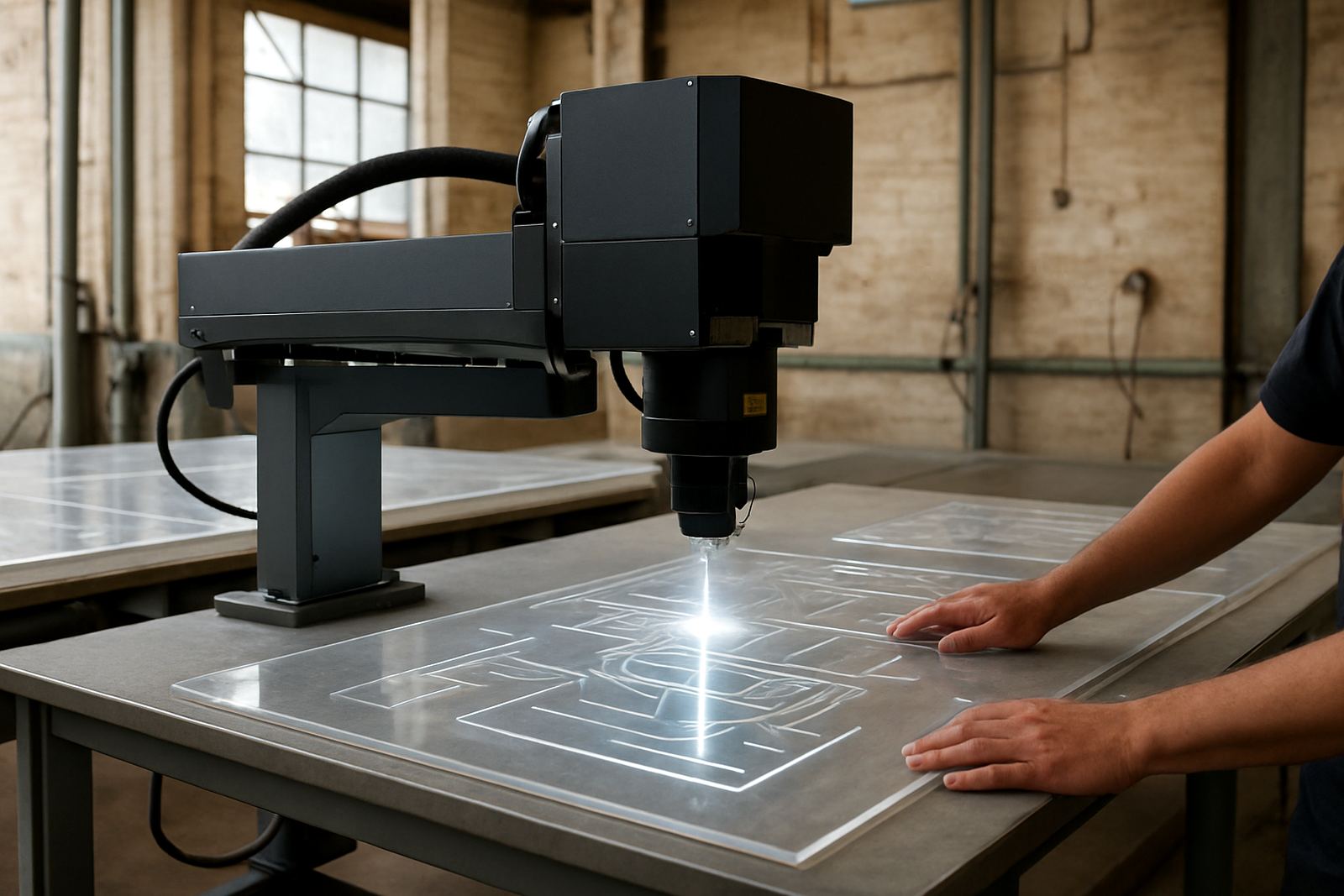
Wide format set-ups are normally chosen by the size of the product, the repeat pattern and how much of the surface needs to be marked in one go. We look at the maximum part length, the widest mark area needed and whether the part sits on a tray, jig or conveyor. Some clients need a broad but shallow marking window for labels, while others need a wider field for logos, serials and traceable codes.
Options can be matched to the process, from bench-mounted units for smaller batches through to integrated systems for continuous production. If the parts are regular in size, fixture design becomes important, especially when the same mark must land in the same spot every time. The right setup saves time and reduces rework.
- Working area sized to the actual part dimensions
- Bench, trolley or line integration options
- Fixture layouts for repeat positioning
- Software settings for variable data and artwork
- Sample testing available before final specification
Where it suits best in South African production
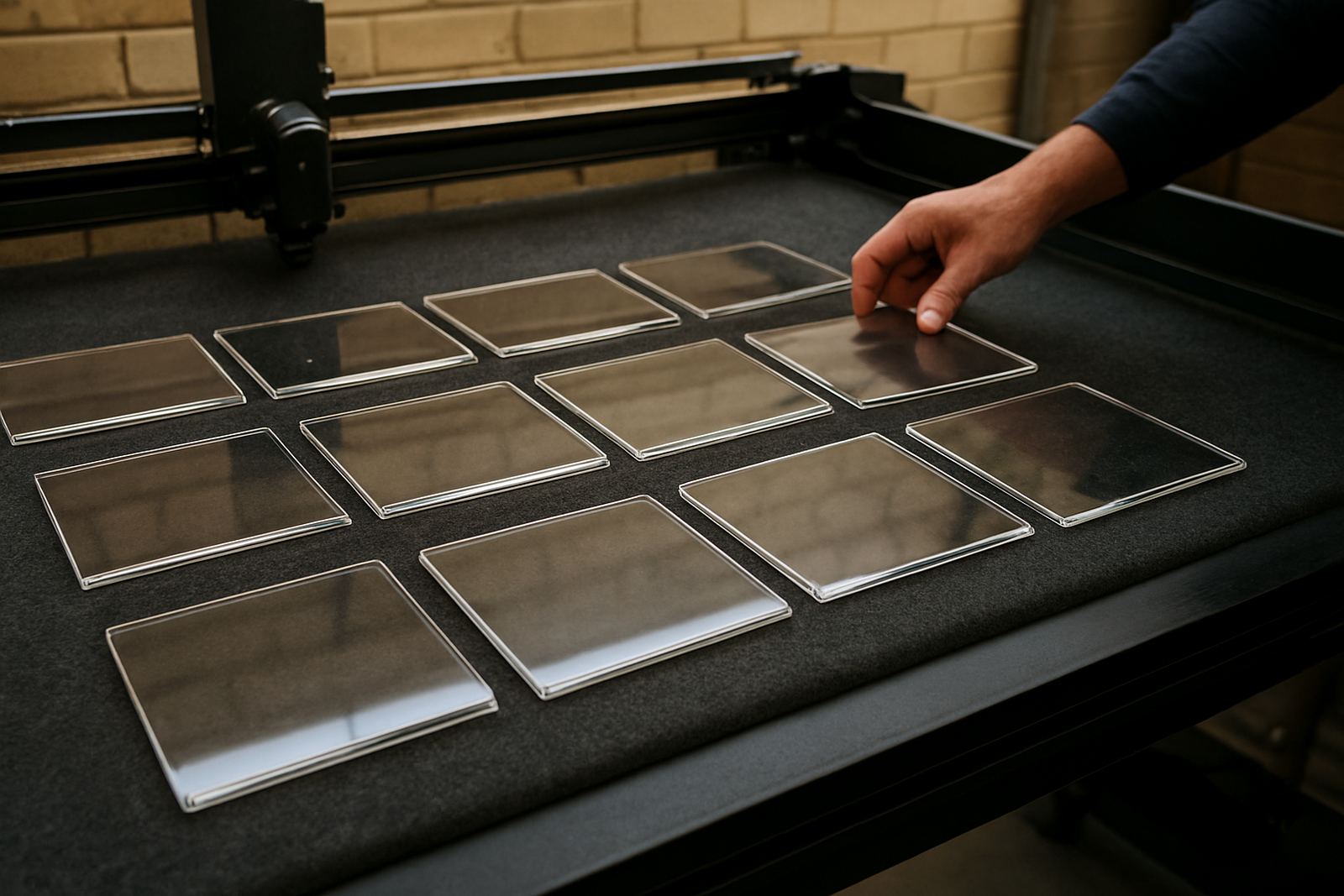
This product suits manufacturers and processors that work with larger plastic housings, display parts, glass panels, packaging components and promotional items. It is also a good fit where a clean branded mark is needed on items that will be seen by the customer, not hidden inside a box. For many businesses, a reliable permanent mark is part of quality control as much as branding.
We see demand from packaging lines, appliance component suppliers, plastics processors and glass converters. In Gauteng, many customers need marking that can keep pace with busy shifts and still perform when the power is not ideal. A correctly set laser marker is efficient, and once tuned it can run steadily with minimal operator input. It is also a neat answer for sites with municipal by-law requirements around labelling and traceability, especially where stock passes through multiple hands.
- Packaging and display components
- Glass panels and decorative items
- Plastic housings, lids and covers
- Traceability marks for batch control
- Branding where a printed label is not enough
Installation, power and site needs
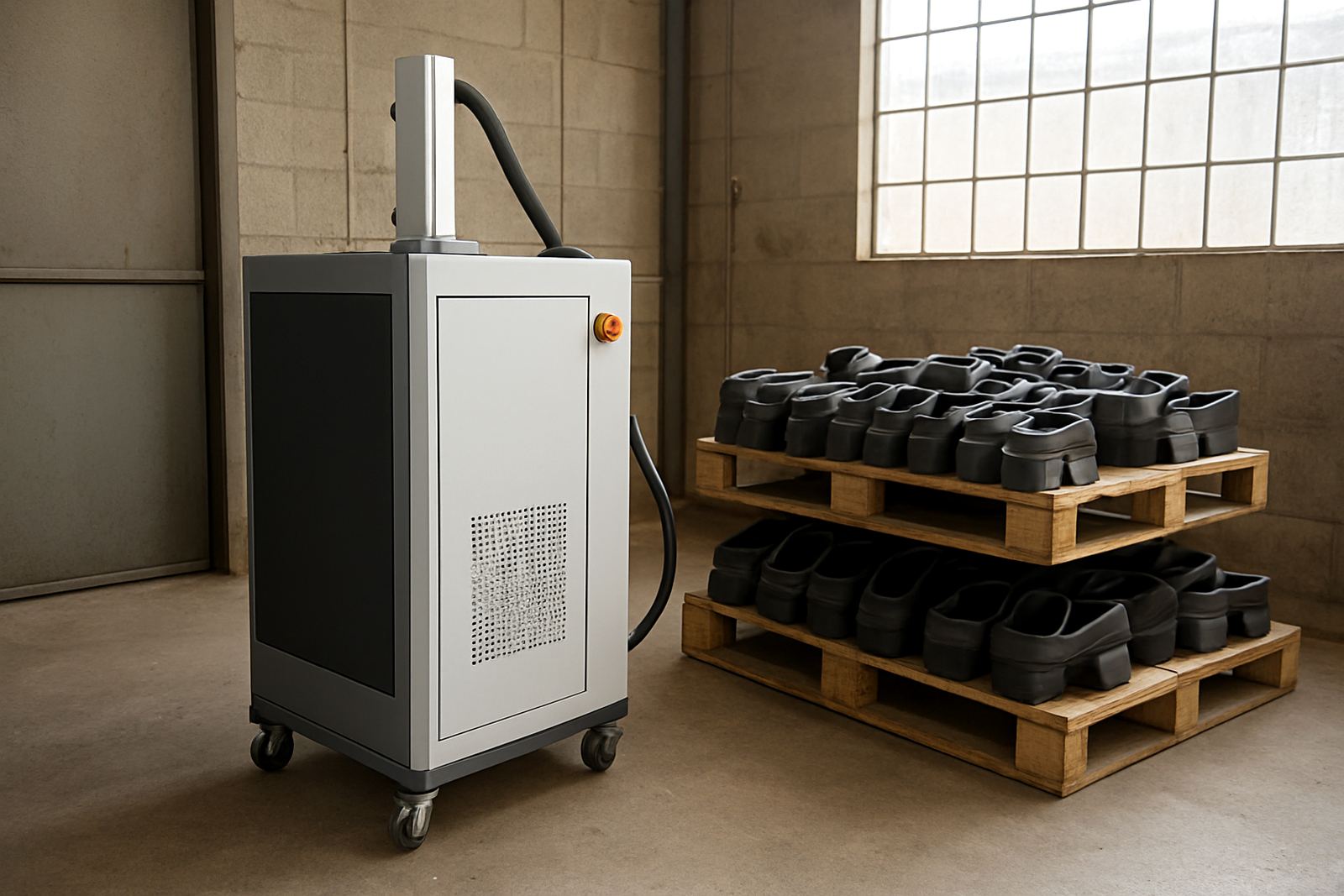
Site setup depends on whether the unit is bench based or built into an existing line. We assess the footprint, operator access, extraction if required, and how parts will move in and out of the marking position. In a production area, the machine should be placed where it does not interrupt material flow and where the operator can load safely without stretching across conveyors or pallet paths.
Power needs are usually modest compared with older industrial marking methods, but stable power is still important. Where load-shedding or voltage fluctuation is part of daily life, clients often use proper surge protection and power conditioning. Some sites also need compressed air for handling fixtures or line equipment, though the marking head itself may not need gas. The exact requirement depends on the configuration and any integration work. We also look at cooling, dust control and cable runs so the machine can keep working in hot inland conditions and coastal humidity alike.
- Space for the marker, control unit and operator access
- Stable electrical supply and surge protection
- Compressed air where fixtures or automation need it
- Correct height and line position for safe loading
- Extraction or enclosure if the process calls for it
Care, servicing and uptime on the floor
Routine care is simple but important. Lenses, covers and work surfaces need to be kept clean, and any fixtures should be checked for wear so parts stay aligned. On glass and plastics, a small shift in positioning can alter where the mark lands, so regular inspection helps avoid rejects. Operators should also keep an eye on software settings and save approved jobs before changes are made, just in case.
For heavier use, preventive maintenance makes a difference. That may include alignment checks, software setup review, cable inspection and a test run on sample pieces. If the machine is tied into a production line, scheduled downtime is better than waiting for a breakdown. Our support team handles breakdown repairs, spares supply and process optimisation, so the machine can stay useful over the long term.
- Daily wipe-down of optics and contact surfaces
- Weekly checks on fixtures and part location
- Periodic software and settings review
- Preventive maintenance for higher-volume sites
- Spare parts supplied when required
What to confirm before you order
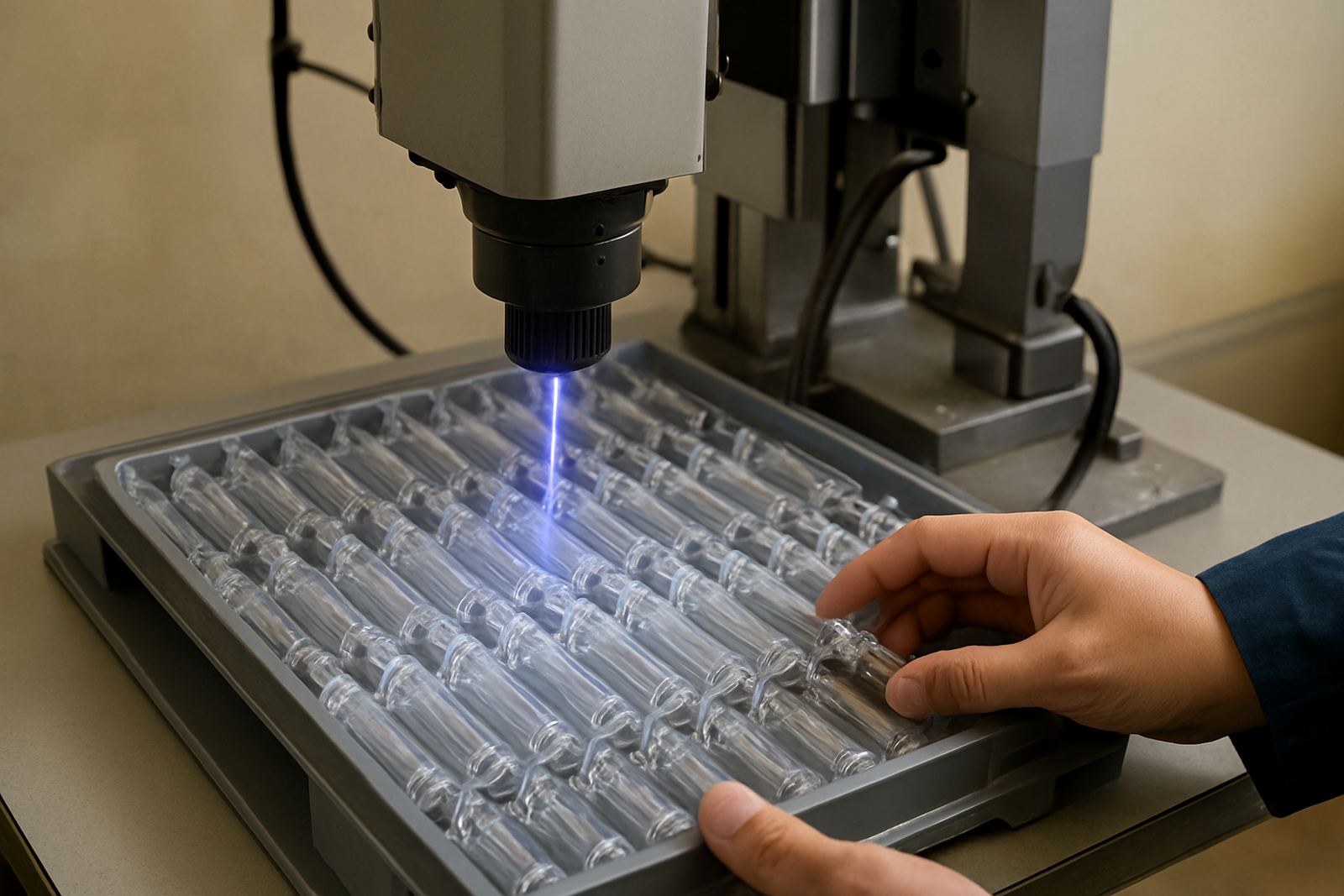
Before placing an order, it helps to know exactly what must be marked, how big the mark is, and how fast the line runs. Bring sample parts if possible, because glass and plastic grades can react differently depending on finish, colour and thickness. If the part has a textured surface or a curved area, we need to see that too. That way the recommended setup matches the real job, not just a drawing.
It also helps to confirm how the mark will be used. A simple logo on a flat panel is not the same as a serial number on a narrow component or a multi-line label on a broad face. If the job needs software setup, custom fixtures or line integration, those details should be listed early so nothing is missed. Our team can support sample testing, operator training and installation nationwide, from Ekurhuleni to Pretoria and beyond.
- Part material, size and finish
- Mark size, artwork and data fields
- Daily volume and target cycle time
- Need for fixtures, conveyors or integration
- Training, maintenance and support expectations
Key facts
| Marking area | Configured to suit wider layouts and larger parts |
|---|---|
| Materials | Glass and plastics, including clear, coloured and coated items |
| Mark type | Permanent high-clarity laser mark |
| Typical use | Branding, labelling, traceability and decorative layouts |
| Setup options | Bench-mounted, fixture-based or line-integrated |
| Support | Demos, installs, operator training and nationwide service |