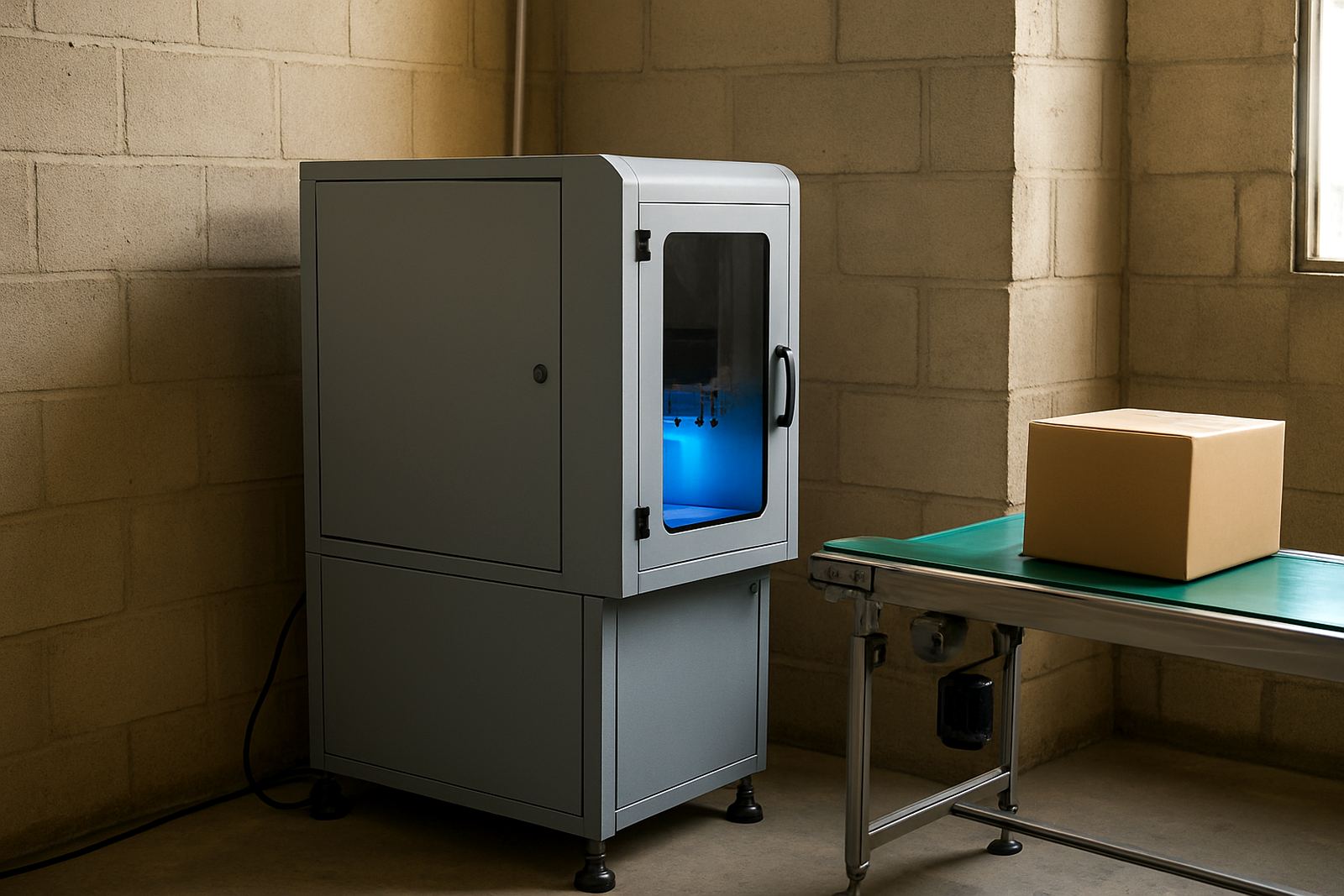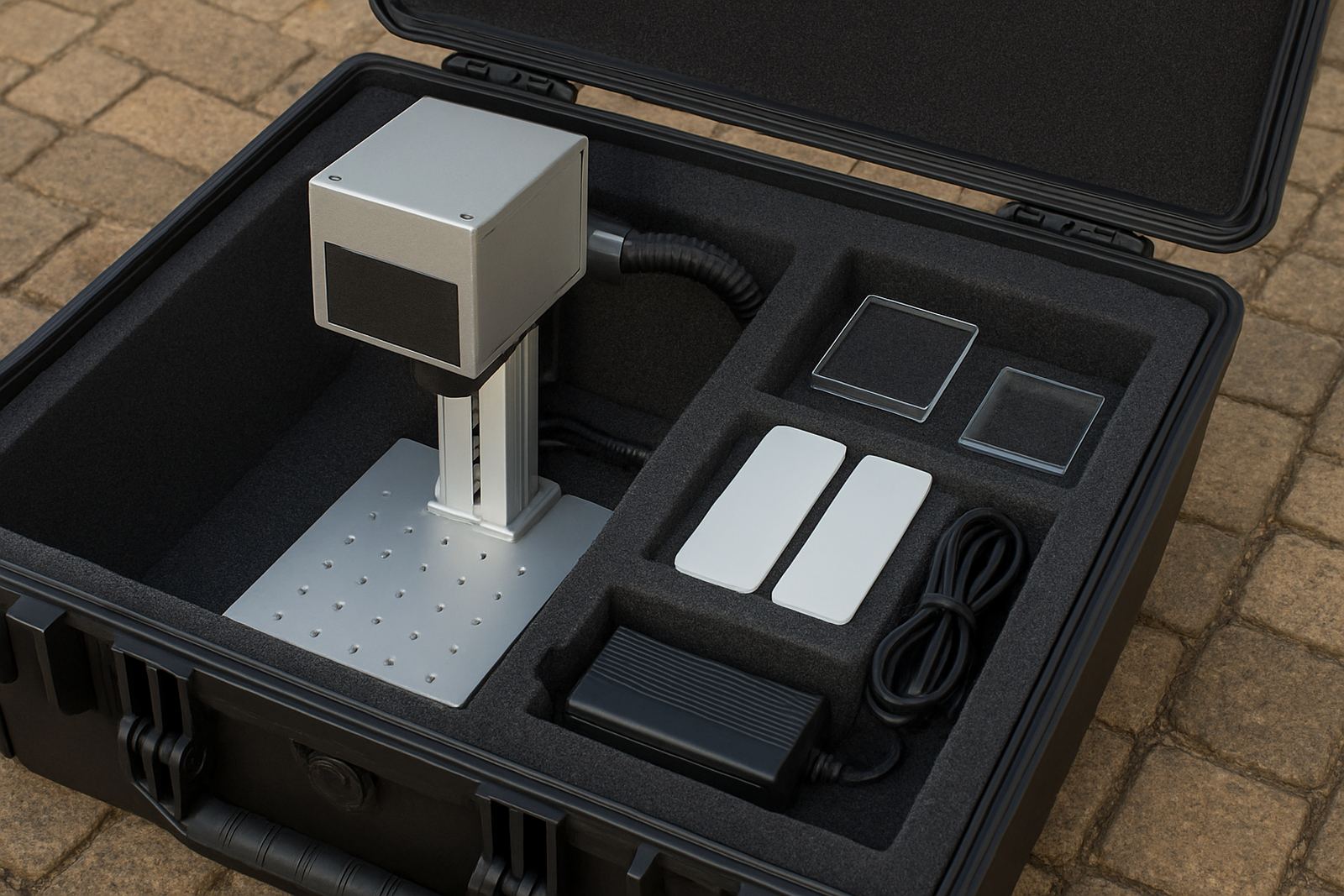
Precise wrap marking for narrow vial bodies
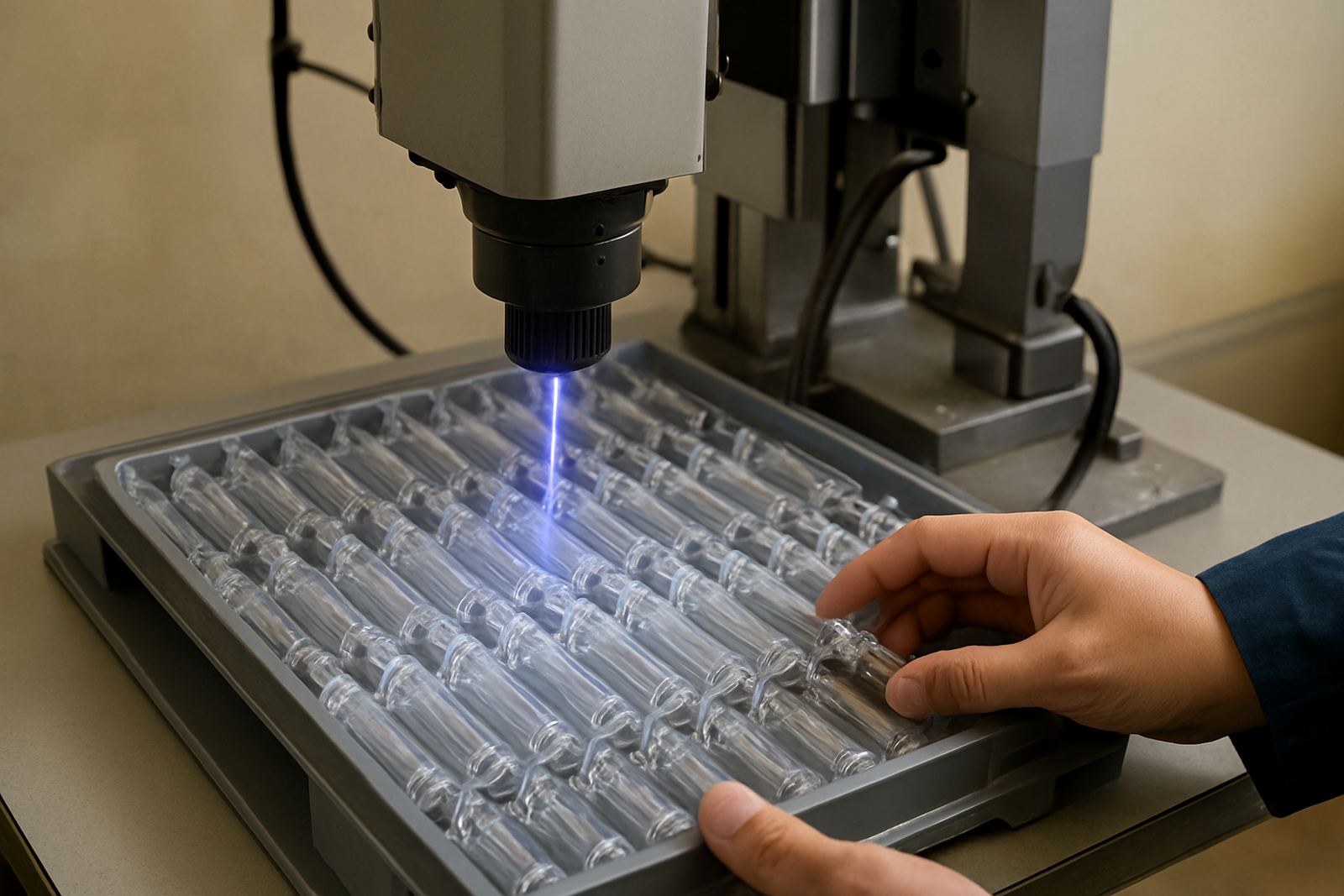
This machine is used where a mark has to sit at the same height and in the same wrap position on every container. That makes it a practical fit for vials, ampoules, small bottles and other slim packaging where label space is limited and print quality has to stay consistent.
The marking process is non-contact, so there is no ink to smudge and no consumables to top up during normal running. On glass it produces a clean, permanent mark that holds up well in handling and storage. On plastics, the result depends on the material blend and finish, so sample testing is important before final sign-off.
For batch coding, branding, numbering or subtle product identification, the Vial Band Marker is often chosen where the line cannot afford variation. It is especially useful when the pack shape is narrow, the walls are thin and the marking area is small, because the system can be set to repeat the same band position with good control.
- Suitable for glass and selected plastics
- Repeatable wrap positions on small diametres
- Permanent marking without ink or ribbons
- Useful for codes, symbols, branding and traceability
Where the system fits best on South African production lines
This product suits plants that run pharmaceutical, cosmetic, laboratory, healthcare and speciality packaging lines. It is also used on contract packing sites and smaller manufacturers that need controlled marking on slim containers without changing the whole line setup.
Because the mark is applied with laser control rather than a physical print head, it is well suited to environments where dust, vibration and frequent line cleaning can affect conventional coding. In Gauteng factories, where production often needs to keep moving during load-shedding windows and after power returns, a stable marking setup can help reduce start-up delays and rejected stock.
It is a good fit when the packaging must stay readable after handling, chilled storage or transport to distributors. If the product is going into hospitals, pharmacies, clinics or export cartons, clear identification can help with traceability and stock control.
- Pharmaceutical and lab packaging
- Cosmetic and personal care lines
- Small glassware and diagnostic containers
- Speciality plastics with repeatable part orientation
Options, sizes and marking range
Vial band marking setups are normally specified around the container size, the required band width and the line speed. The marking head, support frame and handling method are then matched to the product so the band lands in the correct place every time.
Typical systems can be configured for narrow containers with small marking zones and fine detail. The exact working area depends on the material, the finish of the container and the amount of information being marked. On some jobs the requirement is a narrow band around the neck or shoulder. On others the customer wants a wider identification ring with text or a code inside the band.
For bigger production volumes, the unit can be arranged with guides, fixtures and product-present sensing to keep repeatability tight. If the containers are especially small or light, fixture design becomes important so the vial stays stable during the mark cycle and does not roll, twist or shift.
- Band widths set to suit the product and artwork
- Guide and fixture options for stable handling
- Suitable for single-line or integrated production use
- Repeatable positioning for batch consistency
Installation, power and site requirements
Installation is planned around the line layout, access for maintenance and the space needed for product transfer. In Jet Park, Boksburg and surrounding industrial areas, many sites need a compact footprint because the marking station has to fit between filling, capping, inspection or packing equipment.
Power requirements depend on the final configuration, but the system must be installed on a stable electrical supply with proper earthing and protection against voltage fluctuations. Where sites have generator support or inverter backup, the changeover should be checked so the marking setup does not lose settings or stop mid-run.
Most installations do not need process gas, but some applications may need air for handling, fixtures or line support components. If compressed air is used, the pressure and quality must be checked during site assessment. For clean production areas, the position of cables, enclosures and operator access should be planned so the machine does not interfere with routine cleaning or compliance requirements.
- Compact footprint for production lines with limited space
- Stable power supply and proper earthing required
- Compressed air may be needed for some line setups
- Site survey helps confirm orientation, access and utilities
Care, servicing and long-term uptime
This type of equipment needs regular checks to keep the marking position accurate and the output consistent. The main care points are cleanliness, alignment, ventilation and secure mounting. In factory conditions with dust, cardboard fibres or plastic fines, the enclosure and optics should be inspected on a schedule rather than waiting for a fault.
Preventive maintenance helps avoid downtime and is especially useful on lines that cannot stop for long. We can assist with scheduled servicing, breakdown repairs, software setup and process optimisation so the machine keeps working to the same standard after installation. If the product is used in a humid coastal area, extra attention should be given to corrosion control and storage conditions during shutdowns.
When a site changes bottle shape, band position or artwork, the settings may need to be adjusted again. That is normal, and a short recheck at sample stage often saves wasted stock later. A trained operator should know how to confirm the start point, inspect the mark and identify when the fixture needs attention.
- Routine cleaning and alignment checks
- Preventive maintenance for planned uptime
- Software and parameter support when product changes
- Breakdown response available nationwide
What to confirm before you order
Before placing an order, it helps to have samples in hand and a clear idea of the marking requirement. The container diameter, wall thickness, material type and target band width all affect the final result. If the containers are very small, the orientation method is just as important as the laser settings.
You should also confirm the line speed, the type of code or artwork, and whether the mark must face a specific direction. If the product will be used on different lines in Germiston, Kempton Park or Pretoria, the handling arrangement may need to be flexible enough to move without changing the whole setup.
Our team can assist with sample testing, machine installation, operator training and fixture design. Clients often reach us through the enquiry form on the contact page, after which we can discuss the product, test pieces and the site layout before finalising the right configuration.
- Container material and diameter
- Required band width and mark position
- Production speed and line integration points
- Sample pieces for testing before sign-off
Key facts
| Product type | Laser marking system for slim vials and small containers |
|---|---|
| Working material | Glass and selected plastics |
| Marking style | Permanent band, code, text or identification mark |
| Typical use | Wrap position control on narrow diametres |
| Installation | Standalone or integrated on a production line |
| Support area | Jet Park, Boksburg with nationwide demos, installs and training |