A compact marking cell for tighter shop floors
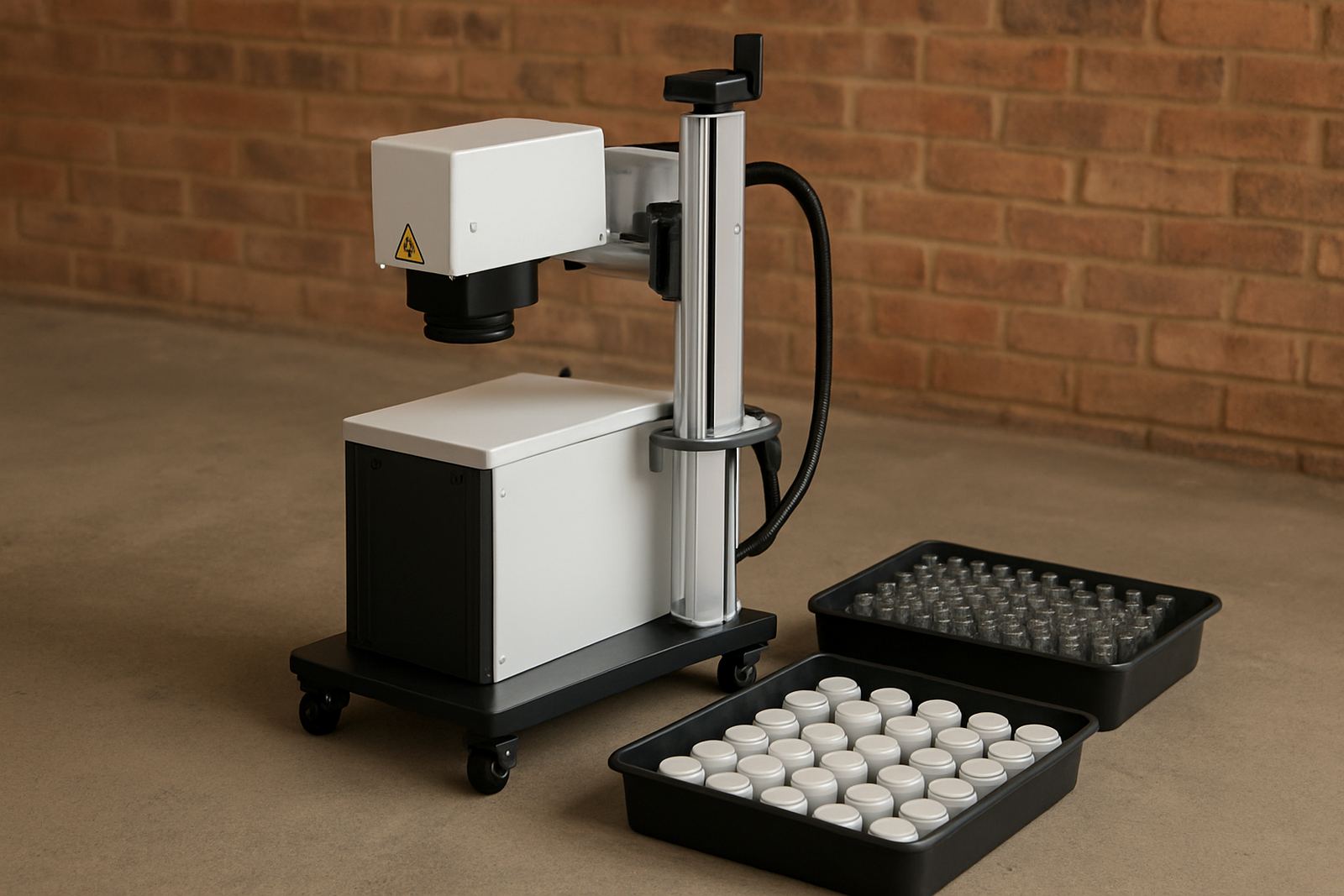
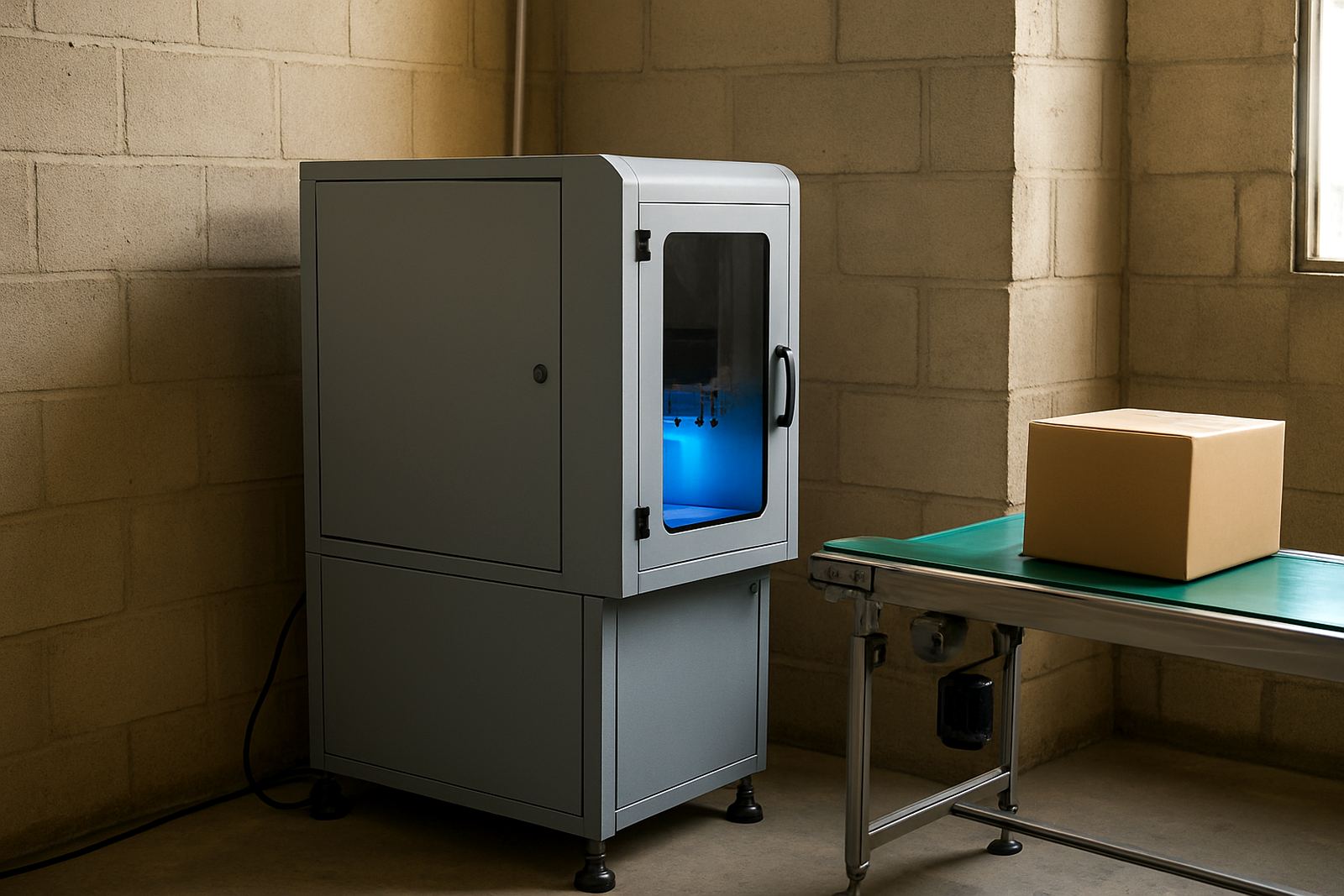
The Compact Cell Marker is built as a self-contained marking station for sites where every square metre counts. Instead of spreading equipment across the floor, the marker, control panel, safety enclosure and work surface are arranged in one practical cell. That makes it easier to place beside a packing bench, inspection point or finishing area and still keep a clear route for staff and forklifts.
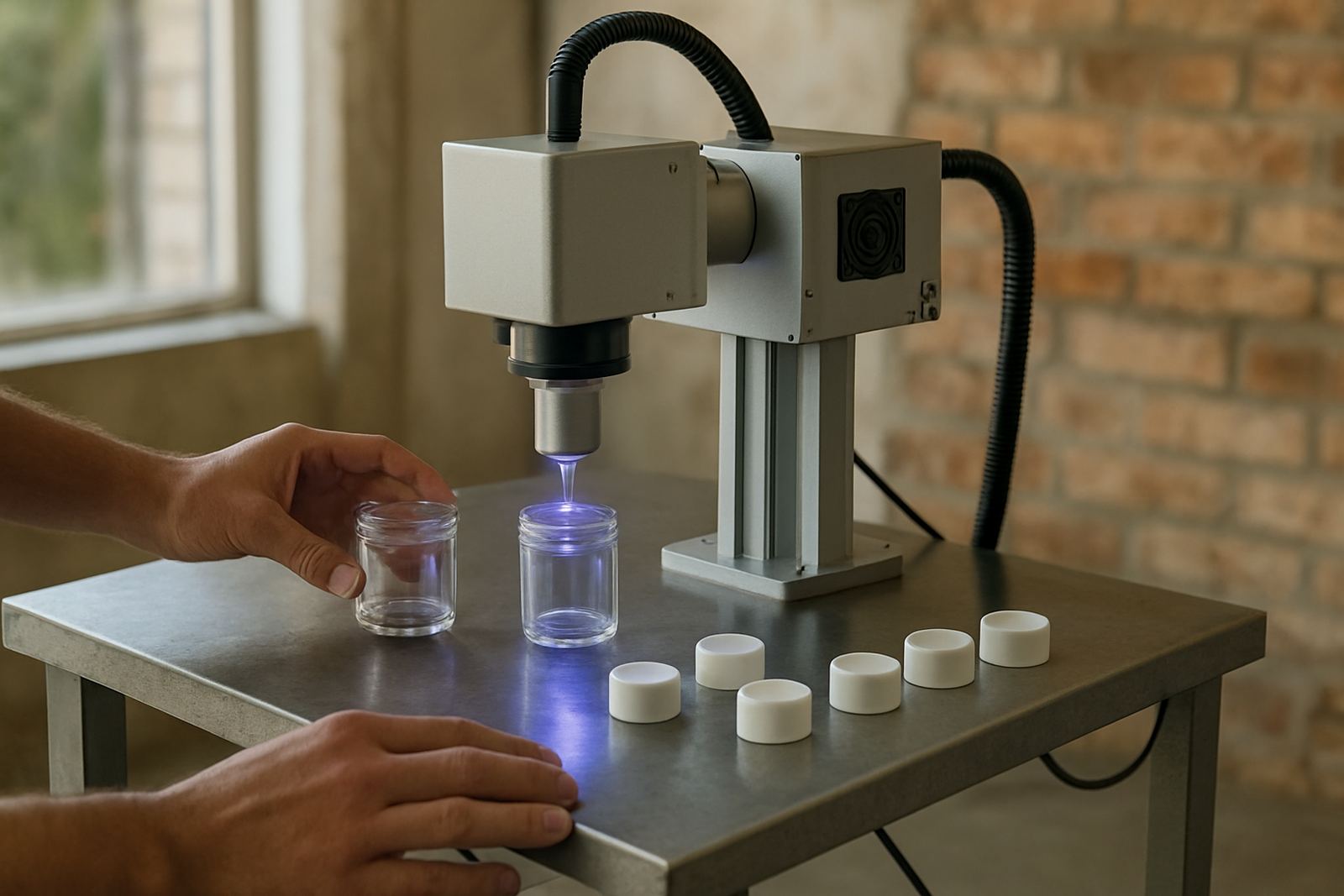
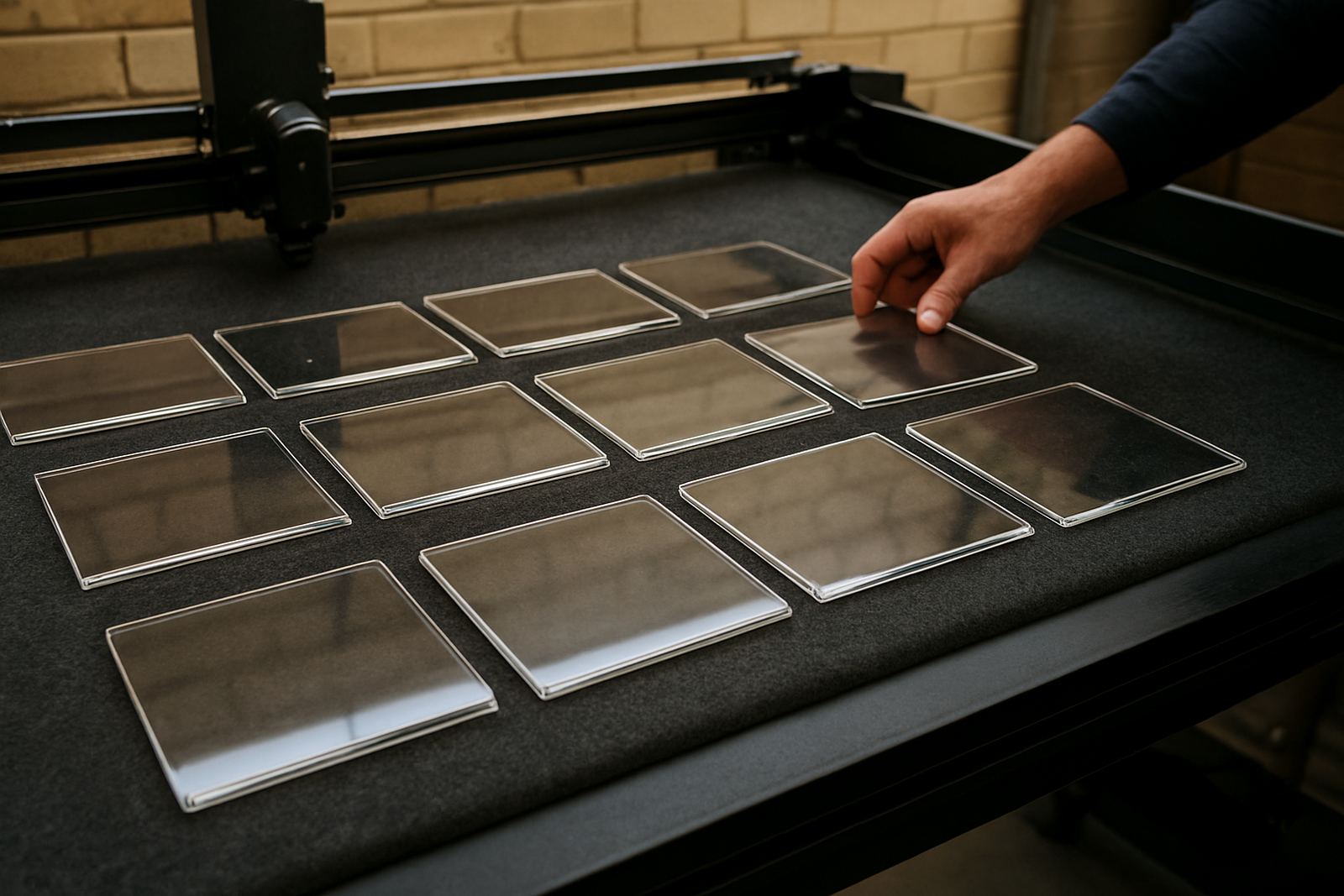
It is suited to glass panels, bottles, jars, cosmetic containers, plastic caps, tubes, closures and other non-metal parts that need sharp marking without contact. The UV laser produces fine detail with minimal heat transfer, so there is far less risk of charring, cracking or surface distortion. For many shops, this means cleaner results than ink, stickers or manual engraving methods, especially where the marking must stay readable after washing, handling or exposure to sunlight.
Because the cell is compact, it works well in Jet Park, Boksburg, Germiston and Kempton Park factories that have limited spare space but still need a proper production setup. It also suits smaller operations in Benoni, Alberton, Midrand and Pretoria that want a reliable marking point without major building changes.
Sizes, options and layout choices
The Compact Cell Marker can be set up in different working envelopes depending on the part size and production target. Smaller versions suit caps, vials and cosmetic packaging, while larger layouts handle trays, bottles and flat glass parts. The enclosure size, table height and fixture arrangement are selected around the product, not the other way around.
Typical options include manual loading, guided positioning, turntable fixtures and custom nesting for repeat jobs. If a line produces several variants, the cell can be arranged with quick-change holders so operators switch between products with less downtime. For higher throughput, the cell can be linked to upstream or downstream handling points, though it still needs clear access for loading and maintenance.
- Single operator cell for small to medium batch work
- Custom fixture design for irregular shapes and repeat positioning
- Optional viewing window and interlocked access for safer operation
- Software setup for saved mark files and repeat jobs
For businesses that run different products on different days, this flexibility matters. It keeps the marking area useful without forcing you to buy a large line for a modest workload.
Where the Compact Cell Marker suits best
This unit suits manufacturers and converters who need permanent product identification, batch codes, decorative details or small logos on glass and plastic. It is commonly considered for beverage packaging, personal care items, household containers, laboratory consumables and specialist components where the mark has to stay crisp and consistent. It is also useful for firms doing short runs, samples or contract work, where set-up time and repeatability are both important.
In South African conditions, the cell is especially practical where staff need a controlled marking area away from dust, vibration and temperature swings. In hotter inland sites, stable placement and decent ventilation help keep the equipment running well. On the coast, where humidity can affect some production spaces, the enclosure keeps dust and moisture away from the part during marking, though you still need proper housekeeping and storage. Load shedding planning is also worth considering, so the cell can be tied into backup power or controlled shut-down procedures if your site needs that.
- Glass marking for branding, codes and decorative detail
- Plastic marking for lids, bottles, tubes and formed parts
- Short-run and mixed-product production
- Quality control points where traceability is needed
Installation, power and site preparation
Installation starts with a site check so the cell fits the room and the workflow. Our team handles demos, installs and training nationwide, with work centred from Jet Park, Boksburg and support across Germiston, Kempton Park, Benoni, Alberton, Midrand and Pretoria. Before delivery, we check access routes, floor level, loading space, power supply and the position of nearby benches, air lines or conveyors.
The Compact Cell Marker normally needs standard electrical supply sized to the chosen configuration, plus clean, stable power. A dedicated circuit is often recommended, with surge protection and proper earthing. If the site has intermittent power or backup generation, the electrical setup must be checked before commissioning. Some installations may also need extraction or filtered air depending on the product and the marking process. Gas is generally not part of the standard marking requirement for this kind of cell, but any site-specific accessory or process aid is reviewed during order confirmation.
Space planning matters. Leave enough room for the operator to load parts, open access points for servicing and store fixtures close by. That avoids unnecessary walking and helps keep throughput steady, especially in tight plants where one machine has to do the work of several stations.
Care, servicing and keeping mark quality steady
Like any precision machine, the Compact Cell Marker works best when it is kept clean and checked on schedule. Dust, loose packaging scraps and residue from parts can affect marking consistency over time. A simple daily wipe-down, together with proper storage of fixtures, keeps the cell in better condition and helps reduce avoidable stoppages. If the cell is used on plastics that shed fines or on glass that carries surface dust, the work area should be cleaned more often.
Preventive maintenance usually covers lens inspection, alignment checks, software updates, safety interlocks and general mechanical inspection. If a line is running long shifts, a service plan can help keep downtime under control. Breakdown repairs are also available when a fault interrupts production and a quick return to service is needed. For sites with multiple operators, refresher training is worth doing after any change in product or fixture setup.
- Keep the enclosure and working table free of dust and residue
- Check fixtures and clamps for wear or movement
- Schedule regular inspection of optics, cabling and safety systems
- Store spare parts and consumables on site where practical
What to check before you order
Before ordering, it helps to define the part size, material type and mark content. Glass and plastic behave differently, so the sample test should match the real job as closely as possible. Bring the actual part, the final artwork or code format, and if possible a sample of the finish you want. That lets the applications team check contrast, placement, cycle time and any fixture needs before the cell is set up.
You should also confirm daily volume, operator skill level, available floor space and whether the cell must work next to an existing line. If the mark must remain readable after washing, heat exposure or handling, say so early because this affects the test and the setup. For regulated work, check whether your internal traceability rules or municipal site requirements affect ventilation, access or waste handling. The right order details reduce changes later and help the machine land in the right place first time, which saves money and avoids frustration.
Riaan Pretorius and the team handle sample testing, fixture design, software setup and operator training, with support from Naledi Mokoena, Refilwe Mahlangu, Anele Dlamini, Priya Naidoo and Thabo Khumalo. If you need a compact marking cell that fits your floor and your production plan, start with a sample test and a clear spec sheet. It makes the rest much easier.
Key facts
| Product type | Compact UV laser marking cell for glass and plastics |
|---|---|
| Working method | Non-contact laser marking with permanent surface detail |
| Typical footprint | Space-saving single-cell layout, sized to the part and fixture |
| Part compatibility | Glass, acrylic, PET, PP, PE and other suitable plastics |
| Power requirement | Standard electrical supply, final load confirmed to site configuration |
| Support services | Site demos, sample testing, installation, training and nationwide service |