What the Tube Body Marker does on round plastic products
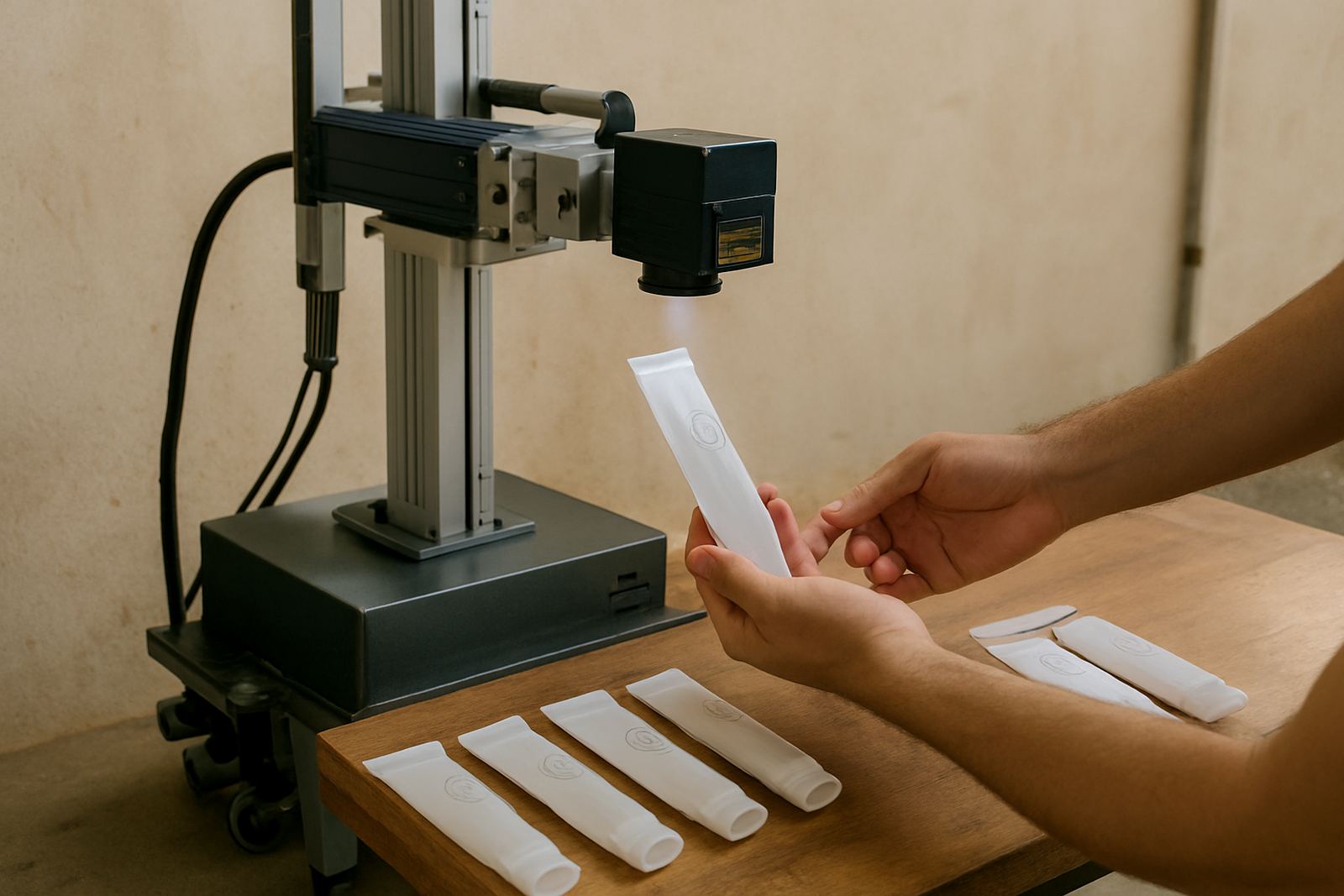
This machine is set up for direct marking on plastic tubes and sleeves, especially where the surface is curved and the artwork must stay aligned. It uses UV laser energy to create a permanent mark without wet ink, ribbons or labels, which helps when the finished tube must stay neat through handling, packing and distribution.
For South African plants, that matters when you are running cosmetics tubes, medical packaging, adhesive sleeves, sample vials or specialist polymer parts. The mark stays clear through normal rubbing, carton movement and moisture exposure. In humid coastal areas, it also avoids the lifting and smudging you can get with some printed codes, and there is no drying time to slow the line.
The marking head can be configured to suit the tube diameter and the required mark position. On smooth plastics the result is a sharp contrast mark, while on certain additives and colours the laser can produce a lighter or darker finish depending on the material response. A sample test is always worth doing before sign-off, because different plastics react in slightly different ways.
Sizes, marking area and configuration options
Tube Body Marker systems are usually specified around the product size, line speed and the amount of information that must fit on each item. The marking window can be matched to short batch codes or to longer branding panels, and the fixture can be arranged for single tubes or continuous feeding. If you need repeatable placement on small diameters, a guided fixture is often the best choice.
- Marking area options for small code fields or longer wrap-around zones
- Adjustable fixtures for different tube diameters and lengths
- Single-item or indexed production layouts
- Manual load, semi-automatic feed, or in-line integration
- Vision or sensor trigger options where line control is needed
In practice, the right setup depends on your product range. A short cosmetic tube may only need a small panel mark, while a technical sleeve might need serials, part numbers and traceability information. If you are changing between tube sizes, ask for a fixture design that makes changeover quick and simple, otherwise operators can waste time setting up between batches.
Where it suits best in local production
This marker suits businesses that need reliable coding on plastics without introducing ink maintenance or label stock. It is commonly used for tubes that leave a visible panel on the outside, but it also works where the mark must sit close to a shoulder, seam or capped end. In Ekurhuleni and the wider Gauteng manufacturing belt, this is useful for converters, contract packers and smaller producers who need clean traceability on every unit.
It can work well in plants around Jet Park, Boksburg, Germiston, Kempton Park, Benoni, Alberton, Midrand and Pretoria, especially where floor space is tight and the pack line must keep moving. Because the system does not rely on consumables like ink or solvent, it is easier to keep running during load-shedding recovery periods too, provided your power backup covers the machine and any extraction or control equipment nearby.
- Cosmetic and personal care tubes
- Medical and laboratory plastic sleeves
- Industrial consumable packaging
- Sample containers and technical parts
- Short-run branded promotional items
Power, setup and installation requirements
Installation is usually straightforward, but the machine still needs a proper site check before it goes into service. You need stable electrical supply, enough bench or frame space, and a safe working area around the marking point. If the unit will run on a line, the trigger signals, product feed and guarding must all be checked so the tube enters in the same position each time.
Most installations need single-phase or three-phase power depending on the exact build, plus a stable earth and clean routing for cables and controls. In some factories, the best result comes from integrating the marker with a conveyor, rotary fixture or clamp system so the tube is held steady during marking. Where there is dust, heat or high humidity, the setup may need extra protection and better ventilation, especially near open loading points.
Our team handles site demos, installs and operator training nationwide, from the East Rand to Pretoria and beyond. If the application is new to your line, a sample test and layout discussion should come first. That saves time and shows whether the chosen tube material gives the contrast you want, or whether the fixtures need a small change before commissioning.
Care, servicing and keeping the mark consistent
To keep the Tube Body Marker performing properly, the optics, guards and mounting points should be checked on a routine basis. Dust, vibration and poor handling can all affect mark quality over time. On busy production lines, a short daily inspection is usually enough to spot loose fixings, dirty lenses or alignment drift before it becomes a stoppage.
Preventive maintenance should include cleaning the relevant optical parts, checking cable routing, confirming focus settings and testing the fixture repeatability. If the machine is tied into software or line controls, those settings should be backed up and reviewed after any layout change. A clean compressed air supply and a tidy electrical cabinet help too, though the exact requirement depends on the installation.
If a fault does come up, breakdown repairs and spares supply should be available without long delays. That matters for manufacturers who cannot afford missed dispatches or late batches. It is also worth keeping a small record of settings for each tube type, so operators can return to the same mark position and power level without redoing the whole setup.
What to check before you order
Before placing an order, confirm the tube material, diameter range, wall thickness and finish. Plastic chemistry matters because the same laser setting can behave differently on two similar-looking products. You should also confirm the text height, logo size, code format and whether the mark needs to sit in one fixed position or move between multiple positions on the tube.
- Tube material and colour
- Diameter, length and wall thickness
- Required mark size, text and artwork format
- Line speed and whether the process is manual or automated
- Power supply, space and guarding available on site
- Need for fixture design, software setup or line integration
If you are not sure about the finish, bring samples for testing. A proper sample run shows whether the mark is legible under normal light, whether the surface reacts cleanly and whether the tube can be handled without marking damage. It also gives the operator team a chance to see the workflow before installation day, which is usually the best time to catch small issues.
Support from Jet Park to sites nationwide
UV Laser is based in Jet Park, Boksburg and supports clients across Gauteng and further afield with demos, installs, training and after-sales service. The team works with practical production needs rather than generic specs, so the advice you get is shaped around your tube size, factory layout and marking target. If you need a fixture, a software adjustment or process optimisation, the same support structure can cover it.
For businesses that want permanent, neat marking on plastic tubes and cylindrical sleeves, the Tube Body Marker offers a direct and repeatable method. It is well suited to production environments that need traceability, product identification and presentable branding without extra consumables, and it can be adapted to suit changing product ranges. Small things like the right clamp, correct focus and clean setup make a big difference, and that is where proper application support pays off.
Key facts
| Product type | UV laser marker for plastic tubes and cylindrical sleeves |
|---|---|
| Typical use | Branding, batch codes, date marks and traceability |
| Marking method | Permanent direct marking without ink or labels |
| Material focus | Plastic tubes, sleeves and other cylindrical polymer items |
| Installation options | Bench setup, fixture-based marking or in-line integration |
| Support | Sample testing, installation, training, maintenance and breakdown repairs |