Clear marking for samples that must stay readable
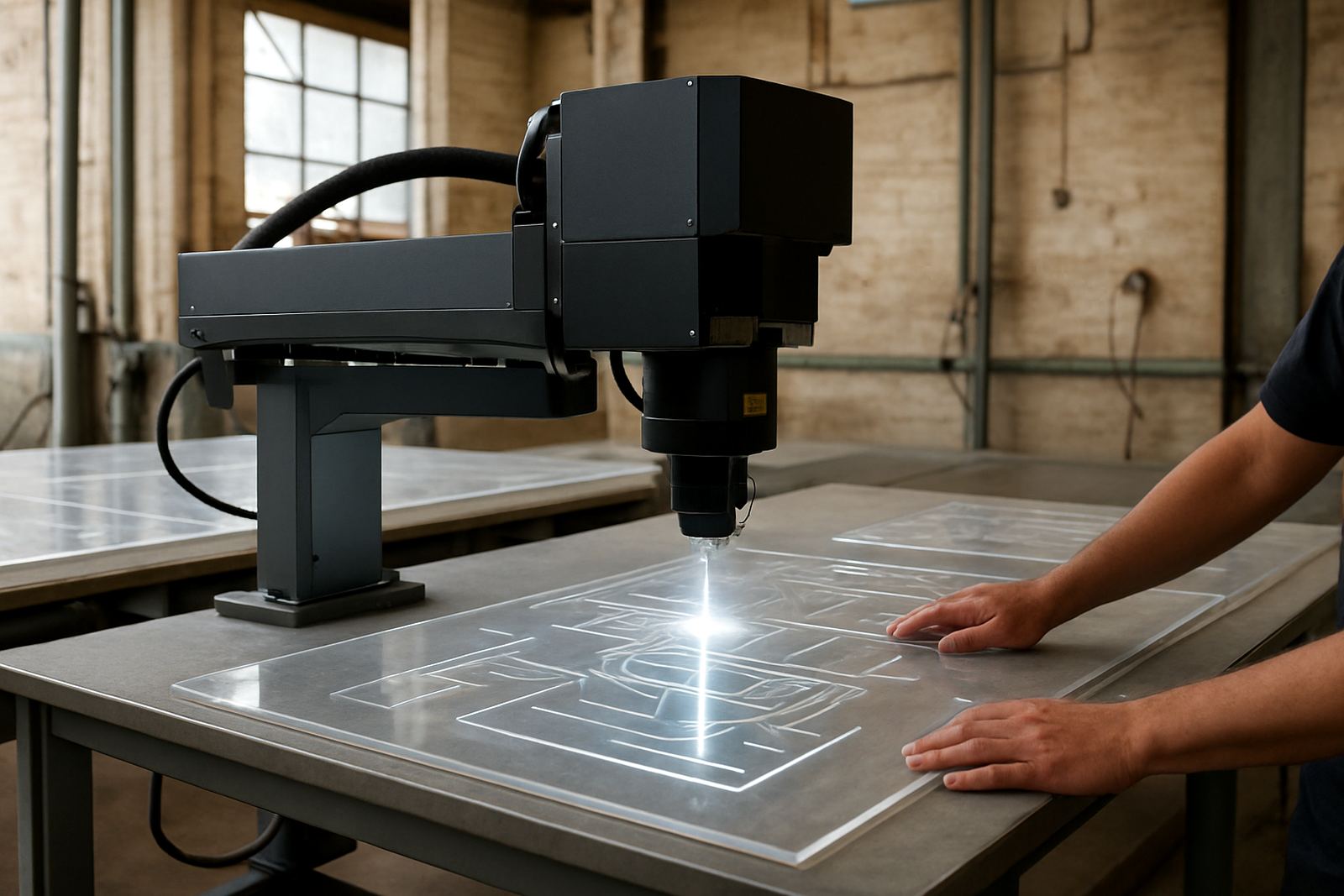
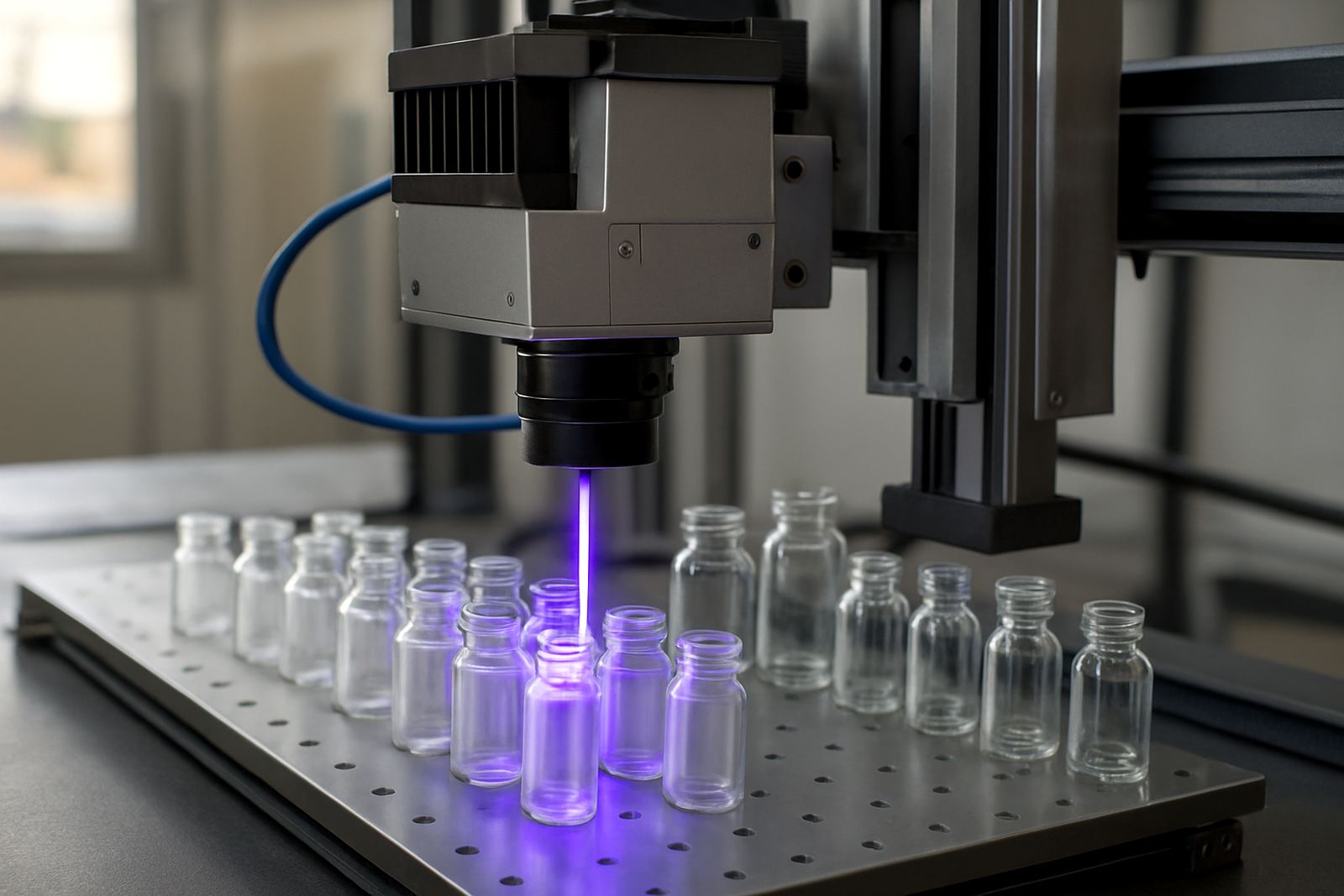
This marker is built for small, detailed marking on items used in testing and sample handling. It is commonly used on vials, tubes, jars, carrier plates, lids, trays and other accessories where a code or reference must remain legible after cleaning, storage and handling. The mark is made directly on the surface, so there is no peeling label and no ink to rub off during routine use.
For labs working with sample traceability, the main benefit is consistency. Once the mark is set up correctly, each item can be marked in the same position and at the same size, which helps with batching, record keeping and stock control. It is a good fit for glass and many plastics, provided the material is suitable for UV laser marking and the surface finish is checked first.
Where this product suits best in South African operations
The Laboratory Sample Marker suits pharmaceutical, food testing, water analysis, chemical, packaging and general industrial labs. It is also used by contract testing houses and internal quality control teams that need a neat, repeatable mark on high volume samples. In Ekurhuleni, Pretoria, Midrand and other busy metro sites, it helps reduce manual relabelling and the errors that can come with handwritten identification.
It works well in clean rooms, sample preparation areas and pilot plants where space is limited and surfaces must be easy to wipe down. For coastal sites, the machine should be kept away from direct humidity exposure and dust, and a stable bench position helps with repeat accuracy. If the area has load-shedding, it is best to plan for proper shutdown procedures and power protection so the control system is not interrupted mid run.
- Glass sample bottles and jars
- Plastic tubes, vials and holders
- Testing trays and carrier plates
- Caps, lids and inserts
- Flat or lightly curved laboratory accessories
Options, sizes and marking detail
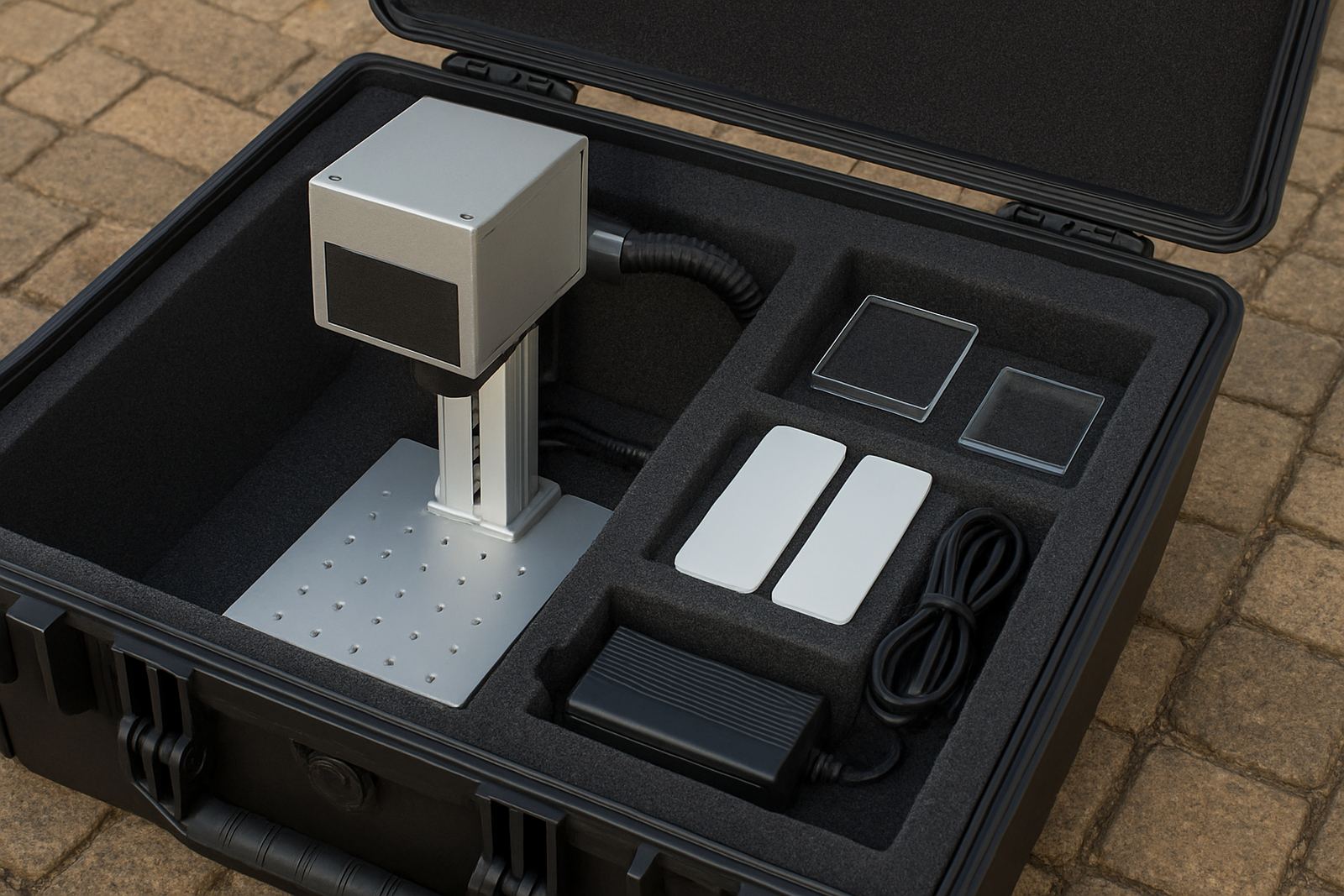
The machine can be specified for different working areas and sample formats, depending on the size of the containers and the volume you process each day. Smaller setups are useful for bench marking and short runs, while larger working areas suit trays, racks and mixed sample batches. Marking size is usually set in software, so the same machine can handle small codes, serial numbers, logos, batch references and fine graphic details.
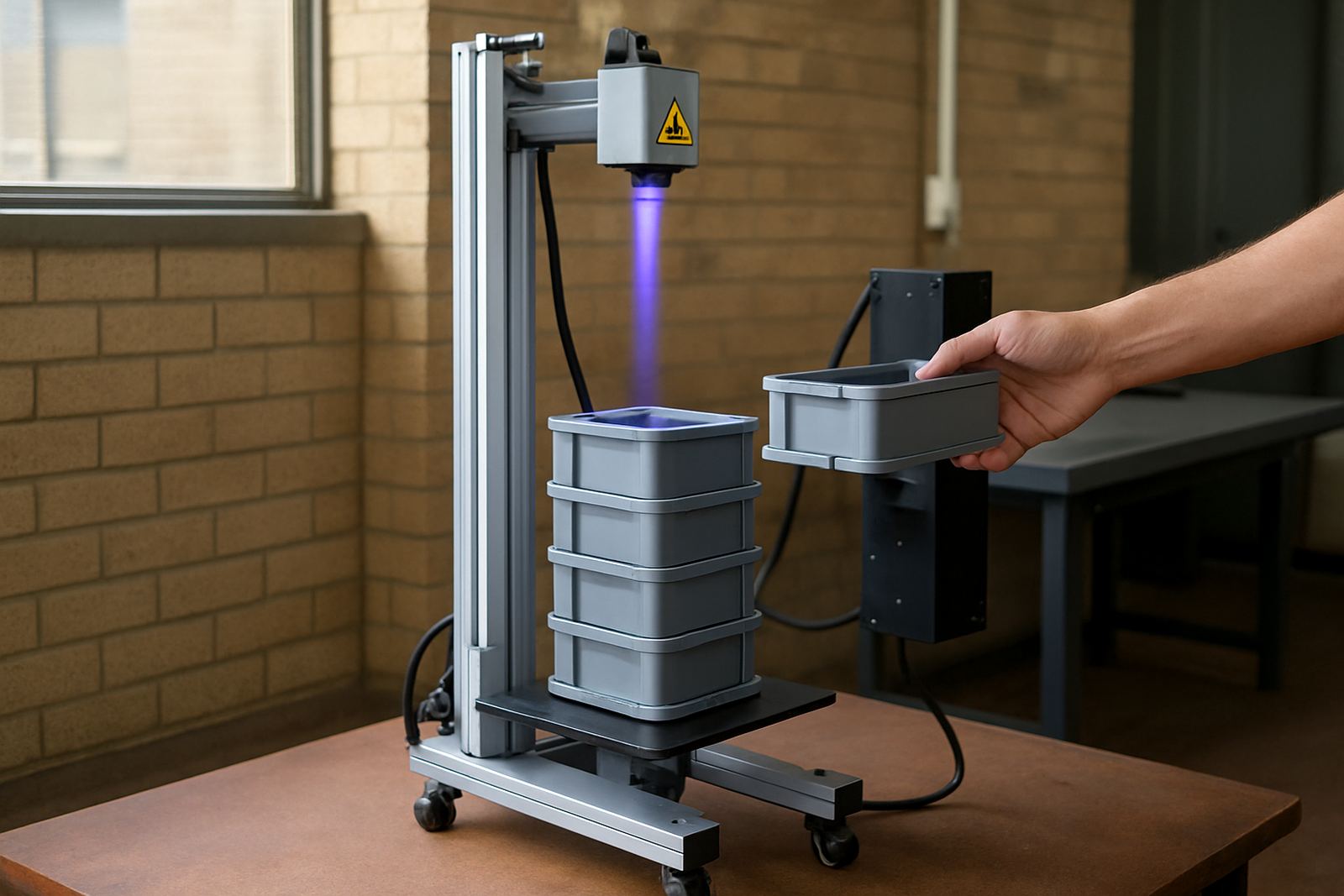
Common options include different lens configurations, fixture setups and workholding arrangements. If your samples vary a lot in diameter or height, ask for custom holding tools to keep the item steady and in the same position every time. That is especially helpful where a batch contains both narrow vials and wider containers, because the right fixture reduces wasted time and improves placement.
- Working area sized to the sample type
- Single-item or batch fixture options
- Fine text, 2D codes and logo marking
- Custom jigs for bottles, tubes and holders
- Software set-up for serial or batch changes
Installation, power supply and site needs
Installation is normally done on a firm level bench or mounted frame with enough space for loading, sample inspection and safe access around the unit. The system needs a clean indoor area with stable mains power and a suitable workstation layout. In most lab environments there is no gas requirement for the marking process, which keeps the setup simpler than many other marking methods.
For South African sites, it is wise to check the supply voltage, plug arrangement and backup power plan before installation. Where power quality is poor or outages are frequent, a protected supply can help prevent control faults and interruptions. If the line is being built into a wider process, the team can assist with fixture design, line integration and software setup so the marker works with your current handling flow rather than against it.
- Indoor installation on a stable bench or frame
- Standard mains power required
- No gas supply normally needed
- Allow space for loading, inspection and safe access
- Backup power planning recommended for outage prone sites
Care, servicing and long term use
Like any precision marking machine, the best results come from basic daily care. Keep the work area clean, remove dust from fixtures and make sure the optics are checked according to the service schedule. If the machine is used in a busy production room, regular cleaning helps maintain mark quality and reduces the chance of small errors caused by residue or movement in the holder.
Preventive maintenance is worth planning rather than waiting for a breakdown. That includes software checks, fixture wear inspection, alignment checks and any consumable replacement that may be needed over time. If your site runs extended shifts, it helps to keep spare parts on hand for common wear items. Refilwe Mahlangu and the service team can support breakdown repairs, spares supply and process adjustments when sample sizes or containers change.
What to check before you order
Before placing an order, it helps to confirm the exact sample material, the container shape and the marking position you need. The team often asks for sample photos, measurements and an example of the mark you want to place. If you are marking glass, check whether the surface is clear, frosted or coated. If you are marking plastics, the material grade and wall thickness matter, because some plastics mark more cleanly than others.
You should also think about throughput, operator skill level and whether the job will stay the same or change often. A lab that marks one sample type all day can use a simpler fixture, while a mixed sample room may need faster setup changes. If your process is sensitive, sample testing is the best starting point. It shows how the mark looks, how it holds up to handling and whether the chosen setup is practical for daily use.
- Sample material and wall thickness
- Container shape, size and marking position
- Daily volume and shift pattern
- Need for codes, text or logos
- Fixture or rack requirements
- Any cleaning, sterilising or handling after marking
Key facts
| Marking type | UV laser marking for glass and plastics |
|---|---|
| Typical use | Sample containers, holders and testing accessories |
| Mark quality | Fine text, serials, batch codes and detailed graphics |
| Installation | Indoor bench or frame mounted setup |
| Power requirement | Standard mains power, no gas supply normally needed |
| Support options | Demo, sample testing, installation, training and maintenance nationwide |