What the Rotary Bottle Marker does on round containers
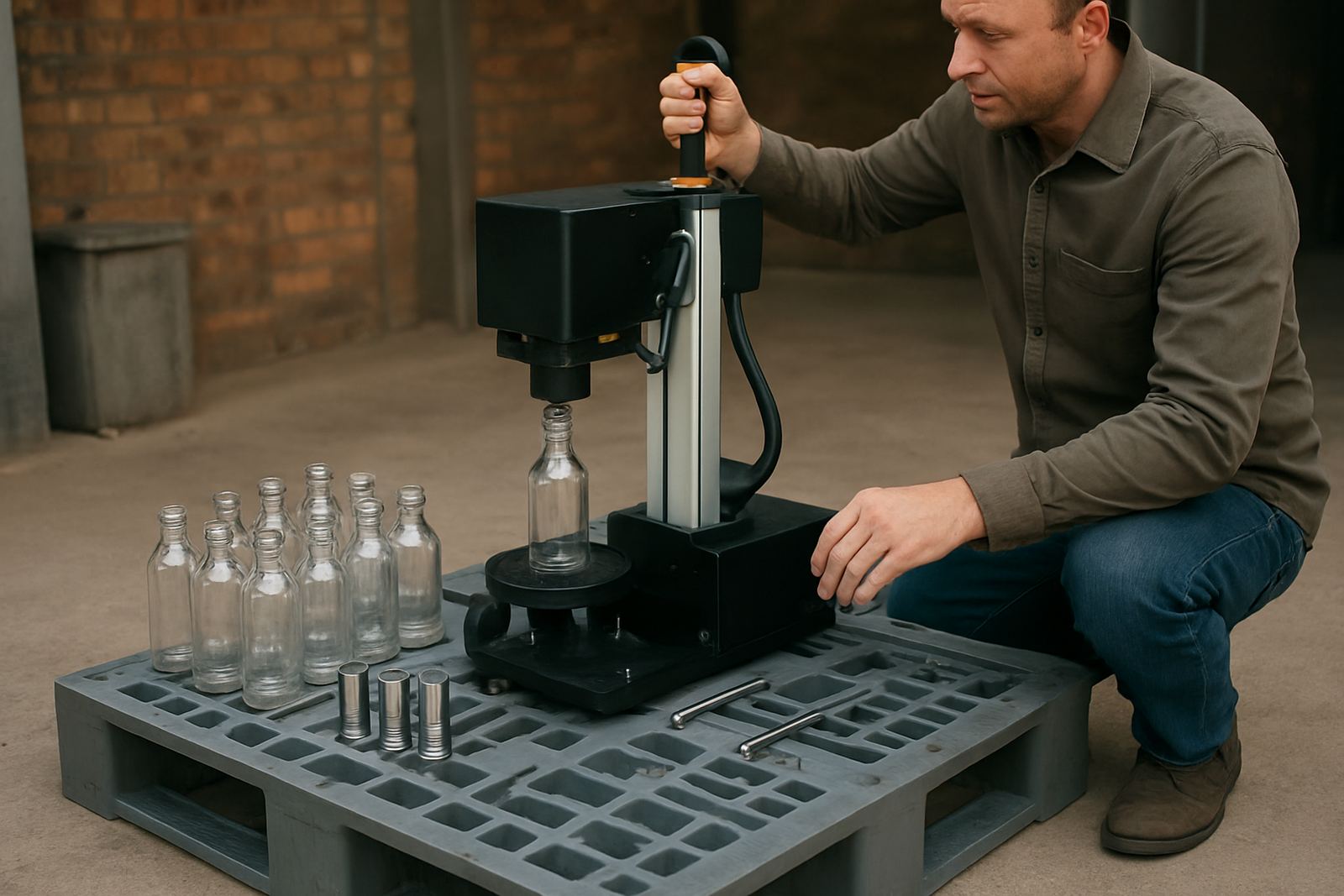
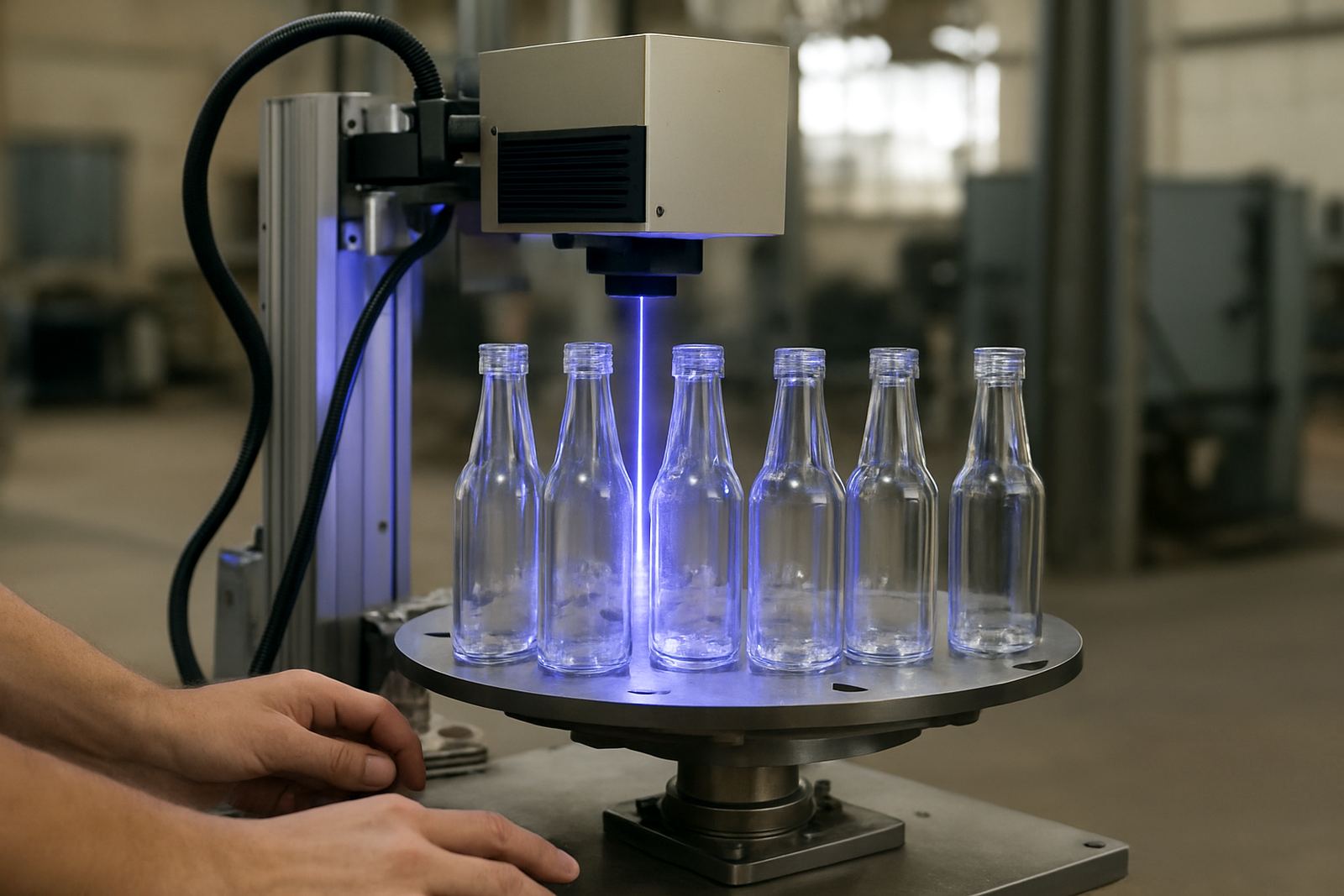
This unit holds a cylindrical container steady while the marking head works around the surface in controlled passes. It is suited to glass bottles, PET bottles, cosmetic jars, sample tubes, small jars and other round parts that need circumferential marking without labels or ink that can rub off.
Because the marking is done by laser, the result is permanent and neat. That matters for product identity, batch numbers, serials, logos and fine text on containers where space is tight and the print must remain legible after handling, washing or chilling.
In many South African plants the challenge is not only the mark itself, but keeping it consistent across shifting bottle sizes and variable line speeds. This setup is designed for that kind of work, with stable rotation and repeatable positioning that helps reduce rejects and rework.
Container sizes and setup options for different production lines
The rotary system can be set up for a range of diameters and lengths, from slim tubes to wider jars. The correct option depends on the container weight, wall thickness, neck shape and whether the bottle is round all the way through or has only a short cylindrical section.
For smaller batches, the unit can work as a stand-alone marking station. For higher output, it can be set into a conveyor line with guides and fixtures matched to the container. If the bottles are light or unstable, a support cradle or roller change can make a big difference to positioning.
- Typical suitable container diameters: about 20 mm to 150 mm
- Typical marking area: full circumference or a defined wrap zone
- Common applications: glass packaging, plastic bottles, cosmetic jars, laboratory tubes and sample containers
- Options: manual loading, semi-automatic feed, conveyor integration and custom fixtures
Where it suits best in South African production
This product suits bottling, cosmetics, toiletries, pharmaceuticals, food packaging, speciality drinks and laboratory supply work. It is also a practical fit for contract packers and manufacturers that need variable data on short runs, not just one fixed design.
Sites in Jet Park, Boksburg, Germiston, Kempton Park, Benoni, Alberton, Midrand and Pretoria often want equipment that can handle mixed containers without slowing the line too much. On coastal sites, the dry mark advantage is useful where humidity can affect inks and labels. In dusty or busy factory areas, a laser system also helps reduce consumables and cleanup.
Where municipal or export requirements call for clear batch identification, this kind of marking gives a permanent finish that can support traceability. It is often chosen where stickers peel, coding rubs off, or the bottle shape makes standard labelling awkward.
Installation, utilities and line connection
Installation depends on the marking head, the rotary fixture and whether the unit is being placed on an existing conveyor or used as a separate station. A proper site demo helps confirm container stability, feed direction, marking position and any guarding needed around the work area.
The unit typically needs single-phase or three-phase power depending on the final configuration, along with a stable work surface or mounted frame. In most cases no process gas is required for the rotary action itself, though the marking process may use assist gas or extraction depending on the material and surface finish required. Good dust control and ventilation remain important, especially in enclosed rooms or where load-shedding backup systems may limit available power.
- Power requirement: configuration specific, confirmed during sample testing
- Utility needs: electricity, controlled ventilation and optional extraction
- Integration: conveyor timing, sensor alignment and product stop position
- Site checks: floor space, cable routing, safety guarding and operator access
Care, cleaning and servicing that keeps marking consistent
The rotary mechanism works best when it is kept clean and aligned. Glass dust, plastic fines and packaging residue can build up around rollers, clamps and sensors, so regular wiping and inspection helps avoid vibration or slipping. If the line runs long shifts, a simple daily check is worth doing before start-up.
Preventive maintenance usually covers alignment, mechanical wear, optical cleanliness and software settings. If the mark begins to drift, fade on one side or show overlap, the issue may be container positioning rather than the laser itself. Refilwe and the field team can help with breakdown repairs, software setup and process optimisation when the line needs tuning.
For sites with more than one shift, it helps to keep spares on hand for the moving parts that wear first. That reduces stoppages when production is under pressure and keeps changeovers quicker.
What to check before you order one
The right rotary marker starts with sample containers and a clear idea of the mark you want. Bring the exact bottle, tube or jar whenever possible, because slight changes in diameter or wall thickness can affect the result. A sample test will show whether the mark should be white, frosted, darkened or very fine, depending on the material.
Ask these questions before placing an order so the unit is matched properly to the job:
- What container diameter and height range will be marked?
- Is the mark full wrap, partial wrap or on one fixed section only?
- Will the line run manually, semi-automatic or with conveyor feed?
- Do you need fixture design for unstable or tapered containers?
- Will the marking be for branding, traceability or both?
- Is operator training needed for more than one shift or site?
When those details are confirmed, the supply, installation and handover are much smoother. That is how you avoid a machine that can mark the product but not in the way the line actually runs day to day.
Key facts
| Marking type | Circumferential UV laser marking for round containers |
|---|---|
| Suitable materials | Glass, clear plastics and selected coated packaging plastics |
| Typical container range | About 20 mm to 150 mm diameter, subject to test sample |
| Marking area | Full wrap or partial wrap around the body of the container |
| Power | Configuration specific, confirmed during site assessment |
| Services | Demos, installs, training, maintenance, repairs and nationwide support |