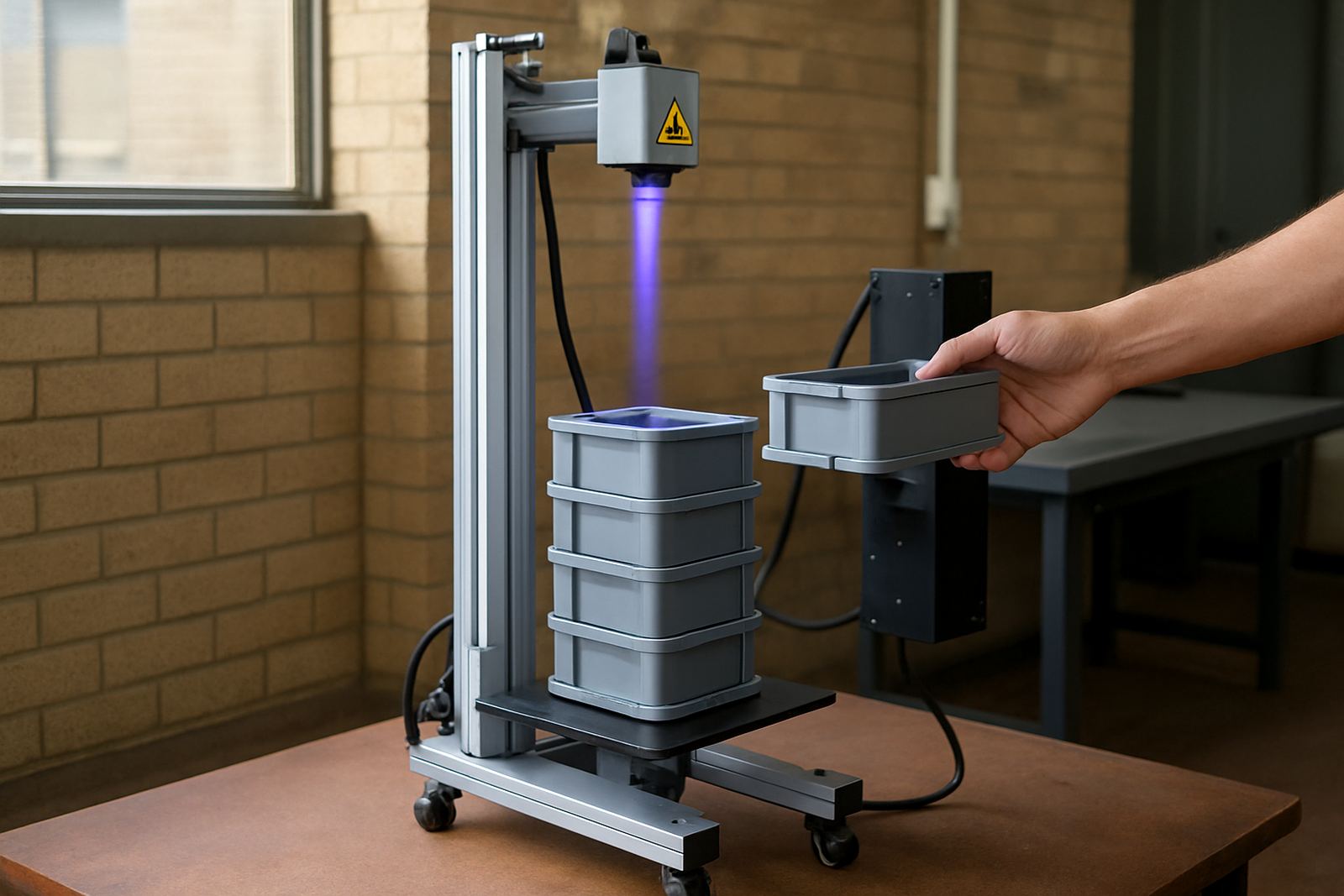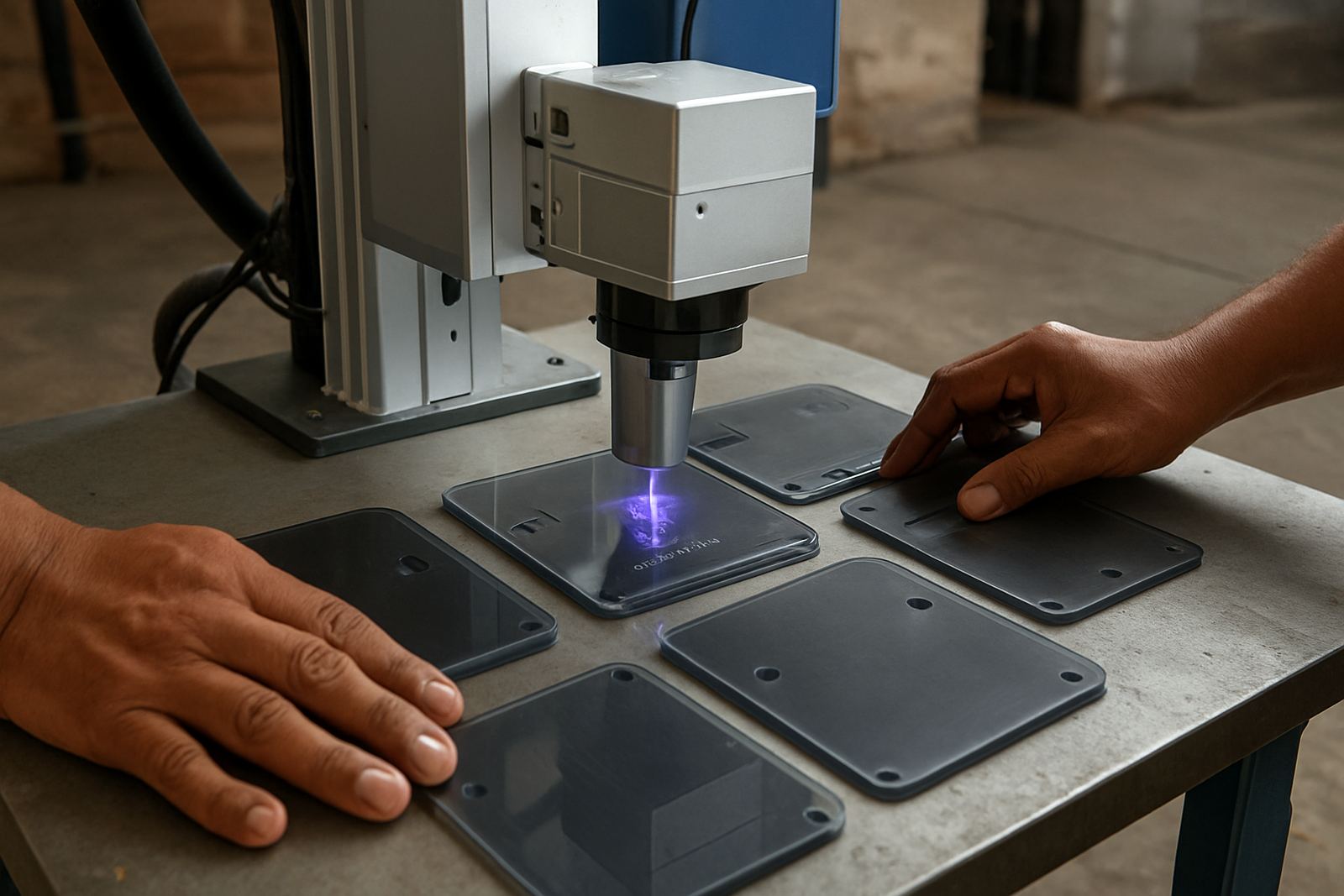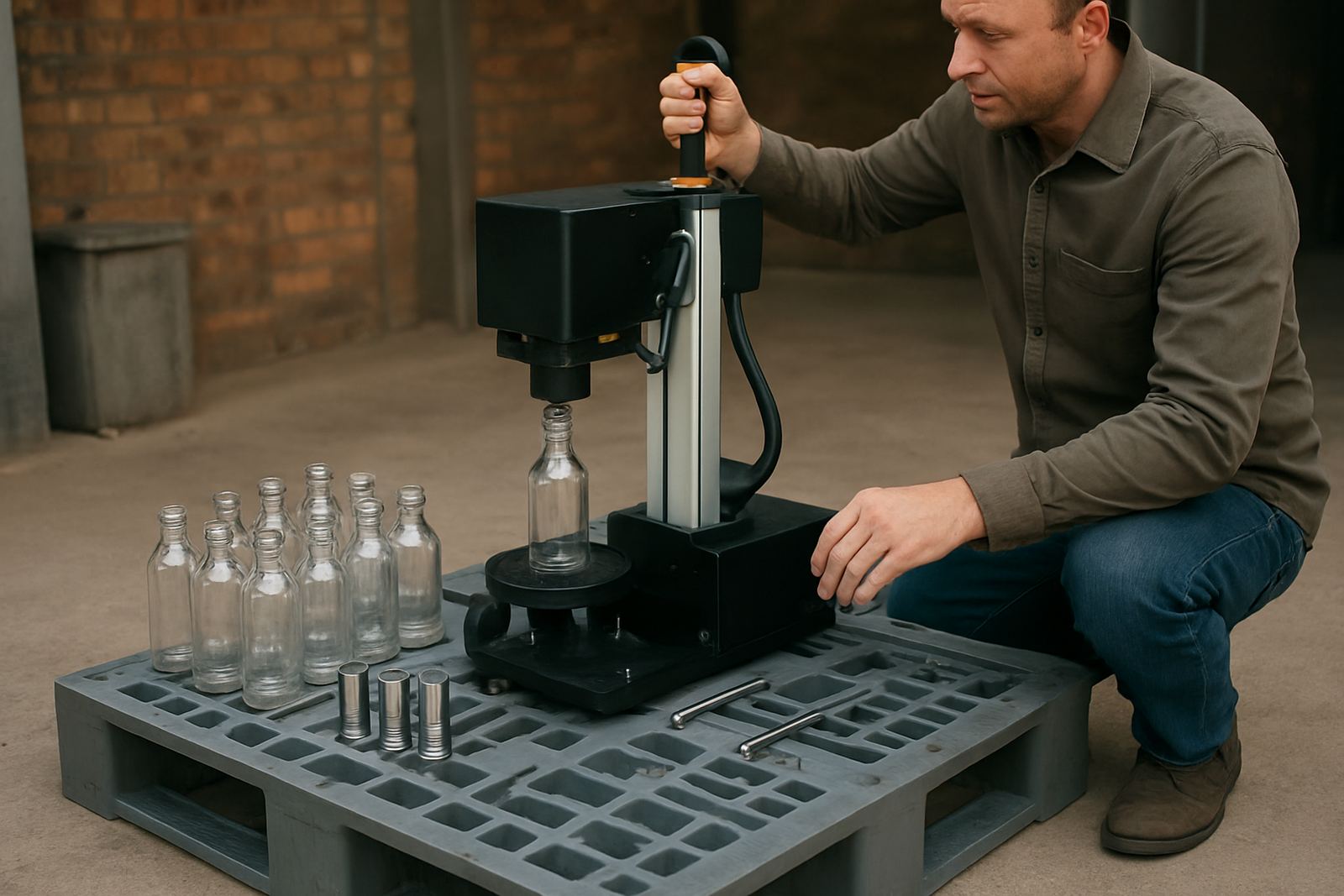
A rotary hire unit built for round parts
A rotary hire unit holds cylindrical items in a steady turning motion while the laser marks the surface. That makes it suitable for glass bottles, plastic tubes, cosmetic containers, sample vials and similar parts that need text, batch details, logos or fine line work placed accurately around the curve.
The hired unit is supplied for defined timeframes, which suits factories, contract packers and product developers who need a dependable marking setup for a specific job. It is especially useful when you are testing artwork, proving a production method, or covering a short production spike in Gauteng, the Cape or further afield.
Because the marking is non-contact, there is no blade wear and very little physical force on the part. That helps when working with thinner glass, lightweight plastics or finished products that must stay clean and undamaged.
- Suitable for straight-sided and gently tapered bottles
- Handles small tubes through to larger round containers
- Ideal for permanent serials, dates, codes and branding
- Works well for trials before full production rollout
Where a hire rotary marker fits best
This option suits businesses that run batches with changing artwork or recurring short orders. It is commonly used by cosmetic fillers, beverage producers, laboratory suppliers, packaging houses and companies making promotional items. If you need one-off samples for a client presentation, or a limited production run before peak season, hiring can make good commercial sense.
It also suits operations that do not want a permanent machine taking up floor space when the job is finished. In busy plants, a hired unit can be brought in for a fixed period, then removed once the run is complete. That keeps the line flexible and avoids unnecessary capital spend.
For sites in Jet Park, Boksburg, Germiston, Kempton Park, Benoni, Alberton, Midrand and Pretoria, the unit can be matched to your current handling process so the setup feels practical from day one. If your bottles are wet from rinsing or your tubes are unpacked in humid storage, that is worth factoring into the test sample, because surface condition can affect marking quality.
- Short runs and project based work
- Sampling, demonstrations and customer approvals
- Seasonal production peaks
- Product development and process trials
Sizes, holders and options to match the job
Rotary hire units are selected according to the bottle or tube size, the marking position and the way parts are fed in and out of the line. Common checks include the outside diameter, length, weight and whether the item is fully round or slightly tapered. Where needed, the holding arrangement can be adjusted with simple fixtures so the part sits square and turns evenly.
For small-format work, the unit can be set up for narrow tubes, ampoules and sample containers. For larger items, the holding area and rotation support need to suit the bottle body and shoulder shape. If your product has a textured surface, a printed sleeve or a curved label, it should be tested early so the result is clean and legible.
We normally recommend checking a few sample pieces before the hire period starts. That saves time and helps avoid surprises on the first production day. It also gives a clear idea of line speed, marking position and whether any fixture changes are needed.
- Small tubes and vials
- Cosmetic bottles and personal care containers
- Glass and plastic roundware
- Custom fixtures where the product needs extra support
Installation, power and site prep
The hire unit is installed on a stable surface or integrated to suit the line layout. The key requirement is a clean, dry working area with enough access for loading, unloading and maintenance. If the machine is going into a production line, the surrounding conveyor height and transfer point must be checked so bottles do not tip or snag.
Power needs are straightforward, but the exact supply should be confirmed before delivery. In many factories, a standard single-phase or three-phase supply is available, depending on the site. Because load-shedding still affects a lot of South African operations, it is sensible to plan for proper shutdown and restart procedures, plus surge protection where required. If the plant already uses compressed air for other equipment, we will check whether your line needs it here or not, as some setups do and some dont.
For sites with limited space or mixed production, a compact temporary layout can work well. The rotary station can be positioned so operators have a clear workflow, and the access around the unit remains safe and practical. A brief site check before delivery usually answers most of the setup questions.
Keeping the hired unit in good working order
A hire machine still needs sensible daily care if you want consistent marking and fewer stoppages. Keep the working area free of dust, plastic offcuts and moisture. On glass lines, wipe away condensation and residue before marking. On plastics, avoid oily contamination from handling, because that can affect the finish.
Routine attention normally includes visual checks, cleaning of exposed surfaces, checking alignment, and confirming that the part is seated correctly in the holder. If the machine is used in a humid coastal area or a plant with frequent temperature changes, allow for extra inspection around the fixtures and any exposed metal parts.
Our team can assist with preventive maintenance, breakdown repairs and software setup during the hire period. If something is not running the way it should, it is better to sort it early rather than push through a full shift and lose good stock.
- Daily cleaning of the working area and holders
- Check part alignment before each batch
- Keep sample pieces for quick verification
- Report unusual marks, slip or vibration at once
What to confirm before you place the order
Before arranging a rotary hire, it helps to confirm the exact product type, the material, the marking content and the hire timeframe. A bottle used for beverages is not the same as a cosmetic tube, and the marking position on the shoulder, body or base can change the fixture requirement. If the job includes batch codes, expiry dates or variable data, send those details early so the setup can be matched properly.
You should also confirm your target line speed, how many units need marking per hour, whether the items arrive loose or packed, and whether there are any municipal or site rules around noise, access or working hours. If the line runs in shifts, include that too, because it affects training and support planning.
For better planning, send through a few sample items and a brief drawing or photo of the product. That gives a clearer picture than measurements alone. It also helps us check whether any fixture design or line integration is needed before the unit arrives on site.
- Product material and exact dimensions
- Roundness, taper and surface finish
- Artwork, code format and marking position
- Hire period and expected daily output
Key facts
| Marking method | UV laser marking for glass and plastics |
|---|---|
| Part type | Bottles, tubes, vials and round containers |
| Hire basis | Defined project timeframe |
| Typical use | Branding, batch coding, labelling and fine detail work |
| Support | Site demos, installation, operator training and nationwide support |
| Base location | Jet Park, Boksburg, with service across South Africa |