What the Panel ID Marker does on glass and plastic
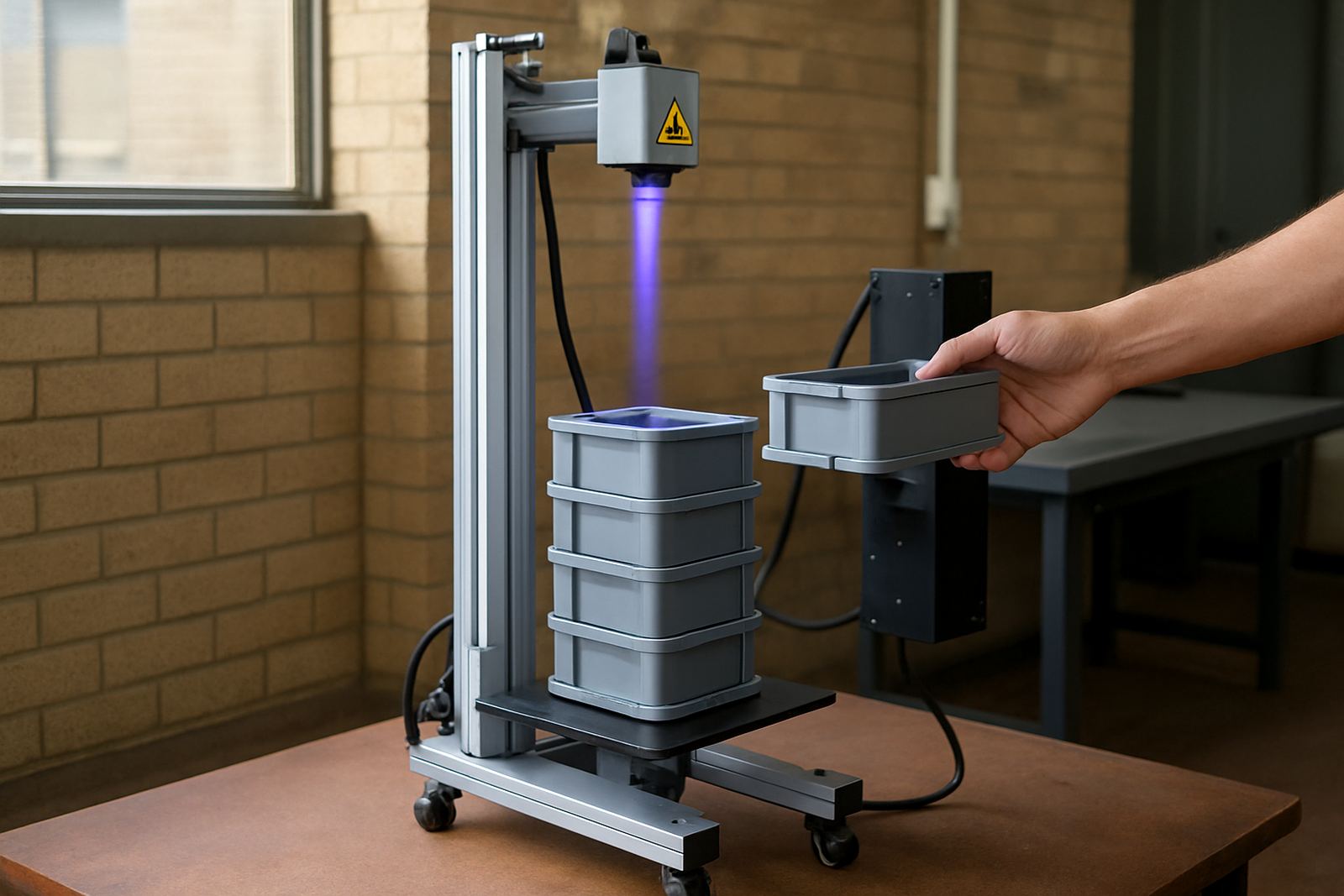
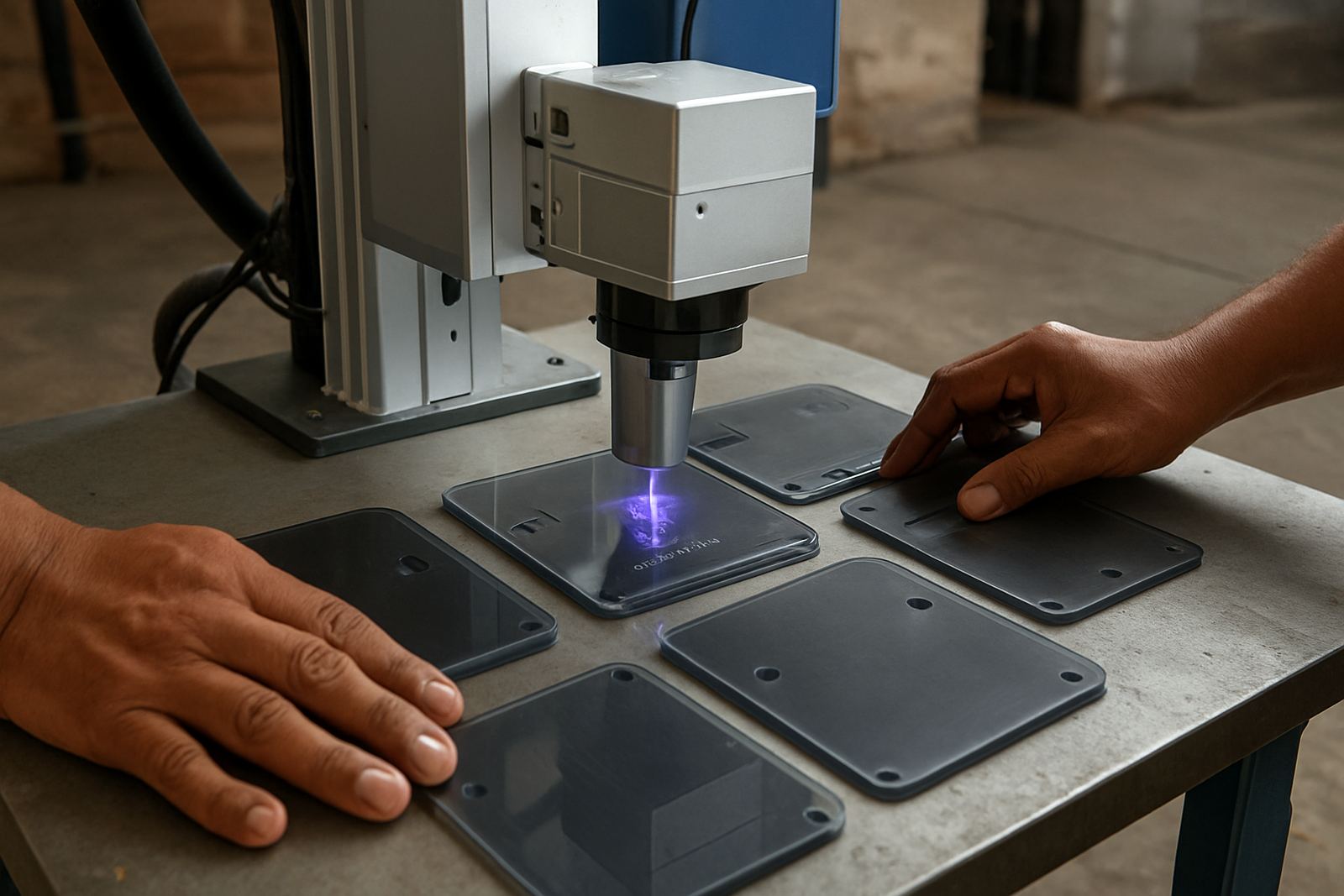
The Panel ID Marker uses a UV laser beam to create precise marks on flat or lightly curved panels. It is used where ink can rub off, labels can lift, or printed details need to stay readable after cleaning, handling, or exposure to moisture. On glass, the mark is typically crisp and high contrast. On many plastics, it gives a fine, controlled finish that works well for serial numbers, logos, batch codes and inspection marks.
This type of marker is a good fit for production lines and workshop settings that need permanent identification without contact. Because the marking process is non-contact, there is no tool wear on the part, and no consumables like ribbons or solvents. For companies in Gauteng working with high volumes, that can simplify day to day production and reduce stoppages, especially where quick changeovers matter.
Where this marking system suits best
Panel ID Markers are commonly used by manufacturers and processors working with sheet material, display panels, covers, control parts, bottles, sample plates and technical components. It is useful where a part must remain identifiable after assembly, transport, washing or site use. The system suits businesses that need permanent marks on clear or coloured panels, and it is often specified for traceability on parts leaving the factory floor.
- Plastic panels for appliances, instruments, housings and signage
- Glass panels for display units, inspection plates and control windows
- Parts that need batch codes, part numbers or compliance marks
- Short runs and repeat jobs where setup must stay quick
- Sites that need clean marking with no ink mess or adhesive labels
We often see demand from operations in Jet Park, Boksburg, Germiston, Kempton Park and Benoni, with installations also going into Midrand, Pretoria and Alberton. For coastal clients, the permanent mark helps where humidity can make labels fail sooner than expected.
Sizes, field options and marking format
The right setup depends on the panel size, the mark size and how much detail must fit on each item. The Panel ID Marker can be set up with a range of working fields to suit small components or larger sheets. Marking can be arranged for text, numbers, QR codes, Data Matrix, logos and fine line artwork. In many cases the operator can store repeat jobs and swap between them quickly, which helps when one line handles different panel types in the same shift.
- Small field options for compact parts and close detail
- Medium field options for standard identification zones
- Larger field options for broad panels and multiple marks
- Variable text for batch codes, date codes and serial numbers
- Artwork marking for logos, symbols and layout-based IDs
We help check the panel finish, thickness and colour before the final setup is confirmed. Some plastics react better than others, so sample testing is useful before you place orders for a full run. That way the contrast, depth and size can be checked on the actual material, not just in theory.
Installation, power needs and line integration
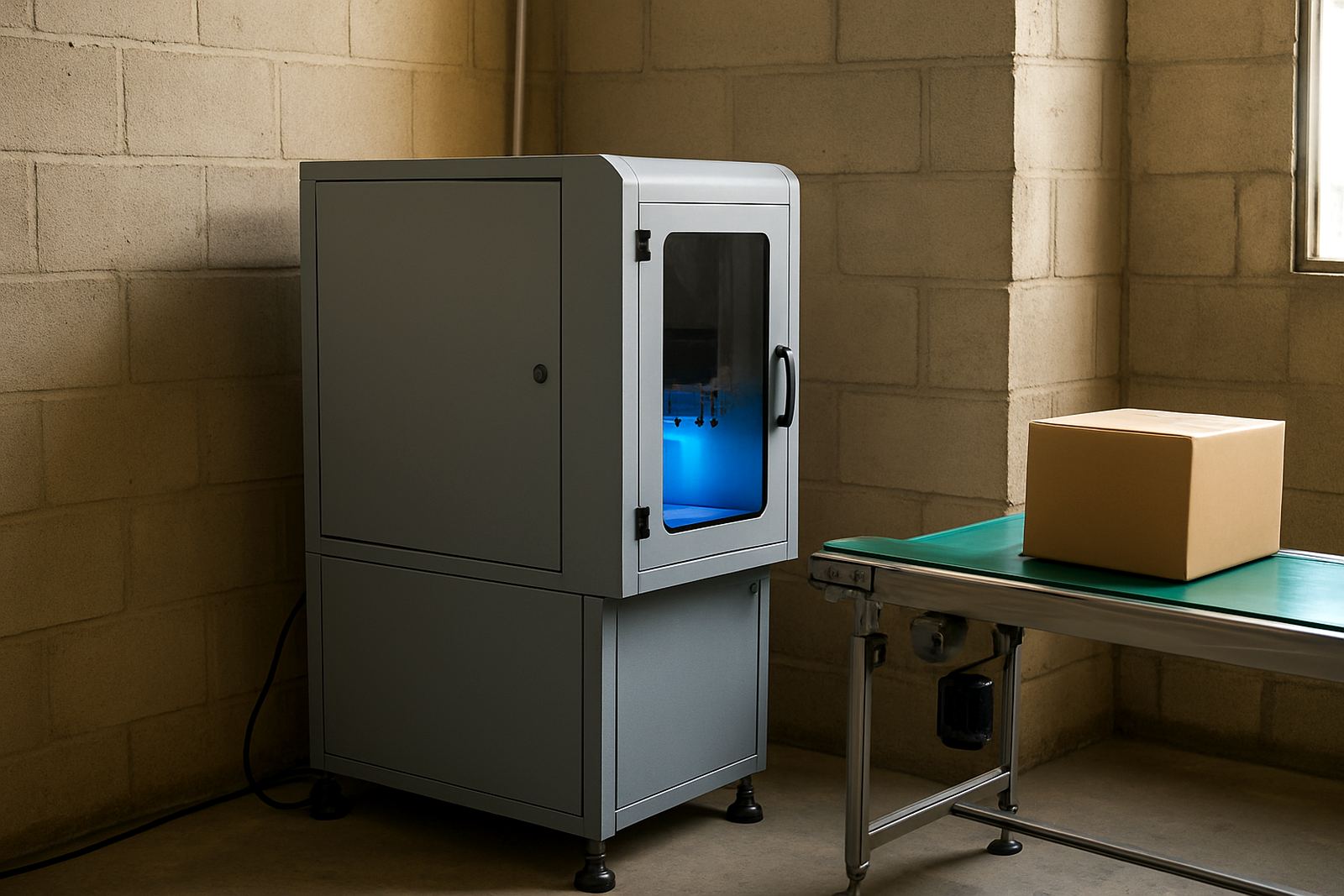
Installation is handled on site and can be planned for a standalone station or built into a production line. The unit needs a stable position, suitable electrical supply and proper access for operators, maintenance and part loading. In most cases the setup is straightforward, but the work area should be kept clean and dry, with enough room for fixtures, safety guarding and cable routing. If the line is sensitive to load-shedding, we can advise on surge protection, backup power planning and restart procedures so the equipment comes back safely after an outage.
Power is typically single-phase or three-phase depending on the chosen setup and the production layout. No gas supply is required for the marking process. If the unit is being integrated into conveyors, jigs or automated part handling, we can help with fixture design and software setup so the marking happens at the right point in the cycle. A tidy installation also makes training easier and cuts the chance of operator error.
Care, servicing and keeping marks consistent
This marking system needs routine care rather than heavy maintenance. The lens and work area should stay clean, and the surrounding equipment must be checked for dust, vibration and loose fixtures. In busy plants, a short daily check is usually enough to keep output steady. If the marker is used in a dusty fabrication area or near cutting and grinding work, cleaning intervals may need to be more frequent. Small issues can build up quietly, so it pays to keep an eye on mark quality and alignment.
- Clean optics and guards on a regular schedule
- Check fixture position and clamp pressure before runs
- Confirm software files and mark placement after product changes
- Book preventive maintenance to reduce breakdown calls
- Keep spares on hand for busy lines and urgent jobs
We support breakdown repairs, preventive maintenance, software setup and process optimisation from our Jet Park base. Nationwide support is available, and training can be arranged for operators, supervisors and maintenance staff. That helps keep the marking consistent across shifts, even when teams change.
What to check before you place an order
Before ordering a Panel ID Marker, it helps to confirm the material type, panel dimensions, mark area and expected daily volume. You should also know whether the mark must be visible to the eye, machine readable, or both. Some jobs need a light surface mark, while others need stronger contrast for scanning. If the part has a curve, texture or protective coating, that must be mentioned as well, since it can affect the final result.
It is also wise to check the line speed, the operator workflow and whether the panel will be marked before or after assembly. If the part changes from job to job, the software should allow quick file changes. We recommend sending samples for testing where possible, especially for new plastics or glass types. A small trial can save time later and help avoid rework.
- Material type: plastic, glass or coated surface
- Panel size and the exact marking zone
- Required text height, code format and logo detail
- Daily output and line speed
- Need for fixtures, integration or operator training
Support from Jet Park, Boksburg and beyond
UV Laser is based in Jet Park, Boksburg and serves clients across Ekurhuleni and further afield. Our team includes Riaan Pretorius, Naledi Mokoena, Refilwe Mahlangu, Anele Dlamini, Priya Naidoo and Thabo Khumalo, and the focus is on practical support from first sample through to installation and after-sales care. Site demos, sample testing and training are available nationwide, with service visits arranged where needed.
For businesses that need identification marks to stay readable and permanent, the Panel ID Marker gives a clean and dependable result. It is a sensible option for plastic and glass panels where the detail must hold up under use, cleaning and transport, and where traceability matters every day.
Key facts
| Marking method | UV laser marking, non-contact |
|---|---|
| Suitable materials | Glass and many plastics |
| Typical output | Text, serial numbers, batch codes, QR codes and logos |
| Power requirement | Single-phase or three-phase depending on setup |
| Gas requirement | None |
| Support options | Sample testing, installation, training, maintenance and repairs |