What the open-frame marker is used for
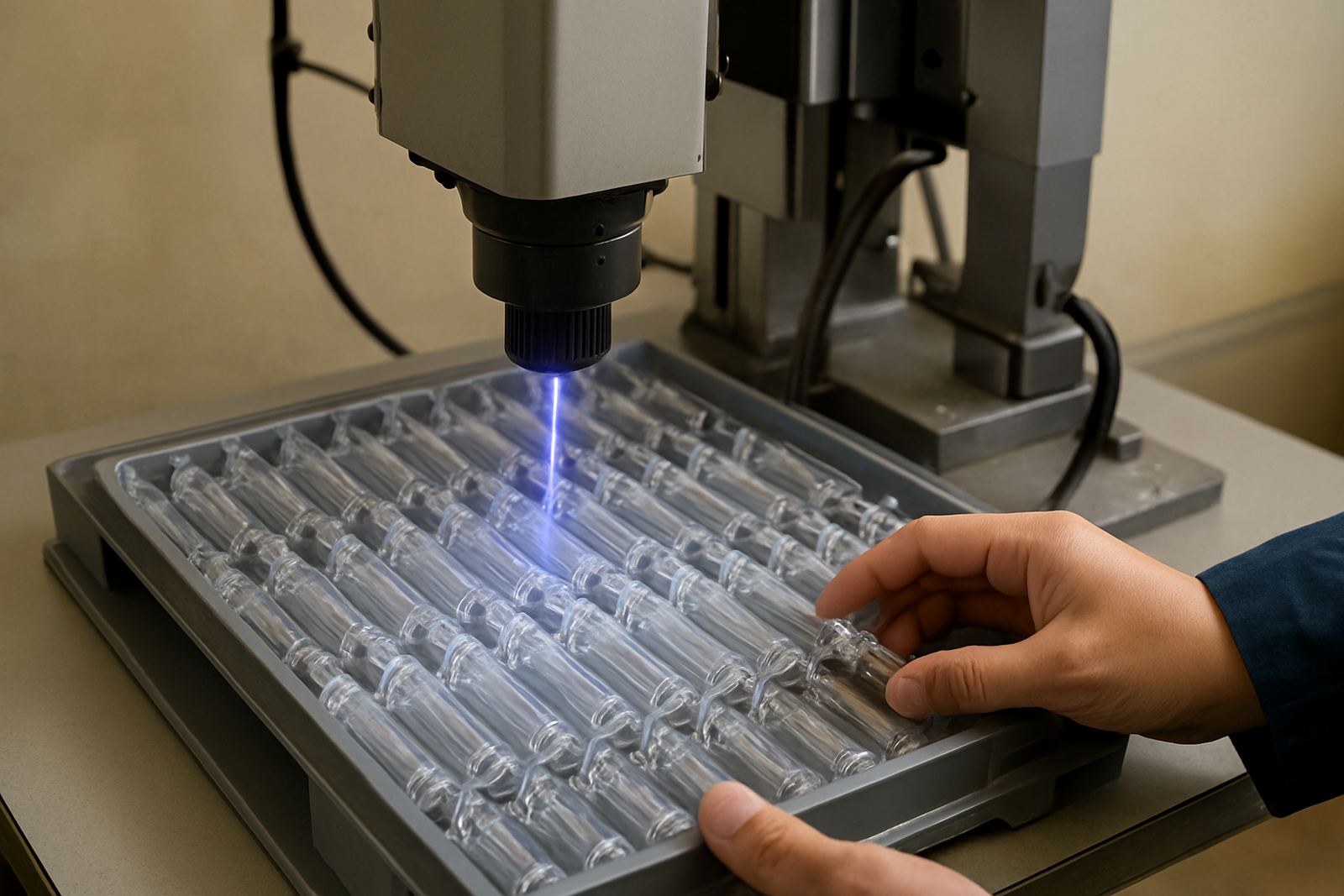
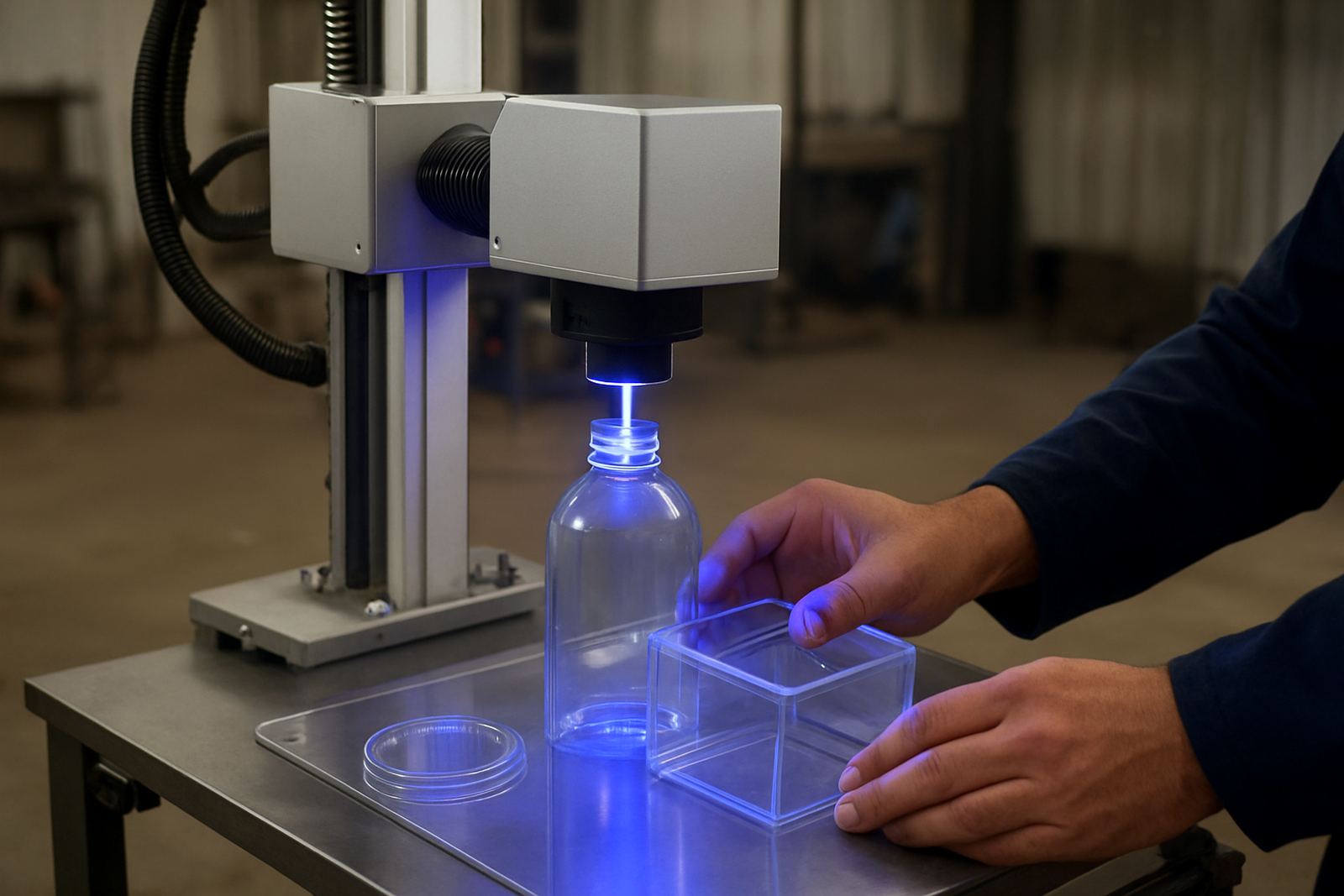
An open-frame marker is a UV laser marking station with a clear working area instead of a closed enclosure. That makes it practical when you need to load parts by hand, fit a custom fixture, or mark items that come in mixed sizes. It is commonly used on glass bottles, cosmetic containers, medical plastic parts, jars, caps, closures, moulded components and flat plastic panels.
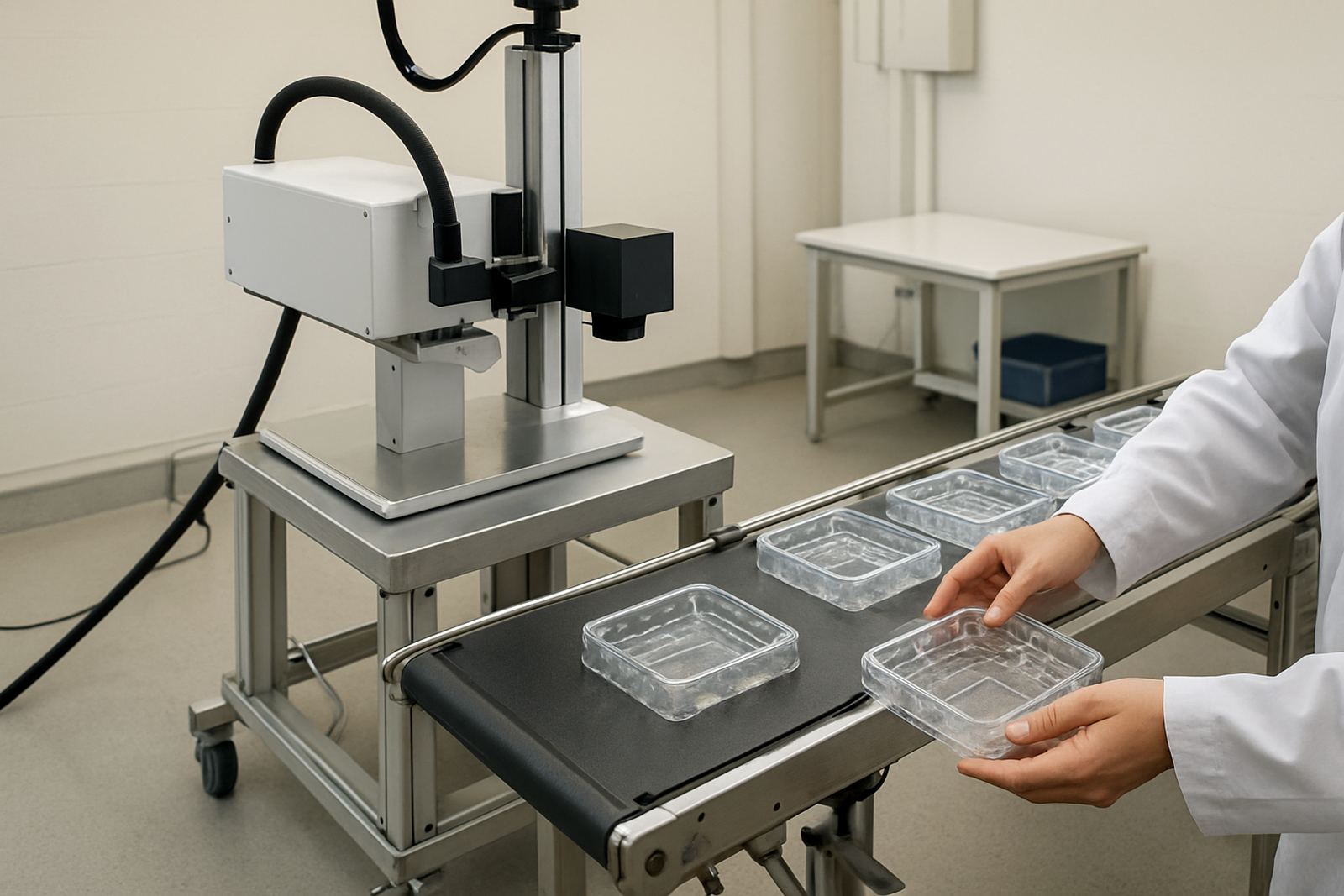
Because the frame is open, the setup can be matched to your product flow. You can use a simple manual loading table, a guided fixture, or an in-line arrangement where parts arrive on a conveyor and are marked one by one. The result is a permanent mark with fine detail, good contrast on the right material and repeatable placement once the tooling has been set correctly.
Sizes, travel and setup options
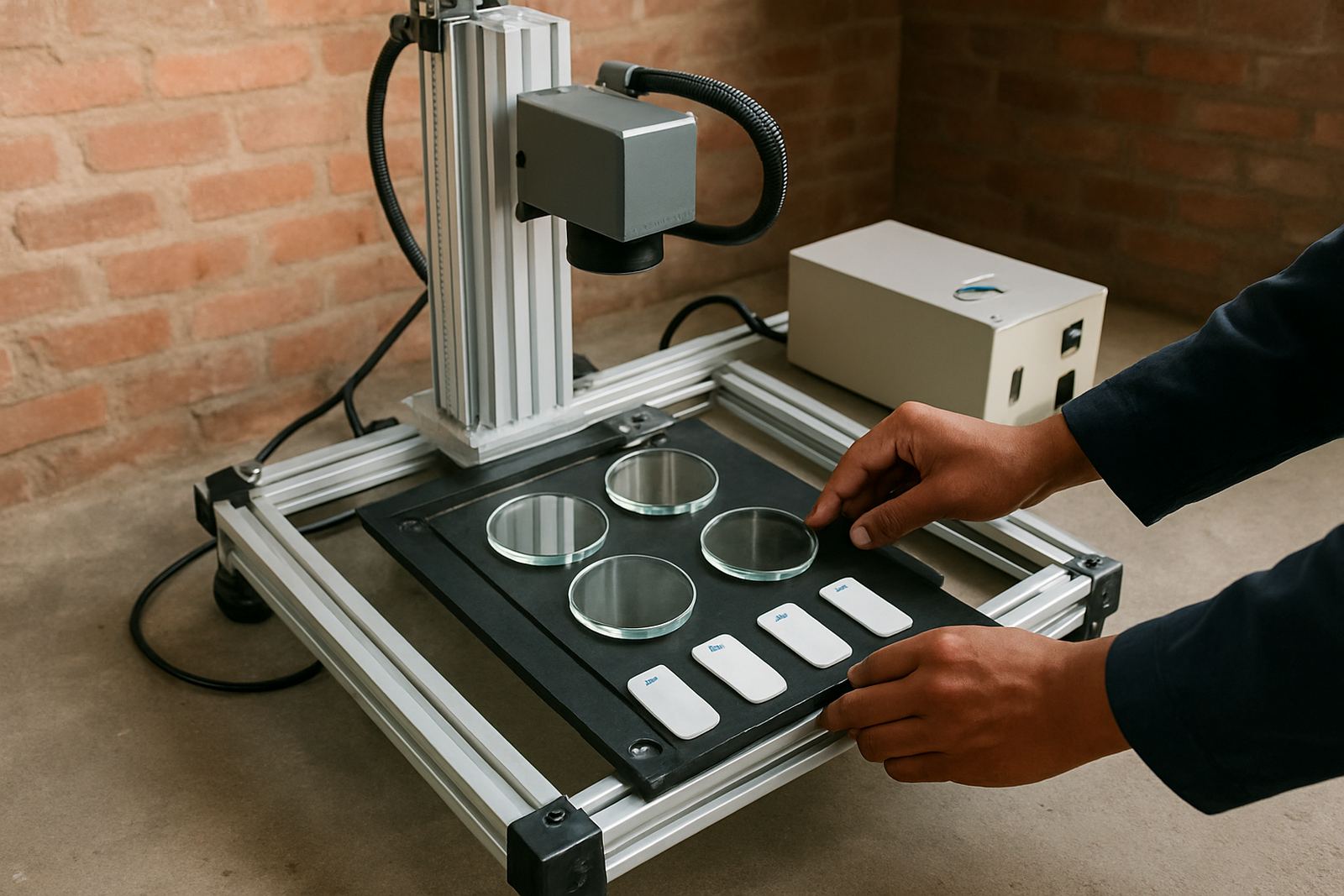
The open-frame format is selected according to the part size, marking area and how much adjustment you need on site. Most customers choose a machine around the part rather than forcing the part around the machine. That gives better control and makes changeovers easier when you have more than one SKU.
- Working area sized to suit small components or larger fixtures
- Adjustable head height for different container and part depths
- Manual or semi-automatic loading positions
- Custom fixture plates for repeat locations
- Optional side guards, interlocks and light shielding where required
For glass and plastics, the fixture matters as much as the laser itself. A well-made jig keeps the part steady, protects the surface from marks, and helps with repeatability when operators are changing between shifts. If your range includes bottles, lids and flat mouldings, we usually plan for quick release tooling and a clear access path from the front.
Where it suits best in South African production
This marker suits factories and workshops that need flexibility, especially where product variation is high or where the item is too awkward for a closed cabinet. It is a good fit for packaging rooms, plastics conversion plants, laboratories, contract packaging lines and small to medium production floors. In Ekurhuleni, many businesses use this type of station where floor space is tight and a shared machine has to handle different jobs during the day.
It also works well where markings must remain clear under handling, cleaning or exposure to moisture. On glass, the UV process can be used for branding, batch details or fine artwork. On plastics, it is often chosen for serials, logos, traceability codes and part identification. If the site runs through load-shedding, stable power planning is important so the machine can restart without losing position or corrupting the job file, not ideal when you have a busy shift.
- Suitable for manual load, jig load or simple line integration
- Useful where part sizes change from batch to batch
- Good for glass, clear plastics and technical mouldings
- Can be placed into a controlled marking bay or open production space
Installation, utilities and operator training
Installation starts with a site check, then the frame is positioned, levelled and aligned to the fixture or conveyor height. Our team handles demos, installs and operator training nationwide, including Germiston, Kempton Park, Benoni, Alberton, Midrand and Pretoria. For most sites the machine needs a clean, dry area with enough access for loading, service and safe operation.
The open-frame marker normally runs on standard electrical supply and does not need gas for marking. The exact power requirement depends on the configuration, cooling and control system, so we confirm that before delivery. For sites near the coast or in humid storage areas, we recommend keeping the machine in a dry room and avoiding condensation on optics and guides. If your plant has dust, fibre or packaging debris, a filtered housekeeping routine helps a lot.
- Site demo and sample testing before final order
- Installation and setup on your line or worktable
- Operator training for day-to-day use and changeovers
- Software setup and job parameter guidance
- Process optimisation for speed, clarity and repeatability
Care, servicing and long-term running
Routine care is straightforward if the machine is kept clean and the work area is controlled. Wipe down exposed surfaces, keep the lens area free of dust, check cable routing and inspect any fixture points that take daily loading pressure. On plastic parts, static and fine dust can build up, so regular cleaning matters more than many users expect.
Preventive maintenance is worth planning because it reduces downtime and keeps the mark consistent across shifts. Our service team can assist with breakdown repairs, software setup, spare parts supply and periodic checks. In busy factories, we often see that a simple monthly inspection catches alignment drift, loose mounts or operator wear before it becomes a stoppage. That saves a lot of grief when orders are due out by Friday.
- Keep optics and guards clean and dry
- Check fixture wear and location stops regularly
- Back up job files and parameter settings
- Book preventive maintenance before peak periods
- Use trained operators for setup and handover between shifts
What to confirm before you place an order
When you order an open-frame marker, start with the part sample and not just the drawing. The material type, surface finish, curvature, wall thickness and target mark size all affect the result. It helps to know whether you need a logo, serial number, batch code or detailed artwork, because each one has different contrast and cycle time needs.
Please also confirm the loading method, the space available on the floor, any safety requirements from your site, and whether the machine must link into existing controls or a line. If you are operating in a municipality or shared industrial park, check the noise, access and layout rules for your bay as well. For quick quoting, send your sample details and production rate through the enquiry form on our contact page. We can then advise on the right frame size, fixture design and trial setup.
- Material: glass, plastic, coated or uncoated
- Part size, shape and marking position
- Required mark content and font size
- Daily output and changeover frequency
- Power availability and site layout
Key facts
| Machine type | Open-frame UV laser marking station |
|---|---|
| Typical materials | Glass, clear plastics and selected technical plastics |
| Marking method | Permanent non-contact UV laser marking |
| Loading style | Manual, jig-loaded or line-assisted |
| Power requirement | Standard electrical supply, confirmed to site configuration |
| Support area | Jet Park, Boksburg with nationwide demos, installs and training |