Purpose-built marking for sterile-style pack components
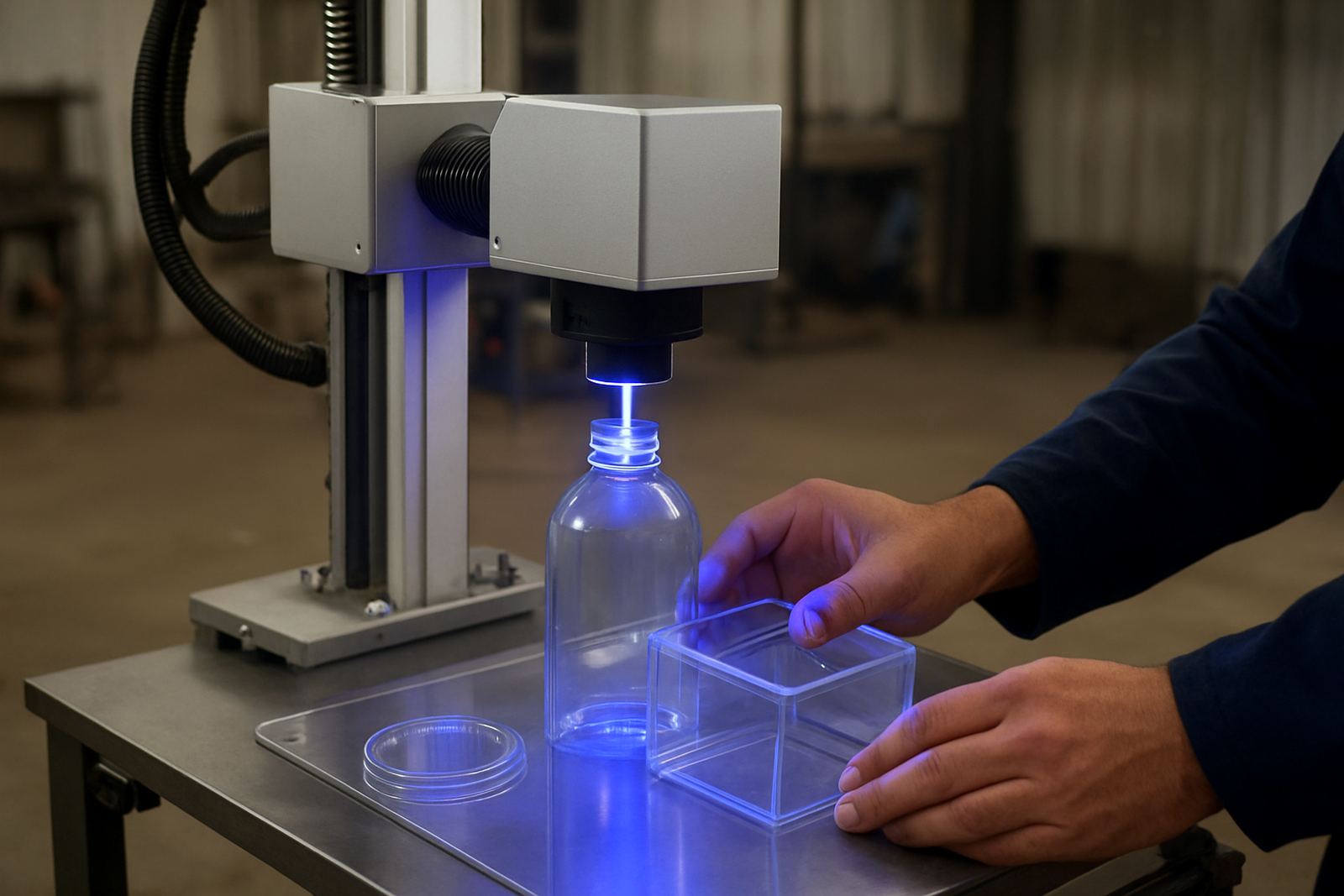
The Medical Pack Marker is set up for direct marking on plastic packaging parts used around medical, laboratory and clean handling processes. It is commonly used where the mark must stay legible through storage, transport and routine handling, but the surface must not be damaged by labels, inks or hot printing methods.
Because UV laser marking works with very fine energy control, it is well suited to thin plastics and moulded packaging items where a neat, low-contrast or high-contrast mark is required depending on the material. The result is permanent, clean and repeatable, which helps with traceability and in-house identification.
- Permanent marking on suitable plastic packaging components
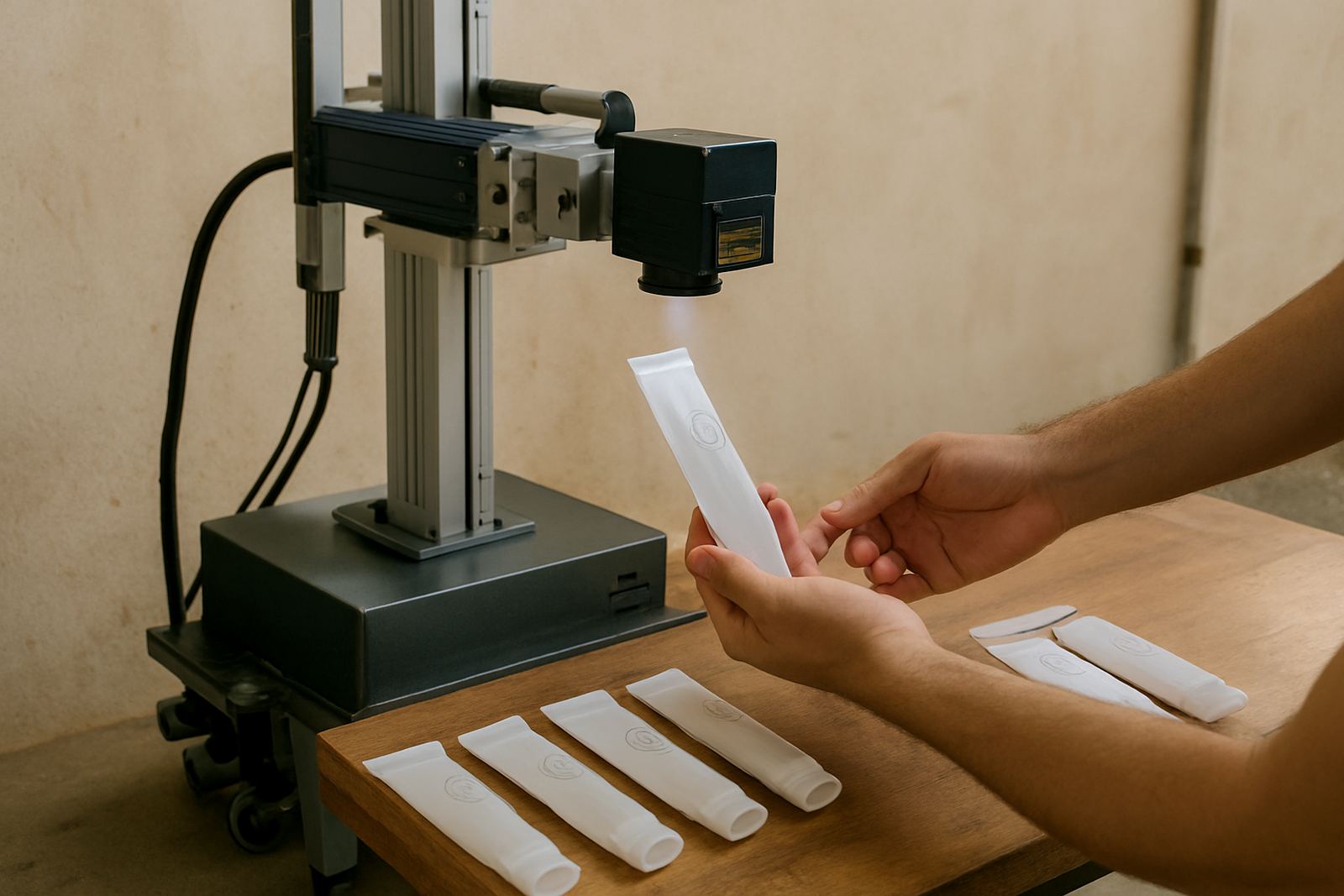
- Fine text, batch codes, expiry dates and logos
- Low heat effect for sensitive materials
- Useful for clean production areas where labels can fail
Typical uses in medical and clean packaging lines
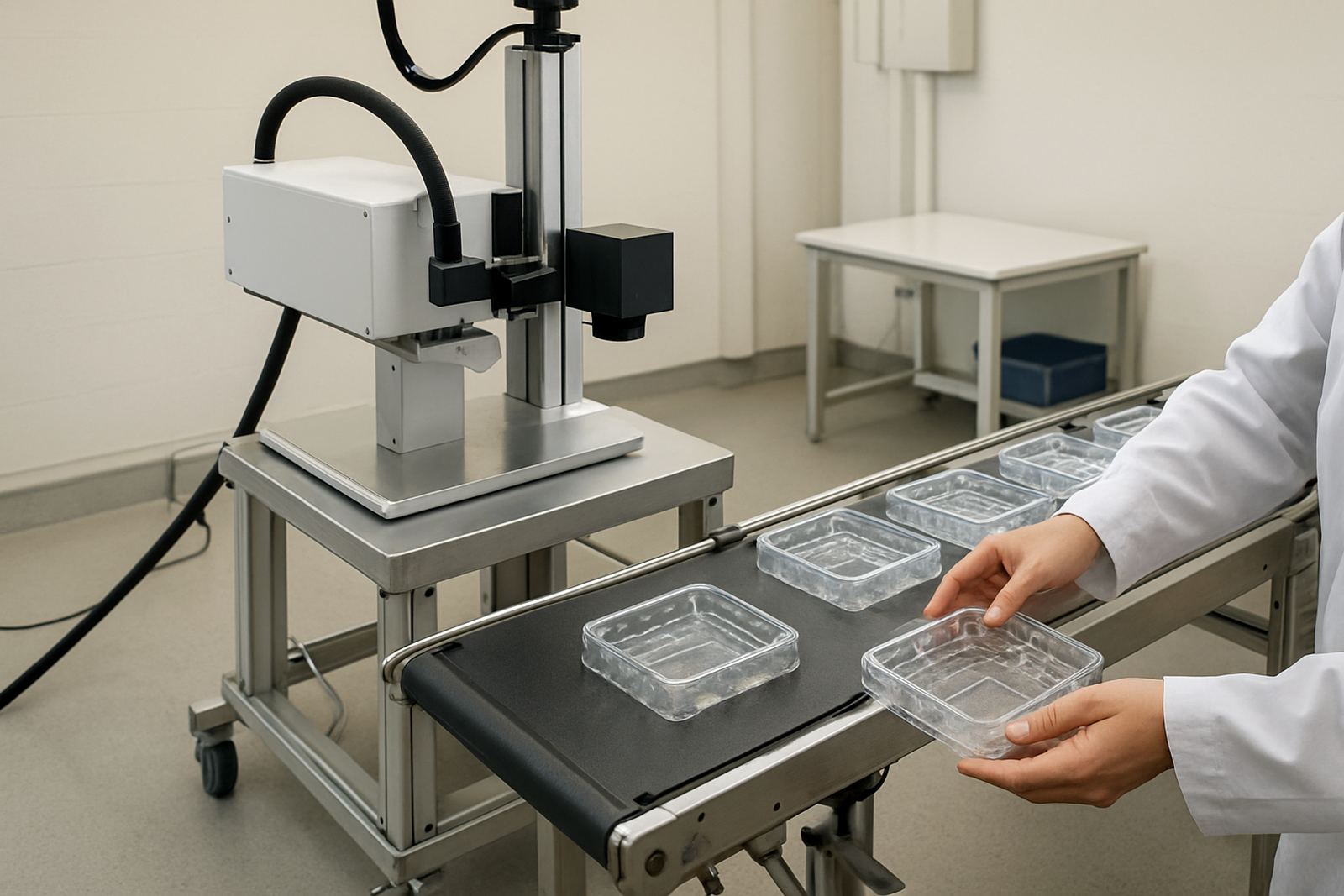
This unit suits manufacturers and converters working with sterile-style plastic packs, trays, lids, closures and other packaging components used in medical supply chains. It is often chosen where the mark needs to remain clear after sealing, handling or exposure to moisture in storage. In coastal areas like Durban or Gqeberha, the mark still holds up well because it is part of the material, not a surface sticker.
In Ekurhuleni and surrounding manufacturing nodes, the system is used for short runs as well as repeat production. It can be added to existing lines for coding, part marking or product identification, and it is also useful in sample rooms and QA testing areas. If your operation has load-shedding pressures, the unit can be planned into a controlled power setup so marking does not become a bottleneck.
- Medical packaging and sterile-style plastic components
- Batch marking and traceability codes
- Product branding on formed plastics
- Sample testing before full line rollout
Marking sizes, formats and practical options
The system is supplied in configurations that suit small components and larger marking fields, depending on the item size and the level of detail required. It can be specified for fine print, serial numbers, barcodes, 2D codes and small logos. For many clients, the question is not only what the machine can mark, but how much of the part needs to stay visible and readable after production. That is where the right lens and field size matter.
Where space is tight, a smaller marking field gives sharper detail. Where a wider area is needed, the setup can be matched to the job, though there is always a trade-off between field size and marking density. Refilwe and the applications team usually confirm this during sample testing, because plastic grade, colour and surface finish can change the final result. A test run is the best way to check if you need a lighter pass or a stronger contrast.
- Small-format marking for tight pack areas
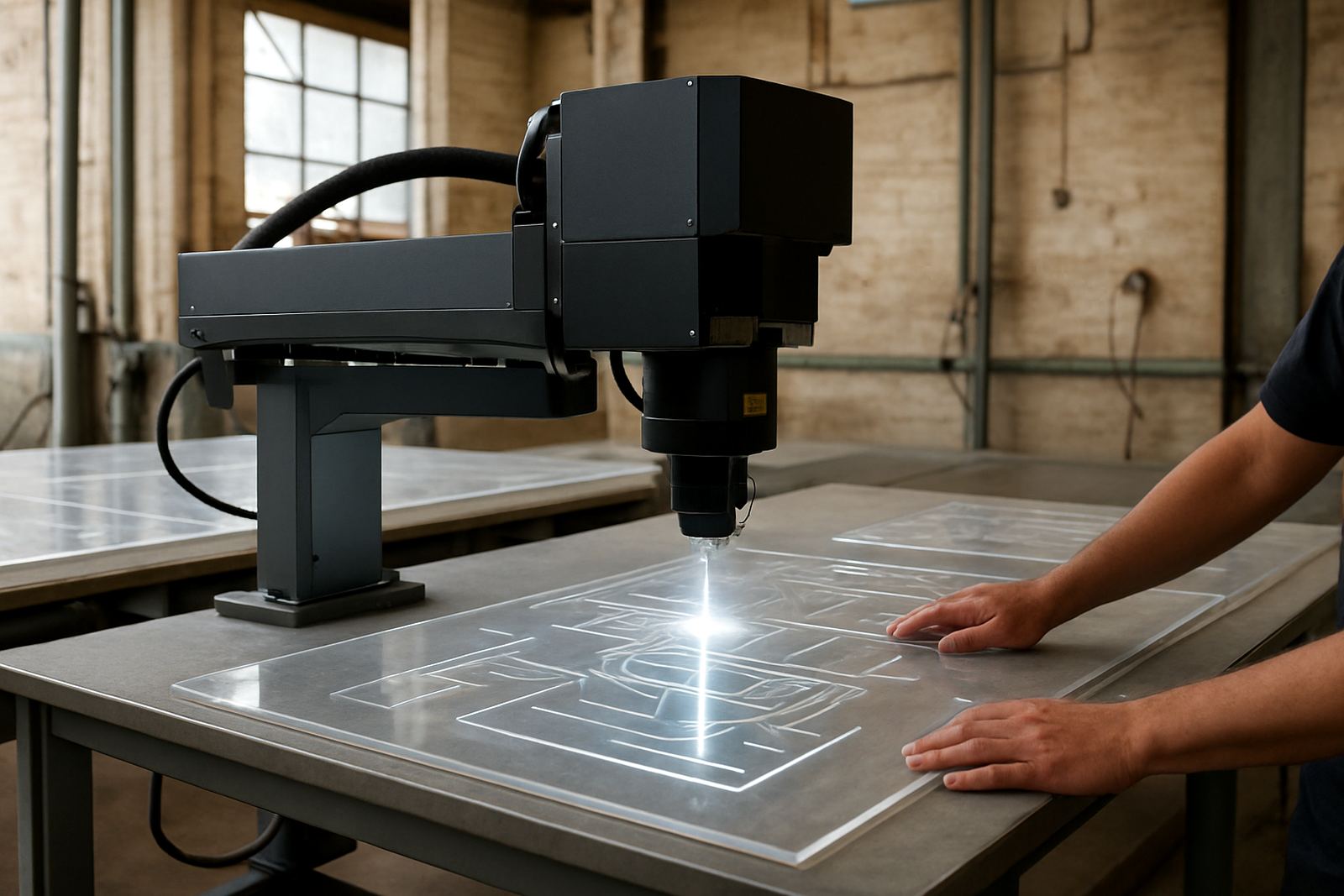
- Medium and wider fields for larger panels or lids
- Text, numbers, codes and logos
- Fixture options for repeatable positioning
Installation, power and site conditions
Installation is handled nationwide, with site visits arranged from Jet Park, Boksburg across Gauteng and beyond. The unit is typically installed on a stable bench or integrated into a production line, depending on throughput and handling needs. For a clean result, the machine should be placed where vibration is low and where operators can load parts safely and consistently.
Power requirements are kept practical for factory use, and the final setup is confirmed with the site conditions in mind. In many South African plants, stable power protection is worth planning for, especially where load-shedding or voltage swings may interrupt production. If the machine is being added to a line, we also look at guarding, conveyor height, part feed direction and operator access so the process feels natural.
- Bench or line-mounted installation
- Power planning for South African site conditions
- Protection from dust and humidity where needed
- Nationwide installs from Jet Park, Boksburg
Care, servicing and day-to-day upkeep
The Medical Pack Marker is built for regular industrial use, but like any precision marking system it needs basic care. Keep the marking area clean, avoid unnecessary dust build-up and make sure parts are loaded in the same position every time. If the plastic carries mould release, oil or finger marks, the mark quality can change, so handling discipline matters more than people think.
UV Laser offers preventive maintenance, breakdown repairs, software setup and spare support to keep the unit working as expected. Service scheduling is especially useful in busy plants where training changes or shift handovers can lead to small setting drift. Anele coordinates training, while the technical team can assist with process optimisation and fixture changes when the product mix shifts.
- Routine cleaning of the work area and optics housing
- Check fixture position and part alignment
- Review contrast and legibility after material changes
- Schedule maintenance before peak production periods
What to confirm before you order
Before ordering, it helps to know the exact plastic type, part size, mark area and whether the output must be readable by scanner or only by eye. The team also checks whether the item is flat, curved or slightly textured, because this affects focus and fixture design. If you already have a line drawing or sample part, bring it in for a test. If not, send clear measurements and photos and the applications team will advise on the best route.
Some projects need just the machine, while others need a full setup with fixtures, software setup, line integration and operator training. We also look at output speed, start-stop frequency and whether a backup process is needed for maintenance days. For plants in Alberton, Benoni, Kempton Park or Pretoria, this planning step can save a lot of time once production starts.
- Plastic type and finish
- Mark size, position and required readability
- Throughput and line speed
- Need for fixtures, integration or training
Key facts
| Marking method | UV laser direct marking |
|---|---|
| Suitable materials | Sterile-style plastic packaging components and related plastics |
| Common outputs | Text, batch codes, serial numbers, 2D codes and logos |
| Installation options | Bench-mounted or line-integrated |
| Support area | Nationwide demos, installs, training and servicing |
| Base location | Jet Park, Boksburg, Ekurhuleni |