Transportable marking unit for real production checks
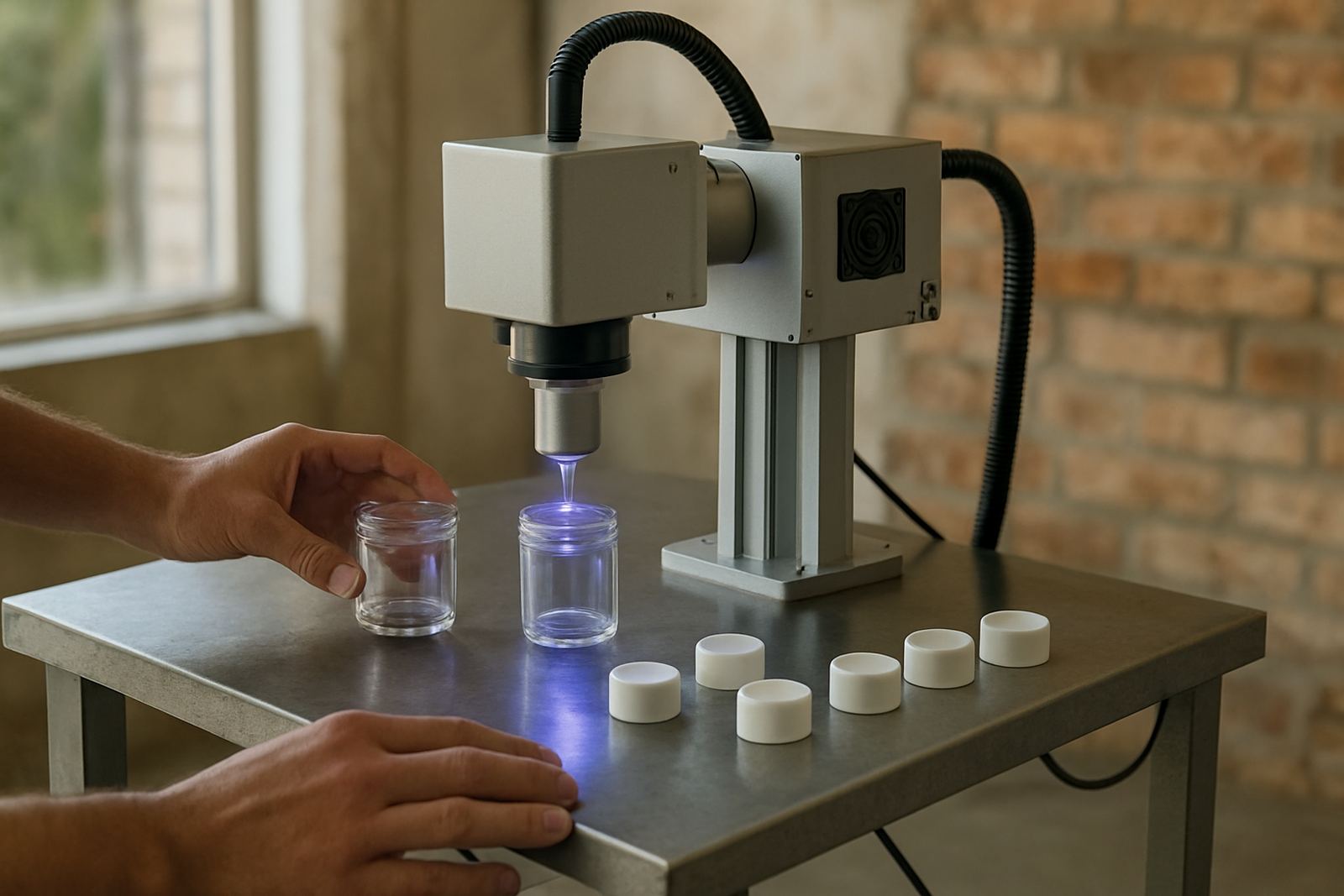
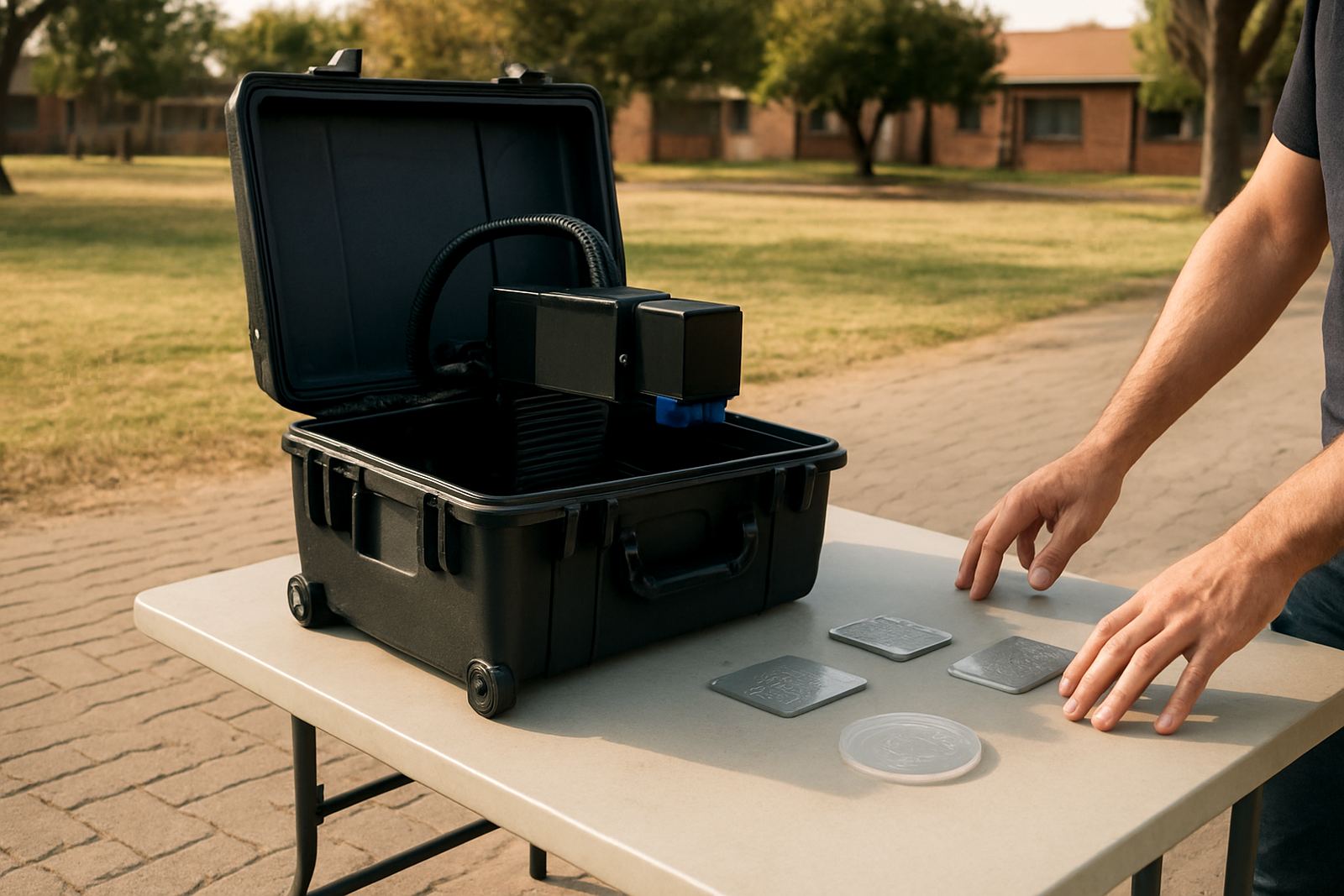
The Mobile Demo Marker is used when a buyer, production manager or technical team wants to see mark quality on actual parts before ordering a full line. It is set up for field demonstrations, short trial runs and practical checks on finished products, so you can confirm adhesion, contrast, cycle time and handling before committing to a larger installation.
This unit suits companies in Ekurhuleni, the East Rand and further afield who need direct testing on site rather than sending samples away. It is especially useful where product shapes change often, or where branding and traceability need to be confirmed on a specific bottle, jar, cap, tube or moulded component.
- Transportable frame for demonstrations and sample approval
- Suitable for glass and many plastic types
- Permanent marking for codes, logos, batch data and fine detail
- Useful for trials at factories, packaging plants and contract packers
Typical sizes, options and marking envelope
The Mobile Demo Marker is normally supplied as a compact unit that can be moved into a warehouse aisle, lab area or production bay without major disruption. Configuration depends on the part size, the marking field required and whether the customer needs a manual presentation setup or a more guided test station.
Common options include a fixed marking head with a movable work area, a simple safety enclosure, adjustable part supports and a choice of controller layout. For glass containers and flat plastic components, the marking field is selected to suit the artwork size and the spacing between parts. If you need to test several product formats, the fixture can be adjusted for different diameters and heights, which helps when a line runs mixed packs.
- Marking field options for small to medium parts
- Manual load or semi-guided trial setup
- Adjustable fixture height and side guides
- Tabletop or stand-mounted arrangement depending on site space
Where it works best in local operations
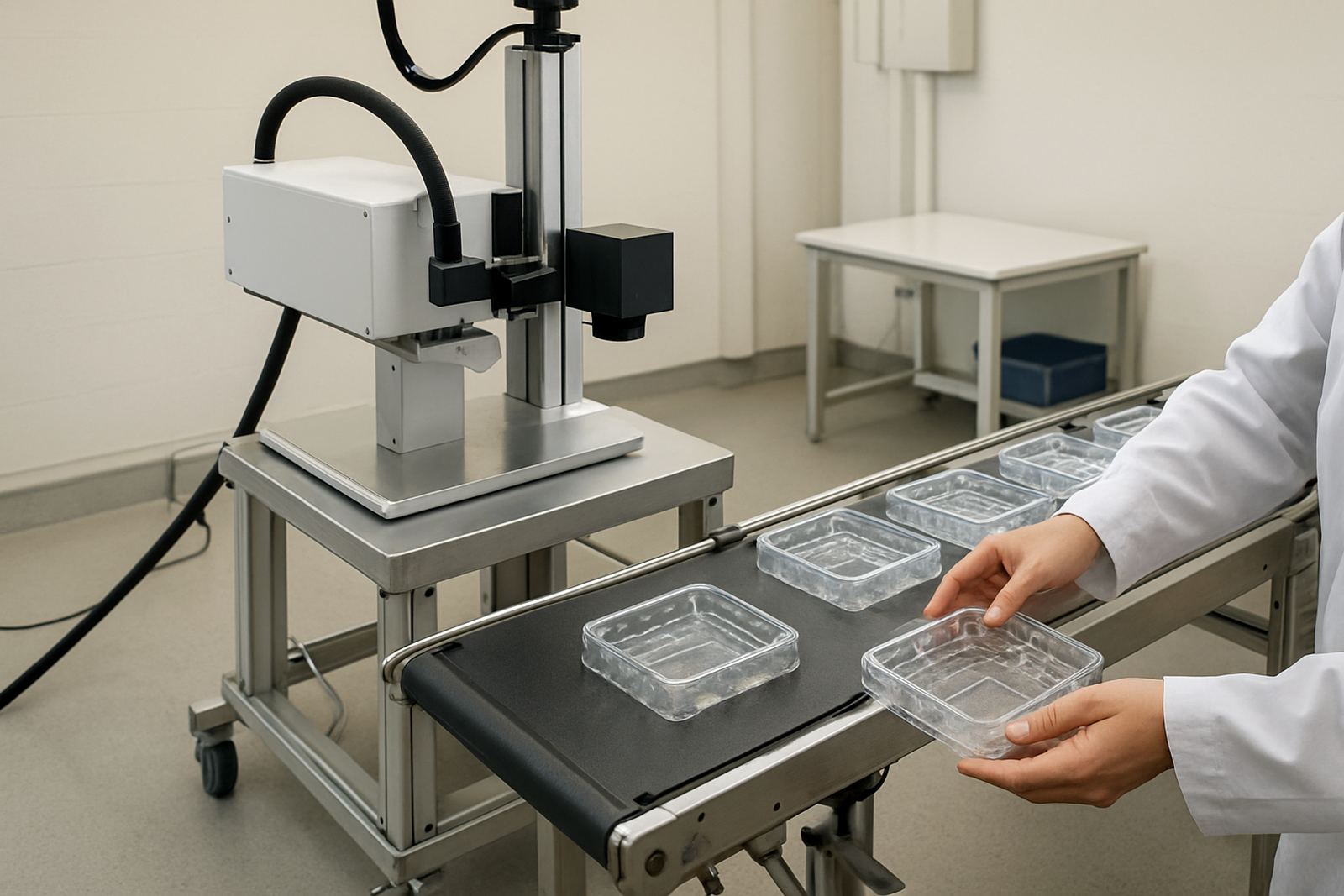
This system is a good fit for beverage plants, cosmetics fillers, pharmaceutical packers, food packaging sites and plastics processors that work with clear or coloured containers. It also helps when a customer needs to compare the look of a mark on different surface finishes, such as gloss, frosted glass or matte plastic.
In Gauteng and coastal areas alike, the main value is the same: you can test the process before a line stops for a full install. That matters when load-shedding windows are tight, when factory access is limited, or when municipal rules control after-hours work and contractor entry. The mobile format keeps the test practical and lets the team see the result under real lighting and handling conditions.
- Best for branding, variable data and compliance marking
- Useful for samples that need customer sign-off
- Appropriate for short-run jobs and product changeovers
- Handy where factory space is limited or access is controlled
Installation, power and site requirements
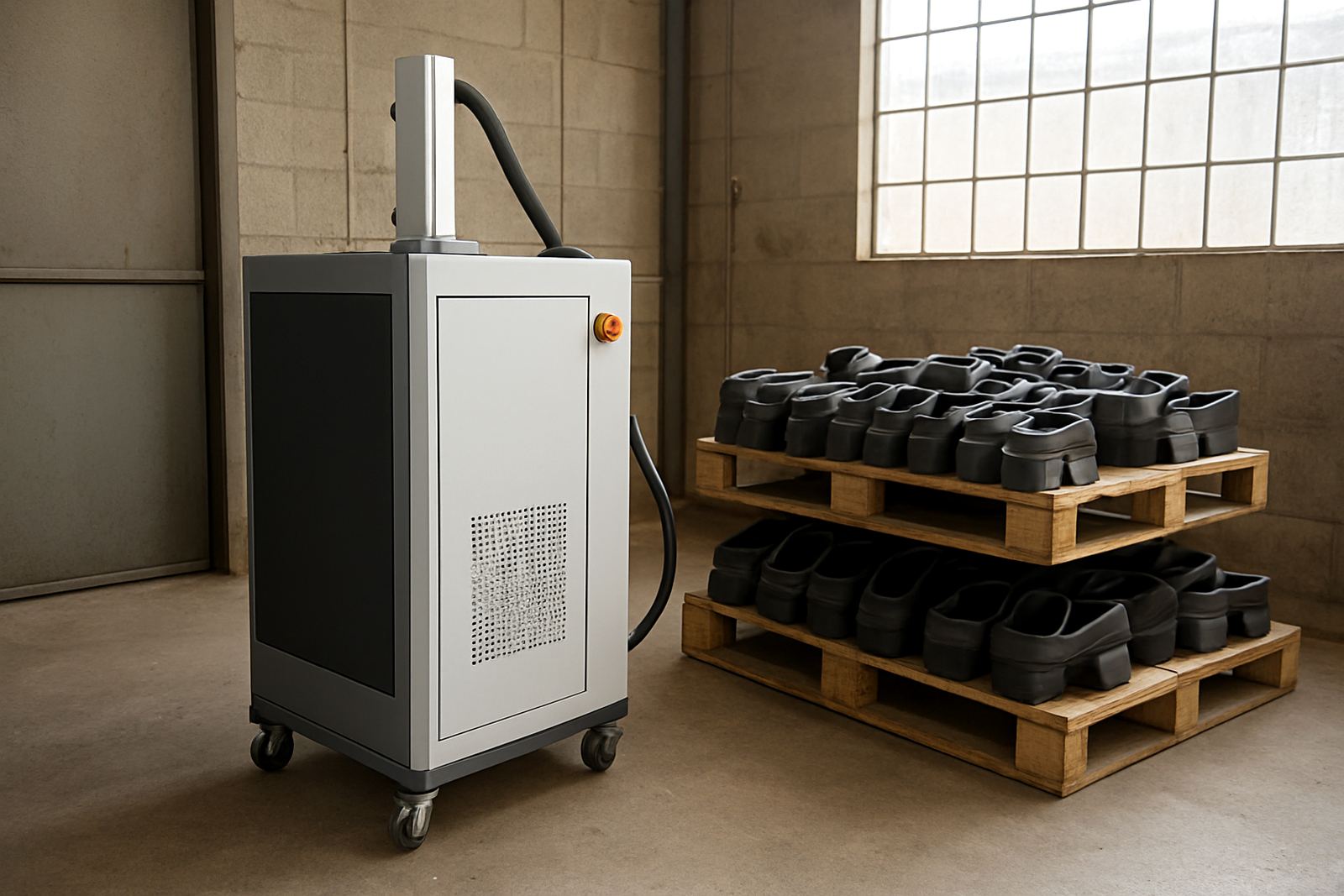
Installation is straightforward, but the unit still needs a sensible work area, clean power and stable placement. A level floor helps with repeatable results, and a protected space is preferred when the line is dusty or subject to vibration from nearby equipment. The exact footprint depends on the chosen configuration, though most demo setups are compact enough for a normal production bay or training room.
Power requirements depend on the final specification, but the system is typically supplied for standard single-phase factory power unless a different site arrangement is needed. Because many South African sites experience voltage dips and load-shedding, we recommend discussing backup supply, surge protection and where the machine will be parked when not in use. No gas supply is usually required for the marking process, which keeps the setup simple and reduces site complexity.
- Level floor and clear access around the unit
- Clean electrical supply with surge protection recommended
- Single-phase or site-specific power arrangement as specified
- No routine gas connection needed for standard operation
Care, servicing and day to day upkeep
For reliable operation, keep the optics area clean and the work surface free of dust, label scraps and packaging residue. Glass particles and plastic fines can build up around fixtures, so a short wipe-down at the end of each session helps protect mark quality. In humid coastal conditions, it is also wise to store the unit in a dry room and avoid leaving it exposed near open loading bays.
Preventive maintenance should include checks on alignment, cable condition, safety interlocks and software settings. If the marker is used for regular trials, a service schedule helps reduce downtime and keeps the demo results consistent from one site visit to the next. A quick inspection after transport is important too, since moving the unit between Jet Park, Boksburg, Germiston or further sites can loosen fittings over time.
- Clean lenses and work area regularly
- Check cables, connectors and mounting points after transport
- Store in a dry, dust controlled space
- Book preventive maintenance if the unit is used often
What to confirm before you place an order
Before ordering, it helps to confirm the part material, surface finish, mark size, required text height and whether the output must include logos, batch numbers or 2D data. You should also check the sample pieces themselves, because the same settings may behave differently on clear glass, tinted glass and various plastics. If the product has curved sides or uneven walls, fixture design becomes especially important.
It is also worth confirming the site location, access route, doorway widths and any safety or supervision rules for demos and training. Our team can assist with sample testing, fixture design and process checks before delivery, so the machine arrives with the correct setup for your application. That saves time and avoids unnecessary changes during commissioning, which is always helpful when a line is already busy.
- Part material, finish and exact marking area
- Sample artwork, code format and character height
- Site access, power availability and floor space
- Need for training, integration or future line expansion
Key facts
| System type | Transportable UV laser marking unit for demos and trial runs |
|---|---|
| Primary materials | Glass and many plastics |
| Typical applications | Branding, labelling, batch data, logos and fine detail marking |
| Power | Site-specific electrical supply, usually standard factory single-phase |
| Setup | Compact movable frame with optional fixture support |
| Support coverage | Nationwide demos, installs, training and after-sales service |