Built for in-line marking on glass and plastics
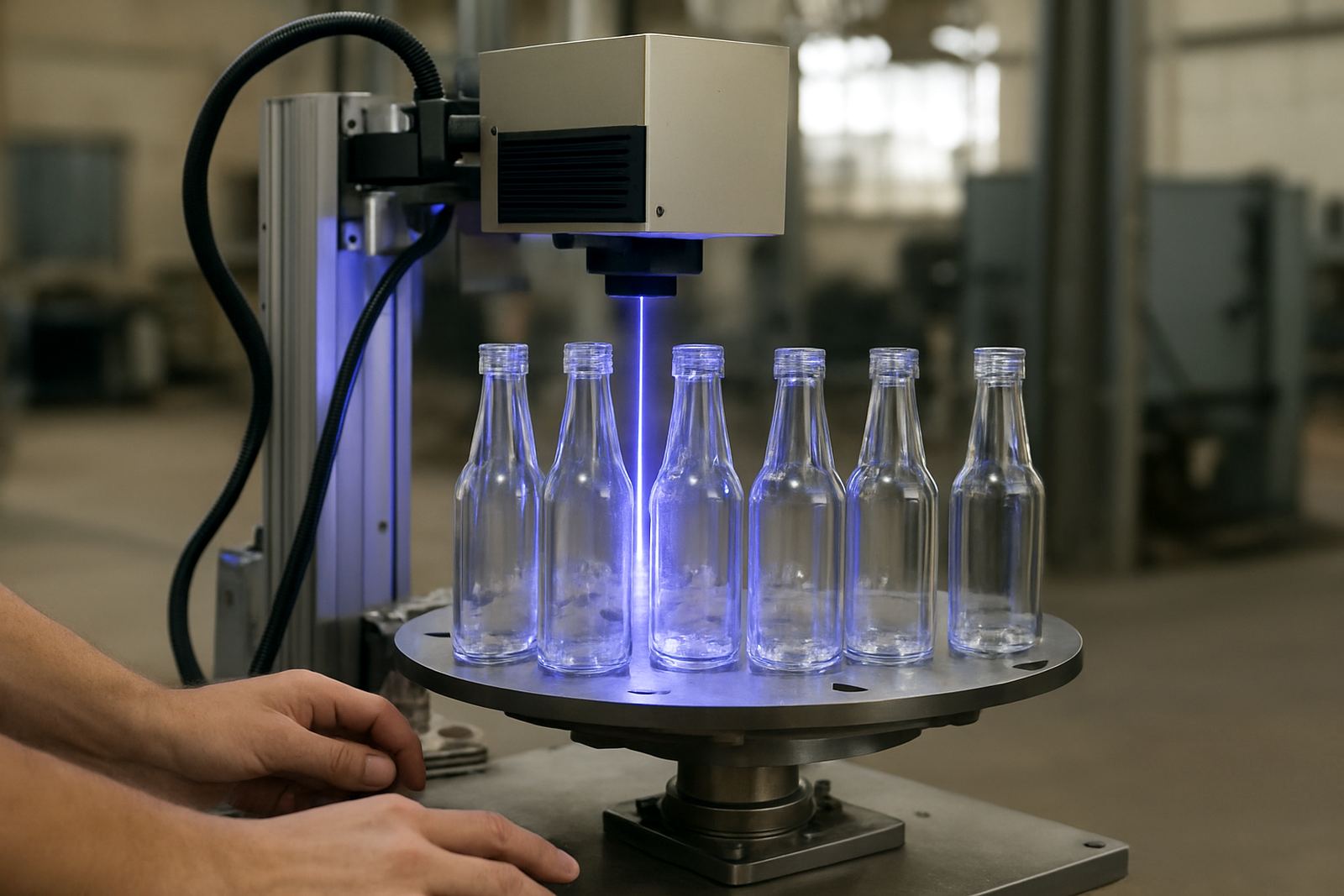
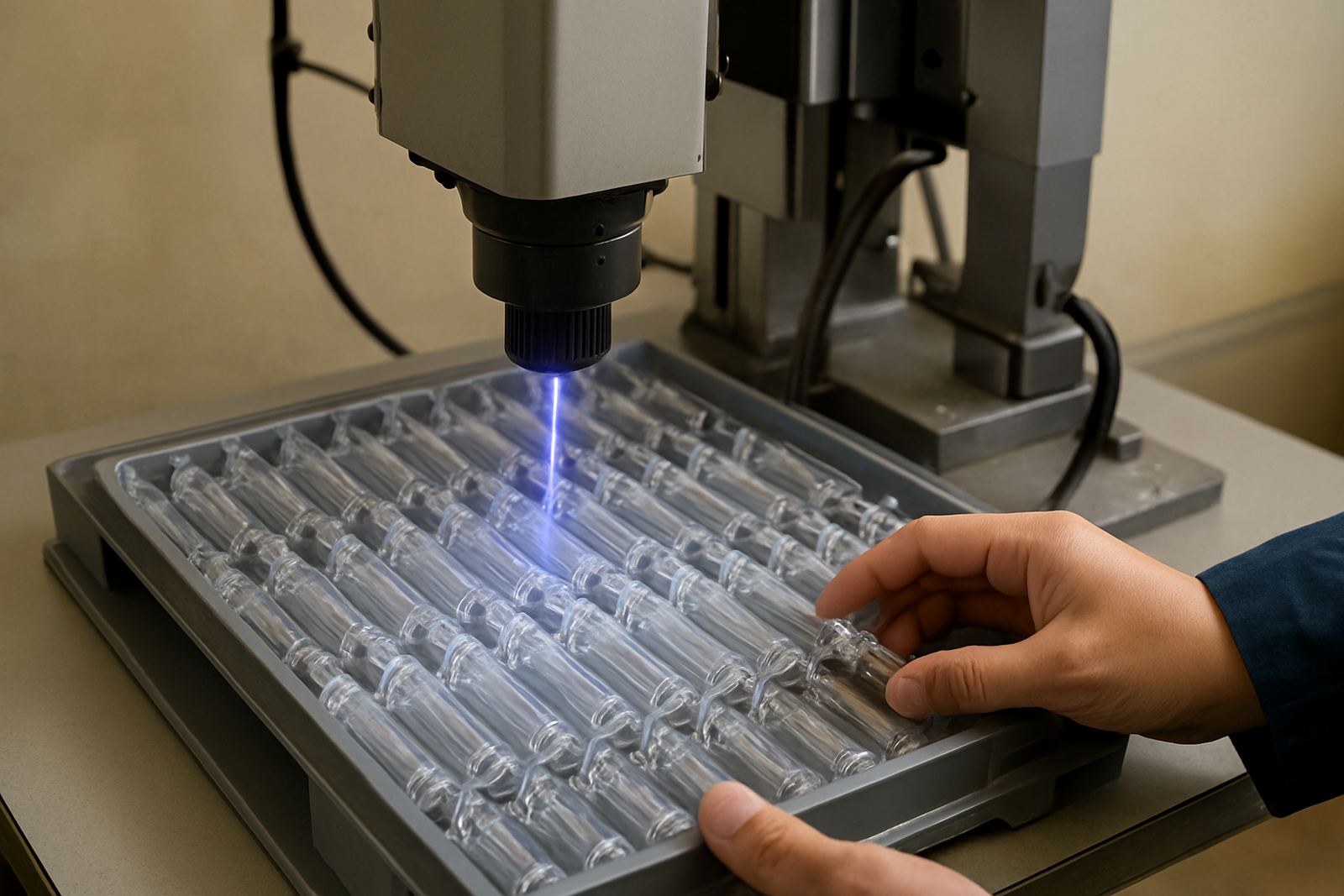
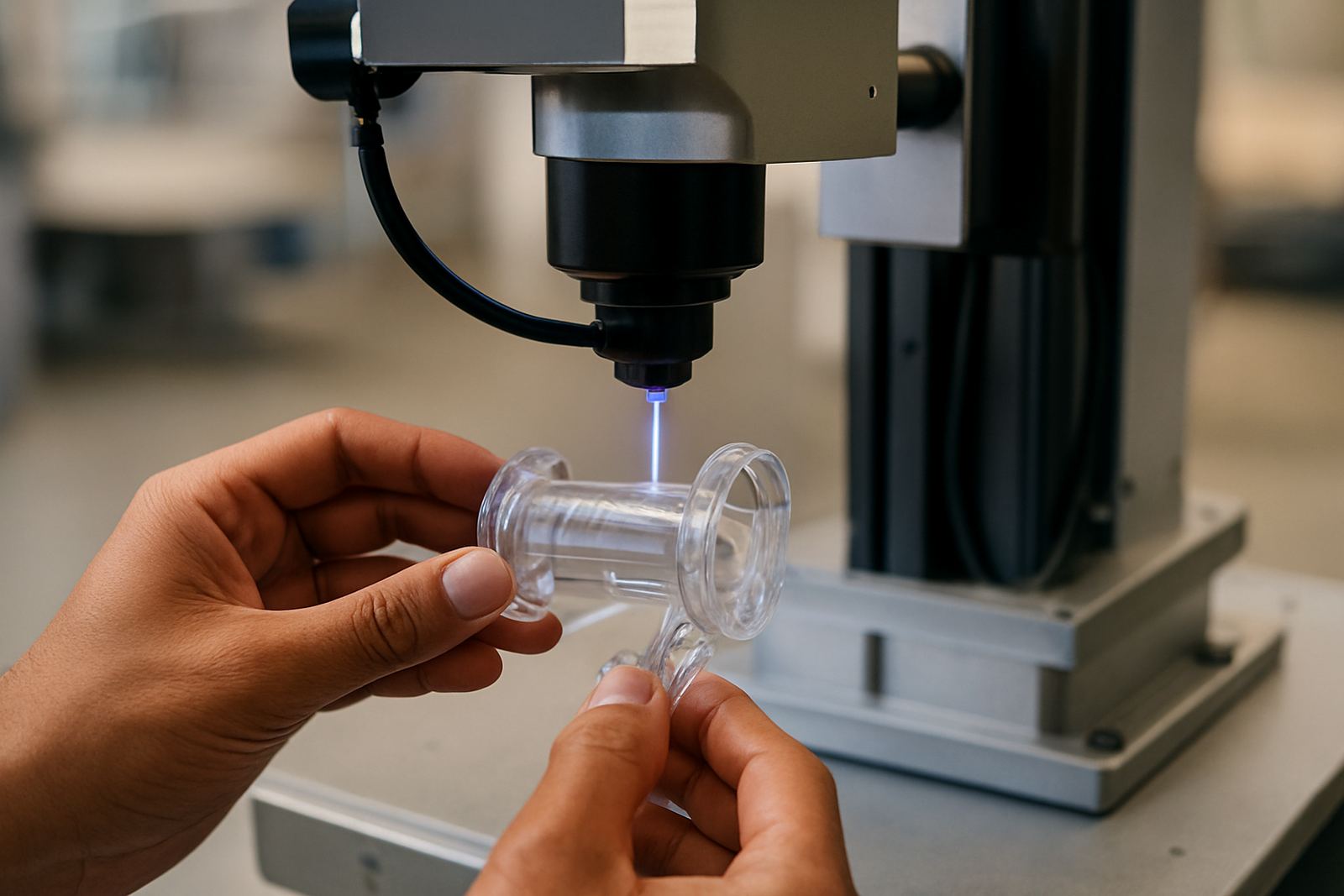
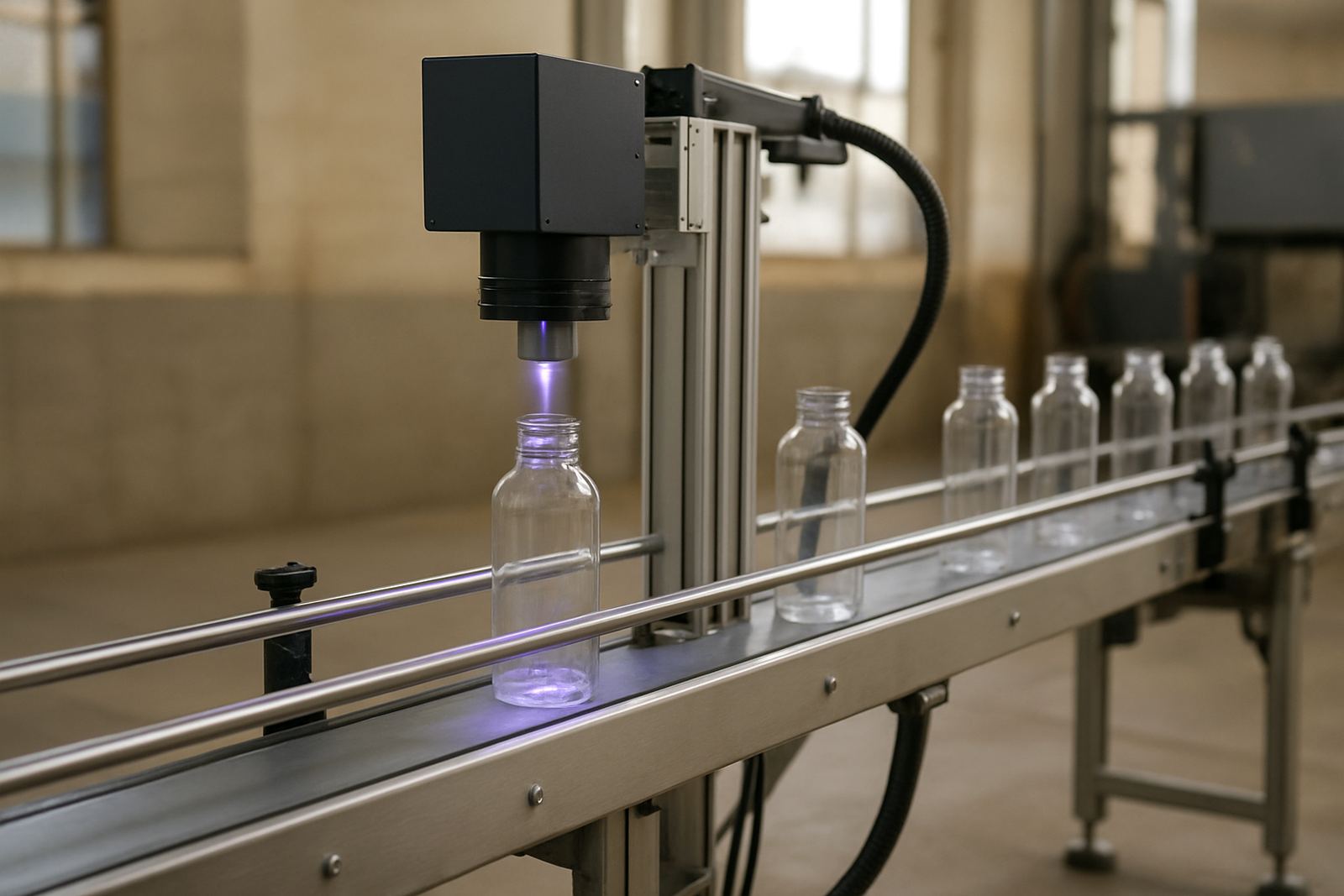
An inline UV marker is used where items move through a line and need to be marked without stopping production. It is common on bottles, jars, cosmetic containers, medical components, electrical housings and clear plastic parts. The UV process is well suited to materials that need fine detail, small codes, logo marks or serials without heavy heat input.
This unit is designed for clean, controlled marking on a moving line. It can be set up for batch traceability, brand identification, regulatory information and part coding. Because the mark is made with a UV source, the result is crisp and permanent, with less risk of surface distortion than some higher-heat methods. On clear plastics and glass the contrast and position control are especially useful.
Model sizes and configuration choices
The Inline UV Marker is supplied in configurations that suit different line speeds, part sizes and marking areas. The main decision is the working envelope and how the unit will be mounted beside or above the conveyor. The marking head, control cabinet and operator interface can be arranged to suit the space available at your plant in Jet Park, Boksburg, Germiston or further afield.
Typical options include different field sizes, beam delivery layouts and fixture arrangements. For plants with limited floor space, a compact frame may be the better choice. For wider products or multiple-up marking, a larger field size can reduce repositioning and keep the line moving. If your parts are irregular or unstable, custom fixture design helps keep each item in the correct position for accurate marking.
- Compact and standard marking field options
- Fixed or adjustable mounting layouts
- Custom fixtures for bottles, caps, lids and moulded parts
- Standalone control or line-linked operation
- Options for batch code, date code and artwork marking
Where the unit suits best
This product suits operations that need permanent marking on a consistent, repeatable basis. It is often used in packaging, plastics conversion, cosmetics, food-related containers, laboratories, electronics and general industrial production. For businesses in Ekurhuleni, Midrand and Pretoria, it is a practical choice where a line already uses conveyors, sensors or stopping points for product handling.
It is especially useful where marks must remain legible after handling, washing, shelf storage or transport. Glass and plastics present different marking challenges, so sample testing is recommended before a final order. The same setup that works well on one bottle type may need small changes for another, particularly with curved surfaces, tinted materials or glossy finishes. That is why site demos and sample testing are worth arranging before fitting the unit into full production.
Installation, power and line integration
Installation normally begins with a site inspection and a review of the conveyor height, product flow, available mounting points and access for maintenance. The unit can then be positioned for the required mark location and linked to line signals if your process needs automatic start, stop or part detection. A proper install helps avoid missed marks, double marking and wastage on the first runs.
Power needs should be checked before dispatch. Most systems need a stable single-phase or three-phase supply depending on the final configuration, with clean mains power and proper earthing. In South Africa, where load-shedding can interrupt production, many customers add surge protection or back-up power at the control side to protect electronics and keep settings safe. No gas supply is normally required for the marking process, which makes setup simpler than some other industrial marking methods.
- Check conveyor speed and product spacing
- Confirm power supply and earthing on site
- Allow space for operator access and servicing
- Plan for sensors, rejects and line signalling if needed
- Test mark position before full production starts
Care, servicing and uptime on busy sites
For consistent output, the unit should be kept clean and checked on a routine basis. Dust, overspray, fibre and residue can affect optics and sensors over time, especially in plant areas with cardboard dust or plastic fines. In coastal areas such as parts of Gauteng's humid supply chains or jobs that move through Durban-bound warehousing, it is wise to keep the system in a dry area and away from moisture build-up.
Preventive maintenance should include optical checks, cable inspection, alignment review, software backup and a test of the marking quality at set intervals. If your line runs long shifts, arrange service before the unit starts drifting or slowing down. Breakdown repairs and spares supply are available when a fault interrupts production. A good maintenance plan reduces downtime, which matters when a line is booked for the full shift and there is no room for delays.
What to check before you order
Before ordering, have the product sample, the intended mark size and the line speed ready. It also helps to know whether the mark must be on flat, curved or recessed surfaces. If you are marking transparent plastic, tinted glass or glossy packaging, send samples for testing so the marking result can be checked in advance. This avoids surprises when the unit reaches your site.
Customers should also confirm whether they need operator training, software setup, fixture design or full line integration. In some cases, a simple installation is enough. In others, the line needs custom handling or a small change to product spacing. The team can help with sample testing, layout checks and process optimisation, so the final setup suits your actual production conditions not just the brochure spec.
- Product material and finish
- Required mark area and content
- Line speed and spacing
- Mounting height and available footprint
- Power supply details on site
- Need for fixtures, software setup or training
Key facts
| Marking type | UV laser marking for glass and plastics |
|---|---|
| Application | Inline production marking on conveyor or handling systems |
| Marking content | Text, codes, serials, logos and small artwork |
| Integration | Suitable for sensor-triggered or line-linked operation |
| Power | Stable mains supply, configuration dependent |
| Support | Installation, training, maintenance and nationwide service |