Fine-detail marking for small parts and clean branding
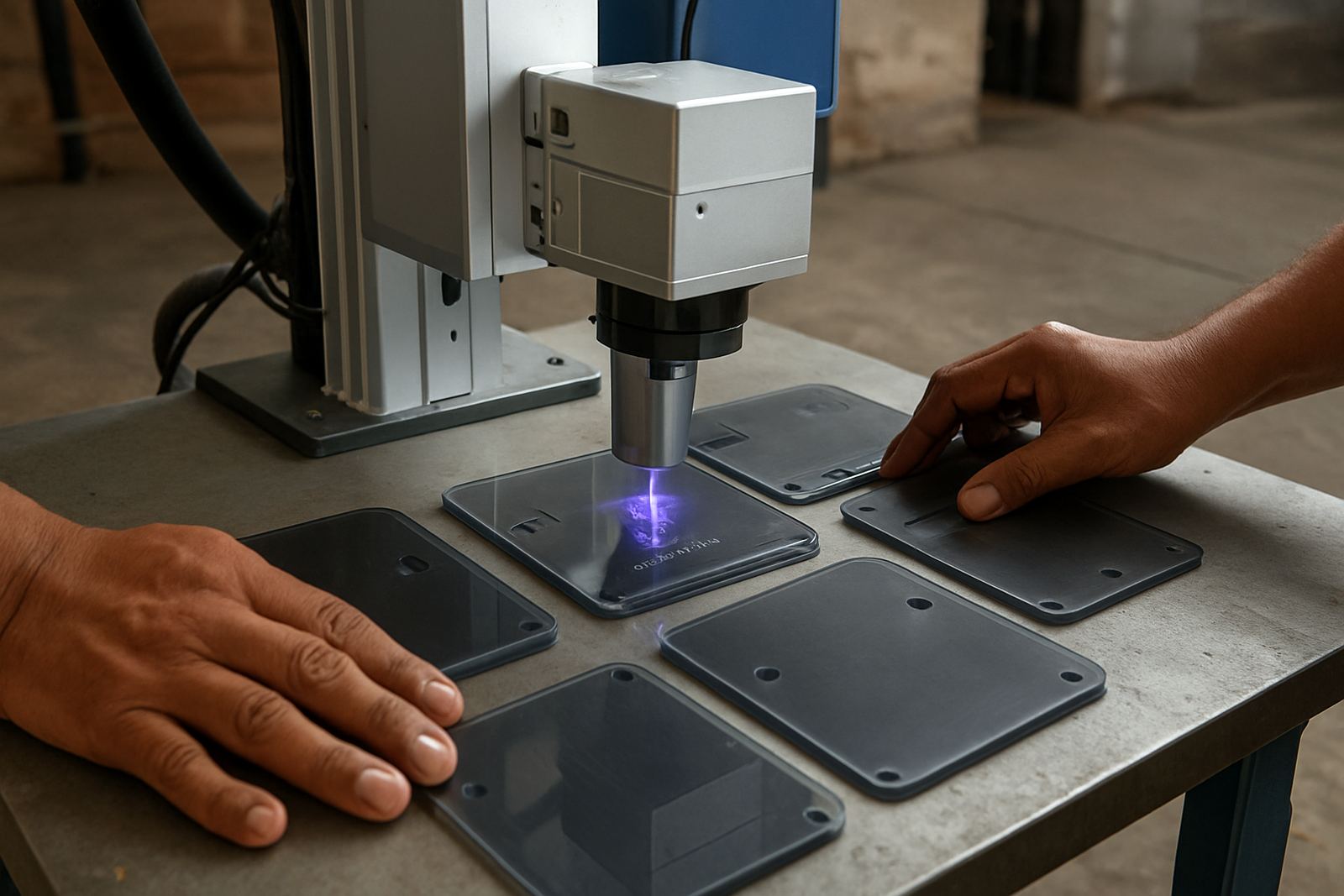
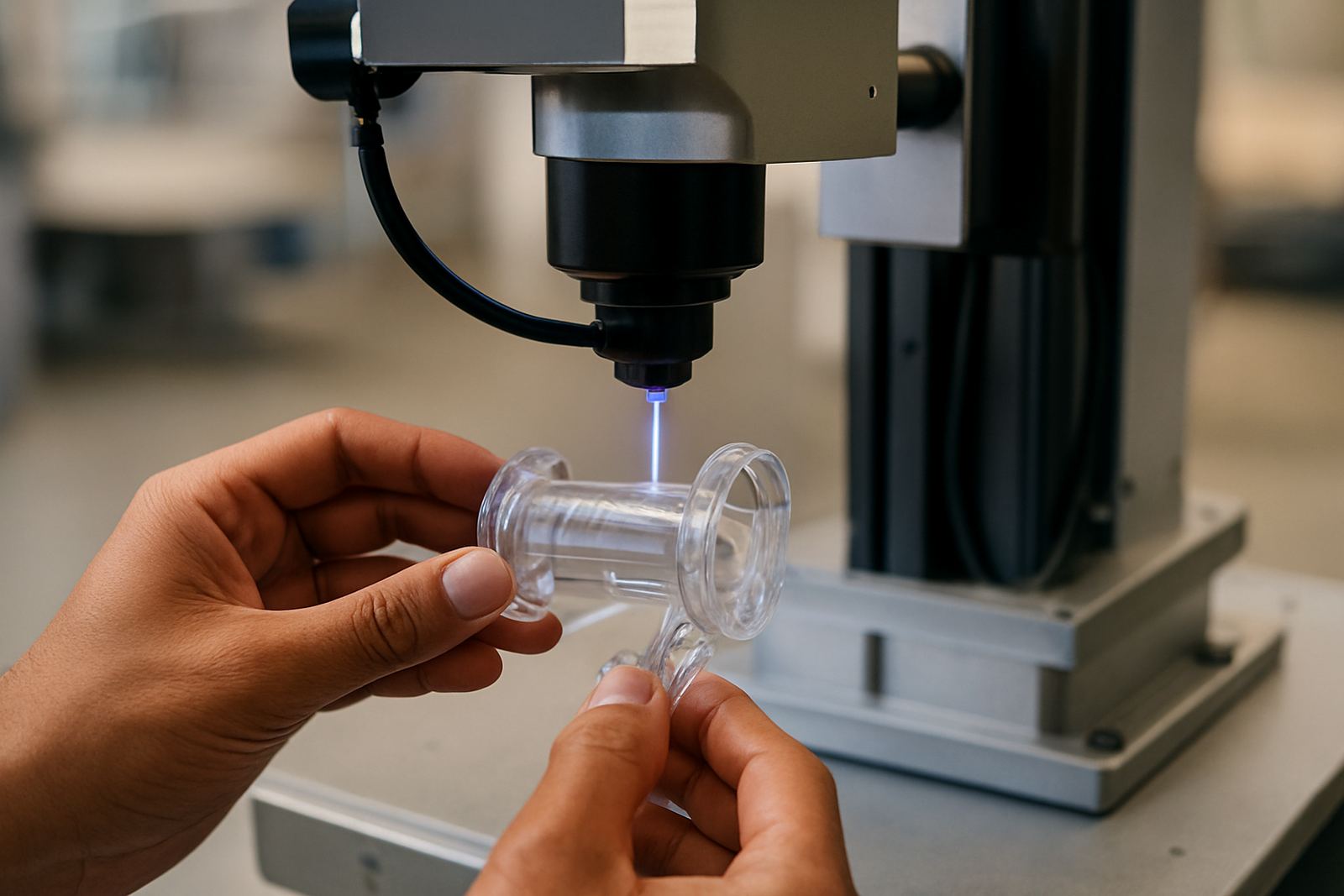
The Galvo Precision Marker uses a fast scanning head to place highly controlled marks on glass and many plastics. It is the right choice when the mark area is small, the artwork has fine lines, or the finished product needs a crisp serial, QR code, logo or instruction panel without smudging. For packaging, personal care items, laboratory items and technical components, the beam can produce sharp edges and consistent depth across runs.
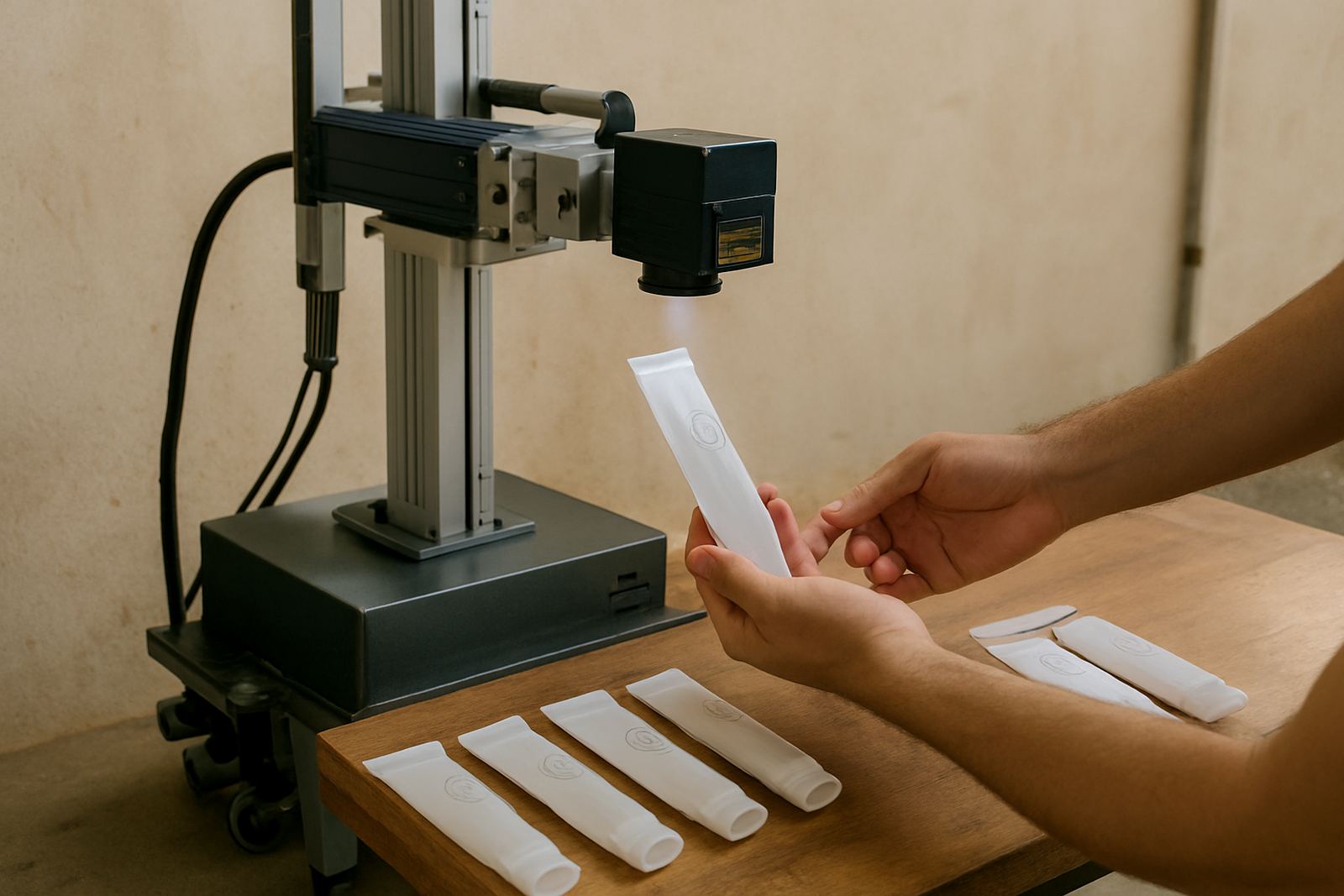
In practical terms, this unit is often selected for bottles, jars, moulded cases, caps, viewing windows, clear covers and other items where traditional ink can wear off. It is a good fit for companies in Jet Park, Boksburg, Germiston, Kempton Park and beyond that need permanent identification with minimal consumables. The mark is permanent and tamper-resistant, which helps with traceability and product presentation.
Where the Galvo Precision Marker suits best
This model is suitable for production environments that need precise, small-format marking on flat or gently curved surfaces. It is commonly used where product lines are already moving at a steady pace and the mark must stay readable without slowing the process too much. It also works well for short-run jobs where a quick fixture change is needed between product types.
- Glass bottles, cosmetic jars and liquor packaging
- Plastic containers, lids, caps and housings
- Medical and laboratory items that need batch codes
- Electrical and technical parts with small labels or serials
- Promotional items and branded components with fine artwork
For sites in coastal areas or high-dust plants, the main advantage is that the mark itself does not depend on ink drying or labels sticking correctly. That helps when humidity changes through the day, or where products are handled soon after marking.
Available sizes, marking field and setup options
The Galvo Precision Marker is typically supplied as a compact marking station with a work area matched to the part size and the level of detail needed. Smaller fields are better for dense coding and precise graphics, while larger fields are useful when you need to place multiple marks on one item or work with slightly bigger parts. The choice depends on the product and the cycle time you want to hold.
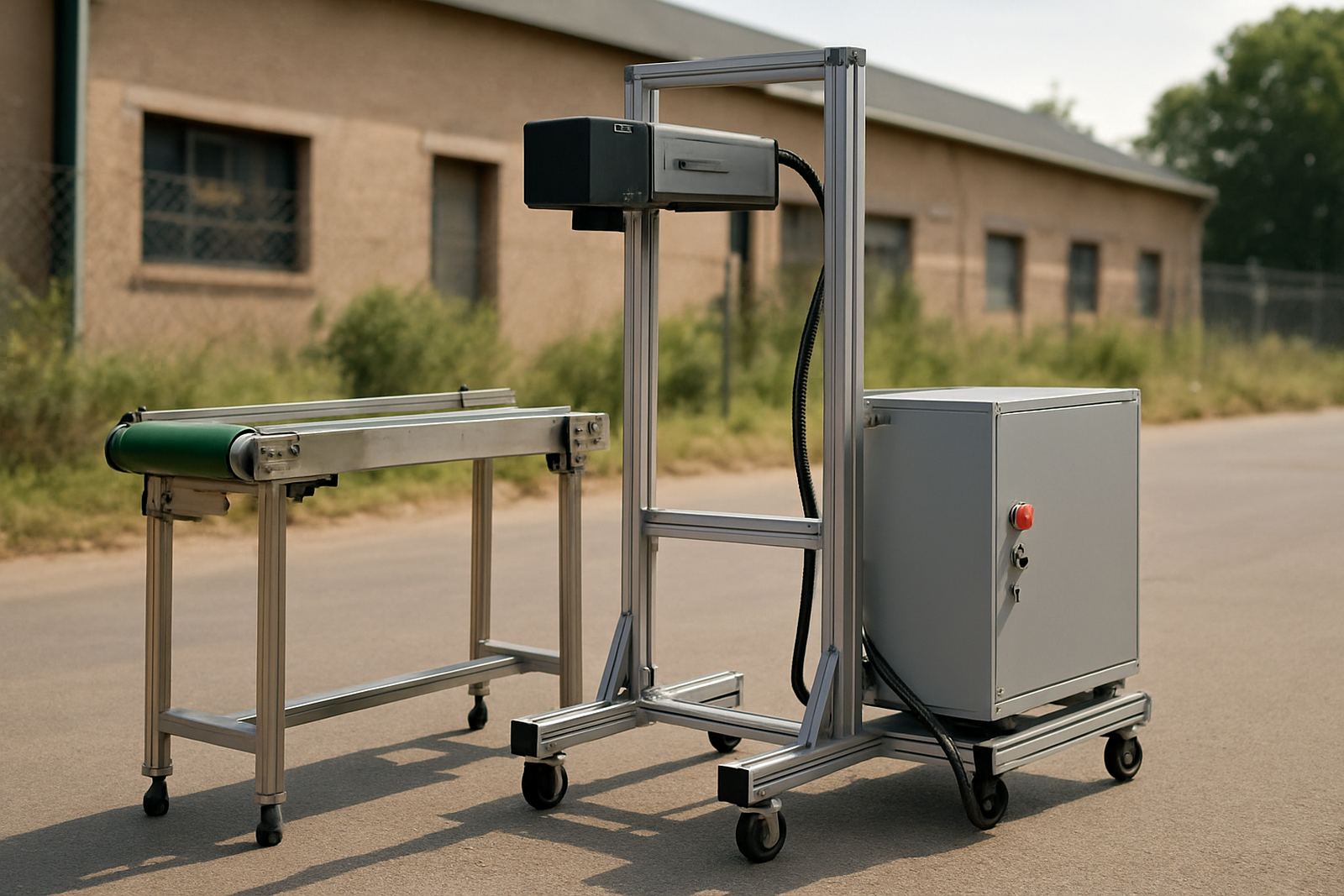
Options can include a manual load table, a simple jig, a rotary fixture for round items, or a conveyor interface for line work. A proper fixture matters more than most people expect, because it keeps the item steady and keeps the mark in the same place from one cycle to the next. On glass in particular, a good hold-down system reduces movement and improves repeatability.
- Marking field options for small and medium items
- Adjustable focal height for different part sizes
- Manual or production-line loading arrangements
- Rotary and custom fixtures for bottles and caps
- Vision or camera alignment can be added where required
Power, installation and site requirements
Installation is usually straightforward, but the site must still be checked properly before the machine is placed into service. A stable table or frame, clean power and enough space for loading are all important. In many South African plants, the biggest issues are not the marker itself, but poor earthing, unreliable power points and cramped working space near conveyors or packing lines.
The unit normally needs standard electrical supply and a clean, dry work area. If the marking is being done near wash-down areas or on a production floor with moisture, the station should be positioned to avoid splash, dust build-up and vibration. Where loadshedding is a regular issue, customers often add suitable power backup for the line or plan the marking step around their existing backup system.
- Single-phase or site-specific electrical supply depending on the configuration
- Stable mounting surface and controlled working height
- Enough clearance for part loading, maintenance and operator access
- Dry, dust-controlled area where possible
- Line integration available for in-feed and out-feed control
Care, cleaning and servicing over time
Although the marking process is non-contact, the machine still needs sensible care. The lens area must stay clean, the work surface should be kept free of grit, and any fixtures should be checked for wear. On plastics with surface dust or release residue, the part should be clean before marking or the finish can look patchy. On glass, fingerprints and moisture can affect the visible result, so basic handling discipline helps.
Routine servicing supports consistent mark quality and reduces unplanned stoppages. That includes checking alignment, inspecting cables, confirming software settings and testing the fixture fit. For plants running long shifts, a preventive maintenance schedule is a smart choice because it catches small issues before they become breakdowns. We can also help with spares supply and breakdown repairs when a line needs urgent attention.
- Keep lens and protective windows clean
- Check fixture wear and alignment regularly
- Review mark settings after product changes
- Use preventive maintenance for higher-volume sites
- Store files and settings for repeat jobs
What to check before you order
Before ordering a Galvo Precision Marker, it helps to define the product, the mark size and the speed you need. A clear sample is best, because the right setup depends on the material, the finish and how deep or visible the mark must be. For clear plastics and glass, even the angle of the part and the surrounding light can affect the final appearance, so sample testing is worth doing.
You should also confirm whether the machine will work as a standalone station or as part of a full line. If the product changes often, ask about fixture design and quick adjustment points. If you need operator changes between shifts, training is important so the team can set the machine correctly and keep the result consistent. Riaan Pretorius and the team support demos, installs and training nationwide, with site visits arranged from Jet Park, Boksburg to Gauteng and other provinces.
- Material type and finish of the part
- Required mark size, font size and graphic detail
- Throughput target and loading method
- Need for fixtures, rotary handling or line integration
- Whether sample testing is needed before final sign-off
Key facts
| Marking type | UV laser galvo marking for fine detail on glass and plastics |
|---|---|
| Typical use | Serial numbers, batch codes, logos, QR codes and small graphics |
| Working format | Compact station with options for manual or line-fed use |
| Marking field | Sized to suit the part and application, with small and medium field options |
| Installation | Site assessment, machine installation, software setup and operator training available |
| Support | Preventive maintenance, breakdown repairs, spares supply and nationwide support |