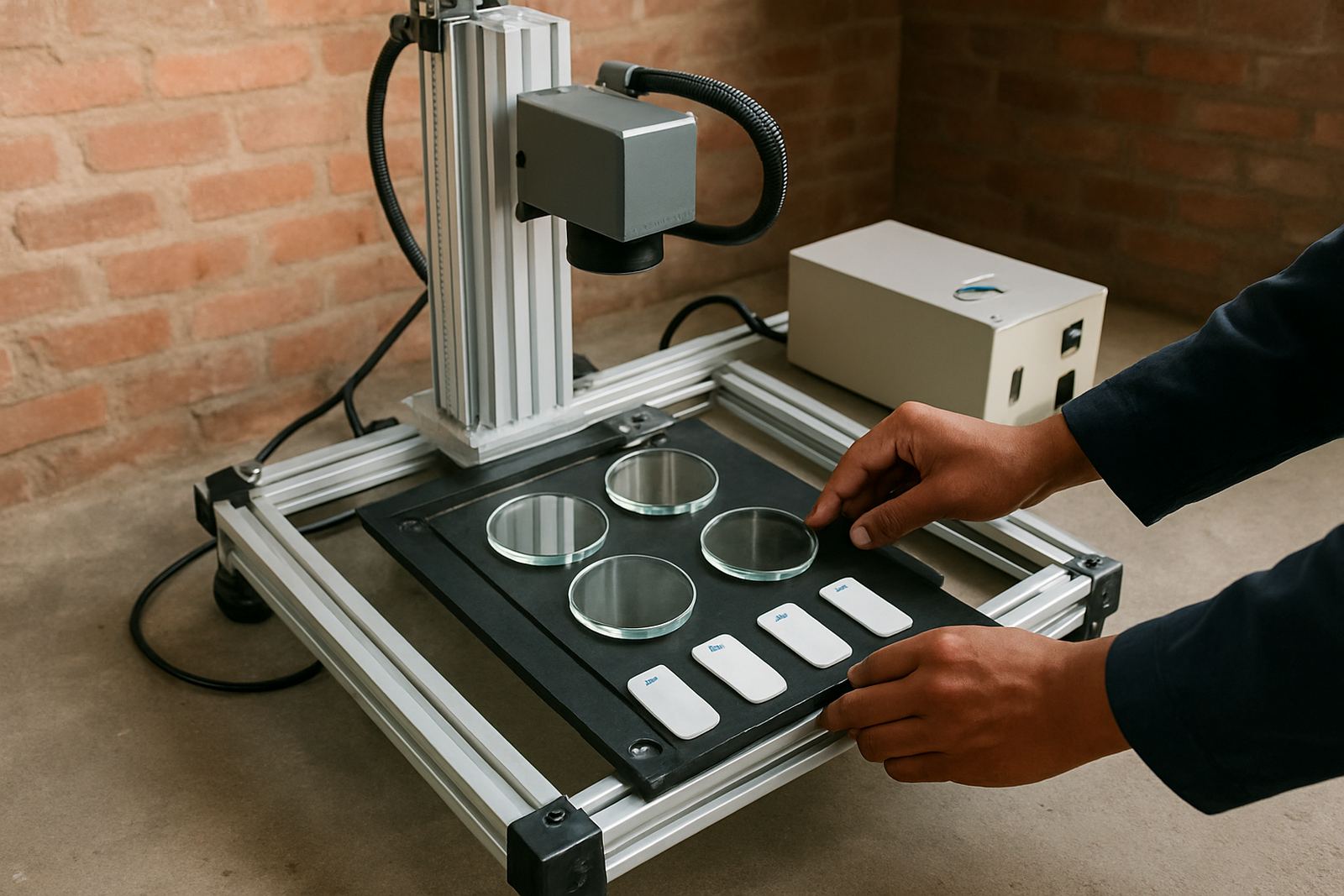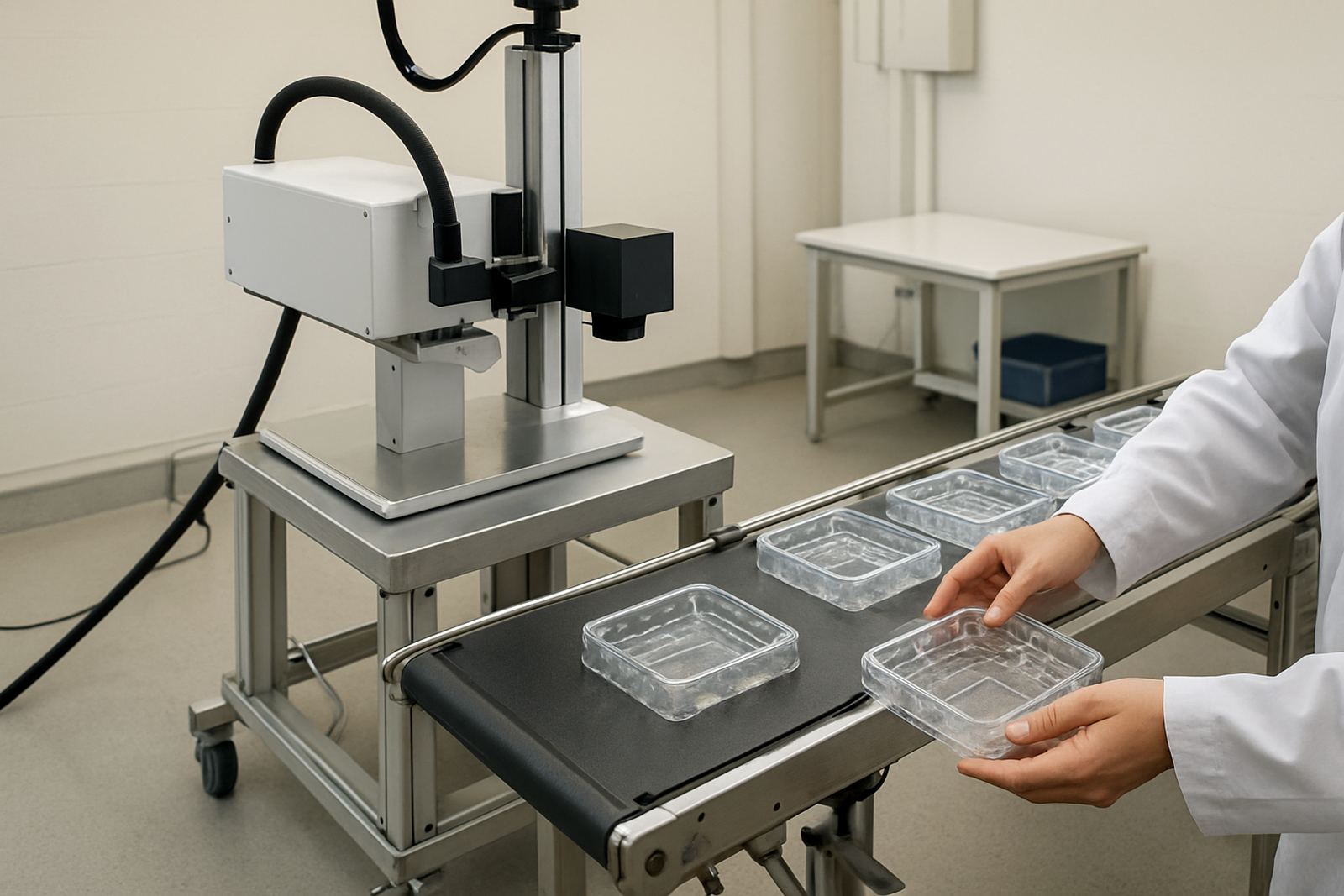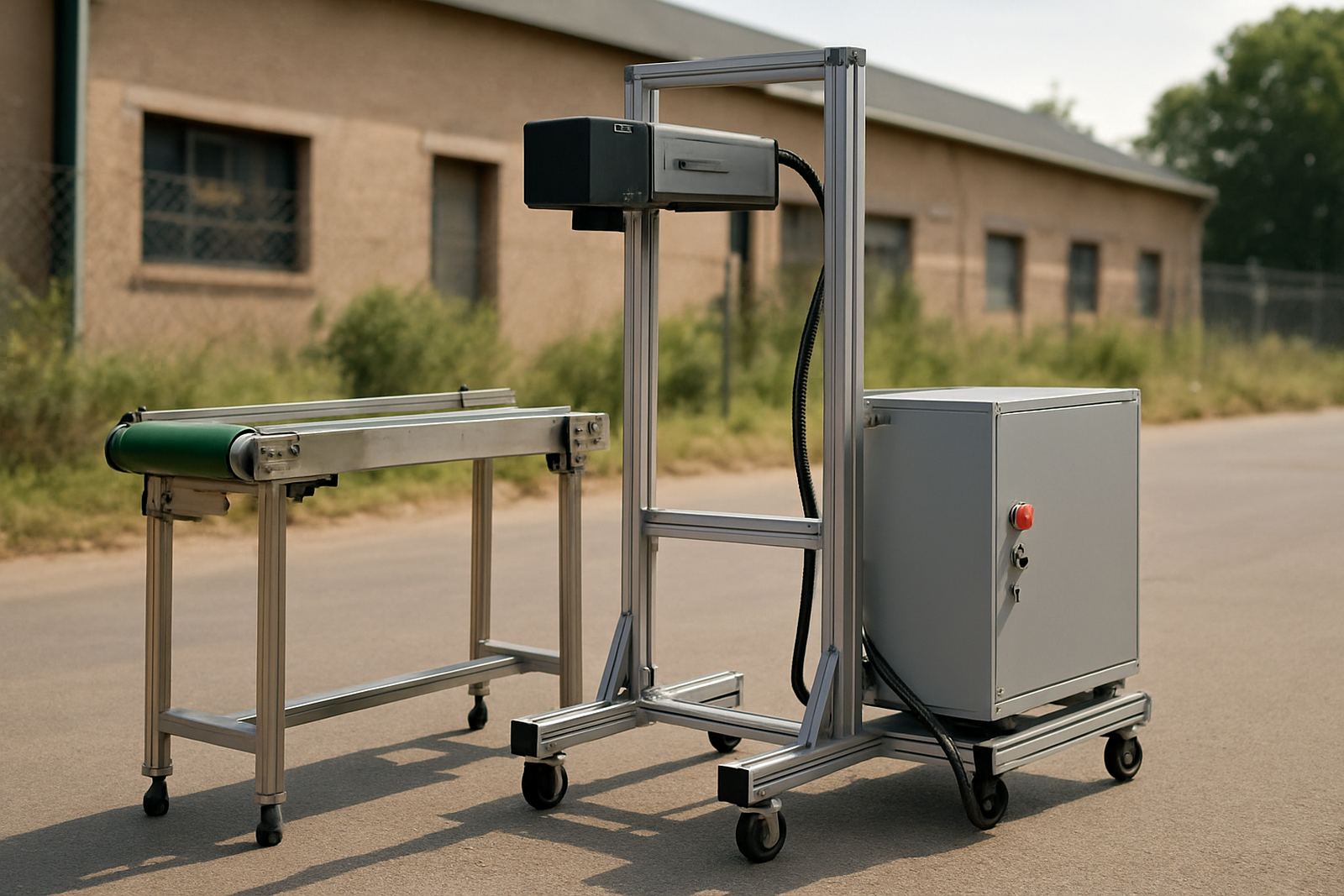
What an inline marker does on a live production line
An inline marker is fitted into your production flow so each item gets coded as it passes through. It is used for batch numbers, dates, serials, shift codes, traceability marks and small branding details on glass and plastics. For businesses handling short runs or seasonal work, hiring is often the most practical route because you get the equipment for the period you need, without tying up capital.
Our rental systems are suited to clean, controlled marking where the finish must stay permanent and readable. The mark is made directly onto the product surface, so there is no label to peel off and no wet ink to smudge. That matters on lines where items are packed quickly, handled by operators, or exposed to moisture during transport and storage.
We commonly see hires for contract packers, moulding shops, beverage facilities, laboratories, cosmetics, and plastics processors around Ekurhuleni, Midrand and Pretoria. It also works well for pilot projects where you need to test a code position or check whether a mark stays clear on a curved or reflective surface. If you are still changing artwork or product sizes, a hire setup gives you room to adjust without major delay.
Hire formats and size options for different line speeds
Inline marker rentals are matched to the product size, line speed and coding area. Some jobs need a compact marking head for small parts, while others need a more open arrangement to clear guards, conveyors and guide rails. We set up the system to suit your space and the way your operators work, not the other way round.
Available options are typically chosen around throughput and the marking area. Smaller systems suit tray lines, bottle handling, medical components and plastic housings. Larger systems are used where there is more height and width around the product path, or where the item needs to be held steady for a precise mark. On curved surfaces, fixtures and guides may be added so the code lands in the same place every time.
- Compact head options for tight production areas and smaller components
- Mid-size systems for general packaging, moulded parts and mixed product lines
- Extended mounting options for wider conveyors and awkward clearances
- Fixture and guide add-ons for repeatable positioning
- Temporary hire periods for trials, peak demand or planned shutdown cover
If you are working from Jet Park, Boksburg, Germiston or Kempton Park, we can usually arrange a site visit first so the hire system is sized correctly. That saves time later and reduces the risk of choosing a unit that is too small or more complex than your line needs.
Where a rental marker suits best in South African plants
This hire option is useful where the line must keep moving and the marking task needs to be sorted quickly. It suits factories dealing with packaging changeovers, temporary production contracts, customer audits, export batches and product launches. It is also a sensible choice where the line has to cope with load-shedding, because a temporary setup can be planned around your backup power and restart procedure.
We often place rental systems in plants that need coding on glass bottles, jars, cosmetic containers, rigid plastic tubs, caps and closures. The mark is best when the surface is clean and the product feed is stable, so it can be used in food, beverage, household goods, pharma support work and general manufacturing. In coastal or humid conditions, good line control and regular cleaning help keep the mark consistent and the optics clear.
Local plants in Boksburg, Alberton, Benoni and Midrand often want a hire system when they have a short production window or a customer order that is not permanent enough to justify a purchase. It is also a practical option for businesses that need to test a new format before committing to full scale coding across all shifts.
Installation, power needs and line integration
Installation is done on site and planned around your conveyor, guarding and product flow. We look at the mark position, cable routing, operator access and the best mounting height before the unit is fitted. If your line includes sensors, reject devices or a barcode reader, we can align the hire marker so it works as part of the same process.
Most setups need standard electrical supply and a stable mounting point. Depending on the configuration, you may need a small air supply for fixtures or for line handling equipment that forms part of the marking station. We will confirm the exact requirements during the site assessment so there are no surprises on install day.
- Stable mains power with proper earthing
- Space for the marking head, control unit and cable run
- Clean product feed with consistent spacing
- Access for operators and maintenance staff
- Optional integration with sensors, conveyors and reject points
Where lines are affected by power interruptions, we can advise on restart checks and power protection. That includes protecting settings, confirming the code window after a stoppage, and checking that product spacing remains correct after the line comes back on. A quick verification after startup prevents wasted product and avoids unreadable marks.
Care, servicing and support during the hire period
Because the unit is rented, we take care of setup support, operator handover and servicing guidance for the hire term. Daily care is simple: keep the marking area clean, check the lens or output window, confirm the product feed is steady and make sure the code is still landing in the right position. If the line is dusty or the environment is warm, a short cleaning routine once per shift can make a big difference.
We also help with preventive maintenance and breakdown repairs where needed, so your rental period stays productive. If your product changes mid-hire, or the mark needs to move slightly, we can adjust the setup and retest it on site. For plants in Pretoria, Germiston and Kempton Park, that support is useful when a job is running under deadline and there is no time to keep guessing at settings.
Training is included where required, and operators are shown how to run checks at startup, after a stoppage and at shift change. The aim is to keep the line moving without making the team dependent on one person only. If something shifts, the crew should know what to look for first.
What to check before you place a hire order
The more detail you give us at enquiry stage, the better the rental fit. We need to know what material you are marking, the speed of the line, the size of the mark and whether the code must be readable after packing, washing or handling. If the product has a curve, a texture or a reflective surface, tell us that too, because it affects fixture design and final positioning.
Please also check the following before ordering:
- Product type: glass, rigid plastic or another smooth surface
- Line speed and how many items need marking per hour
- Code content: date, batch, serial, logo or simple text
- Available space around the conveyor and guards
- Power supply at the line and any backup arrangement
- Whether you need installation, operator training or line integration
If you are unsure, we can do a site demo and sample testing first. That is often the best way to confirm the mark quality before the hire starts. It also helps with municipal or customer compliance requirements where traceability has to be clear and permanent. A short test run upfront can save a lot of rework later.
Key facts
| Rental use | Temporary coding and marking on active production lines |
|---|---|
| Suitable materials | Glass and rigid plastics |
| Typical applications | Batch codes, dates, serial numbers, traceability marks and branding |
| Hire support | Installation, operator training, sample testing and process checks |
| Power and utilities | Mains power, stable earthing and optional air supply for related fixtures |
| Coverage | Jet Park, Boksburg and nationwide support |