Two loading points that keep production moving
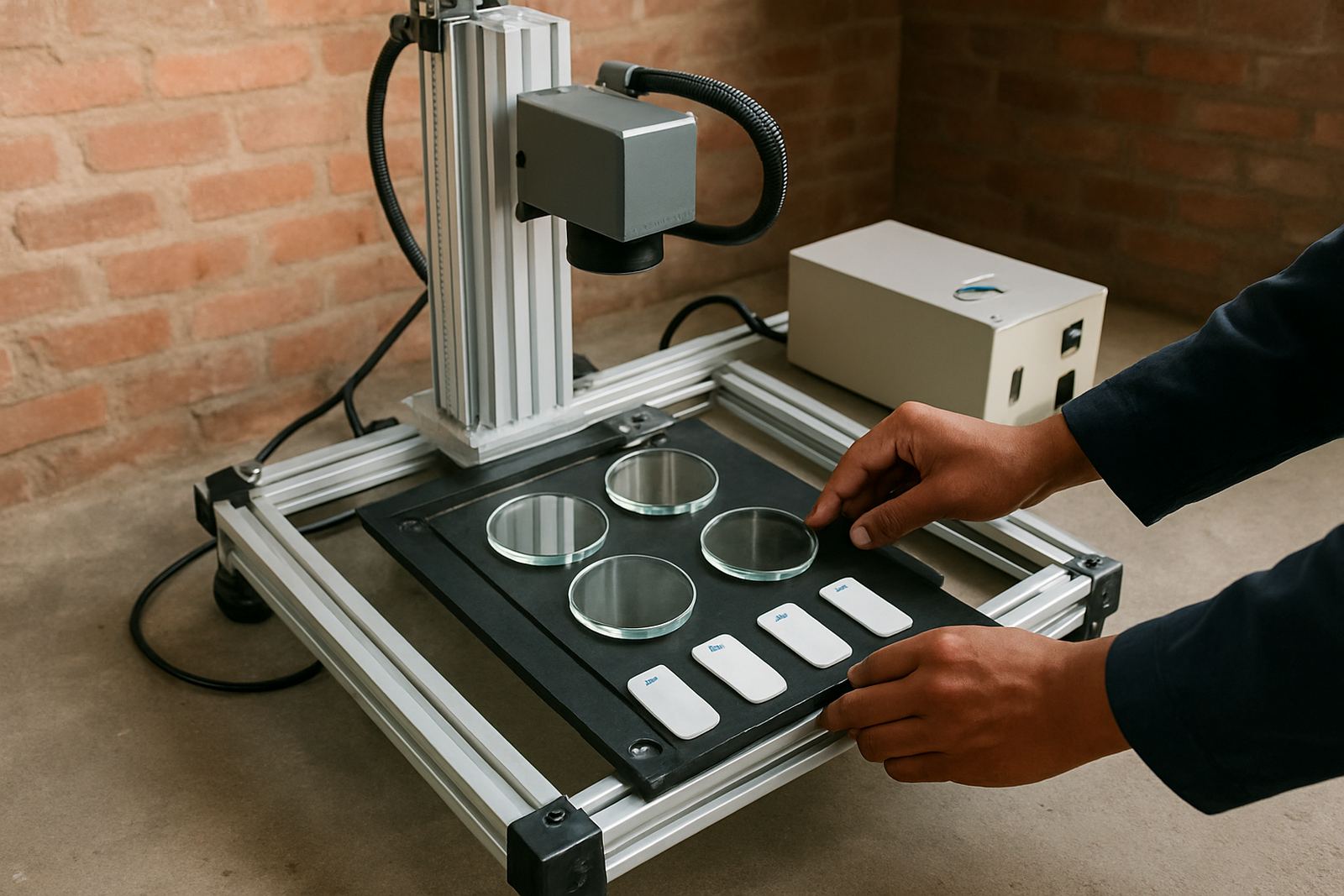
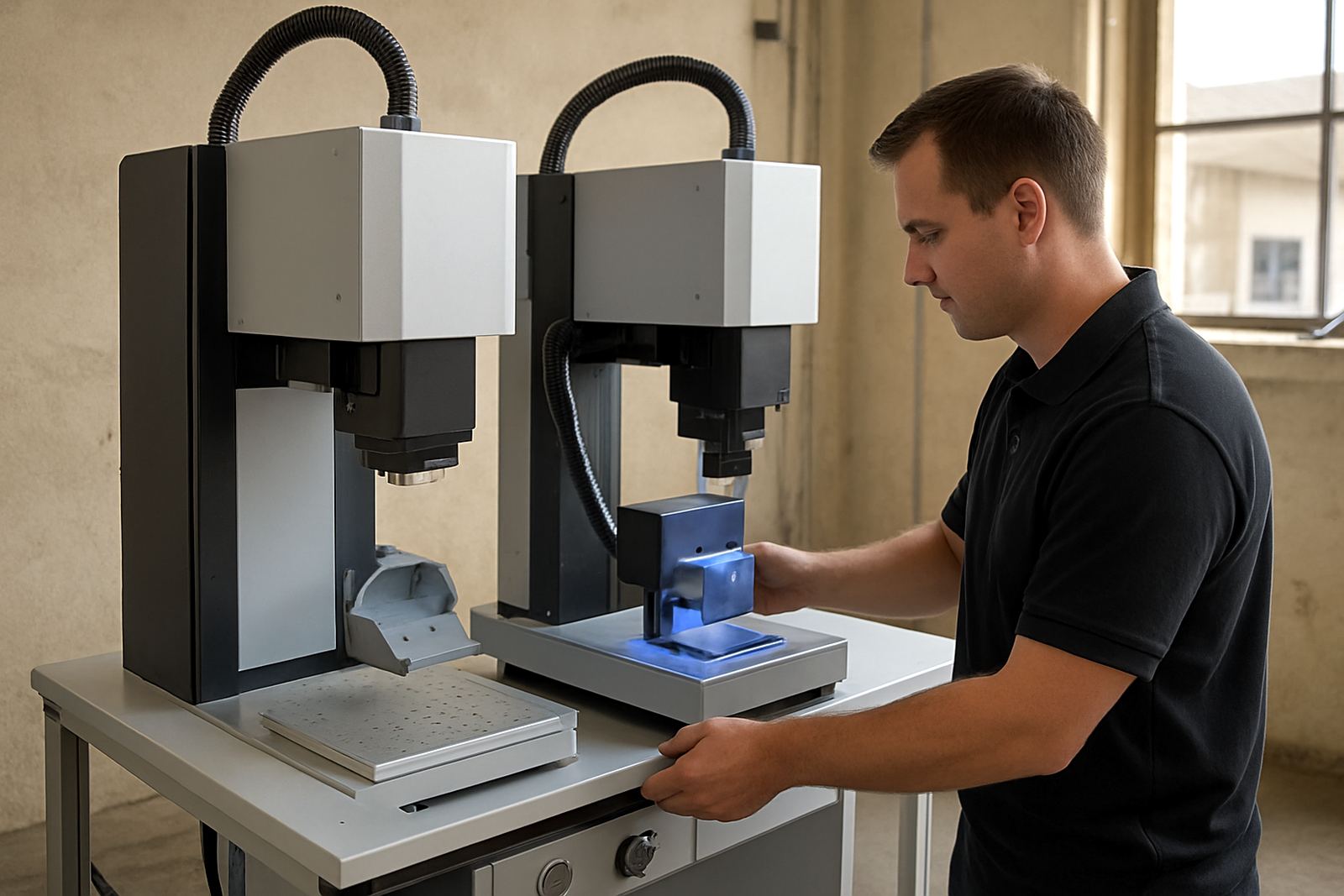
The Dual Station Marker is designed for teams that need repeatable marking on bottles, jars, caps, moulded parts, cosmetic packaging, technical components and other items made from glass or plastics. With two loading positions, one part can be marked while the next is being prepared, which helps reduce idle time and keeps the operator flow steady. It is a practical setup for small to medium production runs and for lines where every minute counts.
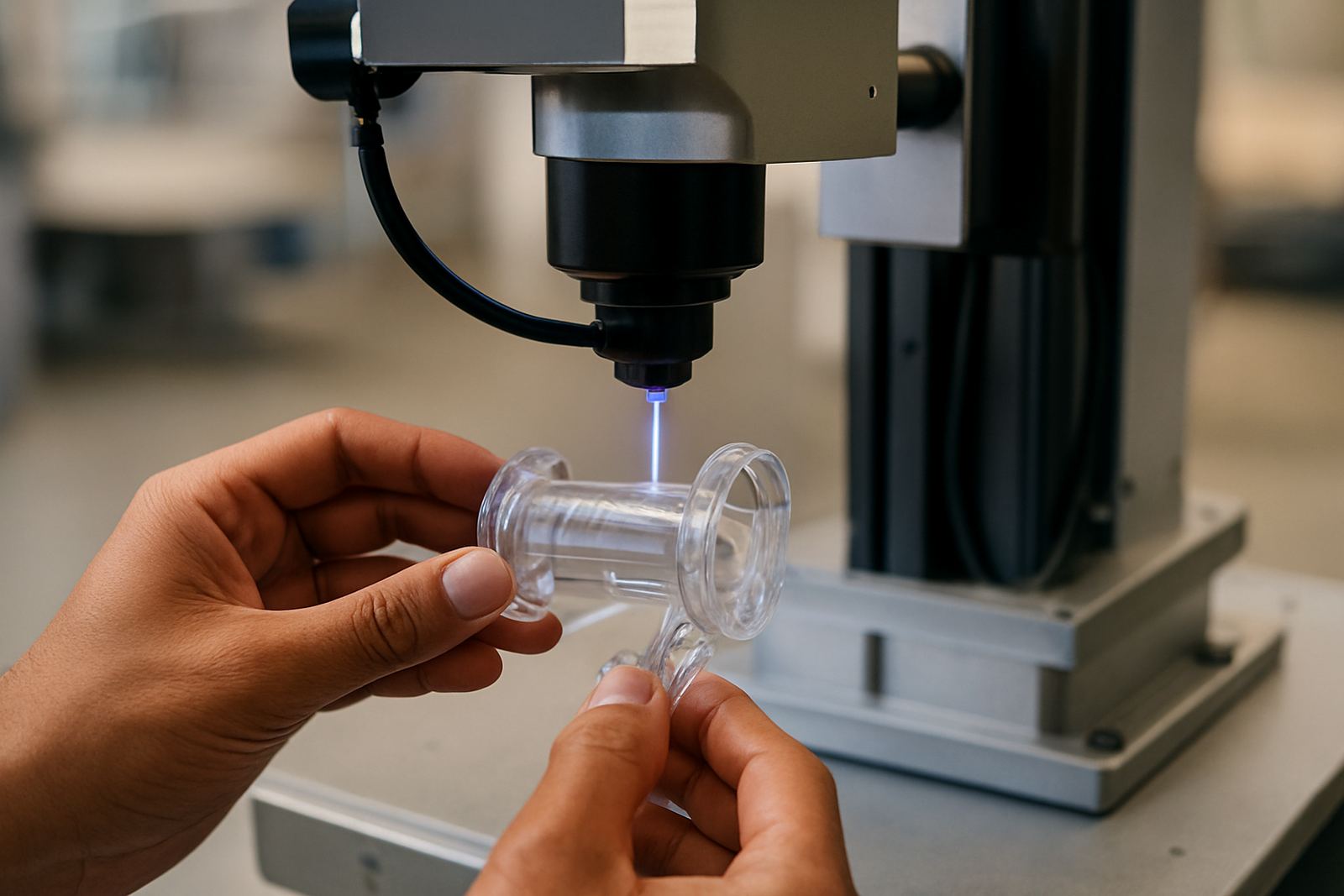
Because the system uses UV marking, the result is crisp and permanent without the heat load associated with some other marking methods. That makes it a good option where the surface needs to stay clean, the branding must stay legible, and the part cannot be distorted. In our climate, especially where humidity and dust are part of daily work in Gauteng or coastal areas, a stable marking process helps keep output consistent.
What the machine is used for in local production
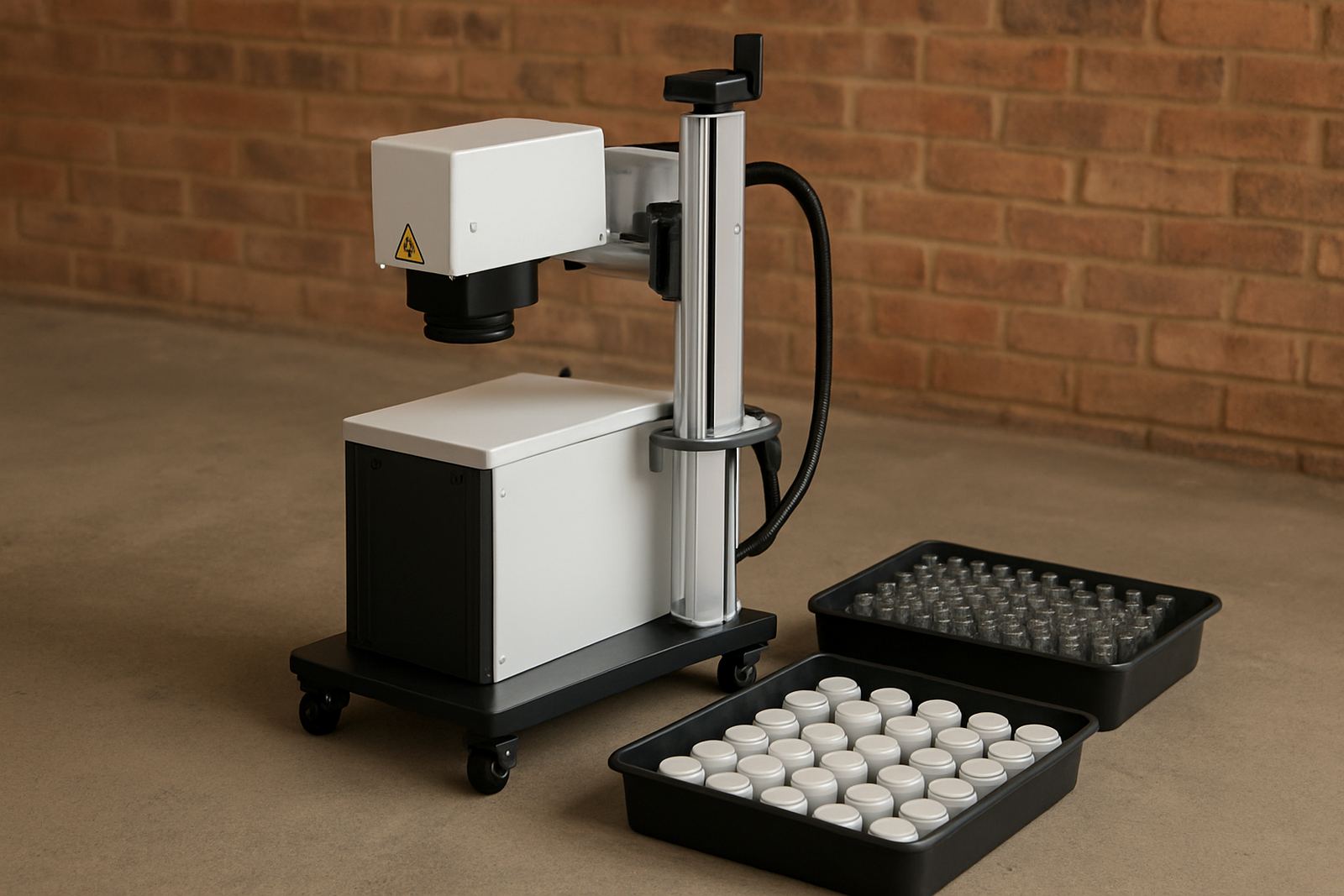
This marker suits manufacturers and packers who need fine detail, batch information, logos, serials, expiry data or simple product names on glass and plastic items. It is used where marks must stay readable after handling, cleaning, transport and storage. Common applications include beverage packaging, personal care items, laboratory containers, promotional glassware and technical plastic parts. If your line changes product sizes often, the dual station layout makes changeovers easier to manage.
- Permanent marking on clear, coloured or coated glass
- Fine detail on plastics without heavy surface distortion
- Branding, traceability, batch coding and part identification
- Short runs, mixed batches and repeat production orders
For businesses in Jet Park, Boksburg, Germiston, Kempton Park and Benoni, this type of unit is often chosen when floor space is tight but output needs to stay steady. It also works well in Midrand, Pretoria and Alberton where lines may need flexible marking for different customers or product types. On one shift you might run smaller batches and on the next a longer run, so the machine needs to keep pace without fuss, and without constant operator rework.
Size options, setup styles and marking area
The machine can be configured to suit the item size, marking area and handling method required on site. The working envelope is normally set around the part you are marking, so the actual footprint and table arrangement depend on your product and how it enters the station. Where needed, fixtures can be designed to hold round, flat or irregular parts securely. This matters when you are marking fragile glass or lightweight plastic pieces that can shift during loading.
- Single or dual loading fixture layouts
- Custom jigs for bottles, jars, caps and formed parts
- Enclosed or semi-enclosed marking areas where safety access is needed
- Integration with manual loading, semi-automatic handling or inline movement
When planning the size, check the largest item you expect to mark, not only the current product. Many clients start with one size and later add another, so it helps to allow room for future work. If a part has an uneven base or curved sidewall, the fixture design should be checked early so the operato does not have to fight the machine during every cycle.
Where it suits best on site and on line
This model suits production areas that need better throughput without moving to a fully automated line. It works in packaging rooms, light manufacturing plants, labelling areas and contract marking shops. The dual station arrangement is useful where an operator can load the next item while the previous one is being marked, reducing dead time between cycles. That makes it a practical choice for businesses balancing labour, floor space and output targets.
It can be placed as a standalone unit or tied into a larger process where products come from filling, moulding, moulding or assembly, then move on to inspection and packing. We also see it used where municipal or customer traceability rules require clean, permanent identification on each item. For businesses near inland industrial areas, load-shedding planning is important too, so the marking station should be checked against site power continuity and downtime procedures.
Installation, power needs and site preparation
Installation depends on the final configuration, but most sites need a level floor, clean working space, stable electrical supply and safe access for the operator. We assess the product flow, the available footprint and the type of part handling before fitting the machine. If the marker is being added to an existing line, the surrounding equipment and material path should be checked so the unit does not interrupt production or create bottlenecks.
- Stable mains power and suitable isolation point
- Enough space for loading, unloading and safe maintenance access
- Correct fixture height for the operator and product type
- Any line signals or interfaces needed for integration
No process gas is normally required for this type of UV marking unit, which keeps site setup simpler. Some sites may still need compressed air for line handling or related equipment, depending on the full system layout. If your plant has voltage variation or frequent outages, it is worth checking backup power and restart procedures before commissioning, especially where production must resume quickly after load-shedding.
Care, servicing and day-to-day checks
Routine care keeps the machine producing clean marks and avoids avoidable stoppages. The marking area should be kept free of dust, packaging scraps and loose offcuts. Operators should check the fixture condition, alignment and software settings before starting a run. In humid environments or on sites close to the coast, a simple cleaning routine matters even more because moisture can affect optics housings, guards and surrounding components over time.
- Clean lenses, guards and working surfaces on a set schedule
- Check fixture wear, clamps and locating points
- Confirm marking files, serial sequences and position settings
- Book preventive maintenance before output starts drifting
We also recommend keeping spare consumables and critical parts on hand where the line runs daily. If a unit is down, the cost is often not only the repair itself but the lost production time. Our service team supports breakdown repairs, software setup, process optimisation and spares supply, with demos, installs and training available nationwide. That includes Jet Park, Boksburg, Germiston, Kempton Park, Benoni, Alberton, Midrand and Pretoria.
What to confirm before you place an order
Before ordering, confirm the product material, the exact marking area, the required text or artwork and the output rate you need per shift. It helps to know whether the marks must be visible on clear glass, tinted glass or a specific plastic grade, because the finish can change the settings required. If the item is curved, fragile or heat-sensitive, mention that early so the fixture and marking method can be matched properly.
Also check whether you need batch coding, serial numbers, QR codes or a fixed logo, and whether those details must move from one product size to another. If the unit is going into a production line, tell us the line speed, loading direction and available power on site. We can then advise on the best layout, sample testing and training before installation, which saves time and avoids rework later.
Clients usually reach us through the enquiry form on our contact page, and we then arrange the next step from Jet Park, Boksburg. Riaan Pretorius and the team handle planning, testing, installation and support across South Africa, with practical guidance from sample approval through to operator handover.
Key facts
| Machine type | Dual station UV laser marker for glass and plastics |
|---|---|
| Loading method | Two loading positions for alternating part handling |
| Application | Branding, labelling, batch coding and traceability |
| Typical marking | Permanent fine-detail marks on glass and plastic surfaces |
| Installation | Standalone or line-integrated, subject to site layout |
| Support | Demos, installs, training, servicing and nationwide breakdown support |