Continuous marking for moving products
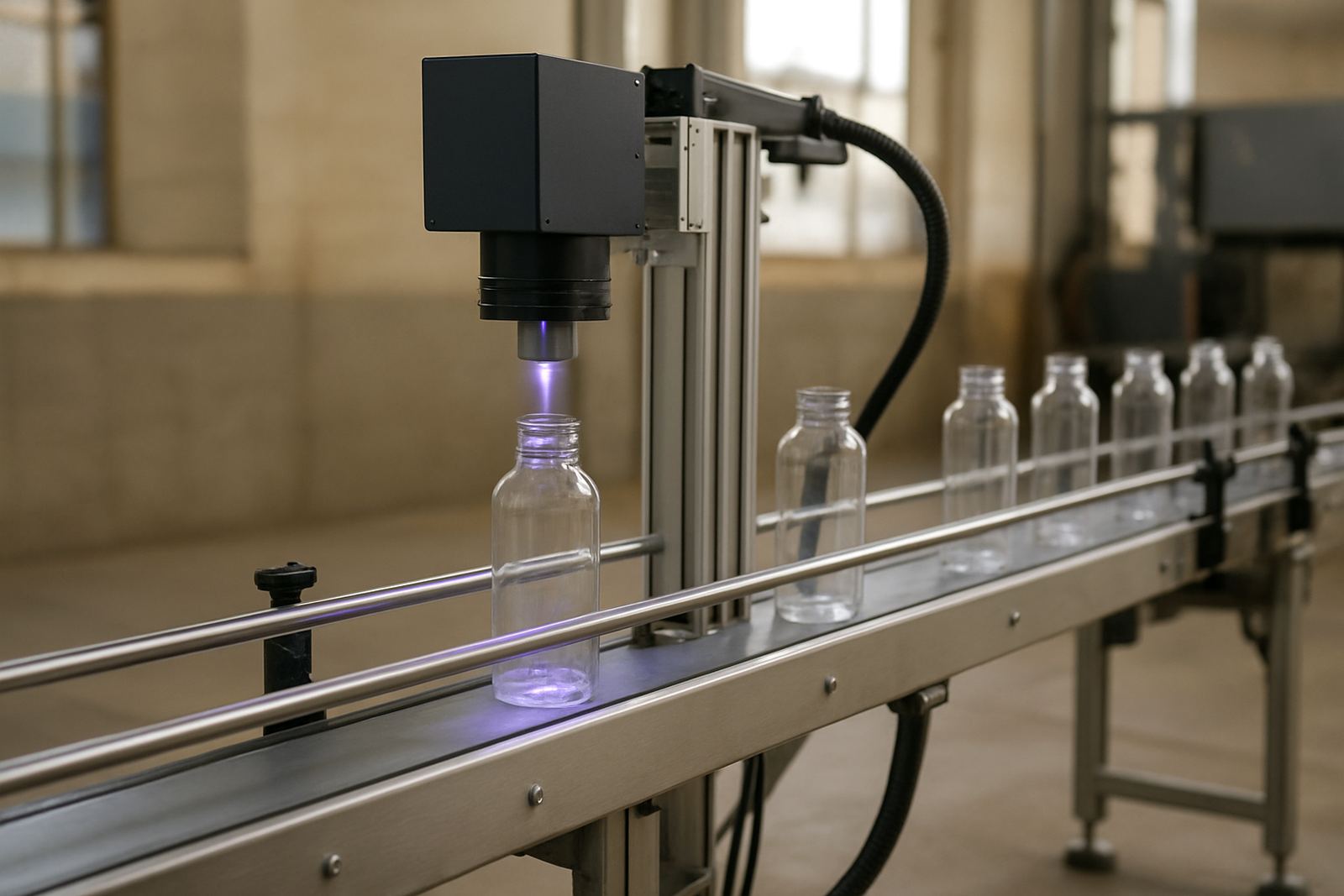
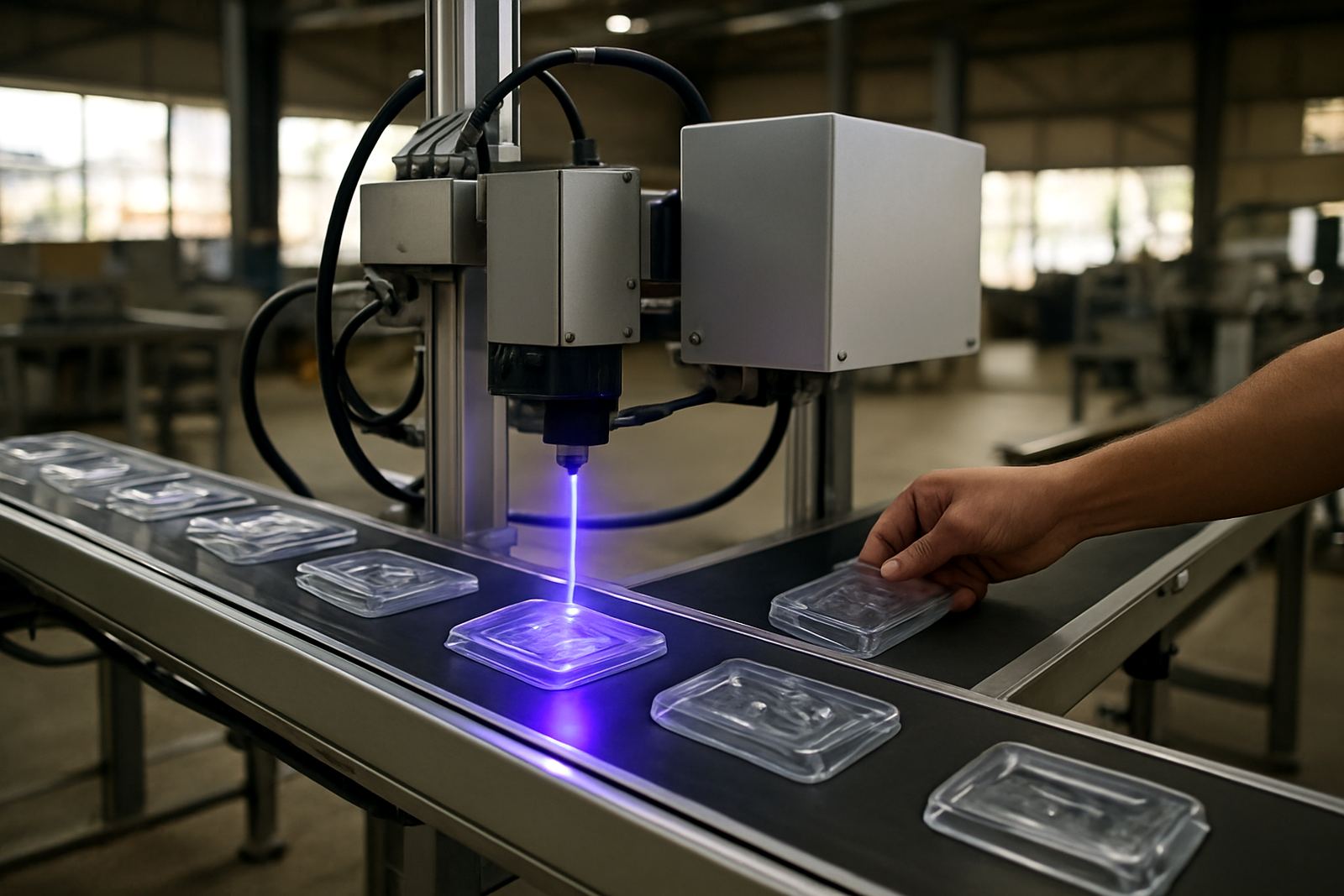
A conveyor code marker is used where products pass the marking point one after another and the code must be applied without stopping the line. On glass and plastics, UV laser marking gives a sharp mark with very little heat effect, so the surface stays clean and the code stays readable. It is a practical choice for batch numbers, dates, shift codes, logos and small trace marks on production lines that run day after day.
In Jet Park, Boksburg and the wider Ekurhuleni area, many plants work with limited floor space, variable labour and load-shedding planning. A laser marker helps because there are no inks, no solvents and no dry-time delays. Once set up correctly, it marks as product moves through the line with repeatable position and consistent depth, which is important when you are supplying retail, industrial or export markets.
Where this marker suits best
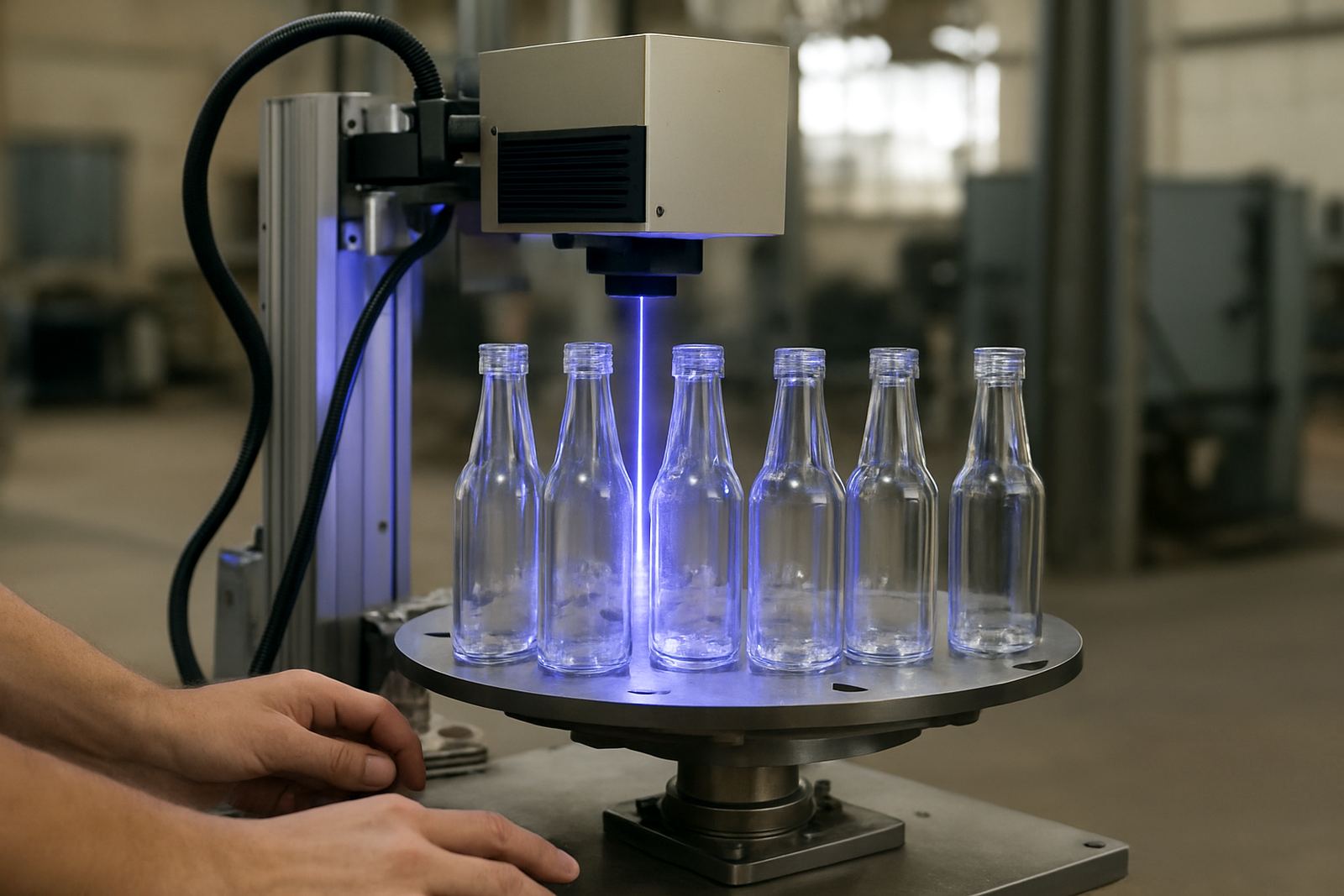
This type of system suits bottling lines, cosmetic packaging, medical packaging, container manufacturing, household products and any plant that uses glass or plastic parts moving on a conveyor. It is also suitable for smaller production runs where changeovers happen often and the code content needs to be adjusted quickly. If the product shape is flat, curved or lightly contoured, a fixture can usually be made to keep the mark in the right place.
- Glass bottles, jars and flasks
- Clear, coloured or opaque plastics
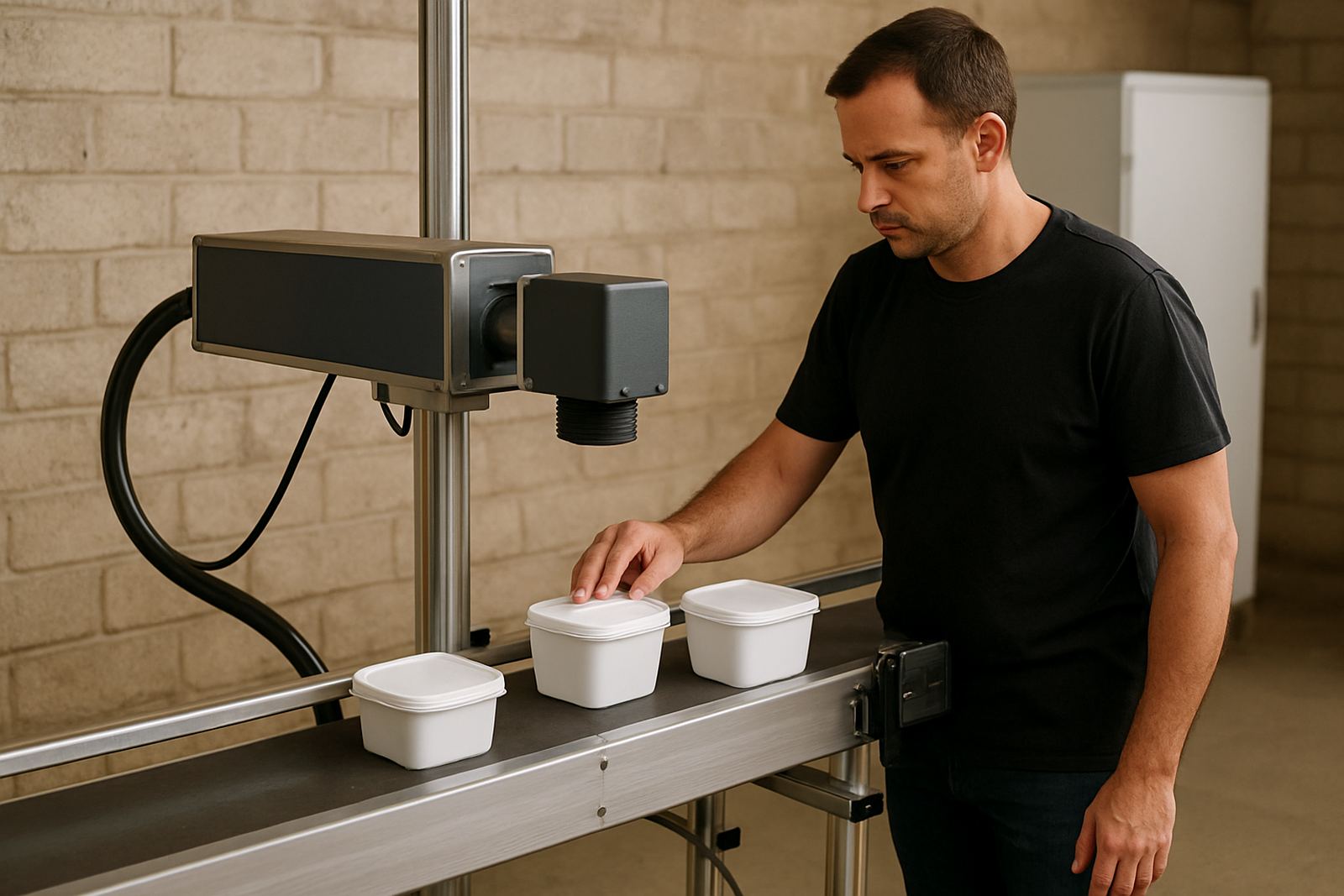
- Caps, lids, sleeves and formed packs
- High-speed lines with fixed code positions
- Production where ink should be avoided
For clients in Germiston, Kempton Park, Benoni, Alberton, Midrand and Pretoria, we can assess the product, conveyor height and marking position before installation. That helps avoid missed marks, crooked codes or unnecessary downtime, which can be costly on a busy line.
Typical options and line sizes
Conveyor code marking systems are supplied in different working field sizes and configurations depending on the product and the speed of the line. The marking head can be mounted above or beside the conveyor, and the controller can be positioned to suit the available space. In most cases, the code area is selected to match the product size and the amount of information required, from a small date stamp to a larger brand or trace block.
We can also assist with sample testing before final selection. This is important for glass, where the finish, colour and curvature influence how the mark appears, and for plastics where additives can affect contrast. A line that runs well during a short test may still need adjustment for focus, timing or fixture position when it runs all shift.
- Compact systems for limited floor space
- Mid-size marking fields for standard packaging lines
- Custom mounting for awkward conveyor layouts
- Options for static or moving product coding
- Fixture design where repeat position is critical
Installation, power and site preparation
Installation normally starts with a site visit or demo on your own product so we can confirm line speed, product spacing and the best mounting point. The unit needs a stable frame, enough access for maintenance and a safe position where operators can load settings without reaching through moving parts. If the conveyor speed changes, the marking timing and trigger setup must be matched to suit it.
The system runs on electricity only and does not need process gas for the marking itself. That makes it easier for plants dealing with gas supply limits or extra running costs. A clean power supply is still important, especially where load-shedding or unstable voltage is a concern. In some cases, backup power or surge protection is recommended to protect settings and keep the line ready for restart.
- Single phase or three phase supply depending on model
- Clean, dry compressed air may be needed for the conveyor or product handling, not the laser itself
- Space for controller, cabling and safe operator access
- Product stops, sensors or encoder setup if the line requires it
Care, servicing and everyday use
Routine care is fairly light compared with ink-based coding equipment. The marking window should be kept clean and the surrounding area free of dust, carton fluff and plastic offcuts. In coastal areas, humidity can affect nearby electrical equipment and fittings, so a regular check of seals, fans and cable entries is worth doing. If the plant runs near the coast or in a dusty warehouse, the machine should be checked more often.
Preventive maintenance helps keep the mark consistent and avoids interruptions when a production run is already underway. Our team can handle planned servicing, breakdown repairs and software setup where code content or shift data changes. Training is important too, because a well-trained operator will catch a wrong file, wrong focus setting or wrong conveyor trigger before it becomes waste.
- Clean lens or protective window on a schedule
- Check mounting bolts and fixture alignment
- Review code files after product or batch changes
- Keep the marking area clear of debris
- Record service dates and operator settings
What to confirm before you order
Before ordering, it helps to confirm the product material, the exact marking position and the line speed. You should also know whether the code must be read by eye only or by a scanner, because that affects contrast and character size. If the product is transparent or very dark, sample testing is strongly advised so the final result is not left to guesswork.
It is also worth checking your available power, operator access and whether the line needs integration with existing controls. If the line changes often, ask for a setup that makes quick changeovers easy. A clear list of order details saves time and avoids a machine arriving with a working field or mount that does not suit the actual line.
- Product material and finish
- Required code size, font and contents
- Conveyor speed and product spacing
- Mounting height and available floor space
- Power supply and control interface needs
- Need for fixtures, sensors or integration
For clients across Ekurhuleni and nationwide, UV Laser provides demos, installs, operator training and support from Jet Park, Boksburg. Enquiries come through the contact form, and we can help with sample testing, spares supply and process optimisation once the line is up and running.
Key facts
| Marking method | UV laser, non-contact |
|---|---|
| Best materials | Glass and plastics |
| Typical code types | Batch numbers, dates, logos, trace marks |
| Installation | Above or beside conveyor, with fixture or encoder as needed |
| Power | Electric supply only, no process gas required |
| Support area | Nationwide demos, installs, training and maintenance |