What the High-Speed Marker does on glass and plastic
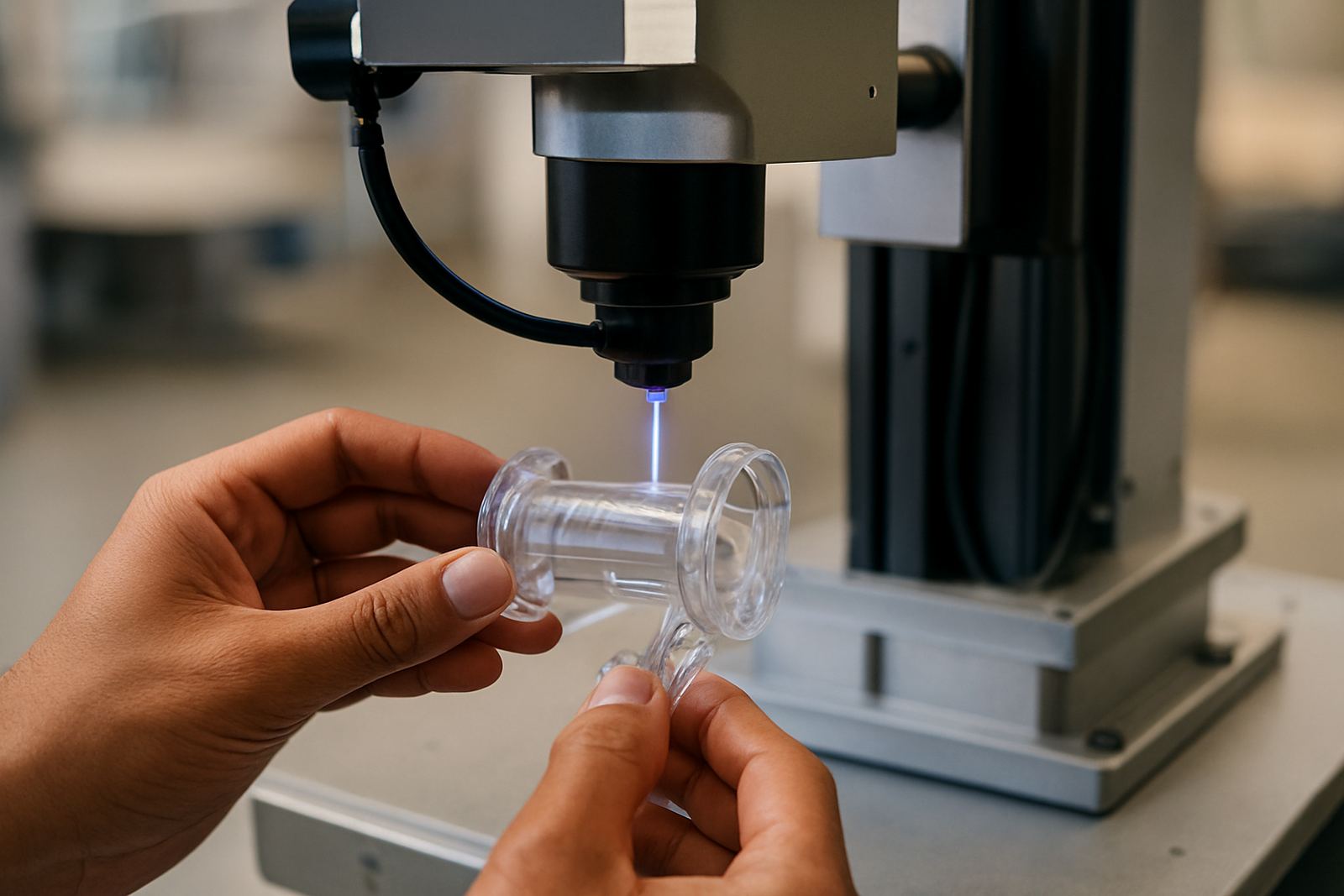
The High-Speed Marker uses a UV laser source to create fine, permanent marks on glass and selected plastics without inks, solvents or labels. It is used for logos, batch codes, date stamps, serial numbers, part marks and small graphic details where clarity is important. Because the mark is made by the laser itself, it stays sharp and consistent even when output is high and the shift is long.
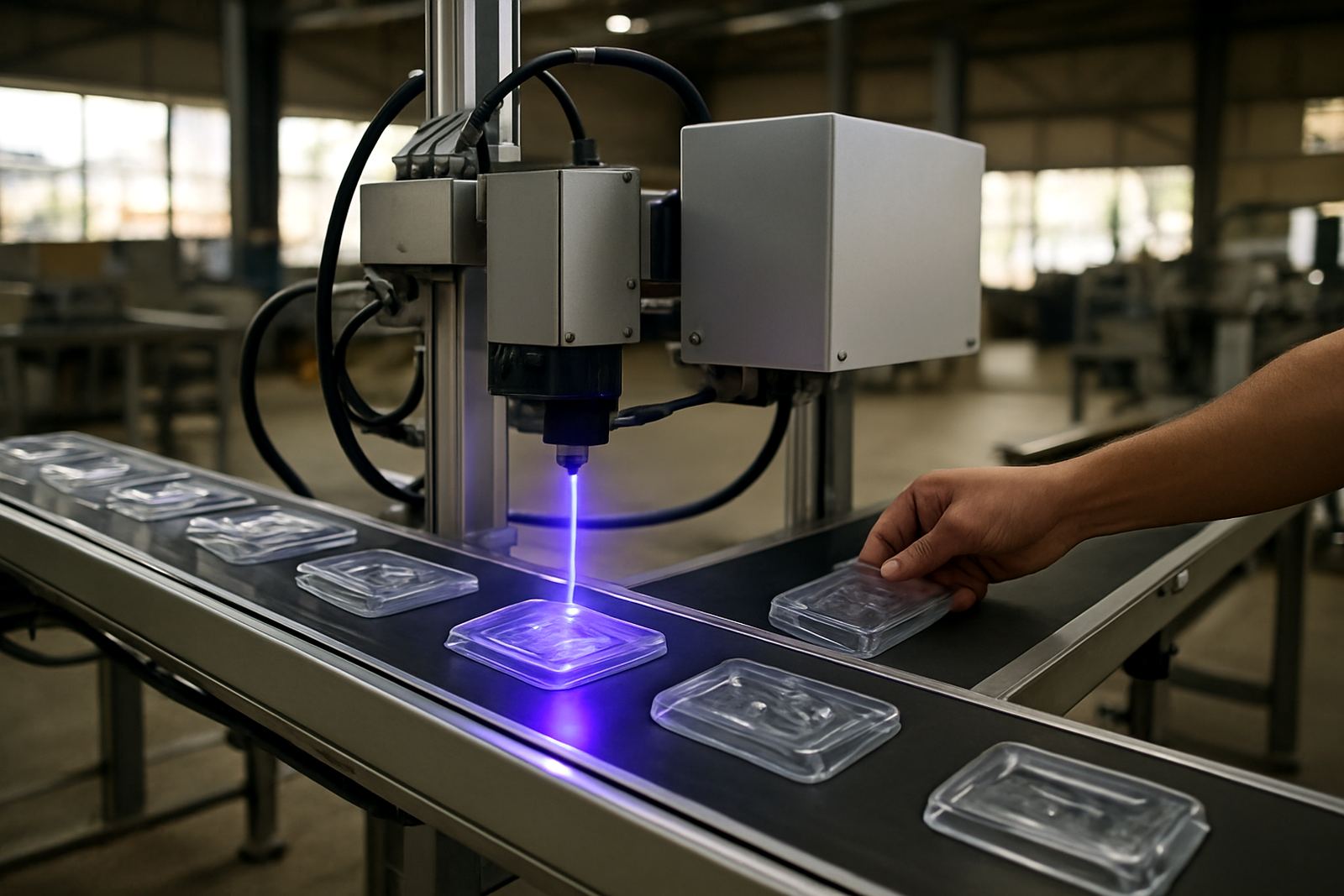
This makes it a practical fit for factories in Jet Park, Boksburg, Germiston and further afield where product traceability matters. It is well suited to items that move quickly through filling, packing or assembly lines, and it can be set up for single-item marking or in-line operation. The marking process is clean and low maintenance, which helps in areas where dust, heat and load-shedding can interrupt other coding methods.
Typical sizes, mounting options and line layouts
The unit can be supplied in compact formats for tight production spaces or in larger configurations for higher throughput and more automation. Working area and field size depend on the lens and application, so the setup is matched to the product, the mark size and the line speed. For small containers, caps, flat panels or precision parts, a tighter field is often used. For larger items or multi-up fixtures, a broader field may be better.
- Compact head for limited space above conveyors or rotary tables
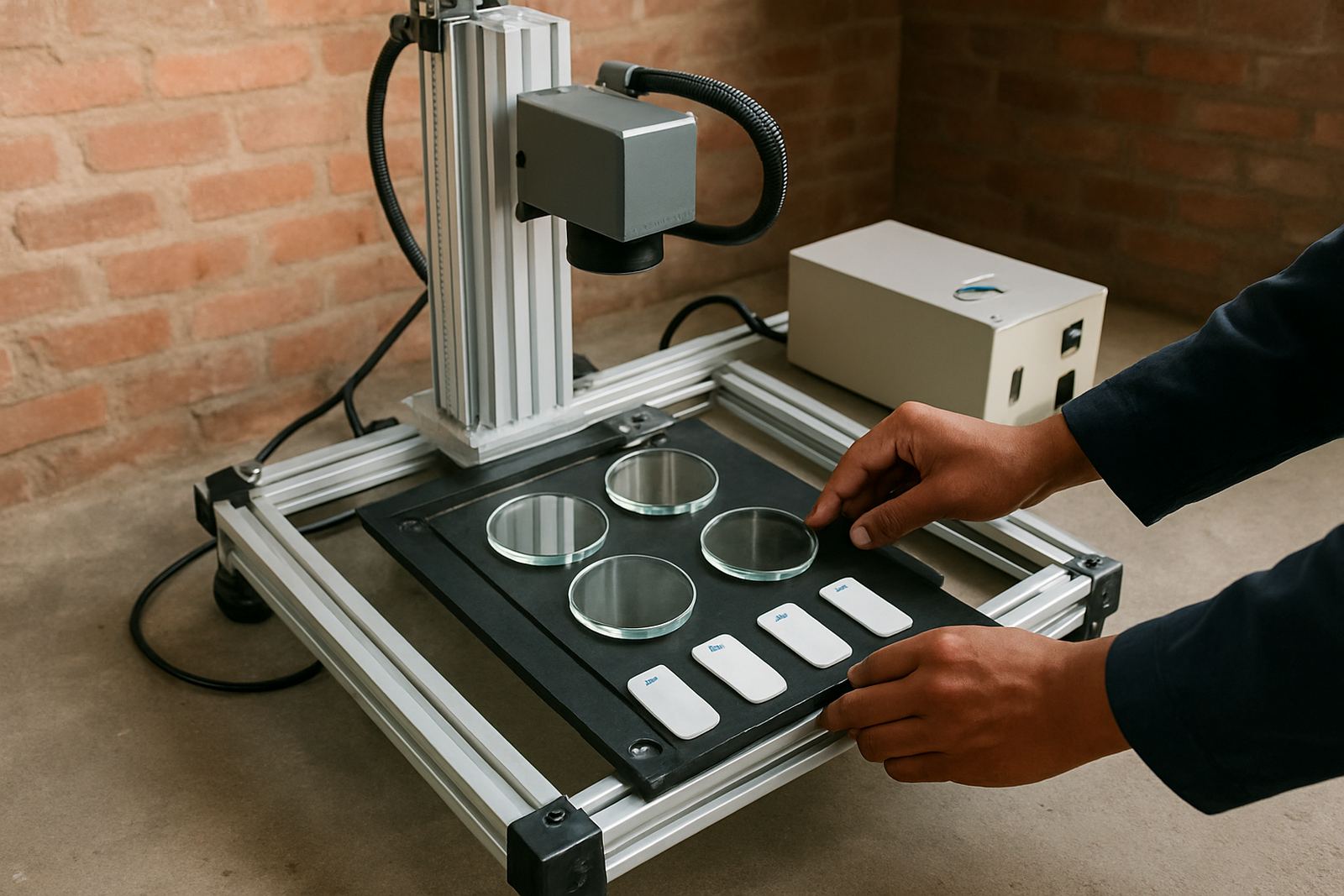
- Benchtop or framed setup for sample rooms and manual loading
- Inline mounting for continuous production lines
- Fixture-based marking for repeat positions and consistent alignment
We help with fixture design and line integration when a site needs repeatable placement or when the mark must land in the same spot every time. That is especially useful on curved glass, moulded plastics and mixed-size runs. If your plant uses different bottle or component sizes, a well planned fixture can save time on changeovers and reduce scrap.
Where it suits best in South African production
The High-Speed Marker suits manufacturers and packers working with cosmetic bottles, medical containers, food-grade packaging, promotional glassware, electronic housings and industrial plastic parts. It is also a good fit for short-run custom work where the marking needs to change often, such as seasonal branding, serial batches or private-label production. Because the mark is permanent, it helps with traceability where product recalls or quality checks are part of the process.
Plants in coastal areas often choose UV marking because there is no wet ink to smear and no residue to dry out in humid conditions. Inland sites appreciate the stable output during heat and dust, especially where downtime is costly. The system can be matched to manual loading, semi-automatic handling or fully integrated production lines, depending on the pace of the site.
- Glass bottles and jars
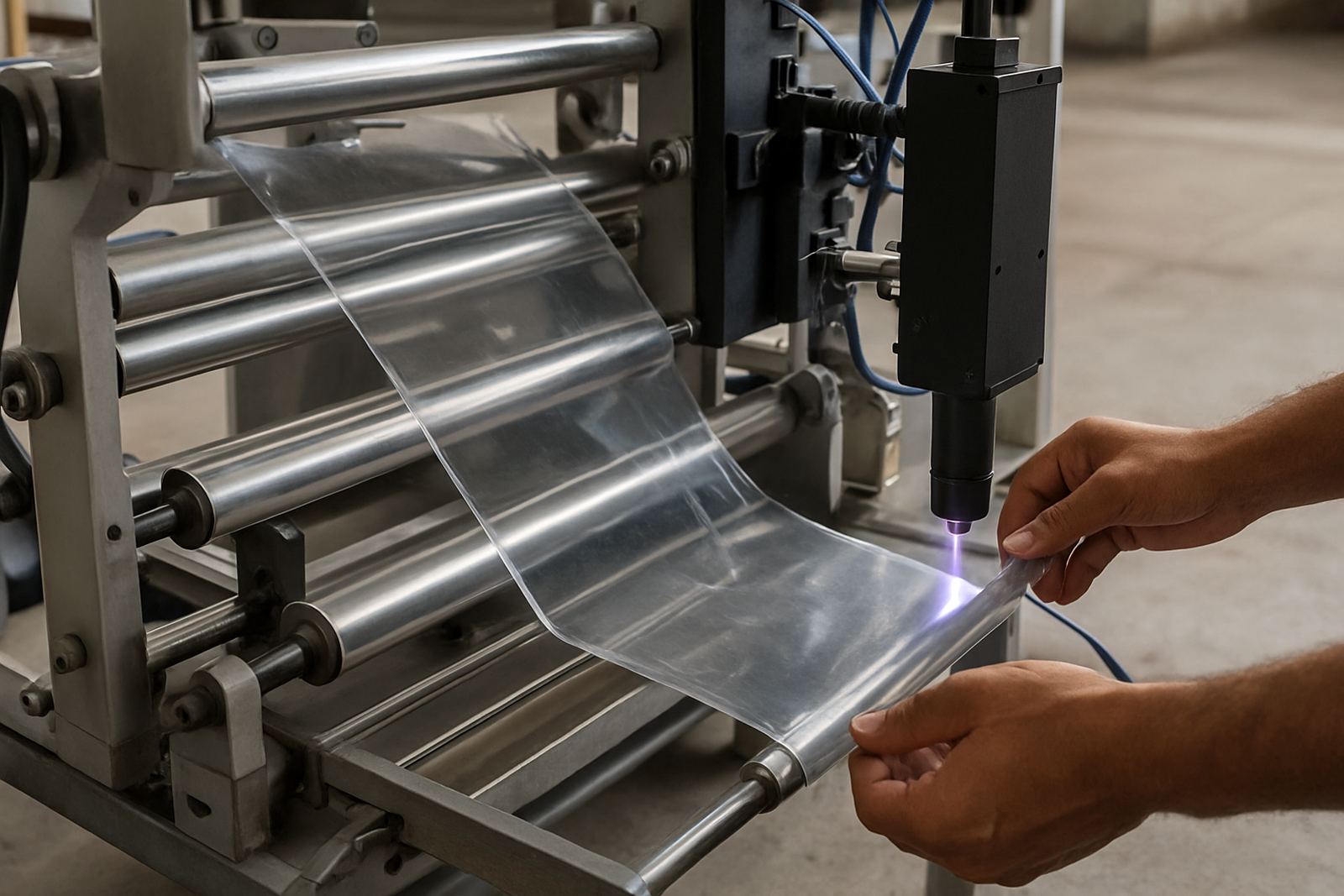
- Clear, tinted or coloured plastic parts
- Cosmetic and personal care packaging
- Technical parts needing serial traceability
Installation, power and site requirements
Installation starts with a site check so the marking head, control unit and product feed all fit the available space. We look at conveyor height, product spacing, lighting, dust control and access for operators and maintenance staff. If the line is already in place, we work around it and set up the marker to suit the existing flow. For new lines, the equipment can be planned into the layout from the start.
Power needs are straightforward for most sites, with a stable electrical supply and proper earthing. In plants that run during load-shedding, backup power planning is important so the machine and control equipment do not trip when supply changes. No process gas is normally needed for standard UV laser marking on glass and plastics, which keeps installation simpler than systems that rely on compressed gas for marking.
- Stable mains power and proper earthing
- Enough space for safe access and airflow
- Correct product positioning and part presentation
- Allowance for backup power where needed
Care, servicing and daily operation
Routine care is simple but it should be done properly. Keep lenses, covers and surrounding surfaces clean, and check that the product feed stays aligned. In dusty industrial areas, a regular wipe-down helps protect output quality. On humid coastal sites, it is wise to keep the machine in a clean dry area and avoid unnecessary exposure to moisture. If a line is stopped often, the machine should still be checked for alignment before restarting.
Preventive maintenance helps avoid downtime and keeps the mark quality steady. Our team handles breakdown repairs, software setup, process optimisation and spares supply, with support available nationwide. We also train operators so they can recognise early signs of poor focus, incorrect positioning or a worn fixture before it turns into a bigger fault. A short service visit now can save a full day lost later, which most production managers know too well.
- Clean optics and guarding regularly
- Check alignment after changeovers
- Book preventive maintenance on a set schedule
- Keep spare parts and consumables in stock where possible
What to check before you order
Before ordering, it helps to confirm the material type, the mark size, the line speed and whether the item is flat, curved or irregular. We also need to know if the mark is for branding, traceability or both, because that affects the setup and any fixture work. If you are marking clear plastic, test samples are especially useful, since different grades can react differently to the beam. For glass, surface finish and coating also matter.
It is worth checking the available power, the space around the line and the operator workflow. If the machine must work with an existing conveyor or packaging line, share those details early so the installation can be planned properly. We can arrange sample testing, a site demo and operator training from our Jet Park, Boksburg base, with support across Ekurhuleni, Midrand and Pretoria as well as other parts of South Africa.
- Material type and thickness
- Required mark size and content
- Line speed and daily output
- Space, power and backup arrangements
Key facts
| Marking method | UV laser marking for glass and selected plastics |
|---|---|
| Best for | Permanent branding, labelling, serials and trace codes |
| Operating style | Manual, semi-automatic or inline integration |
| Power requirement | Stable electrical supply with proper earthing |
| Process gas | Not normally required for standard marking applications |
| Support | Site demos, installation, training, maintenance and repairs nationwide |