Why packaging traceability matters on the factory floor
When packaging carries a permanent ID, you can tie each unit back to a batch, shift, machine setting or production date. That matters when a customer queries a print run, when a pallet needs to be checked, or when you want to know which cartons left the line before a setting changed. It also helps with recalls, stock rotation and internal audits, which is especially useful where product goes through multiple depots and rework points.
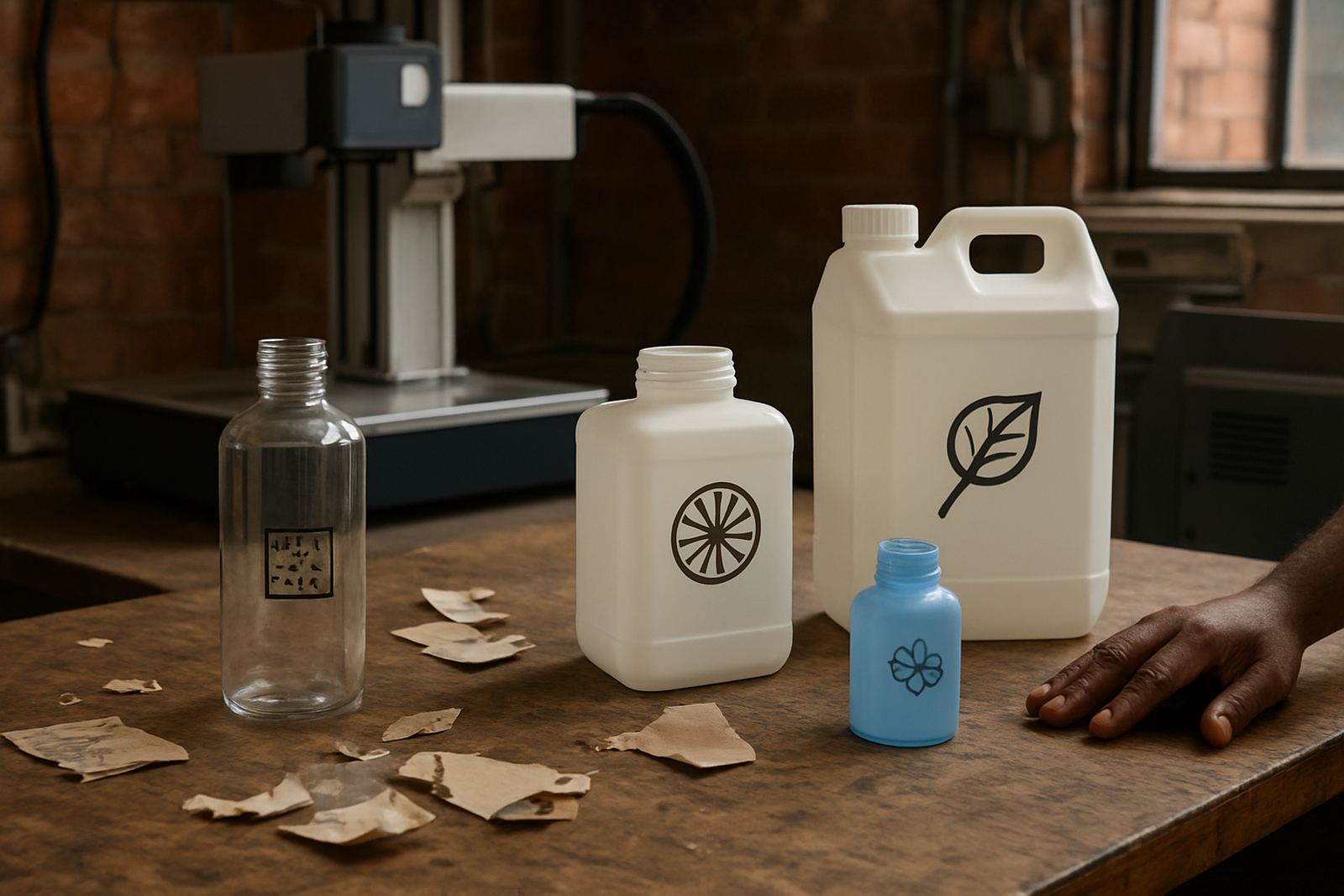
For glass and plastics, traceability has to survive handling, washing, condensation and transport. Ink can rub off, labels can lift and stickers are easy to remove. A laser-marked code, by contrast stays on the surface or in the material itself depending on the substrate and finish. That gives you cleaner control, and less confusion when product is moving through Johannesburg, Durban or Cape Town under tight deadlines.
What a permanent ID should include on glass and plastics
The best code is one your team can read quickly and use consistently. It does not have to be large, but it must be legible and fixed in the same place each time. On packaging this often means a batch number, date code, line code, shift reference or a small 2D code linked to production records.
- Batch or lot number for internal tracking
- Production date or shift code for stock control
- Line or machine reference for fault tracing
- Item number for packaging variants
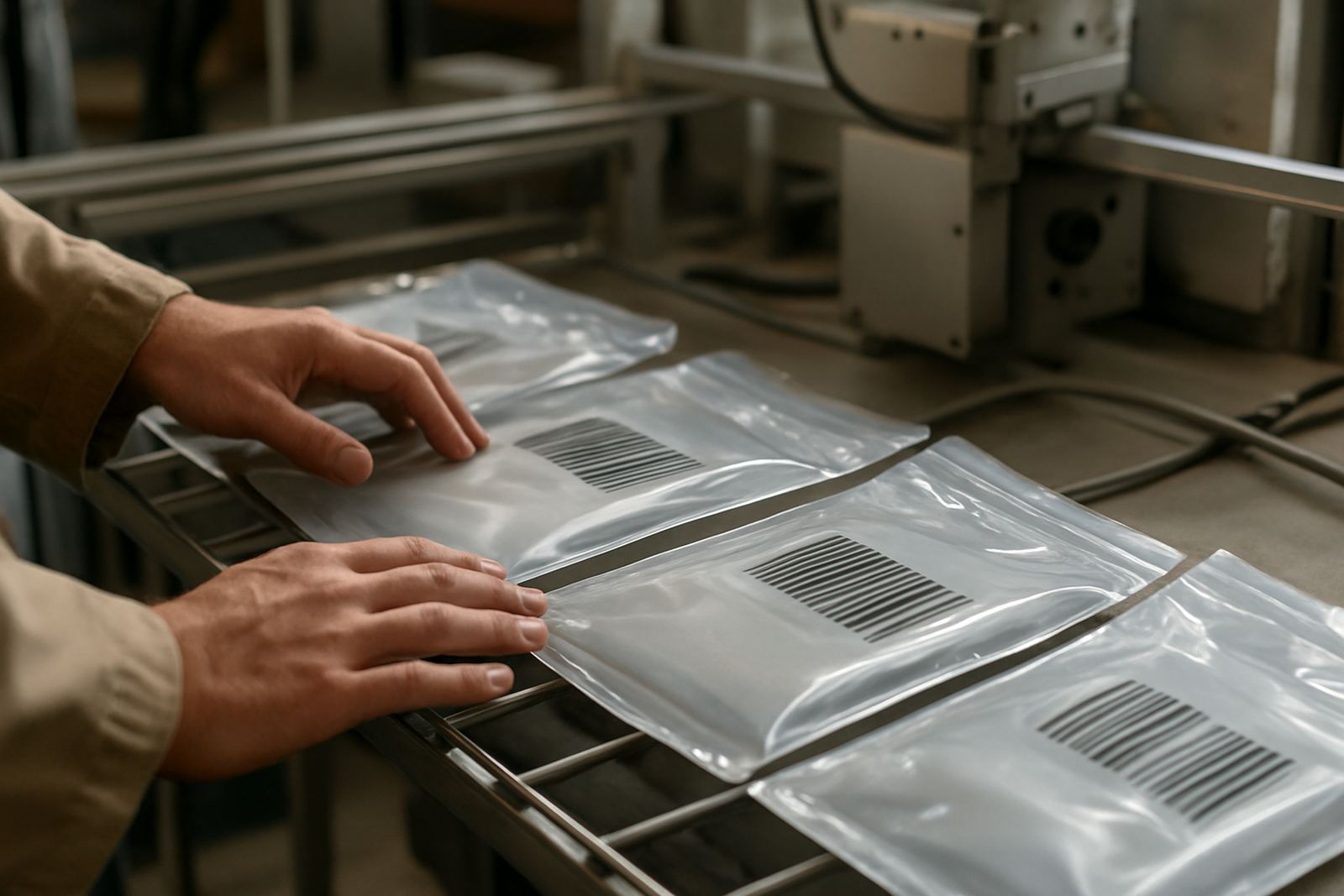
- 2D code where scanning speed matters
On some plastics, the mark needs to stay clear under handling and stacking, while on glass the contrast must be visible without cracking, distortion or unwanted surface damage. That balance is where sample testing helps. A good test shows whether the code reads well under warehouse lighting and whether it still scans after packing tape, dust or moisture have been added.
How laser marking supports compliance and customer confidence
Traceability is not only about the plant. It also affects customers, distributors and auditors who need proof that a pack can be traced back to source. For food, beverage, cosmetics and industrial packaging, a permanent mark helps show that the product identification was applied at the correct point in the process and can be checked again later if needed.
In many South African operations, traceability also supports municipal and customer requirements for cleaner labelling and better control of waste. When packaging carries a fixed mark, it reduces the need for secondary labels and improves consistency across batches. That means fewer errors in dispatch and less time spent checking for missing or smudged information.
- Supports recall control if an issue is found later
- Helps verify stock age in warehouse and retail chains
- Improves accountability between shifts and production runs
- Reduces relabelling where packaging is reused or reworked
Practical points before you mark a production line
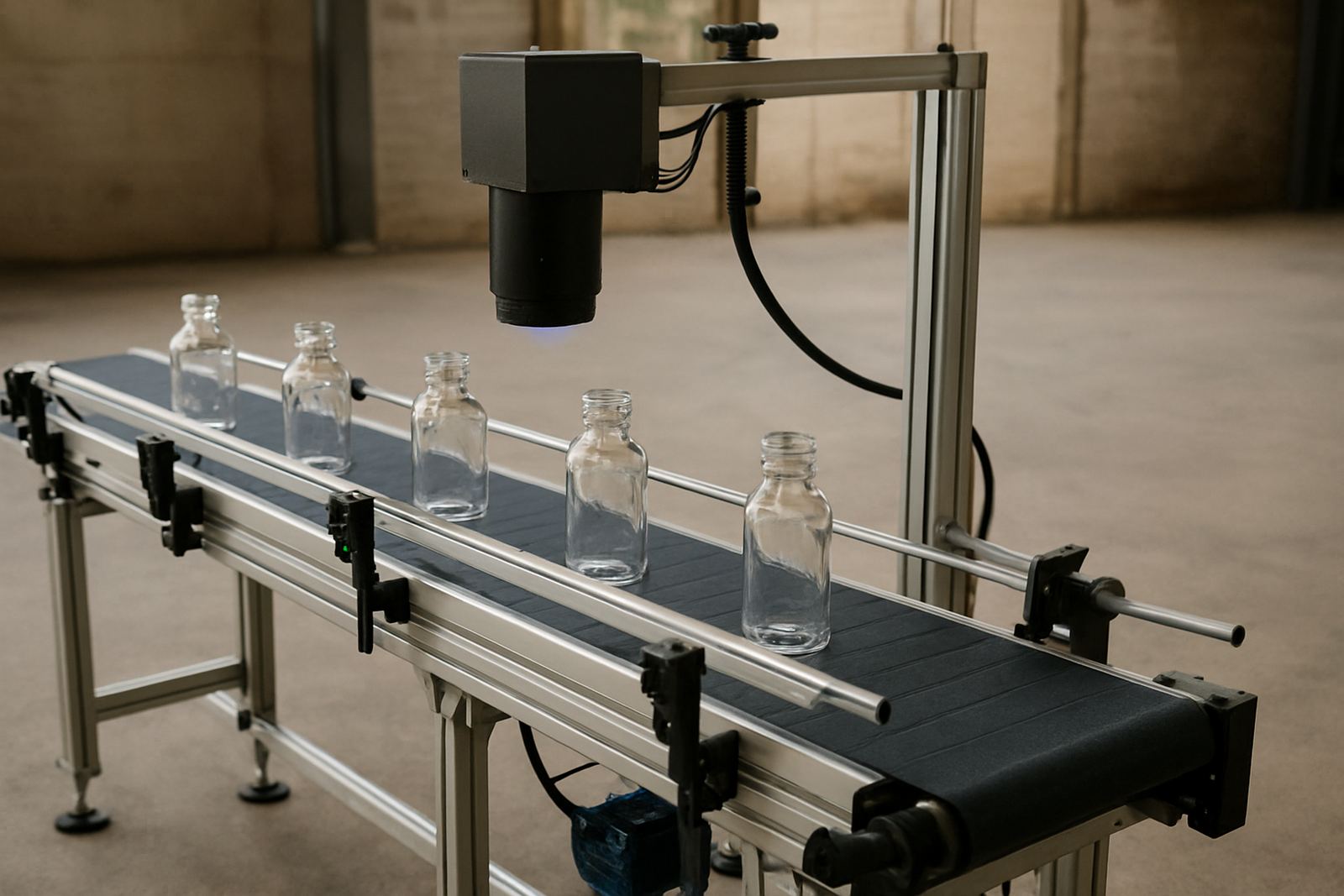
Before any line is set up, it is worth checking the material type, finish and line speed. A glossy bottle neck, a textured cap or a clear plastic tray each responds differently. If the code position is awkward, the operator may struggle to keep it in the same place and your traceability will suffer. Fixture design and line integration matter here, because the mark must land where the item is stable and visible.
In Jet Park and surrounding industrial areas, we often see companies working around load-shedding, older conveyors and mixed packaging sizes. That is where process optimisation pays off. The system should recover properly after a power interruption, and the code placement must still work when the line restarts at a different pace. A quick sample test can save a lot of grief later, especially if the pack is curved or the wall thickness changes.
- Confirm material type before marking begins
- Check whether the mark must be read by eye or scanner
- Test placement on the actual pack, not a sample photo
- Make sure the line can hold the item steady during marking
- Allow for dust, humidity and operator handling
A local example from Jet Park to the rest of Gauteng
A plastics converter in Ekurhuleni, not far from Jet Park, wanted every container to carry a permanent batch reference before it left the site. The issue was not only legibility. The team needed marks that held up in storage, through delivery to Benoni and Alberton, and during returns where packs were checked again after weeks in circulation. Their previous method was inconsistent and hard to audit.
After sample testing and operator training, the marking point was set so the code stayed clear on each unit. Refilwe Mahlangu checked the application requirements, while Thabo Khumalo handled the installation and line setup on site. The result was cleaner batch control and faster checks when stock came back through the system. It also made day-to-day work easier for the pack room team, because there was one standard place to read the ID, no guessing, no crossing out.
What good support looks like after installation
Traceability is only useful if the equipment keeps producing clean marks and the team knows how to use it. That is why training, preventive maintenance and spares supply are part of the job, not add-ons. A plant in Kempton Park may need a quick software adjustment, while a client in Pretoria may need a visit for breakdown repairs or fixture changes after a packaging redesign.
For businesses running glass and plastics across multiple sites, support should cover the full cycle from first demo to ongoing use. That means site demos, machine installation, operator training, software setup and service back-up when production pressure is high. Naledi Mokoena and Priya Naidoo keep the admin and scheduling side in order, which matters when a line has to be back up before the next shift. The goal is simple: keep the marks permanent, keep the records useful and keep the line moving.
Why permanent marking is worth the discipline
Traceability on packaging works best when it is treated as part of production control, not a last-minute label fix. Permanent marking gives you a cleaner paper trail, but it also gives you confidence on the floor. Operators can see what has been made, supervisors can track what went out, and management can act faster if something does not add up.
For glass and plastics in South Africa, that discipline can make a real difference when weather, power supply and transport conditions are not always ideal. A mark that stays readable despite heat, moisture or handling is one less thing to worry about. And when the line is busy, that small bit of certainty goes a long way.