Why fixed-position marking struggles on shaped parts
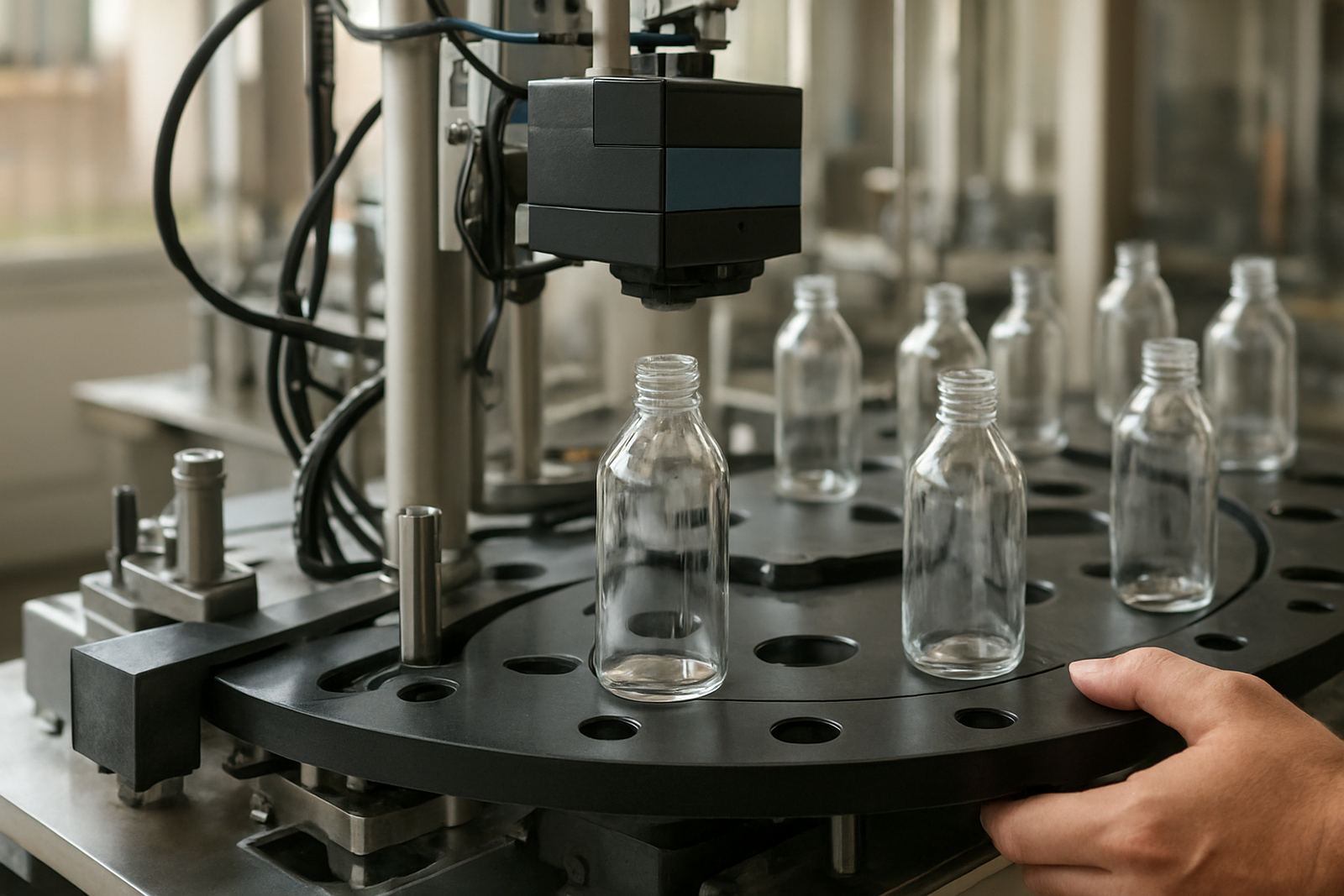
On a flat, plain panel, a simple setup can work well enough. But once you move to bottles, lids, cosmetic jars, appliance trims or moulded plastic components, small variations in part position start to show. A part can sit a few millimetres off centre, rotate slightly, or arrive at the station with a mould line or printed graphic that needs to be avoided.
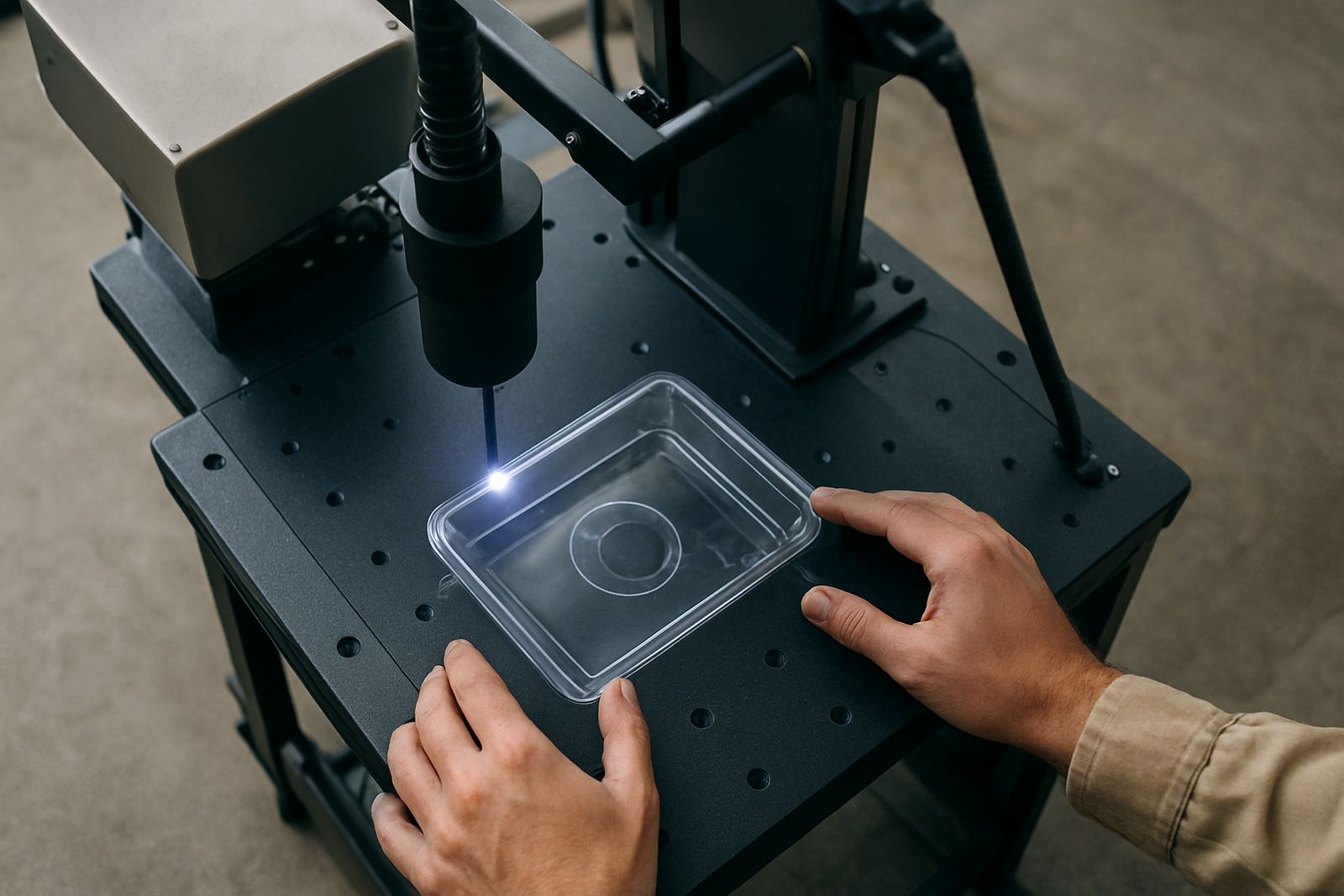
That is where camera alignment earns its keep. The system inspects the part, reads its position and orientation, and guides the mark to the correct location before the laser fires. For glass and plastics, that extra check reduces misplaced codes, crooked logos and off-centre labels. It also helps when you are running mixed batches, where one supplier's container may differ slightly from another and the operator cannot stop every few minutes to re-set by hand.
How camera alignment reduces scrap and rework
Misplaced marks are expensive because they waste both material and time. A bottle or lid that has been marked in the wrong place often cannot be reworked, especially if the mark needs to be permanent and neat. With vision guidance, the system measures the actual part location instead of relying on the tray, fixture or conveyor alone.
In practice, that means fewer rejected items, less operator intervention and more consistent output across the shift. It also helps when the line speed changes after tea break or when a load-shedding restart forces a reset. Instead of redoing a whole batch because the part position drifted, the camera can pick up the new position and keep production moving, which is a proper saving over time.
- Fewer off-centre marks on curved or transparent items
- Less rework when parts shift in trays or on conveyors
- Better repeatability across day and night shifts
- Lower risk of damaging finished goods during manual correction
Better results on glass, plastics and mixed batches
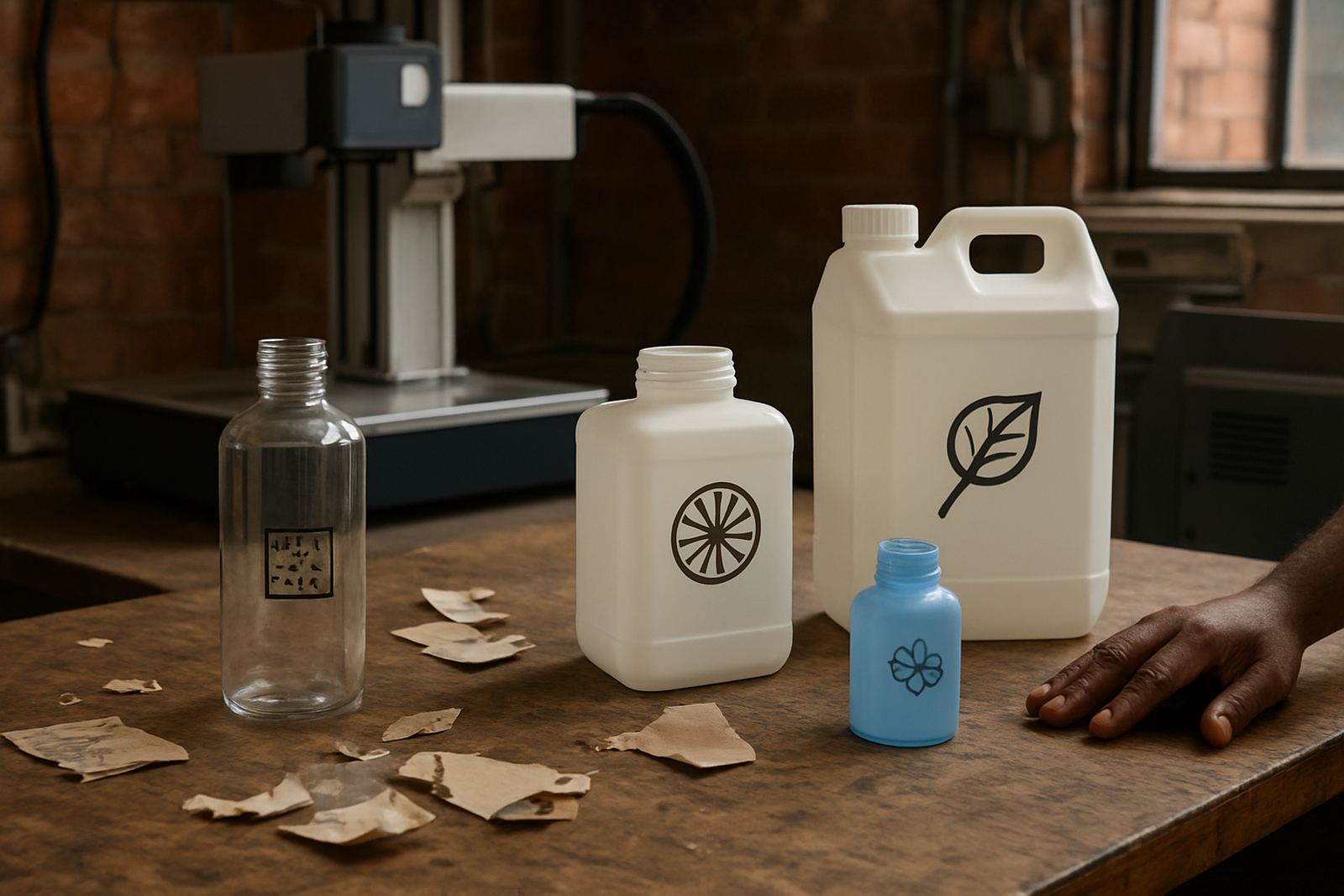
Glass and plastic present different challenges. Glass can be reflective and sometimes difficult to read under bright plant lighting. Plastics can vary in colour, surface finish and mould detail, which affects how a part is detected and where the mark should sit. Camera alignment helps overcome these issues by locating a consistent reference point before marking begins.
This is particularly useful for customers doing branding on premium packaging, technical labelling on industrial components, or small text on pre-printed items. If a part has a logo, seam, notch or embossed feature, the camera can use that detail as a guide. The result is a mark that lines up with the product rather than fighting against it. On some lines, that means the difference between a neat finished item and one that looks rushed or out of spec.
For mixed batches, the operator does not need to build a separate fixture for every slight variation. A well set vision system can handle different part positions and still land the mark where it should be, although the setup must be done properly from the start.
What a good setup looks like on the factory floor
A reliable camera alignment setup is not just about adding a camera to the machine. It starts with stable lighting, a clear field of view and a fixture or conveyor arrangement that keeps the part within the camera's working range. If the image is poor, the software will not be able to make a dependable decision.
In South African conditions, that matters more than people think. Coastal humidity in places like Durban or Port Elizabeth can affect equipment if the cabinet is not protected, while dust and vibration on inland production floors can disturb alignment over time. A good installation includes proper mounting, cable routing, and checks for lighting glare, especially where clear glass sits under bright overhead lights.
- Keep the camera lens clean and free of dust
- Use stable part presentation, either in a fixture or on a controlled conveyor
- Check lighting angles to reduce glare on transparent materials
- Test the system with real samples, not only perfect ones
A practical example from Ekurhuleni production
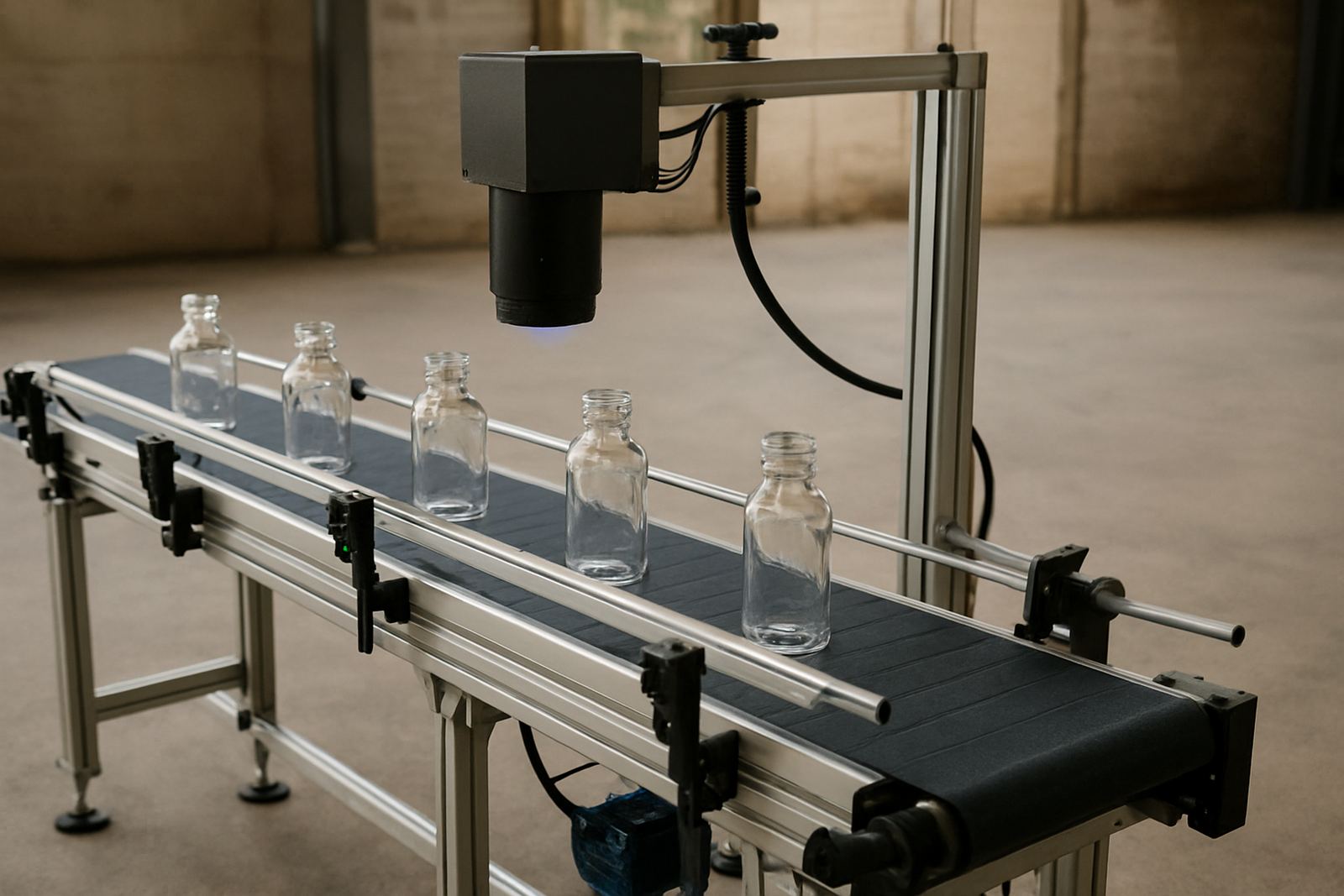
Consider a packaging line in Jet Park supplying bottles to customers in Boksburg, Benoni and Kempton Park. The bottles are clear, slightly curved and arrive with small variations in how they sit in the tray. Without camera alignment, the team has to accept a higher reject rate or stop the line to adjust positions by hand.
Once vision alignment is introduced, the system can detect each bottle's actual position and place the mark on the intended face every time. That means better consistency across long runs, even when the line is restarted after a short power interruption. It also helps the operator catch bad presentation before the laser starts, instead of finding out only after the part has already been marked wrong.
For businesses working with municipal or export labelling requirements, that accuracy is not just nice to have. It supports traceability, cleaner presentation and fewer disputes about whether a code or branding mark is legible. It also saves staff from spending hours sorting through avoidable misprints.
When camera alignment is worth the investment
Not every job needs vision guidance, but it becomes worth serious consideration when parts are shaped, small, transparent or expensive to scrap. It is also a strong choice where operators change often, production runs are short, or the same machine must handle multiple product types in one day. In those cases, the ability to locate the part automatically can pay back quickly.
For manufacturers in Alberton, Germiston, Midrand or Pretoria, the decision usually comes down to throughput and quality control. If your current setup depends on an operator lining up every item by eye, there is room for error. Camera alignment reduces that risk and gives the line a more repeatable process. The machine still needs proper setup, training and maintenance, but once it is dialled in the process becomes steadier and easier to manage.
That is the real benefit: not fancy kit for its own sake, but fewer mistakes, better use of material and a cleaner finished result. When the mark must be permanent and the part must leave the line right first time, vision alignment is often the difference between borderline and dependable.
How UV Laser supports alignment projects nationwide
At UV Laser, alignment projects are handled as part of the full marking process, from sample testing and fixture design to installation, training and process optimisation. The team works from Jet Park, Boksburg and supports clients across South Africa with demos, installs and follow-up service. That includes sites in Ekurhuleni, Pretoria and beyond, whether the job is a single station or a full production line.
Riaan Pretorius and the team look at the real job on site, not just the machine spec sheet. Refilwe Mahlangu can test sample parts, Anele Dlamini trains operators, and Thabo Khumalo handles installation and line integration where needed. If a customer needs spares, software setup or preventive maintenance later on, the support stays practical and direct. The aim is simple: get the camera, laser and fixture working together so the mark lands where it should, every shift.