Direct marking for permanence and traceability
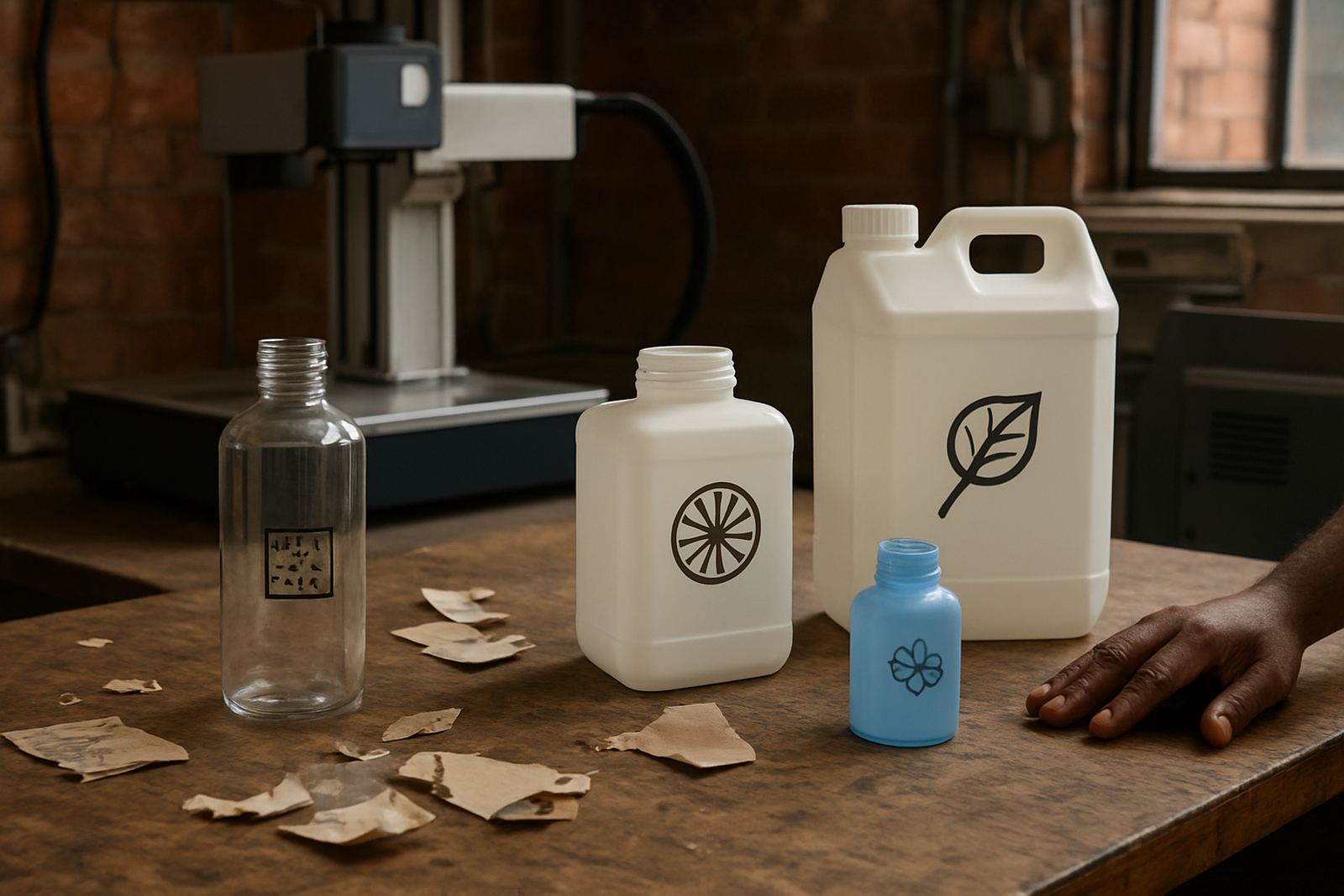
UV laser marking is used when the mark must remain on the item itself. It suits applications where batch codes, logos, serials or product identifiers need to stay clear after repeated wiping, handling or storage. Because the mark is formed on the surface, there is no separate label stock to replace, no adhesive layer to fail and no print edge to catch during packing.
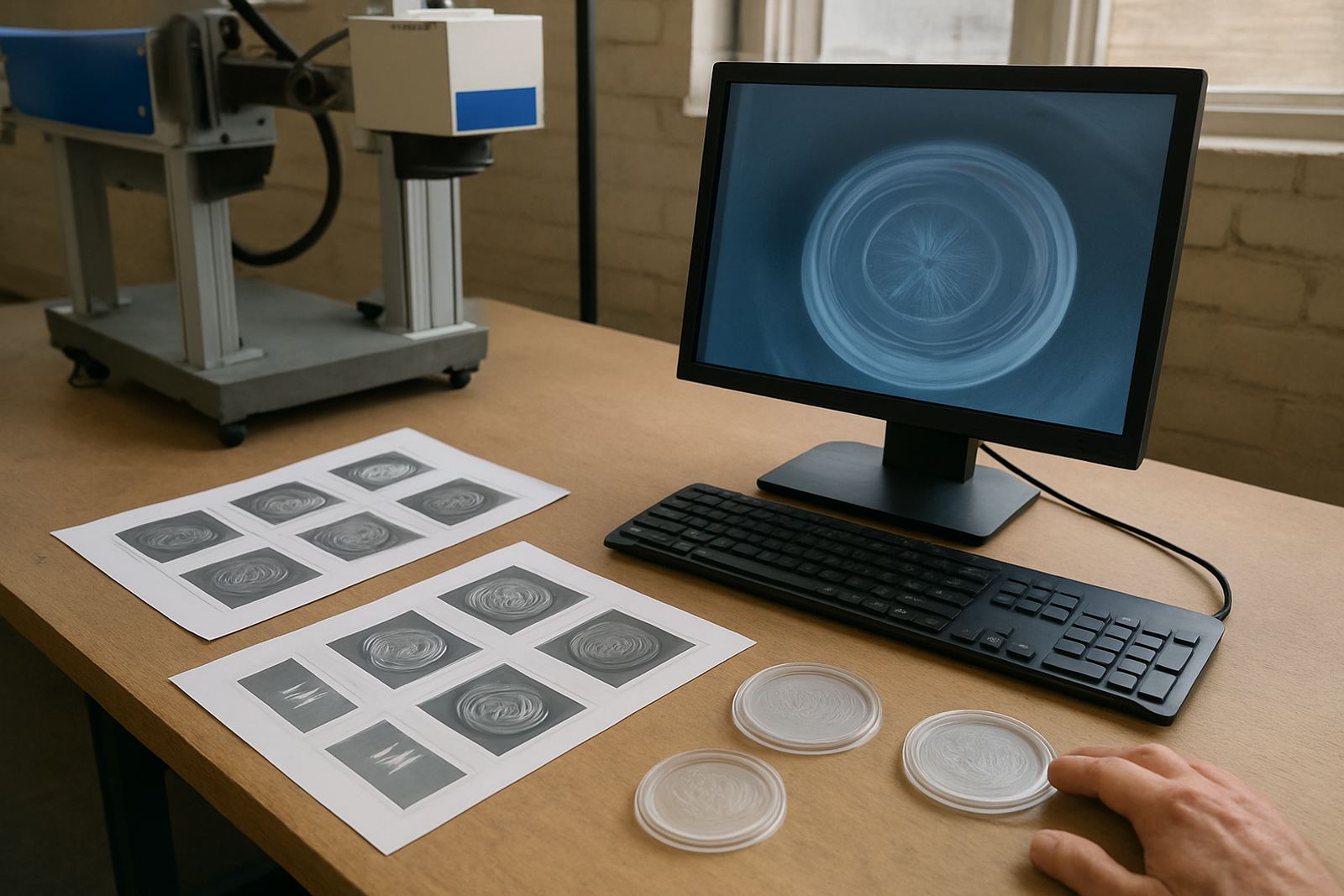
For glass, the result can be very clean and fine. For plastics, careful setup matters so the mark is readable without damaging the part. That is where sample testing helps. On one moulded component, a settings change of a few seconds can make the difference between a crisp mark and a faint one. Riaan Pretorius and the team often work through sample trials before a full install, especially where product lines are already under time pressure.
- Good for serial numbers, compliance details and permanent branding
- Useful where products are washed, chilled or handled many times
- Reduces the need to re-label stock later
- Works well on clear and coloured plastics when the process is set correctly
Where labels still make practical sense
Labels still have a place. If the information changes often, or if the product needs a large surface graphic that would be expensive to mark directly, a label may be the better choice. This is especially true for short runs, promotional packaging and items that move through several versions before the final product is confirmed. In those cases, labels are quick to print and easy to swap out.
They do, however, need the right conditions. In humid areas like parts of the East Rand or on sites close to delivery bays, adhesive failure can show up faster than expected. If cartons are stored near open roller doors or in warehouses with temperature swings, labels can curl at the corners or mark poorly over time.
- Best for variable information that changes often
- Useful for temporary campaigns and short production runs
- Can carry large graphics, barcodes and instructions
- Need correct adhesive choice for heat, moisture and surface type
A Boksburg example from the factory floor
Consider a Jet Park business packing clear plastic components for a client in Pretoria. The parts are small, the batch details matter and the containers are handled by staff on two shifts. A paper label seems simple at first, but once the stock goes through sorting, boxing and warehouse movement, some labels start lifting at the edges. A permanent mark on the component or on a matched fixture solves part of the problem by keeping the key information on the item itself.
That same business may still use labels on outer cartons, because outer packaging changes often and needs shipping details. This mixed approach is common. One method is not always better than the other, the trick is to place permanent marks where the product must last and labels where flexibility is more useful.
For companies in Boksburg, Germiston, Benoni or Kempton Park, this can save time at the end of each shift. Fewer relabel jobs means less stoppage, fewer rework piles and less confusion when orders move through the depot after 4 pm traffic starts backing up on the N12 and R21 routes.
What to weigh before you choose
Before you decide, check how the product is used, not just how it looks on day one. A good marking method should fit the production speed, the storage conditions and the lifespan of the item. If the item is returned for refilling, cleaning or re-use, permanence becomes more valuable. If the label needs frequent changes, flexibility may matter more.
It also helps to think about your staff and your line setup. If operators need a simple routine that holds through power interruptions or backlogged shifts, a stable marking process can remove a lot of small hassles. Training matters here too, because the cleanest result comes from consistent setup, correct focus and a process that suits the material.
- Expected lifespan of the product
- Exposure to water, chemicals, abrasion or sunlight
- Need for changing data or artwork
- Speed of the line and level of operator handling
- Whether marks must remain readable for audits or returns
Choosing the right method for South African production
For many South African manufacturers, the answer is a combination of both. Permanent UV laser marking is ideal for the item itself, while labels can still carry shipping details, promotional text or changing codes. That balance often gives the cleanest result without overcomplicating the line. It also makes maintenance simpler, since the core mark does not depend on a consumable that may run short at the wrong time.
If you are comparing the two for a glass or plastics application, start with a sample test and judge the result after handling, cleaning and storage. A mark that looks fine straight off the machine is not enough, it has to stay legible after the real work starts. That is where practical testing and proper setup make all the difference.
UV Laser supports site demos, sample testing, machine installation and operator training nationwide, with support from Jet Park, Boksburg and service into Midrand, Pretoria, Alberton and beyond. The right choice should fit your product, your floor and your budget, not just the spec sheet.