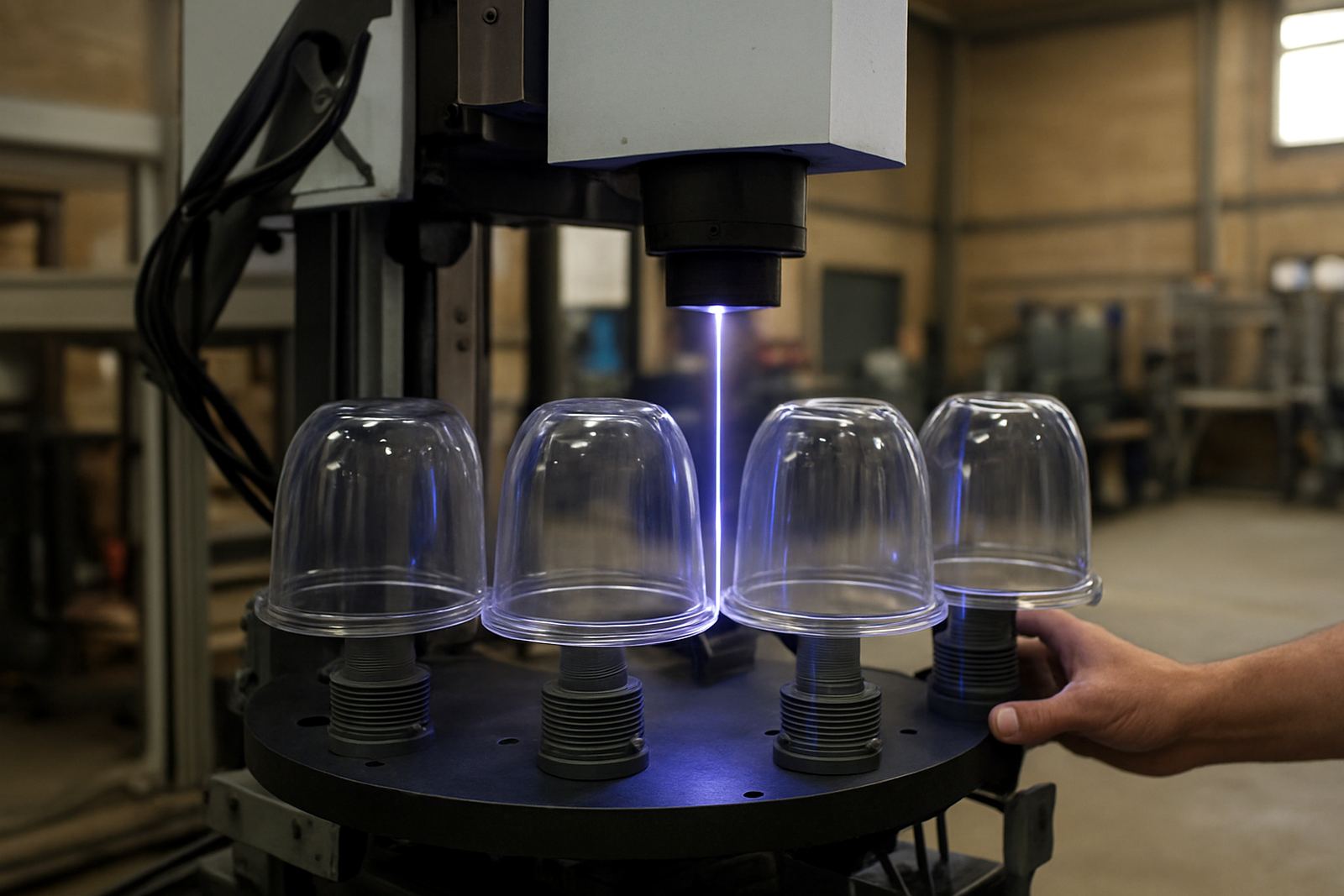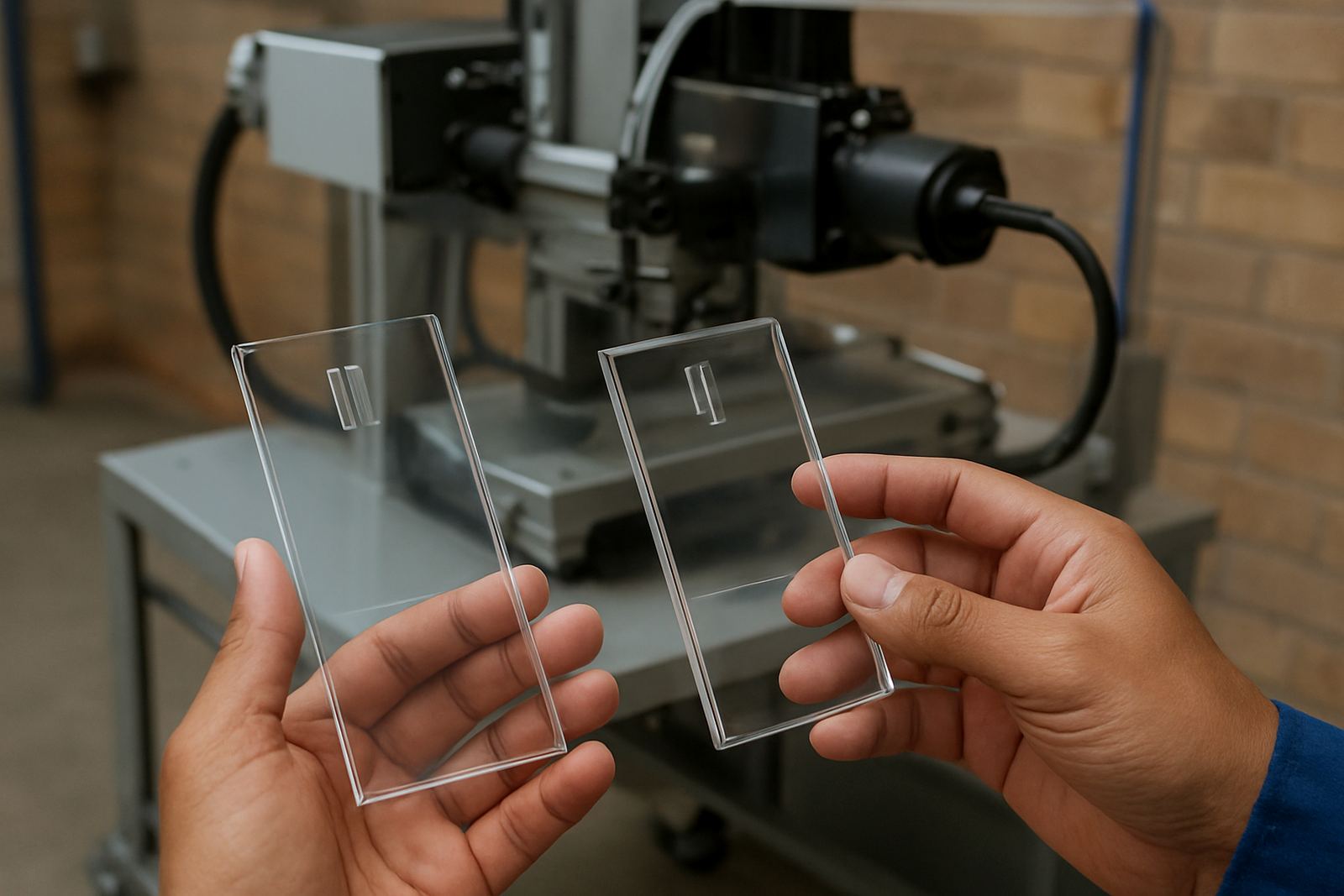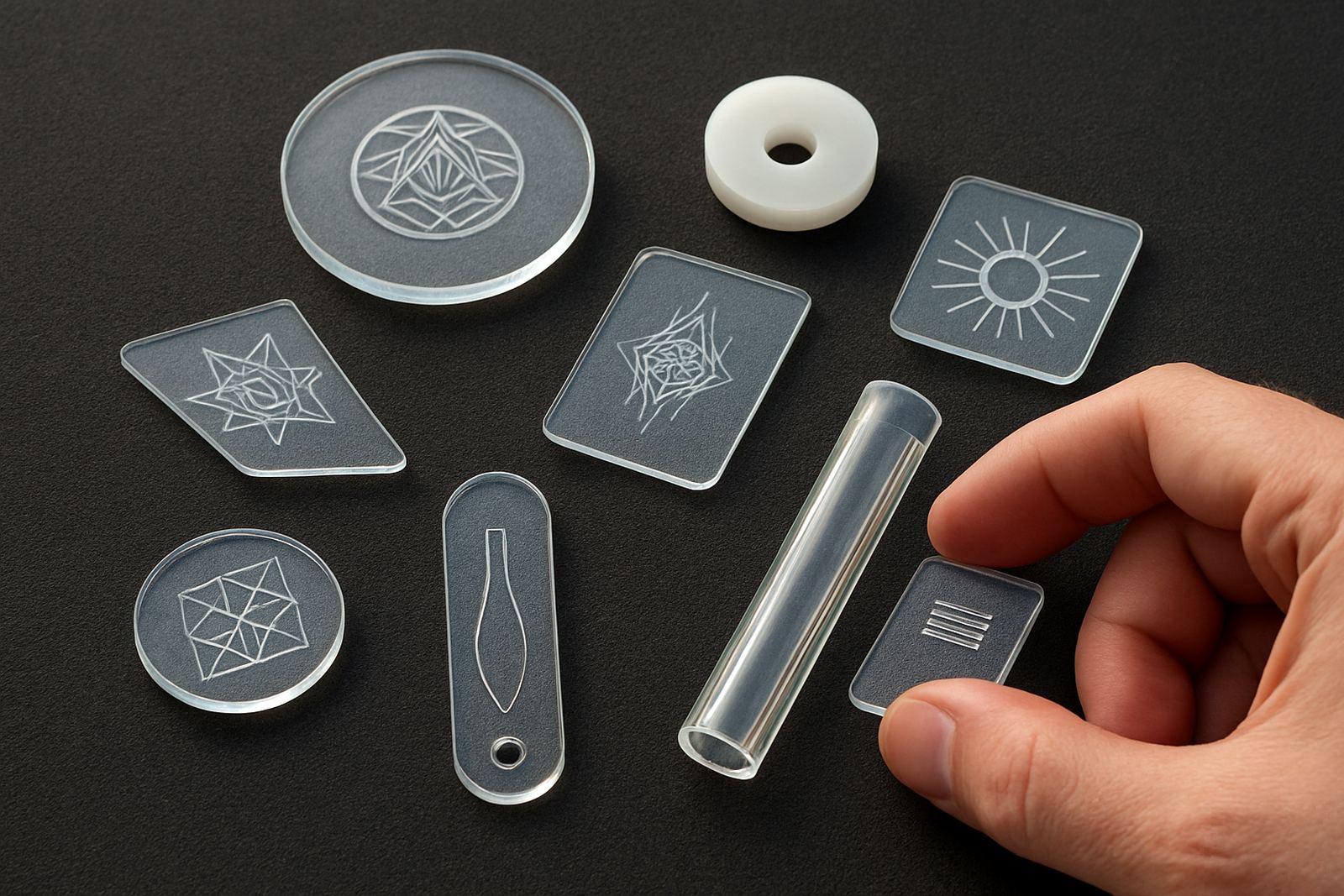
Why material trials save time on the floor
On paper, a marking job can look simple. In practice, two plastics that look the same can react very differently once the laser starts working. One may mark cleanly in a single pass, while the other may haze, warp or leave a weak contrast that disappears after handling. That is why testing matters before you commit to full production.
Material trials help set the right speed, power, focus and marking pattern for the item in front of you. They also show whether the part needs a jig, a different finish, or a change in the way it is fed through the line. For businesses in packaging, medical, tooling, FMCG and technical plastics, this step avoids scrap and saves hours of adjustments later. It also gives the team a known setting to return to when production shifts or staff change over.
In Jet Park and the wider Ekurhuleni area, many plants run on tight schedules and cannot afford long setup delays. A proper trial gives you proof before you order fixtures, start a batch or commit to a customer sample. That is especially useful when a client wants serials, logos or small codes on curved parts, frosted glass or high-gloss plastics.
What a good sample test should show
A useful sample test is not only about whether the mark is visible. It should show how the material reacts after cooling, wiping, handling and light exposure. A mark that looks good straight after the pass may soften, crack or fade if the substrate was not suited to the settings. Testing is there to catch that early.
We normally look at the following points during a sample run:
- Mark contrast and legibility under normal light
- Edge quality around fine text, logos and small codes
- Any heat effect, haze or surface change around the mark
- Consistency across several samples, not just one piece
- How the mark holds up after cleaning or rubbing
- Whether the part needs a fixture to keep position steady
If a bottle, panel or cap is for a customer-facing product, the finish has to be neat as well as readable. For industrial parts, readability and permanence often matter more than appearance, but both still count. A good trial should tell you which side of that balance you are working with.
Glass, plastics and the small changes that matter
Glass usually needs a careful balance. Too much energy can chip the surface or create a rough edge, while too little leaves a weak mark that will not hold up in use. The same applies to plastics, but the response changes depending on the type of polymer, colour, thickness and any coating already on the part. A clear polypropylene container is not treated the same as a black moulded component or a painted panel.
It is common for a client to bring in parts that came from different mould cavities or batches. Even then, the response can shift slightly from one run to the next. That is why testing should cover more than one sample and, where possible, more than one position on the part. On curved or uneven items, the focus height may need adjustment to keep the result even across the face.
For businesses in Benoni, Germiston and Kempton Park, the practical challenge is often not only the marking itself but the conditions around it. Dust, vibration, temperature swings and load-shedding can affect setup and output, so the test should reflect real working conditions as closely as possible. If the machine will run next to a conveyor or packing line, then test it that way, not only on a bench.
How to prepare parts before a trial run
Good trials start with good samples. The more complete the sample pack, the better the result. A single piece can give an idea, but it does not always tell the full story. When possible, bring parts that reflect the actual production batch, including colour, finish and thickness.
- Send the same material that will be used in production, not a substitute
- Include at least a few spare samples for repeat testing
- Note whether the part is moulded, cut, coated or printed already
- Bring the required artwork, serial format or code layout
- Explain where the mark must sit and how it will be read
- Tell us if the item will face cleaning, heat, moisture or outdoor use
If the product has a curved body, a reflective surface or a tight marking area, mention that early. Those details affect the choice of fixture and the marking position. It also helps to know whether the item will be handled by operators wearing gloves, because that changes the flow of loading and unloading.
In some cases, a customer thinks the material is the problem when the real issue is the part finish. A glossy surface may need different treatment from a matt one, and a printed face may need the mark placed elsewhere. Proper preparation removes guesswork.
Turning trial results into a stable production setting
Once the sample looks right, the work is not over. The setting must be repeatable under normal production pressure. That means checking the same result across several parts, across a full shift if needed, and after the machine has been running long enough to warm up. A setting that works for one part at 9am may shift slightly by mid afternoon if the environment changes.
We often use trial feedback to refine the process around the machine as well as the mark itself. For example, the operator may need a different loading method, the fixture may need a locator pin, or the software layout may need to be simplified so changeovers take less time. That is where process optimisation comes in, because the aim is not only a better mark but a cleaner production flow.
For a plant in Pretoria, Midrand or Alberton, this may mean setting up the machine to handle short runs during the week and larger runs on certain days. A practical setup can make the difference between a line that keeps moving and one that stops for adjustments every few hours. The result should be one setting the team can trust, not a setting that only works when the technician is standing next to it.
Local support for demos, installs and training
Testing material response is easier when the people handling the machine understand the full process. That is why site demos, sample testing, installation and operator training all work together. A trial in Jet Park can lead into a line integration plan, or it can stay as a small standalone setup if that suits the production need better. The important part is that the material has been tested before the final decision is made.
Our team in Boksburg works with businesses across Ekurhuleni and nationwide, from Germiston and Kempton Park to Benoni, Alberton, Midrand and Pretoria. Riaan Pretorius oversees the business, with support from Naledi Mokoena, Refilwe Mahlangu, Anele Dlamini, Priya Naidoo and Thabo Khumalo. That mix of operations, applications, training and field support means the trial can be followed through properly, from first sample to live production.
If you need spare parts, preventive maintenance or breakdown repairs later, those services are available too. But the best time to solve a material issue is before the production schedule is full and the orders are stacked up. A careful trial keeps the process steady, and it gives your team a clear point to start from.