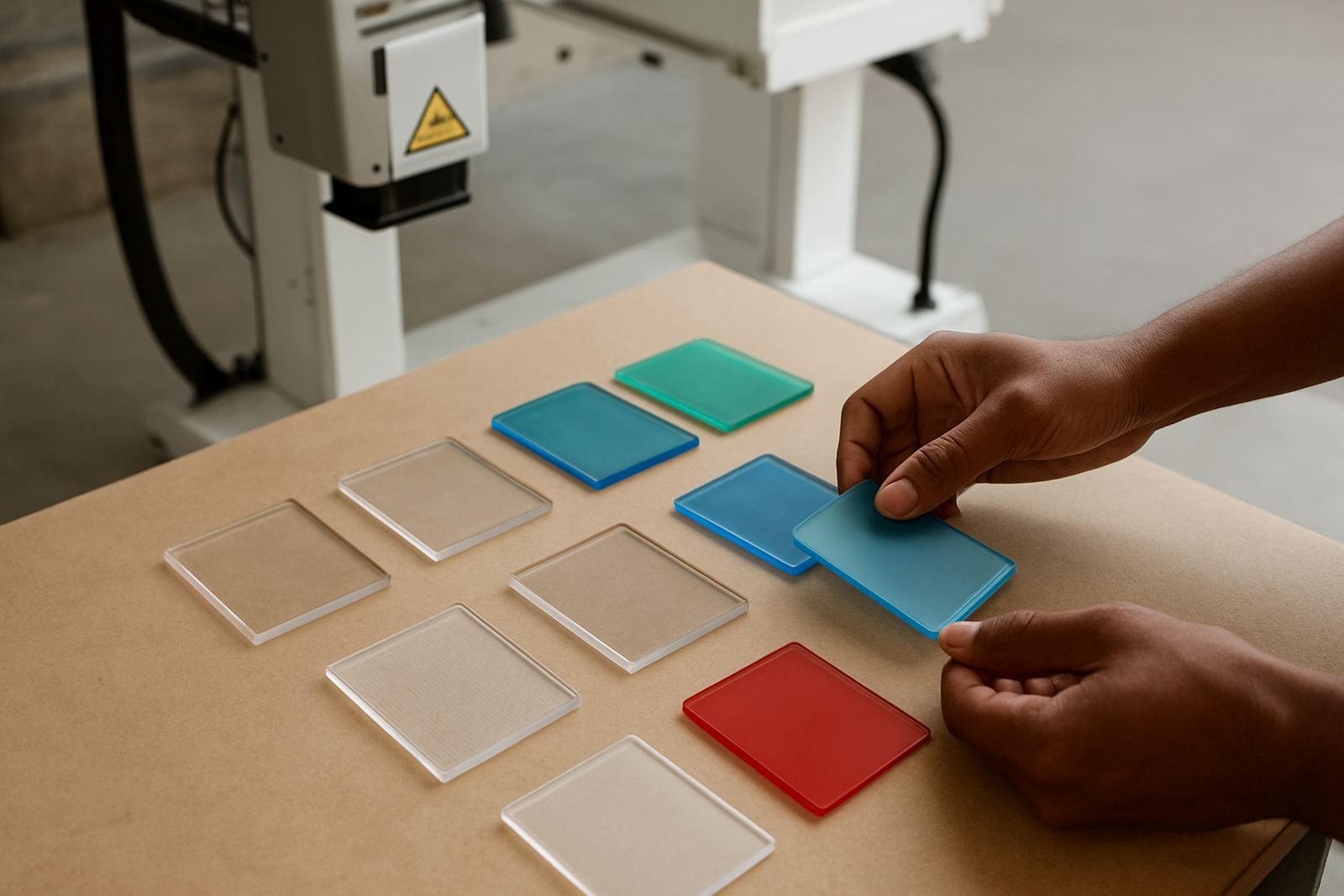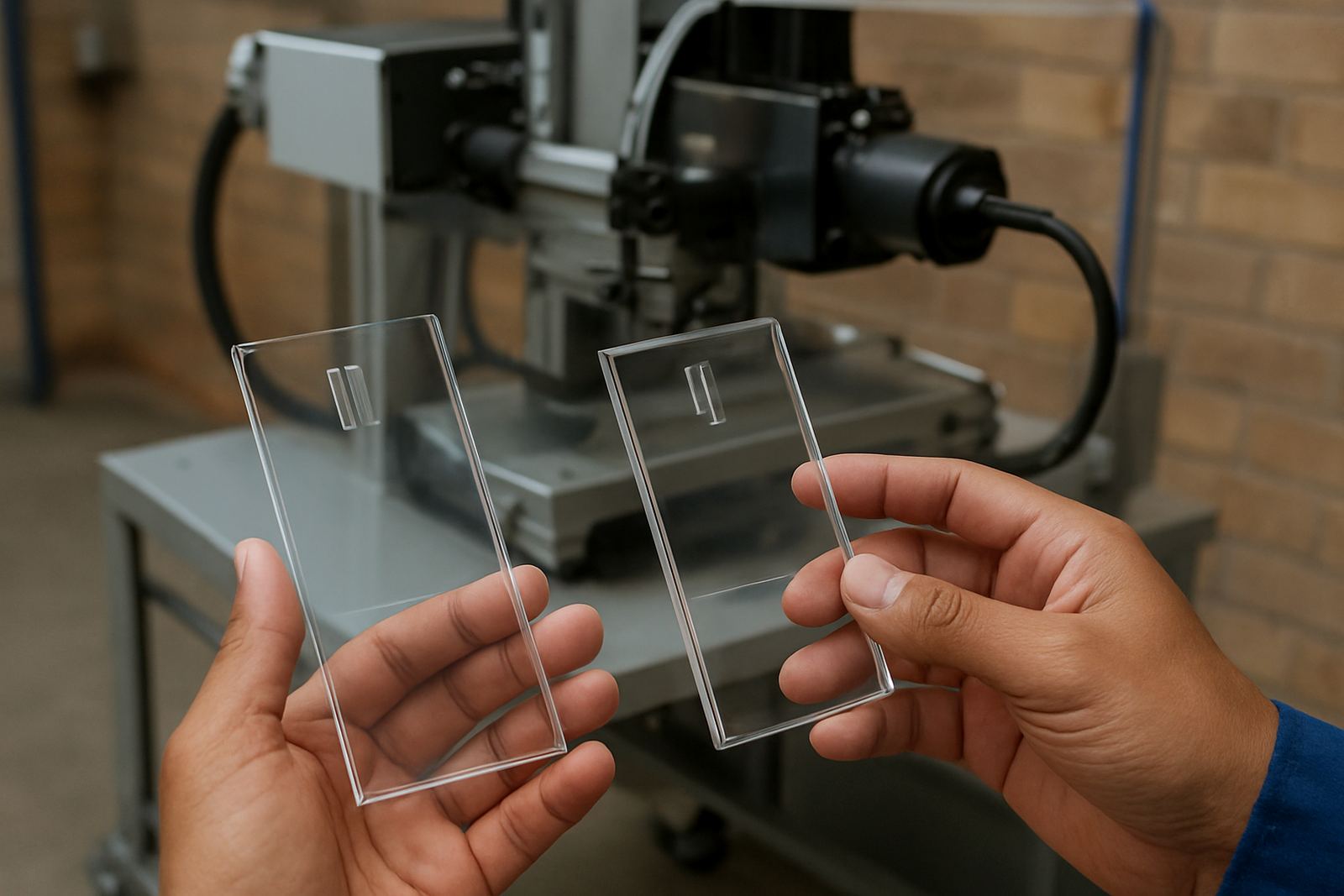
Why similar plastic parts get mixed up
In many production lines the parts are small, light and easy to confuse. Clips, housings, caps, brackets and covers may leave moulding with the same shape but different variants for colour, size, batch, customer or machine model. If they are stored in open crates or moved between departments, one wrong grab can mean rework later on.
That is where direct marking helps. A permanent mark can show a part number, cavity code, date code or simple visual identifier right on the surface. It stays with the part through packing, transport and use, even when labels fall off or get covered by dust, oil or condensation. In humid areas like parts stores near the coast, stickers often fail faster than expected.
For operations in Jet Park, Boksburg and the wider Ekurhuleni area, this matters on busy shifts where materials move quickly. If the team can see the correct marking at a glance, the sorting process becomes easier and mistakes are caught sooner.
How UV marking helps with plastic part identification
UV laser marking is suited to many plastics because it can create a sharp visible mark without touching the part. The result is controlled, fine and permanent. On the right material, it can produce a clean white or dark contrast depending on the substrate and the settings used. That makes it useful for both readable text and small codes.
The value is not only in appearance. Direct marking avoids extra consumables like stickers, ribbons or ink pads. It also avoids the problem of adhesive residue on moulded parts, which can be a nuisance when parts are handled during assembly. If a part is exposed to heat, cleaning agents or repeated handling, a laser mark is often the more dependable option.
- Part numbers for quick visual checking
- Batch or cavity codes for traceability
- Directional marks for assembly alignment
- Customer specific identifiers for mixed production runs
For businesses that produce in medium volumes, the process is neat and repeatable. Once the marking position and settings are set, operators can keep the output consistent from one shift to the next.
What to mark on a part, and what to keep off it
Good part identification is clear but not crowded. The mark should help the team read the part quickly without weakening it or making the moulding look untidy. On small plastic parts there is often only a few millimetres of usable space, so the layout has to be planned carefully.
A practical marking plan usually starts with the basics. If the part is for internal handling only, a short code may be enough. If it is for customer supply, the mark may need to include a part number, revision level and date code. If the part is used in a regulated environment, the marking position may need to remain visible after assembly.
- Use short codes where space is limited
- Keep the mark away from clip points and mating surfaces
- Allow for future revision changes
- Test how the mark reads under workshop lighting
It is worth checking the finish of the plastic before deciding on the final layout. Glossy materials, textured surfaces and coloured plastics can all respond differently. A sample test gives you a proper view of legibility before any production run starts.
Getting the mark right on real production lines
Part identification only works if the mark is placed where operators can see it and where the component can still be used normally. That means thinking about part orientation, fixture design and the way the part moves down the line. If the part is curved or has a small flat face, the fixture may need to hold it steady for consistent marking.
On a local line in Germiston, for example, a plastics supplier might be packing similar clips into separate trays for different customers. Without direct marking, the team may rely on colour bins or handwritten notes. That can work for a while, but once the line gets busy or staff change over it becomes easy to mix parts. A simple laser mark on each clip gives the picker a fixed reference and reduces sorting errors.
Site demos and sample testing help prove whether the part can take the mark clearly. They also show whether the mark stays visible after handling, transport and cleaning. In some cases the best result comes from adjusting the marking angle or changing the fixture rather than forcing a deeper mark.
Where direct marking saves time and waste
Many factories only notice the cost of poor identification when there is a problem. A mixed crate, a wrong batch or an assembly error can mean rework, scrap and time lost on the floor. Permanent part marking helps cut those risks right at the source.
It also improves control in stores and dispatch. When similar parts are marked the same way every time, stock counting is faster and visual checks become simpler. That is useful in workshops where materials move between Midrand, Pretoria, Alberton and the East Rand. It also helps when customers ask for proof of traceability after delivery.
- Less reliance on stickers that peel or lift
- Fewer mix ups between similar variants
- Cleaner storage and packing areas
- Better traceability during audits and returns
For companies running shifts, the benefit is practical. The person doing the packing does not need to guess. The mark speaks for itself, and that helps keep output steady even when the team is under pressure.
Planning for maintenance, training and long term use
A marking system should be easy to maintain. If operators need repeated help to read or place the code, it will slow the line down. Training should cover the basics of part setup, mark placement, cleaning of the marking area and what to check during start up. If the part is part of a larger production cell, the marking step should fit neatly into the process rather than sit awkwardly beside it.
Service planning matters too. Dust, vibration and long production runs can affect equipment performance over time. Preventive maintenance helps keep the mark quality stable, and breakdown support should be available when a line needs urgent attention. For businesses in Jet Park and beyond, that support should be backed by people who understand local factory conditions, including load-shedding interruptions and the need to restart safely after power changes.
With the right setup, part identification stops being a manual workaround and becomes part of the production standard. That makes stock control easier, improves traceability and gives every small component a clear identity from the start.