Why a sample beats a brochure every time
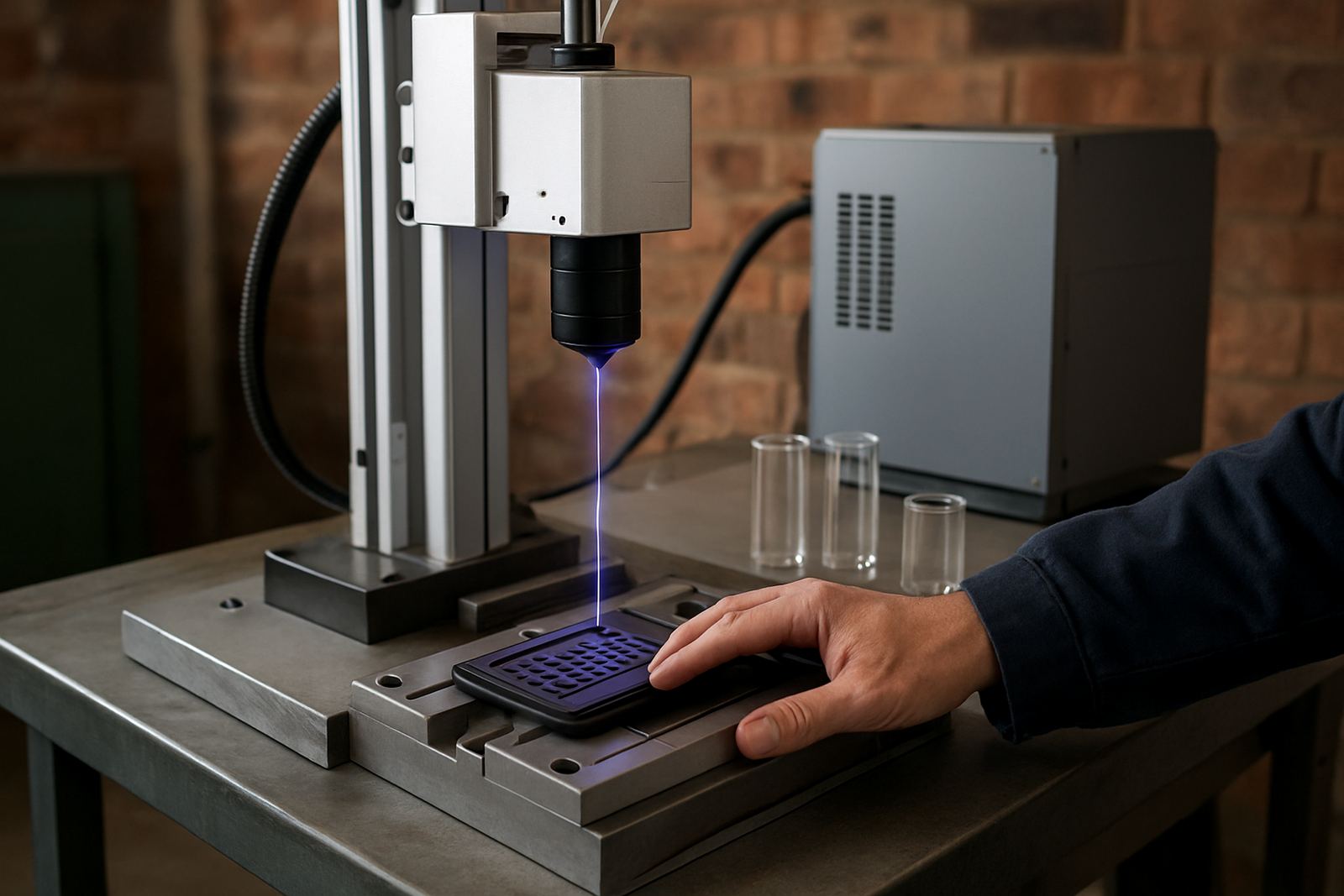
When you are marking glass or plastics, the brochure never tells the full story. The real question is whether the mark stays clear after handling, washing, packing and transport, and whether it looks right under your plant lighting. A sample run gives you that answer before money is spent on a machine that may not suit your product mix.
In South African factories, that matters even more. Some sites run with back-up power, some handle dusty conditions, and coastal plants deal with humidity that can change how materials behave. A sample lets you test the mark on the same substrate, same thickness and same finish you use every day.
What to send for a proper sample test
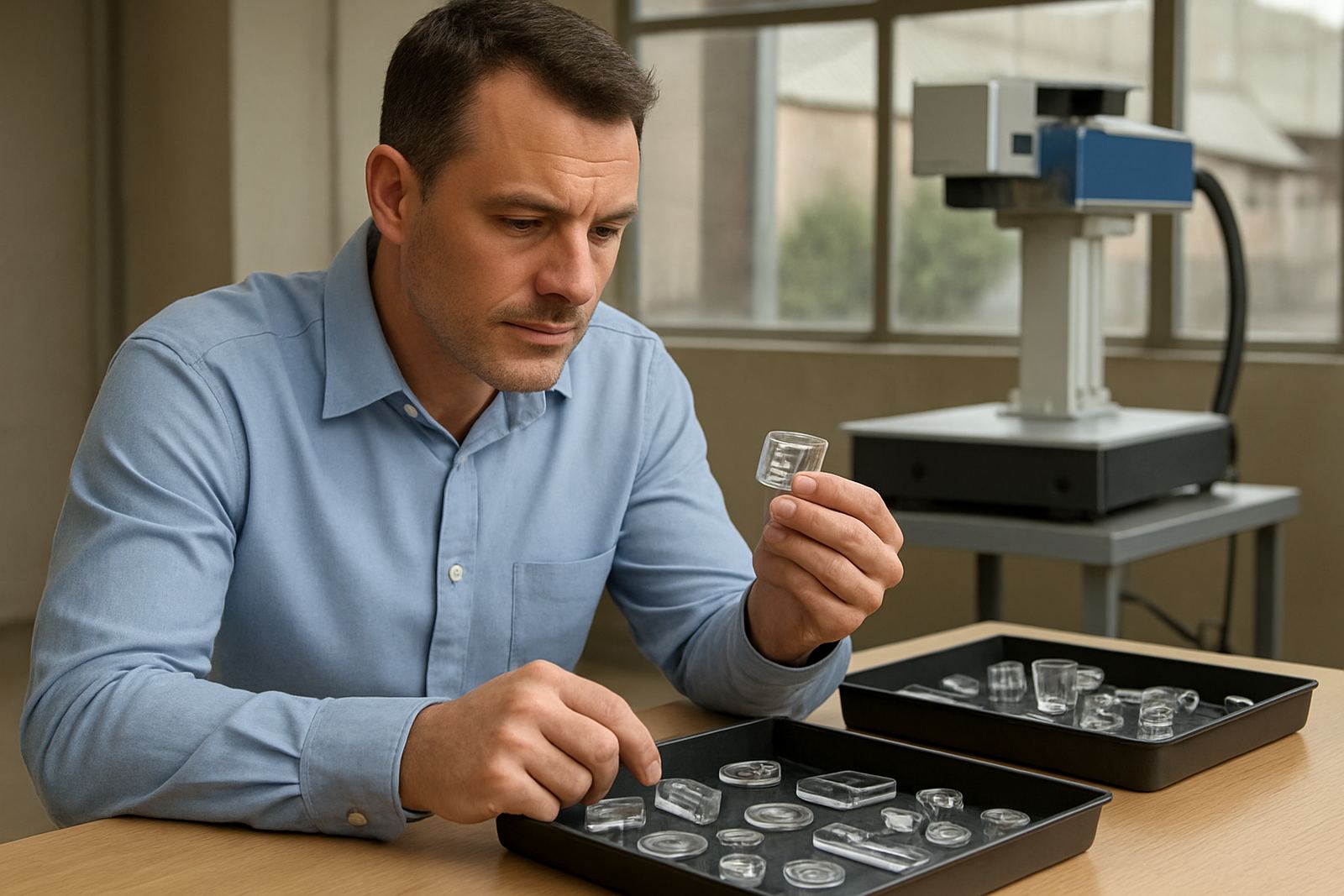
The best sample programme starts with the right material. If the part is a bottle, jar, panel or moulded component, send the exact item you want marked. If there are different colours, coatings or wall thicknesses, include those too. A plain description over the phone is never enough on its own.
- Send finished parts, not offcuts only
- Include the exact surface type, such as clear, frosted or textured glass
- Share the required mark size and location
- State whether the mark must be visible, subtle or code-only
- Tell the team if the part will be washed, sterilised or handled frequently
If you are in Jet Park, Boksburg, Germiston or Kempton Park, samples can usually be arranged quickly for testing. For buyers further afield, couriered samples still work well as long as the product is packed carefully and labelled clearly.
How a sample programme saves money later
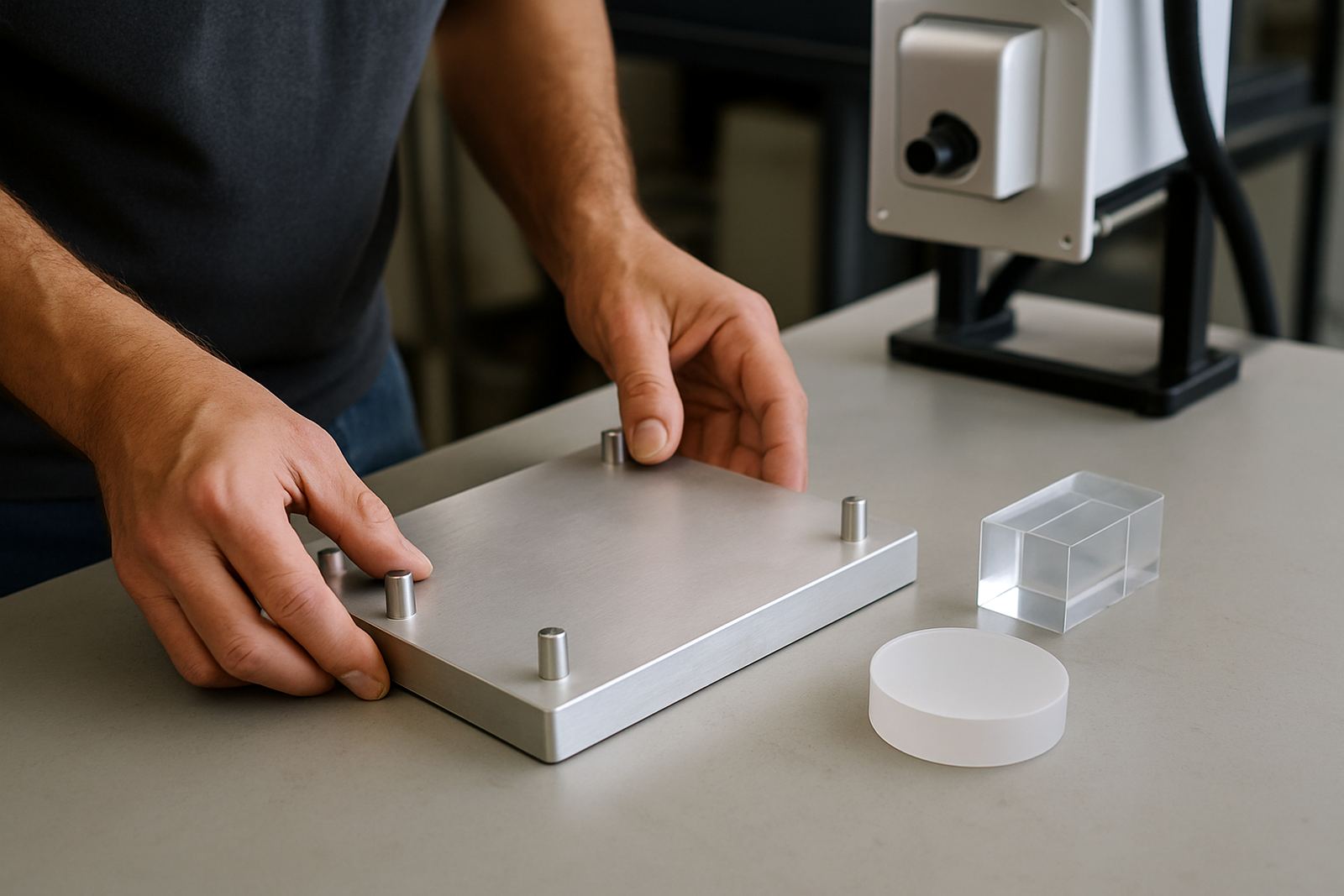
Buying first and testing later often leads to expensive changes. A mark that looks fine on paper can fail on the line, require different power settings, or need a fixture you had not budgeted for. Sample testing helps avoid those surprises. It can also show whether the part needs extra handling, a better clamp, or a different orientation to keep the process repeatable.
That is especially useful when production volumes are tight and downtime has a cost. If a machine needs a special setup, you want to know that before installation day, not after the team has already planned labour and materials around it.
- Reduces the risk of ordering the wrong unit
- Shows the real marking speed on your product
- Helps estimate fixture and integration costs
- Gives your operations team a clearer run rate
What good sample results should show you
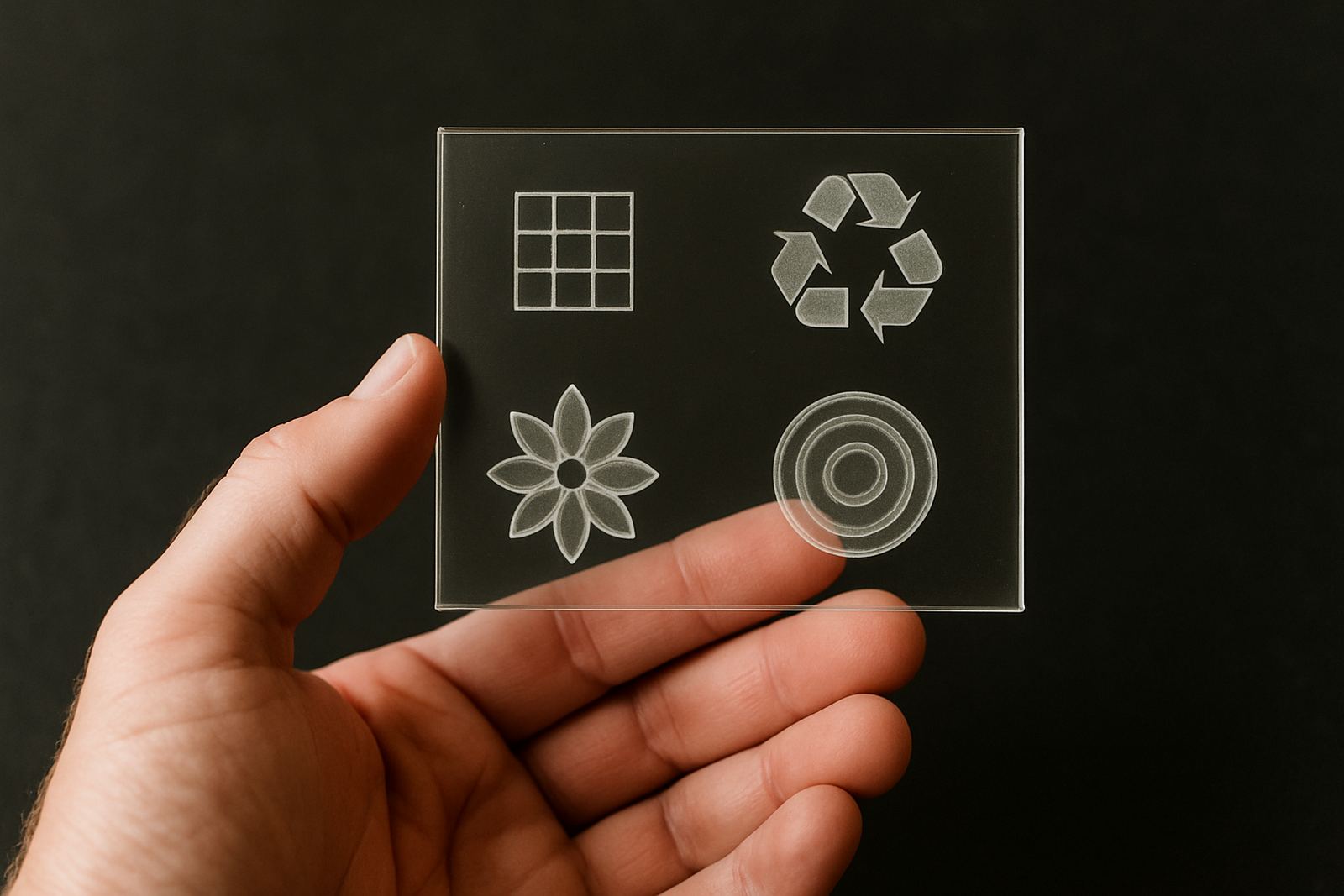
A decent sample is not just a nice-looking mark. It should tell you whether the mark is permanent, consistent and easy to read at the point of use. You should also check whether the mark remains legible after simple handling tests. If the part is for branding, the logo edges must stay sharp. If it is for traceability, the code must read cleanly every time.
Ask for the sample on the same part and in the same position where production will happen. If the line will run in batches, check repeatability across several pieces. One perfect part means very little if the next ten vary too much.
Local example from a Boksburg production floor
A packaging business in Boksburg wanted a permanent mark on clear plastic components used in a retail pack. The team first expected a standard label, but labels were lifting in storage and causing complaints. Through sample testing, they checked several mark positions and different part finishes before settling on a method that held up in normal handling and stacking.
That early test avoided a poor purchase. It also gave the operators time to learn the marking process before full production started. The result was a cleaner pack, fewer rejects and no last-minute panic when the first batch had to ship.
Questions to ask before you place the order
Sampling is most useful when you treat it like a decision tool, not a formality. Ask the team testing your part to explain what they found, what can be improved and what the machine will need in daily use. If there are line speed limits or fixture issues, you want that written down before sign-off.
- Will the mark stay permanent on this material?
- What setup is needed for consistent results?
- Does the part need a custom fixture?
- Can the process run at our target output?
- What training will our operators need?
It also helps to ask about maintenance, spares and software setup at the same time. A machine that marks well but is hard to support can slow a production line later.
From sample to installation without guesswork
Once the sample is approved, the next step is planning the full site rollout. That can include machine installation, operator training, fixture design, line integration and preventive maintenance. For buyers in Pretoria, Midrand, Alberton, Benoni and across the rest of South Africa, the aim is the same: keep the process practical from the first test piece to daily production.
A proper sample programme gives buyers realistic expectations before ordering equipment. It shows what the mark will look like, what the line will need and where the hidden costs sit. That kind of clarity is worth a lot more than a promise on its own, especially when the job has to work day after day.