Why position control matters on glass and plastics
When a mark has to land in the same place on every bottle, panel, cap or moulded part, small shifts become visible quickly. On glass, a few millimetres off can affect branding, fill lines or decoration alignment. On plastics, poor position control can cause labels, serials and codes to sit too close to a curve, rib or gate mark, which makes the finish look untidy and can make the part harder to scan or inspect.
For many Gauteng sites, the challenge is not the laser output. It is the repeatability of the handling. If one operator places a part slightly differently in the morning and another does it differently after lunch, the mark will drift. That is why good position control starts with the process around the machine, not just the machine itself.
The three points that keep marks in place
Stable marking position usually comes down to three things: fixturing, registration and loading practice. Fixturing holds the item in the same physical location. Registration gives the machine a reference point, and loading practice keeps the whole routine consistent through the shift.
In Jet Park and Boksburg we often see plants trying to fix a position problem by changing software settings first. Sometimes that helps, but often the real issue is movement in the part holder or variation in how the part sits in the nest. A small tilt, a loose clamp or a worn locating stop can shift the mark more than most people expect.
- Use a fixture that matches the part shape and supports it evenly.
- Build in hard stops or location pins where the part allows it.
- Train operators to load from the same side, the same way every time.
- Check for wear on pads, clamps and guides before the line drifts.
Fixturing for real factory conditions
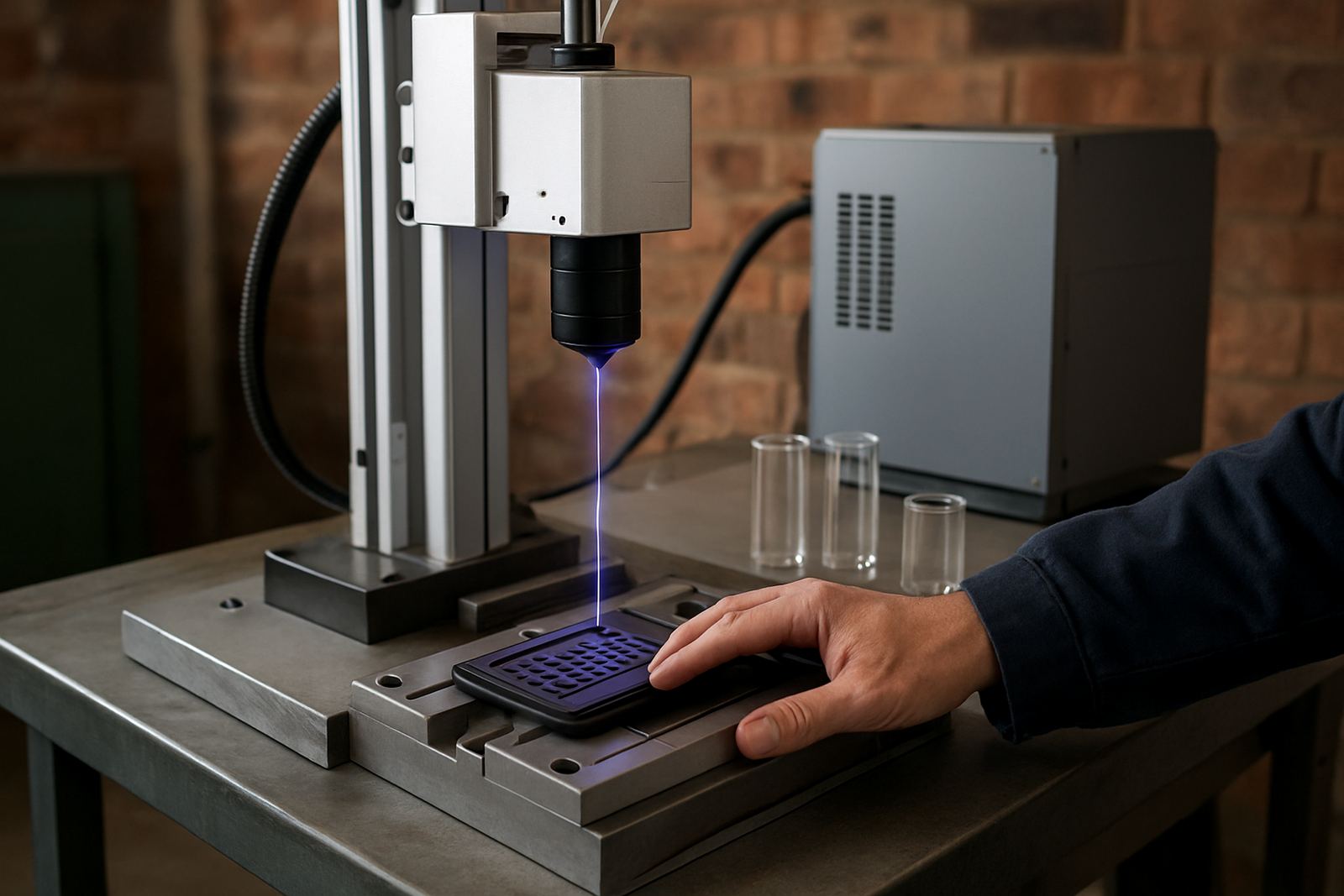
A fixture should do more than hold a part still. It should make the loading point obvious, reduce guesswork and stand up to daily use. In a busy line, the fixture must cope with dust, plastic swarf, glass particles and the occasional knock from a trolley or crate. If the plant runs through load-shedding backups or power dips, the fixture must still return the part to the same position once production restarts.
For glass, smooth support points matter because chips and stress marks can become a problem if the piece is pinched too hard. For plastics, especially softer mouldings, too much clamping pressure can deform the part and move the mark out of position. The best fixture design balances speed with repeatability, and it needs to be easy to clean. On coastal jobs, humidity can also affect some plastics and light corrosion on hardware, so material choice matters as well.
Registration methods that work on busy lines
Registration can be mechanical, optical or a combination of both. Mechanical registration uses stops, nests and guides. Optical registration uses sensors or vision points to confirm where the part is before the mark is fired. In many South African plants, a simple mechanical system is still the most practical because it is easier to maintain and less sensitive to dust. But when part variation is high, optical confirmation can save a lot of scrap.
The key is to match the registration method to the part and the line speed. A neat solution on a sample bench may struggle on a live line if the operator has to wait too long or if the sensing point is too small. Good process setup should allow for normal handling variations without creating delays. That is where sample testing helps. It shows what happens when the part is slightly off centre, rotated or loaded too far forward.
- Test the mark at the start, middle and end of a shift.
- Check the first piece after any stoppage or changeover.
- Record the correct loading position with a visual guide or print.
- Review repeat errors before changing laser settings.
Loading practice and operator consistency
Most repeat mark faults come from people doing normal work in slightly different ways. One operator slides the part fully home, another places it gently and leaves a small gap. One person aligns to a corner, another to the centre. These differences can create a visible position shift even when the machine is working properly.
A short training session helps, but the best result comes from clear loading rules and a fixture that guides the hand naturally. Mark the loading face, define the correct orientation and keep the sequence simple. If there are multiple shifts or relief staff, the process must be easy to understand in a few seconds. We have seen good results where the plant uses a colour coded reference, a simple stop point and a quick first-off check after tea breaks and lunch. It sounds basic, but it keeps the job steady.
When to call for a sample test or site demo
If the mark is drifting, uneven or landing too close to an edge, it is worth testing the full setup before production problems spread. A sample test can show whether the issue is with fixturing, focus height, part finish or operator handling. A site demo is useful when the line already runs, because it lets the team see the mark under real conditions with the same parts, same movement and same pace.
From our Jet Park base, we support customers across Ekurhuleni, Midrand, Pretoria and other centres nationwide. For a packaging plant in Germiston, for example, a repeat position issue on small plastic caps may not need a new machine at all. It may only need a better nest, a firmer locating stop and a loading guide the team can follow under pressure. That kind of practical adjustment saves time, reduces rejects and keeps the mark where it belongs.
Keeping repeat marks steady over time
Once position control is right, it still needs routine attention. Fixtures wear, operators change and product tolerances shift over time. A monthly check on stops, guides and clamp pressure can prevent small errors becoming a daily headache. It also helps to keep a record of what good looks like: the correct position, the correct loading method and any setup notes that matter after maintenance or a shutdown.
For plants that rely on clear branding, traceability or decorative detail, repeatability is just as important as mark quality. Good fixturing and disciplined loading give the laser a fair chance to do its work. When the part sits in the same place every time, the mark does too and the process stays easier to manage.