Why small faults show up first in UV marking
UV laser marking is valued for fine detail, but that same precision means a small issue can affect results quickly. A slight shift in focus, a dirty lens, or a loose fixture can turn a clean mark into a faded line, a patchy logo, or a mark that sits a fraction off position. On glass and plastics, those changes are easy to miss at first, then suddenly the rework pile starts growing.
That is why maintenance checks are not only about keeping the machine running. They are about protecting repeatability. In factories around Jet Park, Boksburg and Germiston, where production teams often work with mixed shifts and changing batch sizes, a short daily routine can save hours of sorting and correction later. It also helps with load-shedding recovery, because once power returns the system can be checked properly before full production restarts.
Daily checks before the first batch goes through
A good daily check should take only a few minutes, but it must be done the same way every time. The person on the line should look, listen and test before production starts. If the machine is used on bottle necks, cosmetic jars, panels or technical plastics, the surface condition and clamp position should be confirmed first.
- Check the marking lens and nearby optics for dust, overspray or fine residue.
- Confirm the fixture holds each part squarely and does not flex under hand pressure.
- Inspect cables, covers and air lines for wear or loose connections.
- Run a sample mark and compare it with the approved reference piece.
- Listen for unusual fan noise, vibration or delayed start up on the control system.
If the sample mark looks different, do not push the line harder and hope it settles. Stop and compare the current settings with the previous job sheet. A small offset in focus or timing can create a recurring fault that gets worse through the shift.
Weekly checks that protect mark quality
Weekly maintenance is where teams catch slow changes before they become downtime. This is the point to check alignment, clean internal surfaces that are safe to access, and confirm the software profile still matches the product being marked. On multi-product lines, it is also worth checking that the saved jobs are named properly and that the correct parameters are loaded. A wrong file name can waste a full tray before anyone notices.
For plastics especially, heat, static and surface finish all influence how the mark appears. If the substrate changes from week to week, the settings should be reviewed with sample pieces from the actual batch. Refilwe Mahlangu, our Senior Applications Technician, often finds that the problem is not the laser itself but the way the part is held, cleaned or fed into the system. That is where a simple weekly inspection makes a real difference.
- Verify beam position against the approved reference point.
- Check whether the fixture still grips parts evenly after repeated use.
- Review mark depth, contrast and placement on sample parts.
- Confirm the extraction or air movement around the work area is doing its job.
- Back up the control settings if the line uses more than one product profile.
Monthly tasks that keep the line stable
Monthly checks go beyond quick cleaning. They are about keeping the system stable over time, especially in plants that run long shifts or operate in coastal humidity where dust can cling to surfaces and build up faster. In areas like Benoni, Alberton and Midrand, many customers run mixed production environments where heat, vibration and handling traffic all affect equipment condition. A monthly inspection helps expose those slow changes.
This is the time to examine mounts, moving parts, protective covers and the condition of the work area around the machine. If the fixture has developed play, the mark position may drift even though the software settings are unchanged. It is also worth reviewing spare parts usage, because waiting for a minor item to fail can stop a job for longer than expected. Preventive maintenance is cheaper than emergency call outs, and that is especially true when a line is booked for the week and the order must still leave on time.
Where process changes have been made, such as a new plastic grade or a different glass thickness, the monthly check should include a fresh sample test and a short operator review. One small change can alter contrast or readability. Catching that in time avoids scrap and keeps the product within customer spec.
What operators should record on every shift
The best maintenance programme is only useful if the team records what they see. Operators do not need a complicated form, just a clear checklist that is filled in every shift. It should show what was checked, what changed, and whether the sample mark still met the approved standard. When the same fault keeps appearing, the record makes it easier to trace the cause.
Good shift records should include the product code, the operator name, the time of the sample test and any setting changes made during the run. That helps the next shift start from the correct point instead of guessing. It also gives the service team better information if breakdown repairs or software setup support is needed later on.
- Product name or code
- Material type and thickness
- Sample result compared with the approved mark
- Any cleaning, adjustment or part replacement done
- Operator comments on noise, vibration or repeated faults
A local example from Jet Park to the line floor
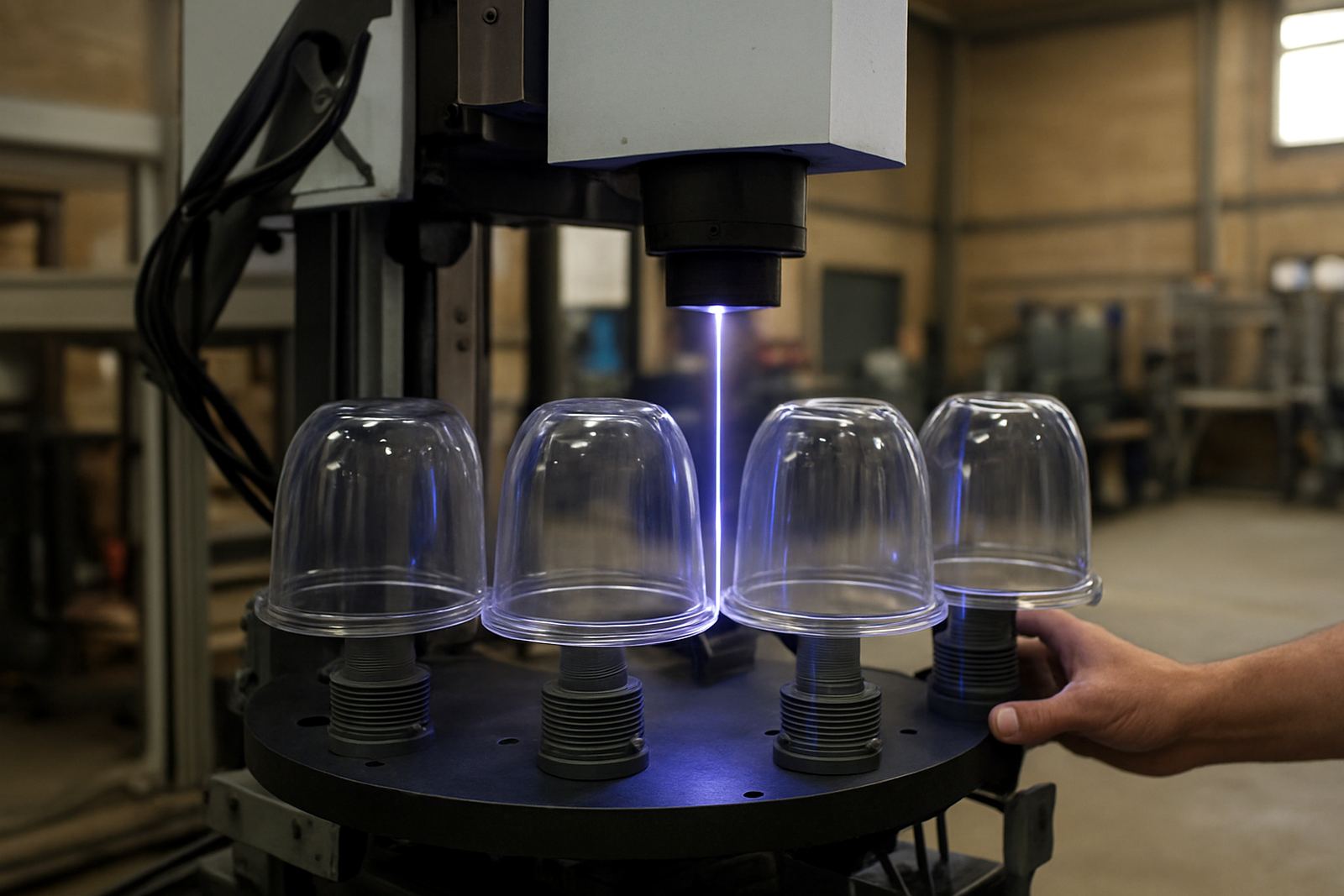
A packaging supplier in Jet Park asked for help after marks on clear plastic lids started looking faint at the edge of the batch. The machine itself had not failed, but the fixture had loosened slightly and dust had built up around the work area after repeated changeovers. The issue was small, but it was enough to affect the appearance of the final pack.
After a proper maintenance check, the team tightened the holding points, cleaned the accessible surfaces and rechecked the sample mark against the approved standard. Production returned to normal without changing the core process. That is the value of routine inspection: it finds the cause early, before the quality team has to isolate stock or the customer spots a visible difference. In a busy Gauteng plant, that can save a lot of time and frustration, and yes a few unnecessary headaches.
When to call for support instead of pushing on
Some issues can be solved in-house, but others need a trained technician. If the mark position keeps shifting after cleaning, if the software settings do not hold, or if there is repeated failure after a power interruption, it is better to stop and get support. Continuing to run with an unstable setup usually creates more scrap than the repair would have cost.
UV Laser supports clients with site demos, sample testing, machine installation, operator training, fixture design, line integration, preventive maintenance, breakdown repairs, software setup, process optimisation and spares supply nationwide. From Boksburg and Kempton Park to Pretoria, the aim is the same: keep the marking process predictable, clean and ready for production. A proper maintenance check is not extra admin. It is part of keeping output consistent and the line ready for the next order.