Why glass and plastics need a gentler marking method
Glass and many plastics do not react well to heat, pressure or harsh contact. A marking method that is too aggressive can create stress marks, micro-cracks, edge chipping or surface distortion. That is a real problem when the item is a bottle, lab component, cosmetic container, medical part or moulded product that must still look clean after marking.
UV laser marking is suited to these materials because it works with controlled energy and very fine focus. Instead of forcing a deep burn or heavy abrasion, the process creates precise marks that stay legible without damaging the part. For factories in Jet Park, Germiston or Kempton Park, that means less scrap and fewer rejected batches. It also helps when products move through humid coastal conditions where printed labels and inks can struggle to hold up.
The detail you can hold on a small surface
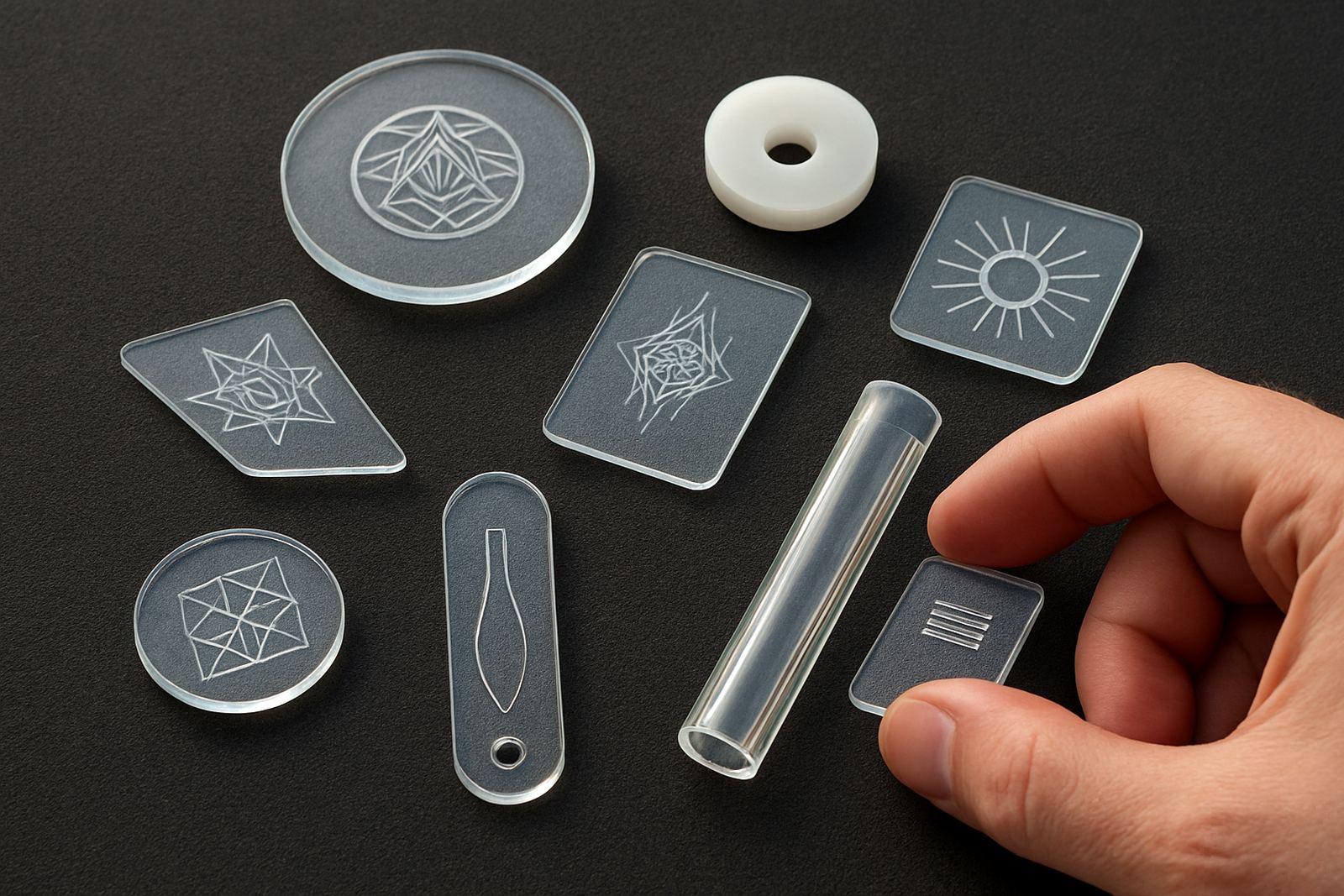
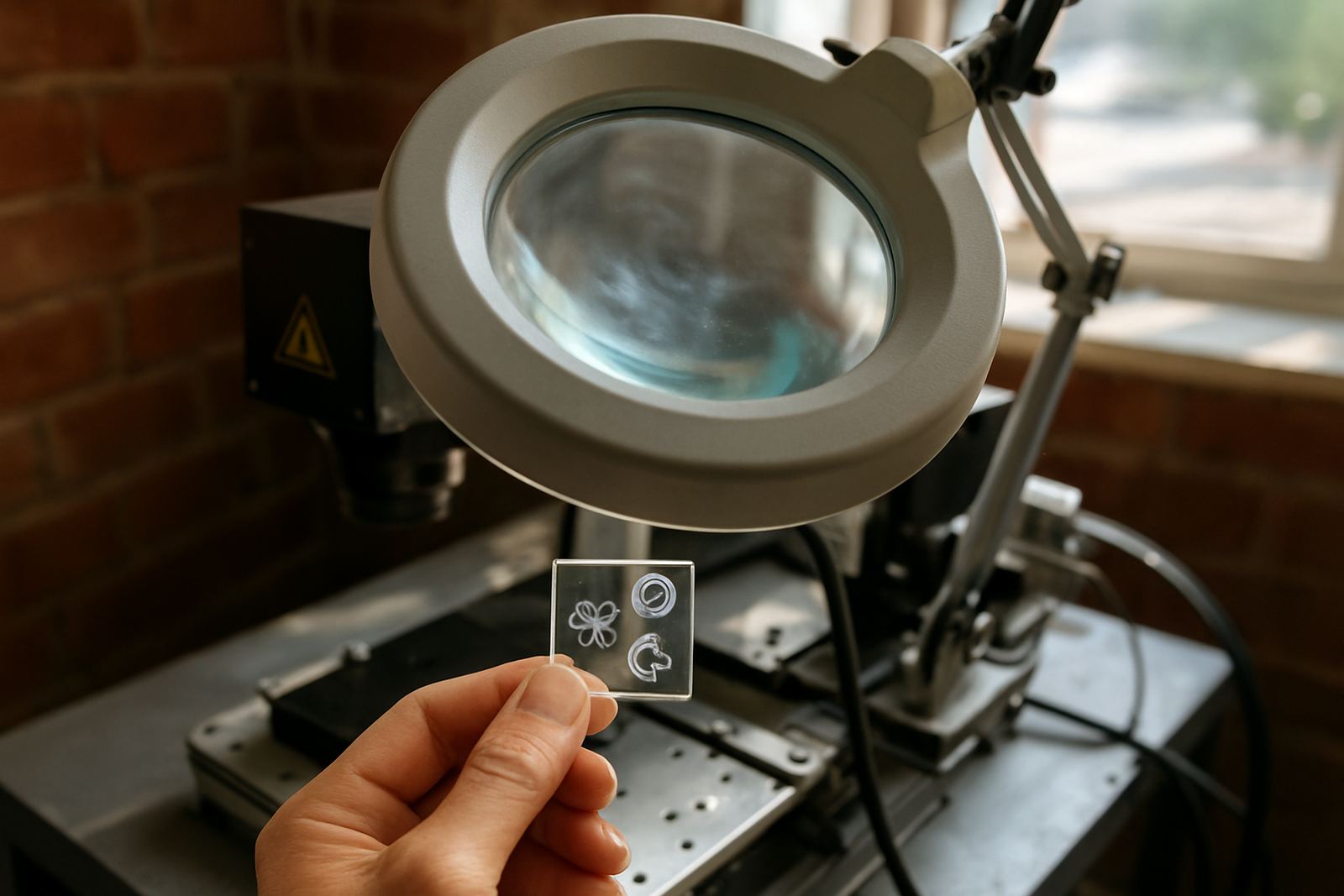
Fine-detail work is where UV marking really earns its place. Small serial numbers, batch codes, logos, ingredient text, calibration marks and intricate patterns can all be applied with sharp edges and strong contrast. This matters when the print area is tiny, or when a client wants branding that still reads clearly after cleaning, handling and storage.
Because the beam is controlled so tightly, UV marking is suitable for parts that carry more than one item of information. A cap might need a code, a date and a logo. A glass vial might need a traceability mark and a warning line. On the right setup, the result is neat and consistent, not patchy or uneven. That consistency helps with internal quality checks as well as customer-facing presentation.
- Small text stays readable on curved or narrow surfaces
- Logos can be marked without smudging or ink buildup
- Batch and traceability data remain permanent after handling
- Repeat runs stay consistent across production lots
Where UV precision helps most in South African production
We see strong demand for UV marking across sectors that need detail and traceability. Cosmetic packaging, pharmaceutical containers, medical plastics, electronics housings and speciality glass all benefit from a method that keeps the surface intact. In some cases, the mark must also survive washing, alcohol wiping, light abrasion or warehouse movement.
A practical example is a Boksburg business producing small glass bottles for a premium product range. The bottles needed batch coding and a simple logo on a curved surface, with no cracking and no faint areas. A UV setup allowed the team to mark each bottle cleanly during normal production flow. It cut down on relabelling and saved time during checks, especially when stock had to move quickly between filling, packing and dispatch.
For operations in Midrand, Alberton or Pretoria, the same approach works well when there is pressure to keep turnaround times short. Clean marking reduces the need for manual correction and keeps the product ready for market sooner.
What to check before choosing a UV marking system
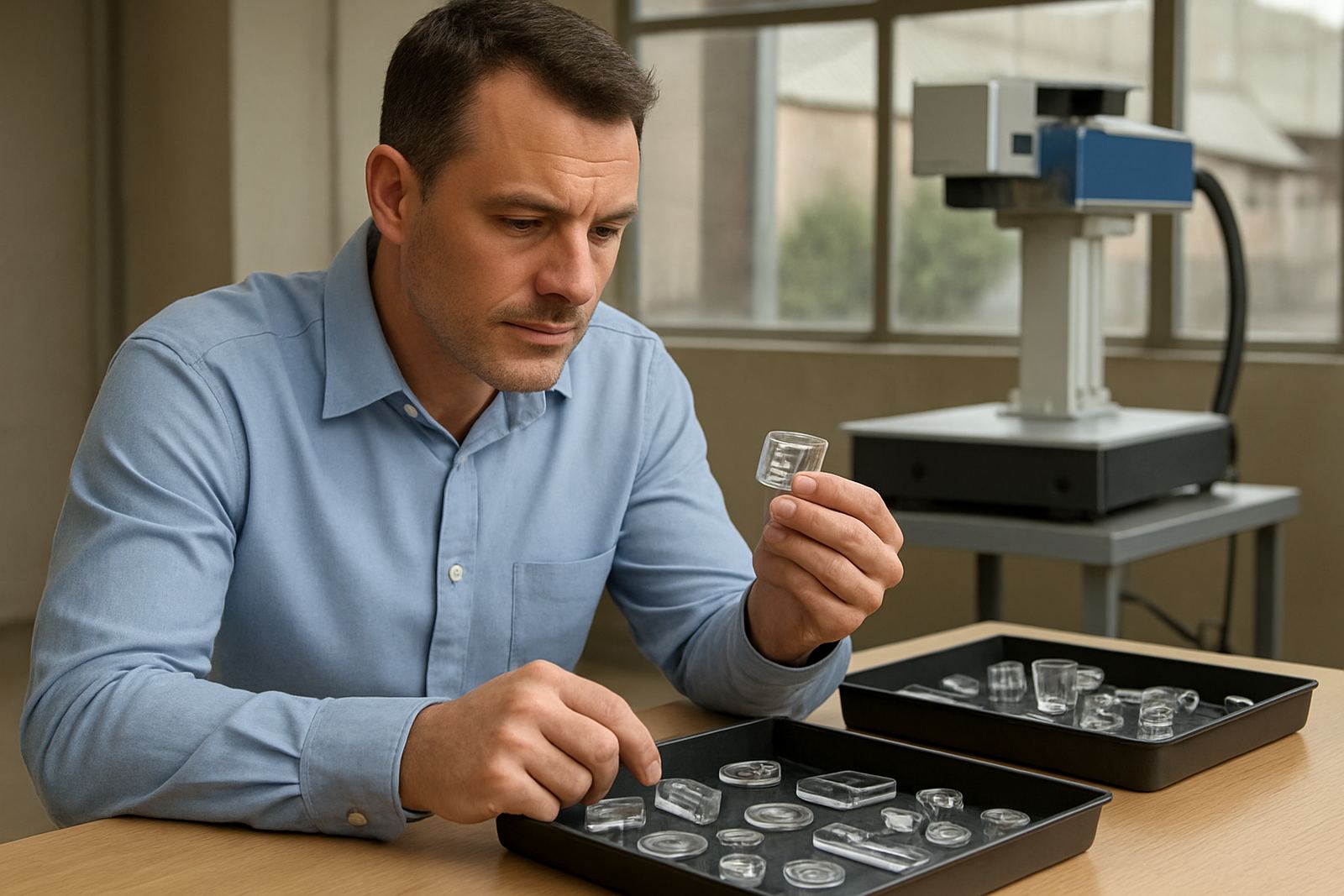
Not every part behaves the same way, so it pays to test samples before committing to a full run. The right setup depends on the material type, surface finish, part size and how the item is held during marking. Flat panels are one thing, but curved bottles, soft plastics and reflective surfaces need a more careful approach.
Good sample testing also shows how the mark will look after real use. A sample may look fine straight off the machine but fail after cleaning or transport if the settings are wrong. That is why site demos and sample testing matter. They give the client a chance to compare mark quality, cycle time and fixture requirements before installation. It is better to sort that out early than to fight the same problem on a live line later.
- Confirm the exact material grade and surface finish
- Test the depth, contrast and legibility on real samples
- Check the marking position against your filling or packing process
- Allow for fixture design if the part shifts or rolls during marking
How installation and training affect the final result
A precise machine still needs the right setup on site. If the beam is out by a fraction, or the part is not held correctly, the mark can drift or lose clarity. That is why installation, software setup and operator training are part of a proper solution rather than extra nice-to-haves. The people running the line need to know how to load the part, confirm the setting and keep the output consistent from shift to shift.
In a busy Ekurhuleni plant, power interruptions and load-shedding planning also need to be considered. If the marking process is tied into a production line, operators should know how to restart safely after a stoppage and how to protect the equipment from surges. Preventive maintenance helps here too, because clean optics, secure alignment and up to date software keep the machine performing the way it should. A little routine attention saves a lot of downtime later on.
Local support matters when production can not wait
For businesses around Jet Park, Boksburg, Benoni, Germiston and Kempton Park, proximity counts when a line needs attention. If a part is not marking correctly or a fixture needs adjustment, a quick site visit can prevent a day of lost output. The same applies to businesses in other provinces that need demos, installs or operator training on their own premises.
At UV Laser, support is built around practical needs rather than guesswork. That includes breakdown repairs, spare parts supply, process optimisation and line integration when a customer wants the marking step to sit neatly inside an existing workflow. The aim is to leave the client with a marking process that is clear, durable and easy to run. When the job is done well, the mark speaks for itself, and production can carry on without fuss.