When hiring makes more sense than buying outright
Not every project needs a full purchase on day one. A hire unit is useful when you have a pilot run, a new product launch, a temporary increase in output, or a contract that may change after the first few months. In those cases, you can keep the job moving without tying up cash in equipment that may sit idle later.
For glass and plastics, this matters even more because the marking result depends on the material, the finish and the line speed. A hired unit lets you check whether your artwork, batch code or serial number is legible, permanent and in the right position before you commit to a larger roll out.
- Good for short contracts and trial production
- Helps when cash flow is tight but deadlines are fixed
- Useful for seasonal spikes in packaging or component marking
- Lets you compare results across different substrates
Practical value during tenders and pilot runs
Tenders often ask for sample approval, proof of process and delivery timelines. A hire arrangement helps you respond quickly because you can test marking quality before final sign-off. That can save you from promising a process that looks fine on paper but struggles once the line is running at full pace.
During a pilot run, the big question is usually not whether the marking is possible, but whether it will stay consistent through the shift. A hired unit gives your team the chance to work through settings, fixture placement and code positioning while the volumes are still manageable. It is far cheaper to make adjustments in week one than after 20 000 parts have moved through the line.
In Ekurhuleni, where many suppliers work to tight manufacturing schedules and municipal compliance timelines, this flexibility can be the difference between missing a deadline and handing over on time. It also helps in facilities where power interruptions or load-shedding force you to plan shorter production windows.
What to check before taking a hire unit on site
A proper hire should not be a guess. Before the unit arrives, make sure the marking sample has been tested on the same material you plan to use. Glass and plastics behave differently, and even two similar plastics can react in different ways depending on additives, surface finish and moulding process.
It also helps to look at the space around the machine. You need enough room for loading, viewing the mark and doing safe access for operators. If the unit is going onto a packaging line or a bench near a moulding area, check for dust, vibration and heat. Coastal humidity is not the same as inland factory air, and even in Gauteng some plants have moisture, dust and static issues that affect handling.
- Confirm material type and surface finish
- Check available space and machine access
- Review marking size, code format and cycle time
- Plan for power availability and safe cable routing
- Ask for sample testing before the job starts
How hiring supports training and process control
Hiring is not only about having a machine on site. It is also a good way to train operators on the actual job, rather than on theory. Your team can learn how to load parts, set up files, check alignment and confirm that the finished mark meets your standard. That reduces the risk of rework later.
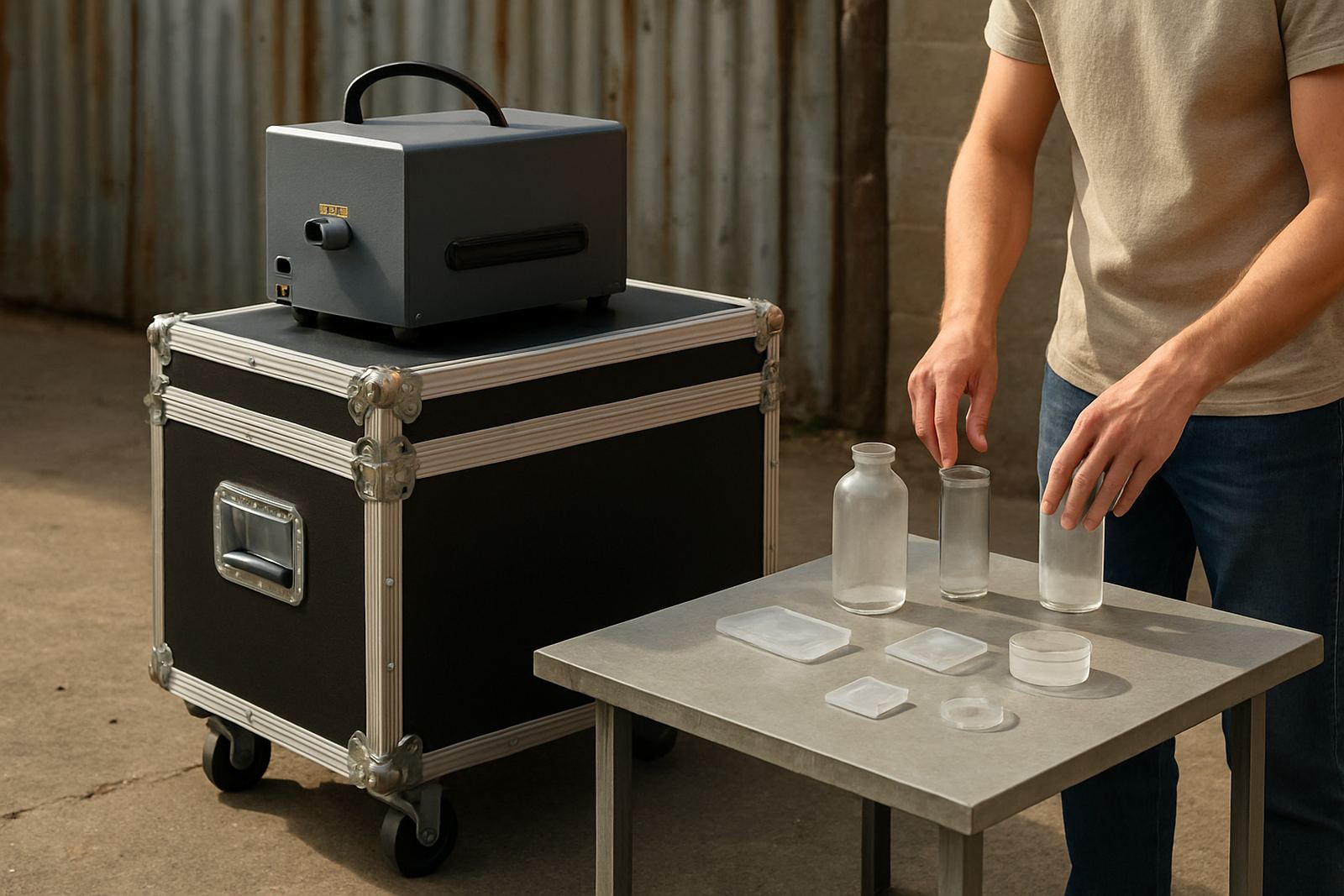
For more complex jobs, a hire period can also be used to fine tune fixture design and line integration. If the part needs to be held a certain way to get a clean mark, or if the conveyor timing must be adjusted, those are the details that become clear only once production starts. We see this often with clients who need careful labelling on clear plastics, or permanent identification on glass components that must stay readable after washing or handling.
Support matters here. A reliable hire plan should include setup help, operator guidance and enough time to sort out the real-world issues that appear on site, because no two factories run exactly the same.
A local example from Jet Park to the rest of Gauteng
Consider a manufacturer in Jet Park that has landed a three month contract for marked glass containers. The order is important, but the client wants samples first and the final volume is still under review. Buying immediately would lock in capital before the contract is fully proven. Hiring the right unit gives them a way to test the process, complete the sample run and keep the option open if volumes change.
Because the base is in Boksburg, site delivery, installation and training can be arranged quickly for nearby areas such as Germiston, Kempton Park, Benoni, Alberton, Midrand and Pretoria. If the job later expands into another line, nationwide support means the same process can be rolled out at a second site without starting from scratch.
This is the kind of situation where hiring works well: the work is real, the deadlines are real, and the decision still needs some breathing room.
Making the hire period count
To get full value from a hire unit, treat the period like a working trial, not just a short term stopgap. Set clear targets for code quality, cycle time, operator handover and maintenance checks. If possible, capture sample results from the first day and compare them after the line has settled in. Small differences can point to fixture movement, cleaning needs or software settings that need adjustment.
It also helps to keep a simple checklist for your own team. That way, if the equipment moves between shifts or between sites, the process stays consistent and nothing is missed during setup. When a job is time-sensitive, a clear plan saves more time than any amount of last-minute fixing.
- Set sample approval criteria before the first run
- Record settings for repeat use
- Assign one person to check quality per shift
- Schedule preventive checks during the hire period
- Keep spare consumables and part samples close by
For businesses that need a practical, locally supported way to manage short-term marking demand, hiring can be a sound business choice. The aim is simple: get the job done properly, with clear results and less pressure on your budget.