Why direct marking suits glass better than labels
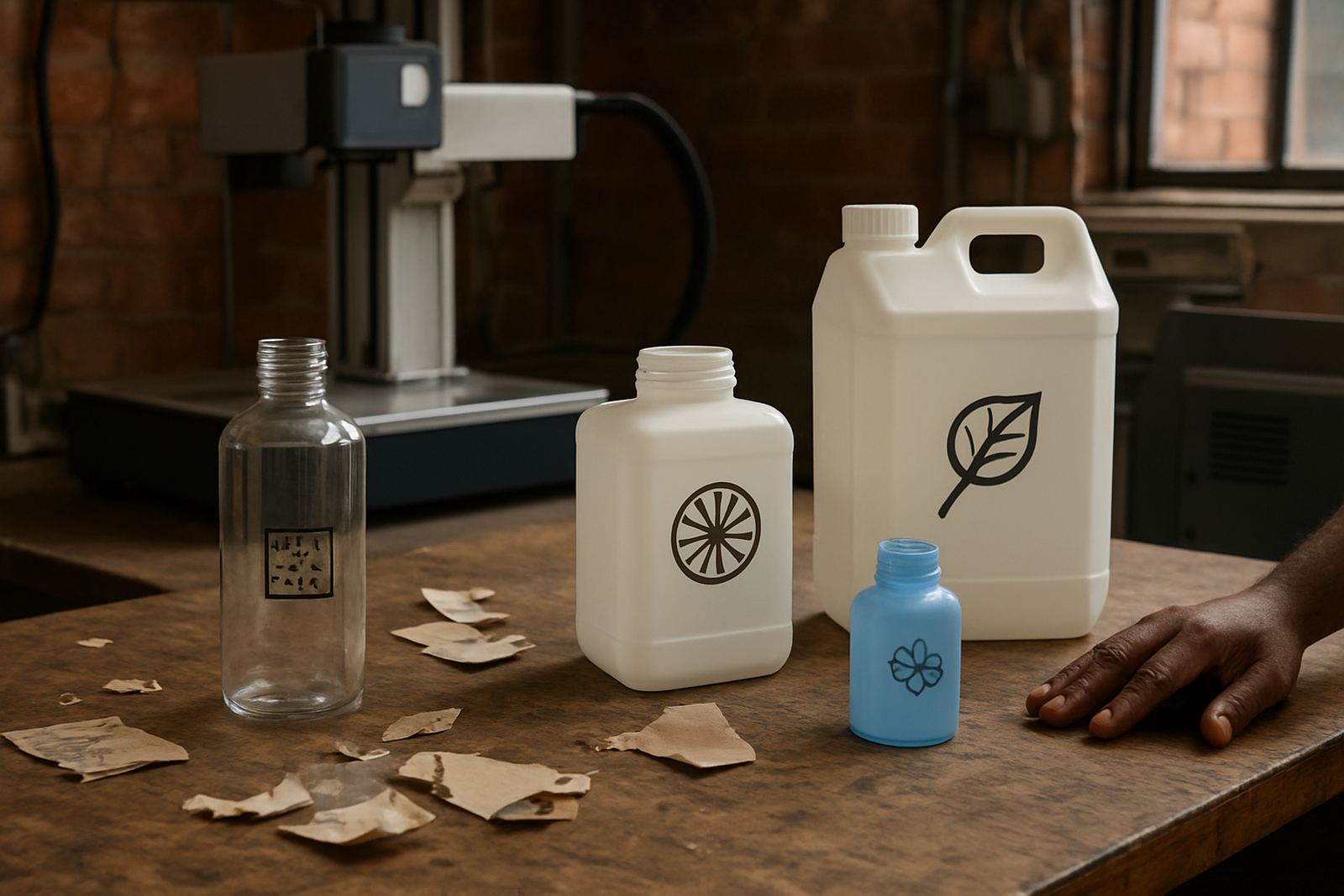
Labels can lift at the corners, show glue marks or lose their look once moisture gets involved. Direct UV laser marking works differently. It marks the glass itself, so the branding becomes part of the product rather than something sitting on top of it.
For South African producers, that matters on products that move through cold rooms, kitchens, bars and retail shelves. Bottles, jars, tumblers, cosmetic containers and laboratory glass all benefit from a mark that does not rub off during packing or transport. The finish is neat and controlled, which makes it useful for logos, batch codes and small design elements where presentation counts.
- Permanent mark with no label edge to peel
- Fine detail for logos, icons and text
- Works well for short runs and repeat production
- Useful for traceability, batch control and branding
Branding ideas that look premium without shouting
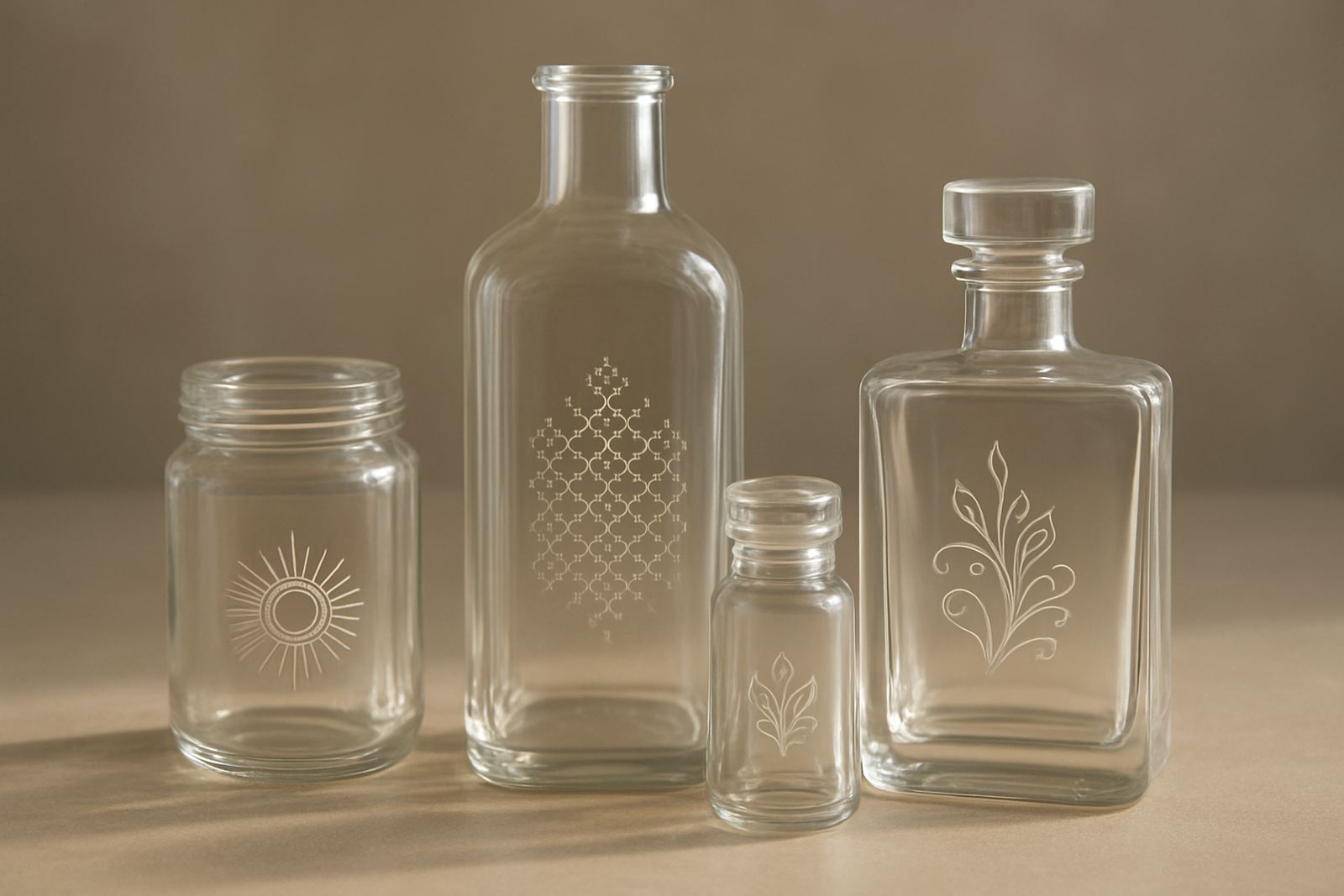
The best glass branding often looks simple from a distance and detailed up close. A small mark near the base of a bottle can be enough for recognition. On jars and jars of preserves, a logo on the shoulder or side panel can keep the front face clean while still giving you brand presence. On glass awards, perfume bottles or giftware, a subtle monogram or pattern can lift the whole product without making it feel overdone.
UV laser marking is useful when you want restraint. It can create frosted style effects, crisp linework and small text that remains legible. If your product is sold in retail stores, hotels, tasting rooms or at corporate events, that quiet finish often suits the market better than a printed label. It also gives you room to separate product information from decoration, which helps if the item carries compliance details elsewhere.
- Logos and monograms for premium packaging
- Batch codes and QR codes for tracking
- Decorative borders, patterns or brand icons
- Minimal marks for high-end gifting and hospitality
What to consider before you mark the first sample
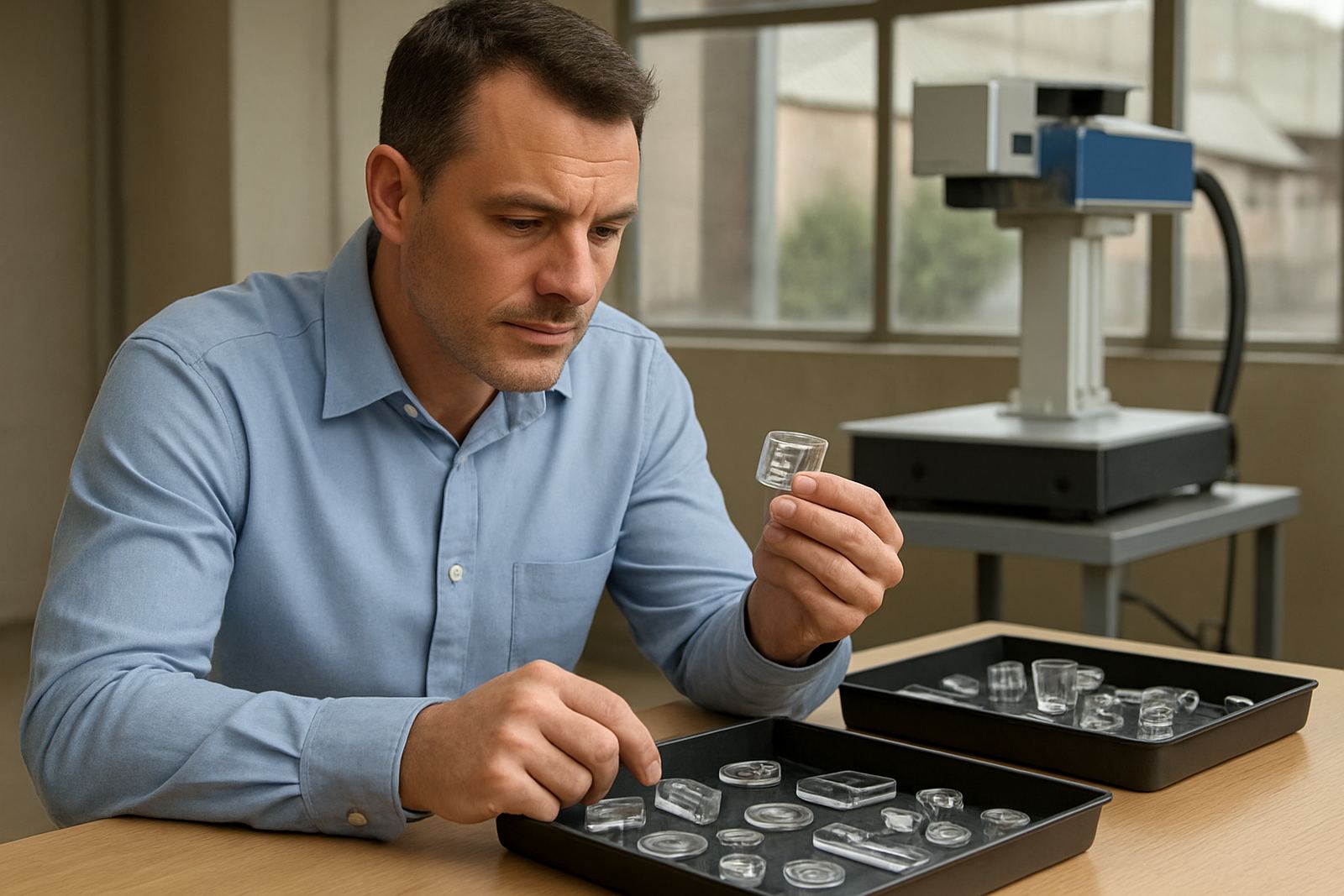
Glass is not all the same. Thickness, colour, curvature and surface treatment all affect the final result. Clear flint glass, tinted bottles and coated decorative glass can each react differently under the beam, so sample testing is worth doing before you commit to a full run. A good test shows how visible the mark will be under shop lighting, on a wet surface and after normal cleaning.
You also need to think about product handling. A curved bottle neck may need a fixture to keep every item in the same position. Flat panels are easier, but if the glass has mould lines, embossing or uneven walls, the marking position must be set carefully. In many cases, the right approach is a mix of artwork changes and process control rather than forcing the same design onto every shape.
- Check glass type, thickness and curvature
- Test visibility in dry and wet conditions
- Allow for positioning marks and fixtures
- Decide whether the design must be subtle or highly visible
In practice, a sample run saves time and money. A wine producer in Jet Park might want a small neck mark for traceability plus a logo on the back panel, while a cosmetic supplier in Midrand may prefer a very light frosted effect on a clear jar. The right answer is usually product-specific, not one-size-fits-all.
Practical uses across South African industries
Glass branding is not limited to luxury goods. It helps a wide range of businesses keep products identifiable and tidy on the shelf. Food processors use it for jars and bottles, beverage makers use it for packaging and refill systems, and promotional product suppliers use it for awards, glassware and gift items. In manufacturing, it can also support internal control by marking parts, trays or inspection samples.
For companies dealing with municipal rules, export requirements or customer traceability, direct marking can simplify record keeping. A small date code or product code helps with recalls, stock rotation and audit trails. Because the mark is permanent, there is less risk of labels falling off in cold storage or during transport, which is a common issue in humid coastal conditions and busy warehouse spaces.
- Food and beverage packaging
- Cosmetic and personal care containers
- Pharmaceutical and laboratory glass
- Giftware, awards and corporate branding
- Industrial identification and traceability
How a good setup protects speed and consistency
Once a glass mark is approved, the next challenge is keeping it consistent. That comes down to the machine setup, the fixture design and the operator training. If the glass sits a few millimetres out, the mark may drift or appear uneven. If the process is not set correctly, the mark can look too faint or too aggressive. Reliable production depends on repeatability, especially where orders change size or product style often.
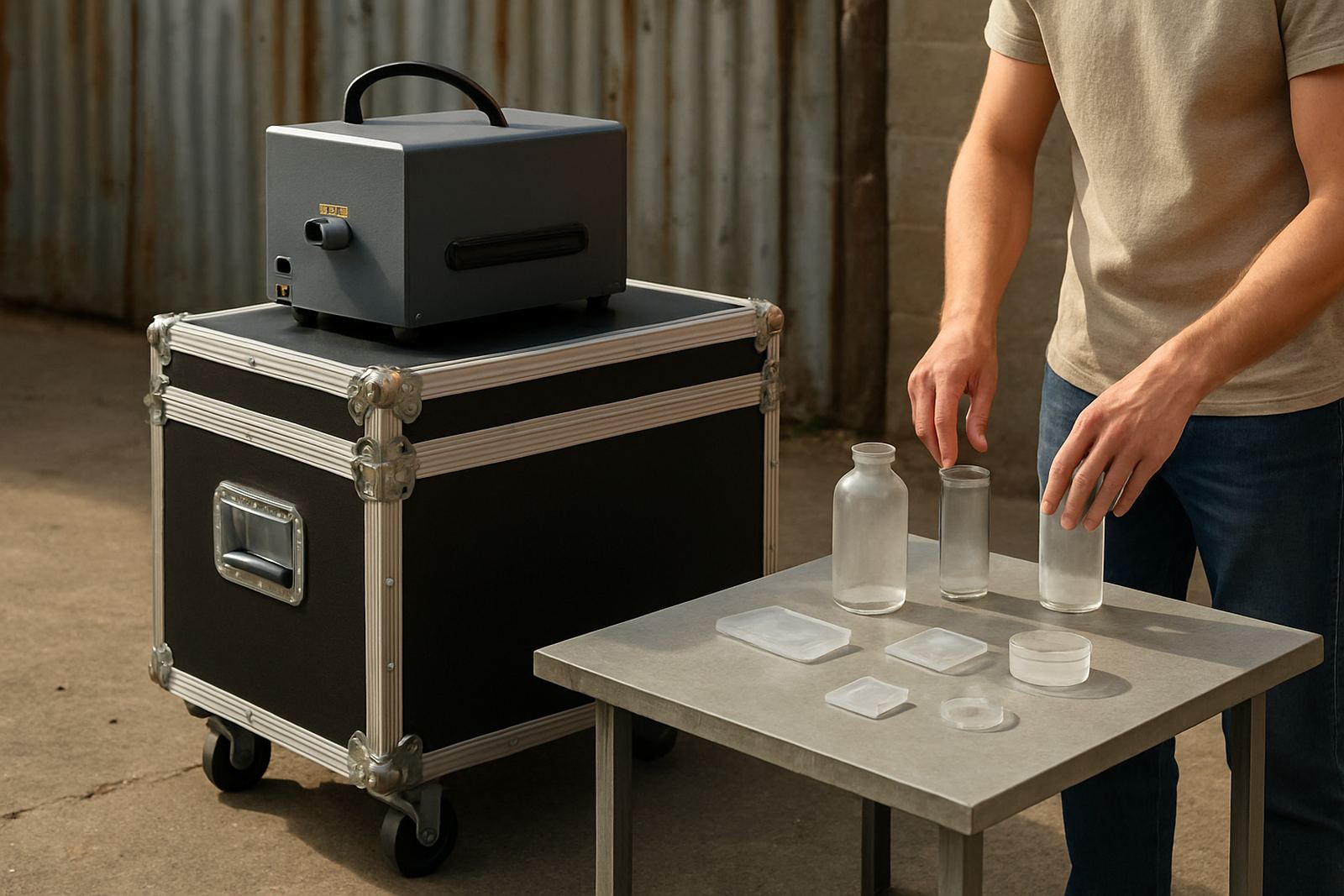
At UV Laser in Jet Park, Boksburg, the usual starting point is a site demo or sample test so the customer can see the finish on their own product. From there, the process may include fixture design, software setup, line integration and operator training. That matters for businesses balancing production with load-shedding, shift changes and tight dispatch times. A well set system is easier to run, and easier to hand over to a new operator without constant supervision.
For manufacturers in Ekurhuleni and beyond, support after installation is just as important as the first sample. Preventive maintenance, breakdown repairs and spares supply help keep the marking line running when deadlines are close and a missed day causes delays. The aim is simple: stable output, clean marks and less wastage.
A local example from Jet Park to nationwide delivery
A practical example is a glass supplier in the Ekurhuleni area that wants to mark bottles for a premium range while keeping the front label clean. The team may start with a small set of sample bottles, test a logo on the shoulder and compare a few positions under retail lighting. If the mark is clear but understated, the same setup can then be used for larger orders with batch coding added at the same time. That kind of approach keeps the branding elegant and the production process manageable.
From Jet Park, Boksburg, support can extend to Germiston, Kempton Park, Benoni, Alberton, Midrand and Pretoria, with demos, installs and training nationwide. The job may be in a factory, a packaging room or a small workshop, but the expectation is the same: the marking must be neat, durable and suitable for the product it sits on. Good glass branding should feel like part of the item, not an afterthought.
If you are comparing options, start with the product itself. Decide what must be seen, what must stay understated and how the item will be handled after marking. That makes the artwork, the sample test and the final setup much easier to get right.