See the mark on your own parts before you buy
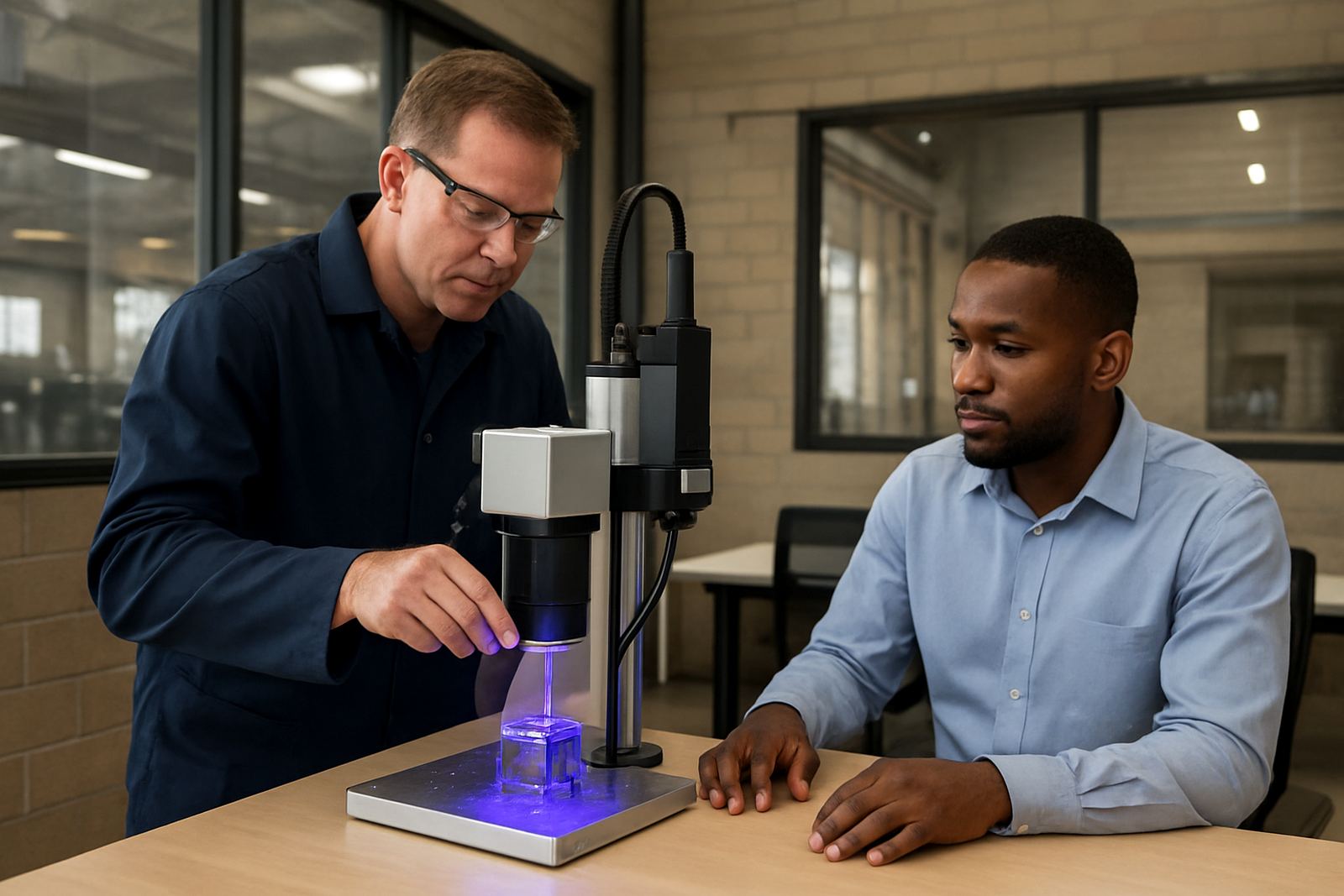
A site demo is the quickest way to judge whether UV laser marking suits your product. We bring the marking head, control equipment and the right settings to your premises so you can test directly on bottles, jars, closures, medical plastics, technical components or cosmetic packaging. That means you see the actual contrast, edge quality and marking depth on the same material that will go into production, not a sample that has been prepared somewhere else.
For many clients in Ekurhuleni and across Gauteng, this saves weeks of back and forth. We can test plain branding, batch codes, serial numbers, QR codes and fine detail such as logos or small text. Because UV marking uses a short wavelength and low heat input, it is well suited to sensitive plastics and glass where you need a clean finish without scorching, cracking or distortion.
Our demo process is practical. We discuss the part, the target finish and the production rate you are aiming for, then set up a few marking trials while your team watches. If needed, we adjust focus, speed, power and line settings until the result matches your standard. It is common to compare two or three options in one visit, and that gives your team real data to work with.
- On-site marking trials on your own materials
- Comparison of contrast, detail and repeatability
- Testing for branding, labelling and traceability marks
- Suitability checks for glass, clear plastics and coloured plastics
What is included in a UV laser demo visit
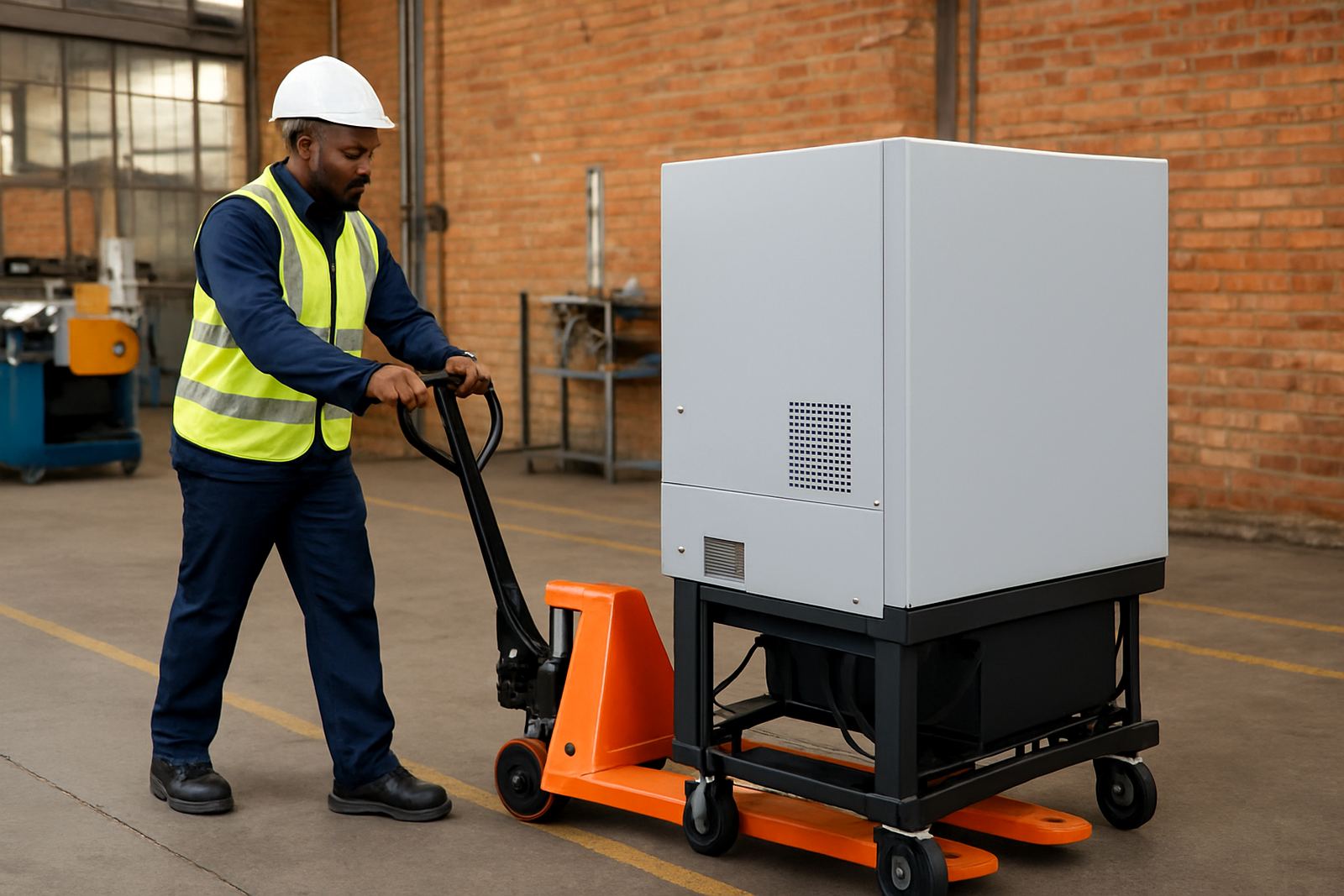
Every demo is planned around the product and the production environment. Some clients only need a sample test on a bench, while others want to see how the marking head behaves near a live line, with the usual vibration, dust and shift pressure. We work through the practical points with you, including part handling, positioning, access to power and the available space around the machine.
Where a fixture is needed, we can discuss simple holding methods and guide your team on how to keep parts stable for consistent marks. If your product changes size or shape, we look at changeover time too. That is often just as important as the mark itself, especially in plants that run short batches or multiple SKUs in a day.
- Assessment of product type, finish and marking area
- Sample setup and live mark trials
- Review of code readability and visual quality
- Advice on fixture design and line placement
- Basic guidance on software setup and operator workflow
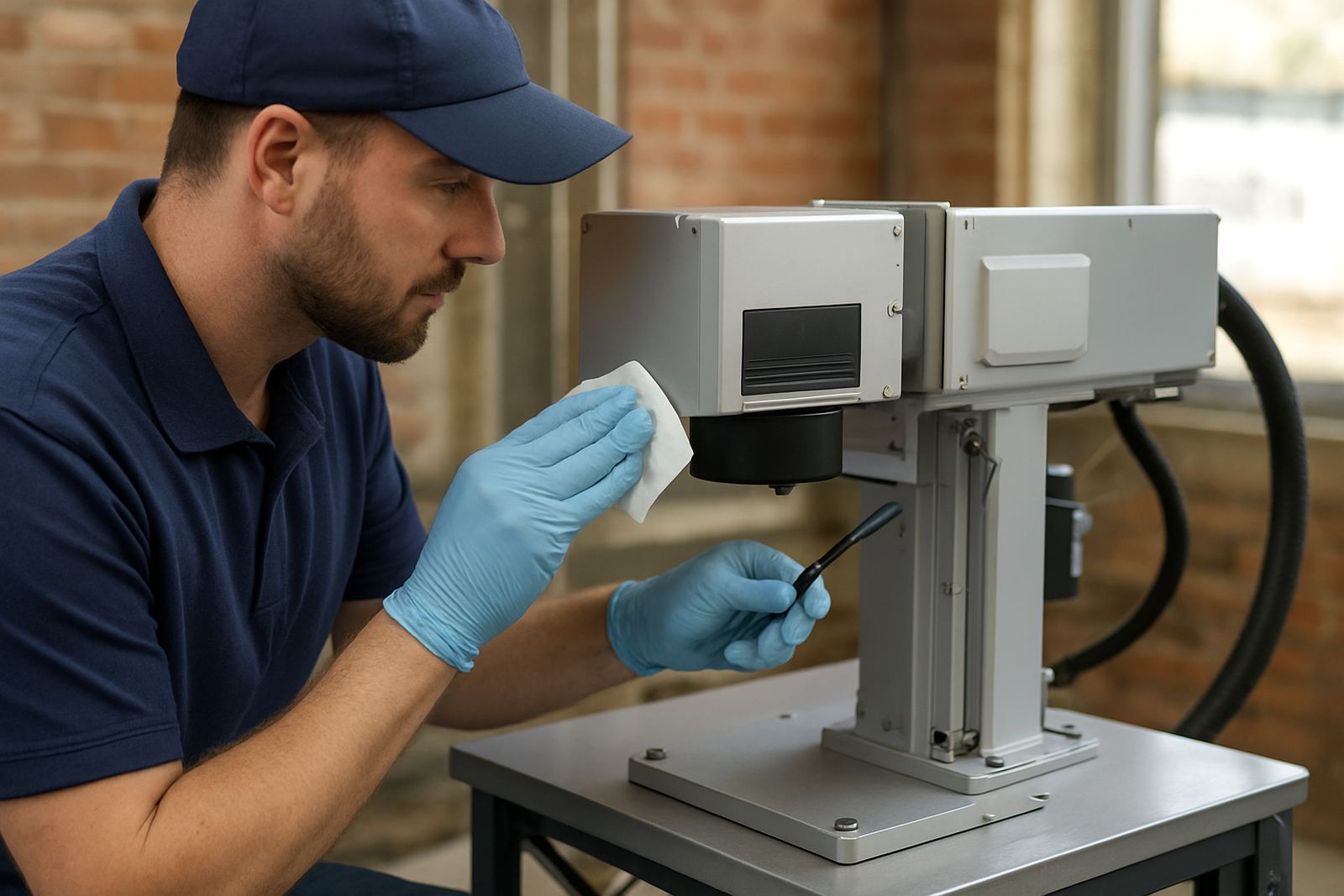
We also explain what maintenance is required to keep the marking result consistent. UV laser systems are generally low on day to day upkeep, but optics should stay clean and the alignment checked at planned intervals. In dusty plants or areas with humidity, like parts of the East Rand and coastal supply routes, we may recommend more regular inspections so dust and moisture do not affect performance.
How the demo process works from enquiry to sample approval
Clients usually start by sending an enquiry through our contact form with the product type, material, dimensions and the kind of mark required. From there, we confirm whether a site demo, sample testing or both will be the best starting point. If you are based in Jet Park, Boksburg, Germiston, Kempton Park, Benoni, Alberton, Midrand or Pretoria, we can often plan the visit quickly. For other towns, we schedule nationwide travel around your production calendar.
The visit itself follows a clear sequence. First we confirm the part and the mark position, then we test on sample pieces and record the settings used. Next we review the results with your team and agree on the best direction. If there is a need for a line demo or a more detailed installation discussion, we can move straight into that next step so there is no need to start over. This keeps the process moving and avoids delays in procurement.
- Send the part details and marking requirement through the enquiry form
- We confirm the best demo format and schedule a visit
- Live trials are done on your own parts or sample pieces
- Results are reviewed and settings are recorded
- Next steps are agreed, whether testing, installation or training
Most demo visits can be arranged within a short lead time depending on location and the complexity of the product. Where parts need special handling or several materials must be tested, we may ask for a bit more notice so the right equipment and support are ready.
Turnaround, pricing and what affects the quote
Pricing for a site demo depends on travel, the number of products tested, the time needed on site and whether additional services are requested at the same visit. A straightforward demo on one or two parts is quoted differently from a full line assessment with fixture discussion, software checks and operator walkthroughs. We keep the pricing structure clear, so you know what is included before the visit is confirmed.
For most enquiries, the turnaround is driven by the client’s production window. If your line can only stop for a short period, we plan the demo around that window and keep the trial focused. If you want side by side comparisons of multiple mark positions, several text sizes or different traceability codes, we allow extra time. That said, the first useful result is usually reached quickly, because UV laser marking responds well to small setting changes.
- Travel distance and site access
- Number of samples or parts to test
- Complexity of the marking requirement
- Need for fixture or integration discussion
- Whether training or support must happen on the same visit
If a demo leads to a purchase, the earlier time spent on testing often reduces later costs by cutting down errors, rework and unnecessary changeovers. That is especially helpful where labels are being replaced with direct marking for traceability or branding.
Suitable materials, mark types and technical limits
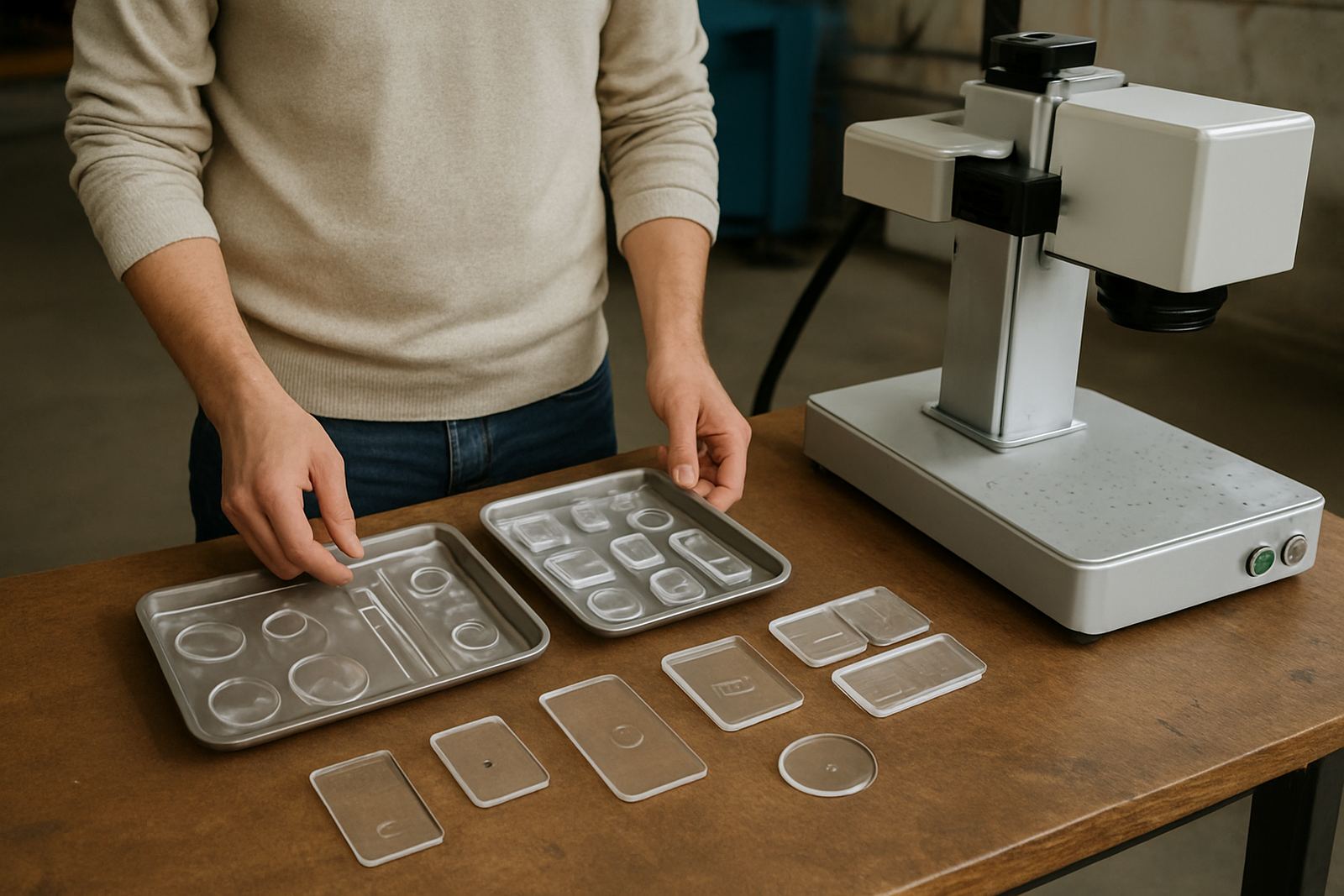
UV laser marking is commonly used on clear and coloured plastics, coated plastics, rigid packaging and glass. It is chosen where heat damage must be kept very low and where the mark must remain legible after handling, washing or repeated use. On glass, the process can create fine, permanent marks with good definition. On plastics, it can produce crisp contrast for codes, symbols and small text.
The best result depends on the actual material formulation, colour and surface finish. Some plastics mark very cleanly, while others need a specific setting to avoid frosting or a weak mark. During the demo we check the response of the material, not just the appearance. That way your team can judge whether the mark will hold up in the real world, not just on day one.
- Glass bottles, jars and containers
- Clear, white and coloured plastics
- Technical and industrial plastic parts
- Brand marks, batch codes and serial numbers
- Small logos, symbols and machine-readable codes
Typical marking considerations include working area size, part presentation, code size, contrast and line speed. A compact unit may suit a small cell, while a production line may need a more integrated setup with stable part handling and a consistent focal distance. We are careful about these details because they decide whether a result is repeatable shift after shift.
Maintenance intervals and support after the demo
Although a site demo is a short visit, it is a good time to talk about maintenance intervals for the marking system and any fixtures used with it. In many plants, a monthly visual inspection and cleaning routine is enough for the optics and surrounding area, with a more detailed service check every six to twelve months depending on dust, usage and operating hours. In harsher environments or where the line runs hard, the schedule may need to be tighter.
We also advise on simple operator checks that help prevent stoppages. These include keeping the marking window clean, checking the stability of the mount, confirming software settings after recipe changes and watching for movement in the product path. If a machine is being used in a warm plant or in coastal conditions where humidity is high, it helps to inspect seals and mounts a bit more often.
Should the demo lead into installation, training or process optimisation, our team can continue with those services without changing the workflow you have already approved. That makes it easier for your supervisors and operators to move from sample approval to normal production with fewer interruptions.
Key facts
| Marking source | UV laser system for glass and plastics |
|---|---|
| Typical use | Branding, labelling, batch codes, serial numbers and fine detail |
| Material range | Glass, clear plastics, coloured plastics and coated plastics |
| Demo format | On-site live trials using your own parts or sample pieces |
| Support area | Jet Park, Boksburg and nationwide |
| Maintenance guidance | Monthly checks, with full service every 6 to 12 months depending on use |