Why fixture design matters for repeatable marking
When a part moves even a few millimetres, the mark can land off position, look uneven, or fail to read properly on a scanner. That is why fixture design is often the difference between a one-off sample and a reliable production process. For glass bottles, cosmetic jars, medical components, clear lids, moulded plastics and thin-walled items, a well made fixture supports the product without putting stress on the surface.
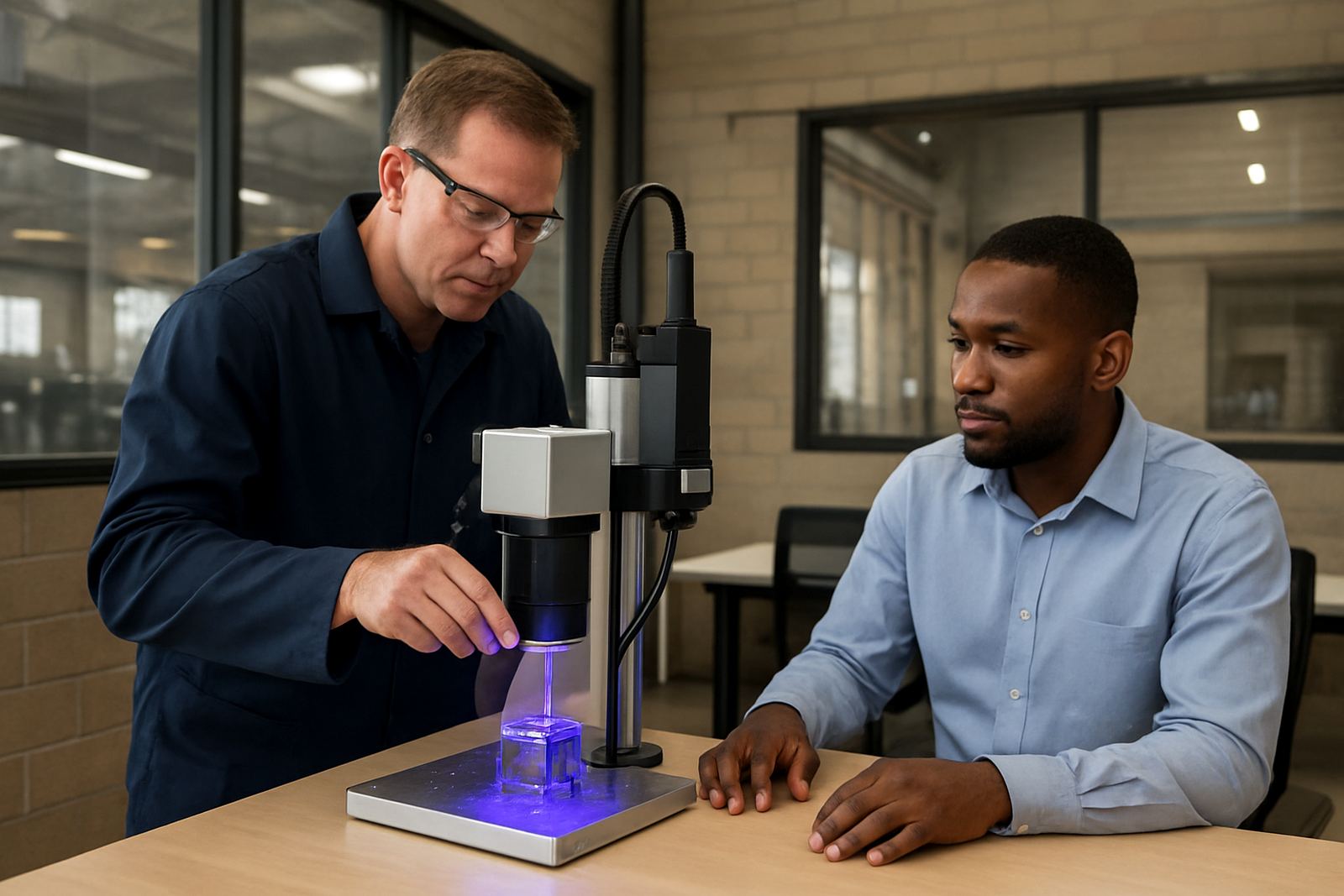
We design fixtures for UV laser marking jobs where loading needs to be quick, repeatable and safe. The aim is simple: place the part, clamp it correctly, mark it, then remove it without scratches, chips or movement. On fragile items this is especially important, since a small twist in the holder can cause rejection later in the line.
Our work is based in Jet Park, Boksburg, with support across Germiston, Kempton Park, Benoni, Alberton, Midrand and Pretoria, as well as nationwide. We also keep local production realities in mind, including dust, vibration, humidity near the coast, and load-shedding conditions where operators may need to resume work after an interruption without losing setup position.
What is included in a custom fixture project
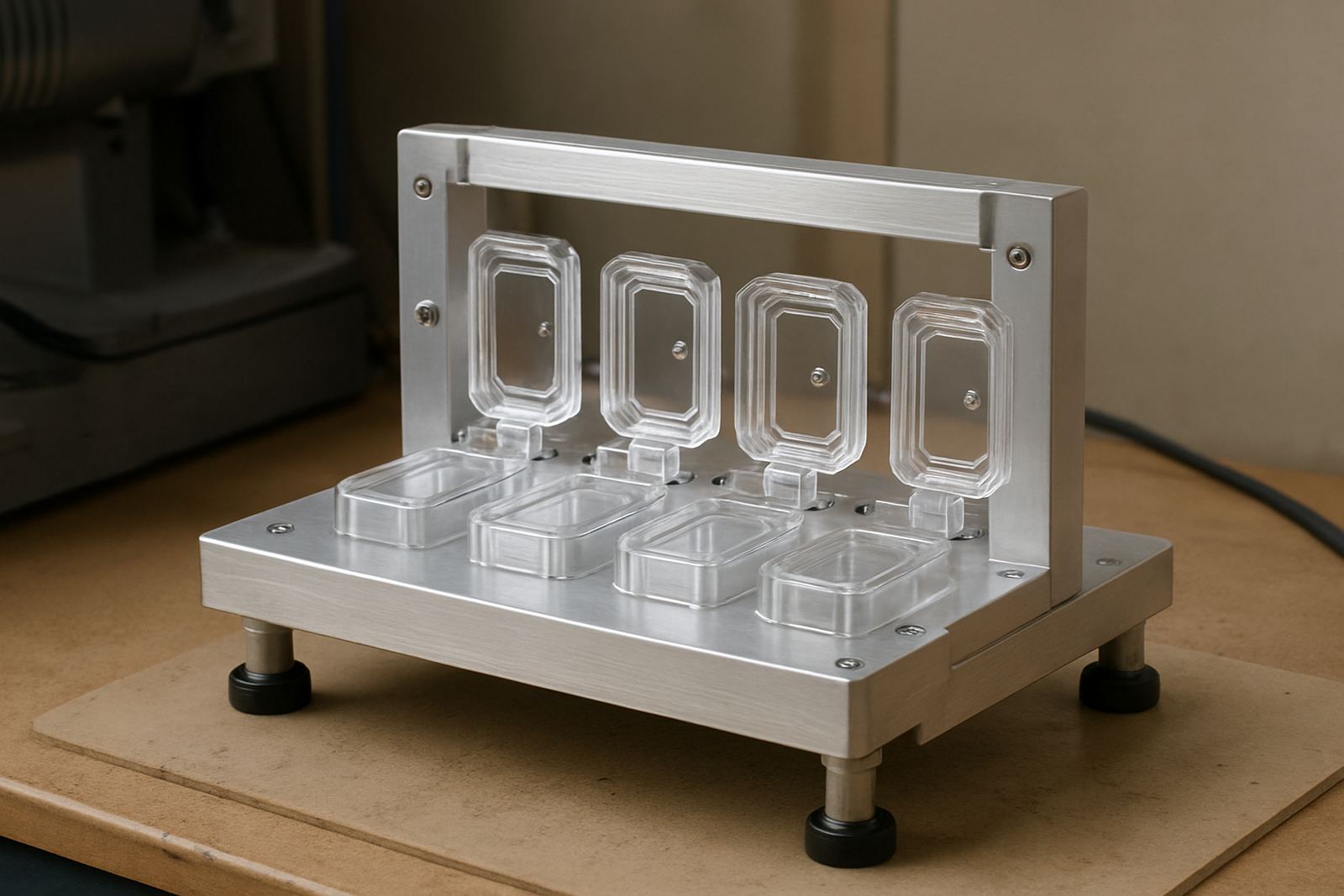
Fixture design is not just a sketch. It is a working setup built around your part, your marking position and your line speed. Depending on the application, we can include locating features, support cradles, adjustable stops, soft contact pads, quick release clamping and alignment references for repeat loading.
- Part measurement and loading review
- Holding concept for glass, plastics or mixed materials
- Alignment to the laser marking field
- Access for operators and maintenance staff
- Allowance for part variation and tolerances
- Changeover support for multi SKU production
For some jobs, a fixture must suit a single product. For others, the same base can be adapted with interchangeable inserts so one station handles several part sizes. We also look at how the fixture will be cleaned, stored and handled during shift changes, because heavy use can loosen poor hardware quite quickly.
How we develop the right fixture for your line
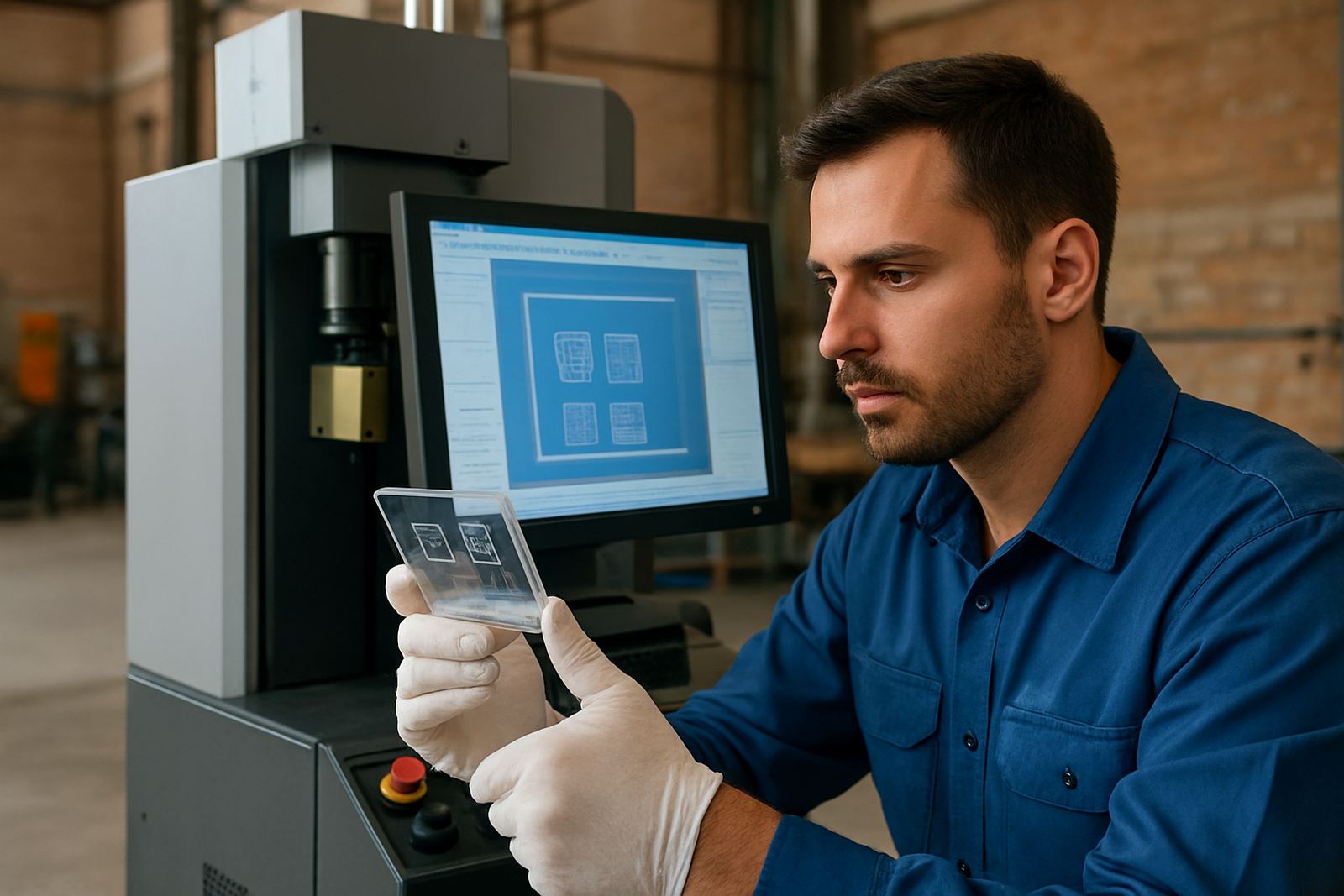
We start by reviewing the sample parts and the marking requirement. That may include the exact position of a logo, date code, serial number, warning text or QR code. We also check the surface finish, wall thickness, orientation and whether the part is round, flat, tapered or irregular. If needed, we test samples before finalising the holding method.
- Step 1: Receive part samples and process details
- Step 2: Confirm marking location, cycle time and operator flow
- Step 3: Prepare the fixture concept and loading method
- Step 4: Build, fit and test the fixture with actual parts
- Step 5: Adjust for alignment, stability and access
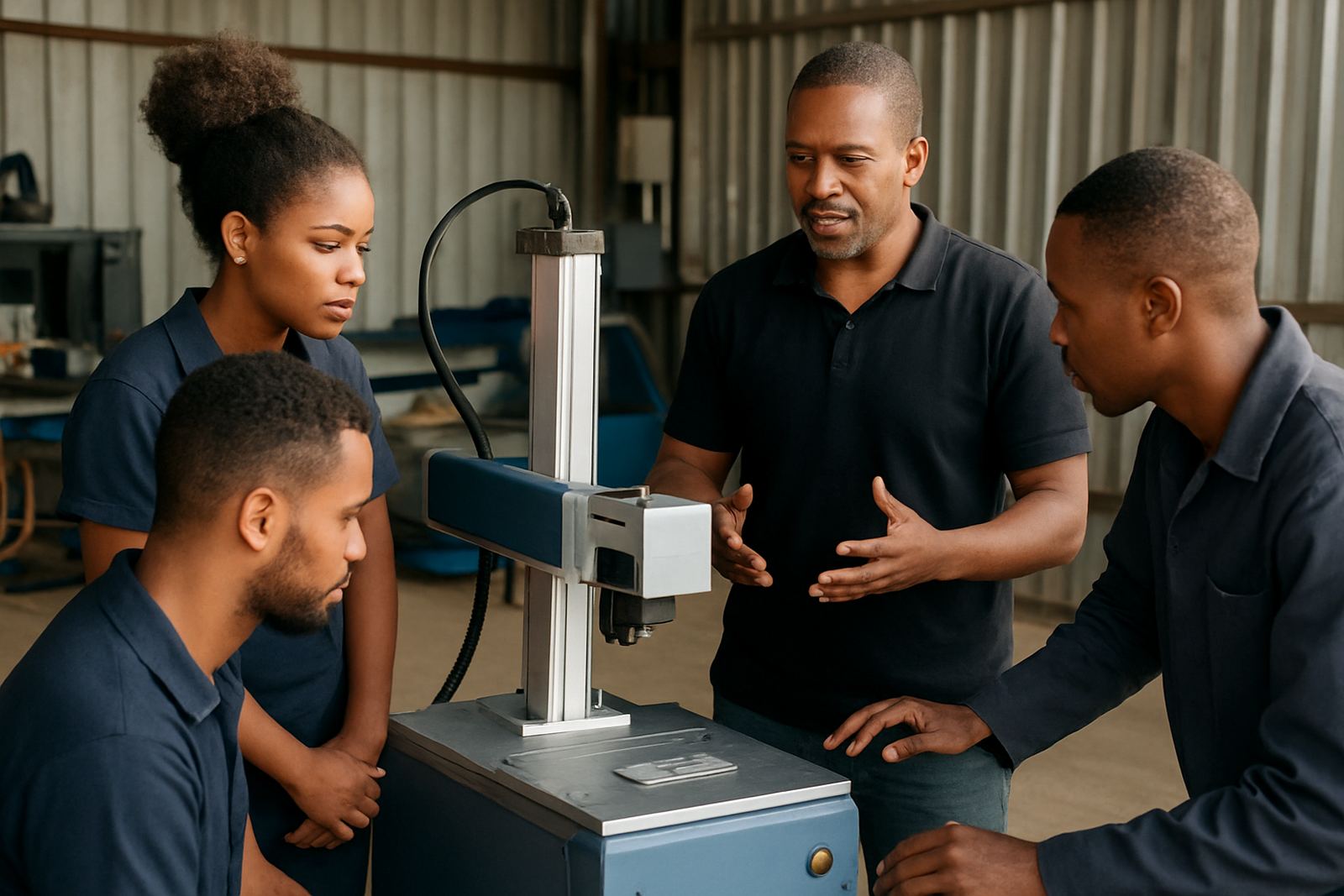
- Step 6: Hand over with operator guidance and basic care notes
Where a line already has conveyors, transfer systems or rotary stages, the fixture is matched to the existing equipment so loading stays practical. We can also assist with software setup where marking position needs to line up with a specific toolpath or part orientation. If the job is more sensitive than expected, we revise the clamp pressure or support points rather than forcing the part to fit the first idea.
Typical fixture specifications and options
Different products call for different holding styles, but most fixture work follows a few practical specifications. We aim for clean access to the marking zone, stable support under the part and enough clearance for safe operation. The final structure depends on the application and the production rate, but common details are listed below.
- Material options: aluminium, steel, engineering plastic and soft contact inserts
- Part size range: from small components to larger tray loaded items
- Repeatability: set up for consistent positioning within production tolerance
- Access: open viewing areas for visual checks and laser safety control
- Changeover: fixed or quick change inserts for multiple products
- Surface protection: non marking pads for glass and polished plastics
For customers in humid or dusty environments, we can recommend finishes and fasteners that hold up better in daily use. On some sites, a simple fixture needs to survive frequent cleaning with light solvents or water based cleaners, so the choice of materials matters. We keep the build practical, not overcomplicated, because a fixture that is too fiddly often gets bypassed by operators.
Turnaround times and pricing approach
Turnaround depends on the complexity of the part, the number of variants and whether samples are available early in the process. A straightforward fixture for a single part can move faster than a multi position setup with inserts or alignment aids. If you already have clear samples and marking data, the job usually progresses more quickly.
Pricing is based on the time needed for review, design, materials, fabrication and testing. We quote according to the actual application rather than using a one size fits all rate. If a customer needs a basic holding solution only, we keep the design simple. If the application needs fine adjustment, extra protection for delicate items or line integration work, the cost reflects that added work. The goal is to provide a fixture that lasts and performs properly, not a temporary fix that gives trouble later.
For planning, many customers also ask whether fixture design can be bundled with machine installation, operator training or preventive maintenance. In many cases it can, which helps reduce downtime and avoids repeated visits for the same setup issue.
Maintenance intervals and when to update the fixture
Even a well made fixture needs regular checks. We normally suggest a visual inspection at each shift change for obvious wear, followed by a more detailed review every one to three months depending on use. High volume lines, heavy handling and dusty environments may need shorter intervals. If a product changes shape, coating or supplier, the fixture should be checked again before full production resumes.
- Daily: check clamps, pads and locating points for wear
- Weekly: confirm alignment and tighten hardware if needed
- Monthly: inspect inserts, stops and any moving parts
- Quarterly: review repeatability against sample marks
- Immediately: rework the fixture after part design changes
If a fixture starts needing operator force to load the part, that is usually a sign that it needs attention. The same applies when marks begin drifting off centre or the part shows handling marks. Small adjustments now are cheaper than scrap later. Our team can support repairs, insert replacement and process changes from Jet Park and across South Africa.
Key facts
| Fixture types | Single part jigs, tray fixtures, interchangeable inserts, rotary holders |
|---|---|
| Part compatibility | Glass, plastics, clear components and delicate moulded items |
| Positioning tolerance | Set per application to support repeatable loading and mark placement |
| Typical build materials | Aluminium, steel, engineering plastic, soft contact inserts |
| Support area | Jet Park, Boksburg with nationwide demos, installs and training |
| Related services | Sample testing, machine installation, software setup, process optimisation |