When industrial labels need to stay readable for years
On a plant floor, a label is only useful if it still reads properly after months of heat, dust, oils and cleaning. UV laser marking is well suited to plastic label blanks, asset tags, cable markers and identification components because the mark is permanent and sharp, even when the part is handled often or mounted near machinery.
Many clients come in with a simple need: serial numbers, asset codes, batch references, warning text or a company name that must not rub off. Others need small text, barcodes, QR codes or a mix of all four on a compact label. For that kind of work, the laser gives clean results on plastics with very little set-up time once the material and artwork have been tested.
In Ekurhuleni, where many sites run long shifts and some areas deal with load-shedding and dust, the value is consistency. A proper marking process means the label looks the same on the first unit and the five thousandth. That matters when stock is moving through warehouses in Jet Park, Boksburg, Germiston, Kempton Park and Benoni, or when labels are being fitted on site in Pretoria, Midrand and Alberton.
Typical equipment set for label production
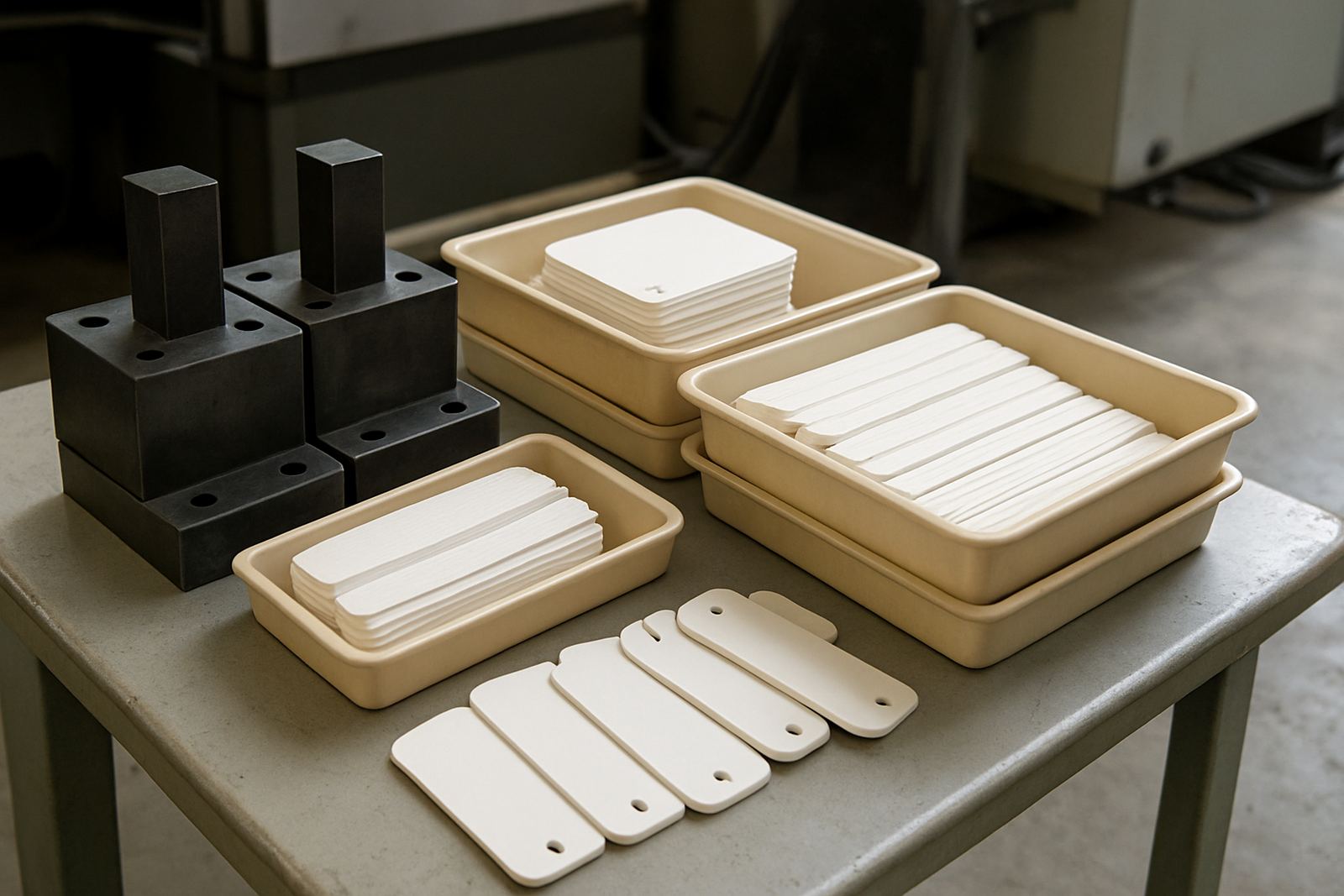
For industrial labels, the full set-up is usually smaller than people expect. A good marking cell can be built around a UV laser source, a stable work surface, a fume extraction unit and a fixture that holds the plastic blank square and steady. If the labels are small or repeat production is expected, a proper jig is worth the effort because it reduces wasted parts and keeps the mark in the same place every time.
Some clients also need software set-up for variable data, so serial numbers and batch changes can be handled quickly. If the labels are being made for an internal asset system, the layout can be arranged to leave enough room for text, codes and any border or logo. Refilwe and Thabo often assist with this side of the planning, especially where the part shape is awkward or the labels have holes, rounded corners or recessed areas.
- UV laser unit matched to the plastic type and required mark size
- Fixture or nest for holding label blanks level
- Extraction to manage fumes and keep the lens area cleaner
- Basic software setup for fixed text and variable fields
- Sample set of blanks for testing before full production
Planning the label layout before production starts
Good layout planning saves a lot of time later. The first thing to check is the usable marking area. A label blank might measure 40 x 20 mm on paper, but the actual clean marking zone can be smaller once clips, holes or curved edges are taken into account. It is worth leaving enough margin so the barcode or QR code does not sit too close to the edge.
Text sizing matters too. If the label will be read from arm’s length, small lettering may be fine. If it must be read on a racking system, a larger font may be needed. We usually recommend testing a few versions on the exact plastic to check contrast, legibility and whether the mark remains clear after cleaning. On some plastics, a mark that looks fine under shop lights can become hard to read under bright daylight, so it is best to test that properly.
When clients are building a new label range, it helps to decide upfront whether all labels will share one standard layout or whether different departments need different codes and colours. A little planning at the start makes training easier and keeps the process tidy when staff changes over.
Common mistakes with plastic label blanks
A lot of problems come from choosing the wrong plastic or trying to run too fast before the settings are confirmed. Some plastics mark well and give a high-contrast finish, while others are too reflective, too soft, or simply not suited to permanent laser marking. If the material is not right, the result can look patchy, shallow or uneven.
Another common mistake is skipping sample testing. A small sample run shows whether the mark depth, contrast and placement are acceptable before a full batch is started. That step saves money, especially when the labels are for a client order or for internal stock control and every piece must match.
- Using untested plastics that react poorly to the laser
- Placing text too close to holes, edges or fixing points
- Running without a proper fixture, which causes drift
- Trying to fit too much information onto a small blank
- Ignoring cleaning needs, which can shorten lens life and affect finish
We also see issues where the label spec changes after production starts. Once the layout is approved, it is best to lock it in and keep a master file. Small changes in font, code length or position can cause unnecessary scrap if they are handled ad hoc.
Site demos, sample testing and line fitment
Before a machine is installed, many buyers want to see their own blanks marked first. That is the practical way to decide if the finish suits the application. UV Laser provides site demos and sample testing so the client can check the real result on the actual material, not just on a brochure description. For industrial labels, that testing is especially useful because some plastics behave differently from one supplier to the next.
If the label work will sit alongside other production steps, line integration can be planned from the start. That might include a dedicated marking station, a hand-feed set-up or a fixture added into an existing assembly flow. We also help with software setup and operator training so the day shift and night shift can run the same job without confusion. In a busy Gauteng site, that kind of consistency matters more than fancy features.
For factories in coastal areas or dusty industrial zones, preventive maintenance should be part of the plan from day one. Humidity, dust and poor storage can affect the machine environment, so a clean room is not always needed but a tidy, controlled area is a good idea.
Budget ranges for industrial label marking in Rand
The budget depends on the label size, the volume required, how much automation is needed and whether the client wants one machine or a full production station. A small entry set-up for sample work and light production will usually cost less than a line-integrated system with custom fixtures and software setup. For most industrial label projects, it is better to budget for both the machine and the support items, not just the laser itself.
As a practical guide, sample testing and basic process setup may sit in the low thousands of Rand, depending on the number of visits and the amount of artwork work involved. A compact production set-up can move into the mid to upper five-figure range, while a more complete station with integration, fixtures and training can run into the six figures. For larger plants with multiple label types, spares supply and maintenance planning should be included too, otherwise the real cost becomes harder to control later.
Thabo and Priya usually help clients map the support side properly so there are no surprises after installation. That includes operator training, breakdown repairs, preventive maintenance and spare parts planning. A clear budget line for support is often the difference between a machine that sits idle and one that keeps producing labels week after week.
Where we support label projects across Gauteng and beyond
Most industrial label enquiries start in Jet Park and the surrounding Ekurhuleni area, but the work does not stop there. UV Laser supports clients in Boksburg, Germiston, Kempton Park, Benoni, Alberton, Midrand and Pretoria, with demos, installs and training available nationwide. That matters for businesses with branches in more than one province or with production moving between sites.
Riaan oversees the overall direction of the work, while Naledi manages operations and scheduling so site visits and support calls are handled properly. Refilwe leads applications testing, Anele handles training, Priya manages service admin and Thabo takes care of field installation work. For clients who need reliable marking on plastic label blanks and identification components, that mix of experience keeps the process practical from first sample to full rollout.
If you are planning a new label line or replacing an older marking method, start with a sample and a layout check. That is usually where the best savings are found, and it keeps the final label easy to read, even after real-world use.