When drinkware needs a mark that stays put
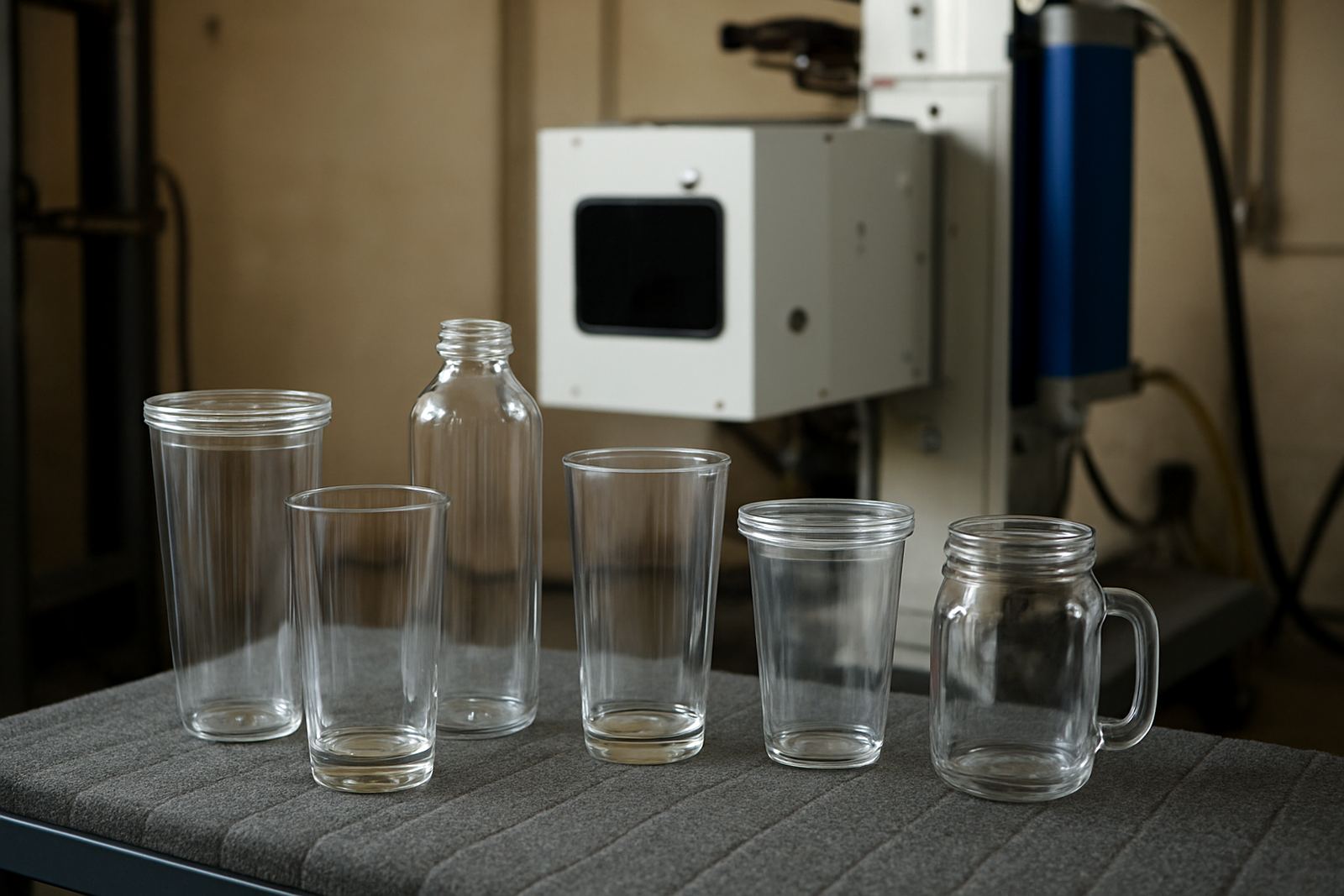
Drinkware is handled, washed and stacked more than most products. That is why many South African producers move away from stickers and inks that rub off, peel in chilled rooms or lift after repeated washing. On glass, a UV laser can place a crisp logo, a size mark, a fill line, or a small decorative pattern that stays readable for the life of the item. On selected plastics, it can do the same where the material responds well and the finish is tested properly first.
We work with clients in Jet Park, Boksburg, Germiston, Kempton Park, Benoni, Alberton, Midrand and Pretoria, as well as nationwide for demos, installs and training. Typical customers include promotional suppliers, bottling plants, contract packers, glassware distributors and businesses that need repeatable markings on glasses, bottles and jars. If the product is going into a gift pack, retail shelf or event order, the mark has to look neat from the first unit to the last.
For drinkware, the main question is not only whether the mark can be made, but whether it can be made at a practical speed without cracking the glass, distorting the plastic or slowing the line too much. That is where sample testing matters. A short test run shows how the surface reacts, how dark the mark comes out and whether the part needs a fixture to keep it steady.
Typical equipment set for glass and plastic drinkware
A drinkware marking setup usually starts with the laser source, a control unit and a work area that suits the item size. For glassware, the beam must be stable and the focus consistent, especially on curved surfaces like stemware, mugs and small bottles. For plastic drinkware, the setup often needs careful power control so the mark is clean without clouding the surrounding area more than necessary.
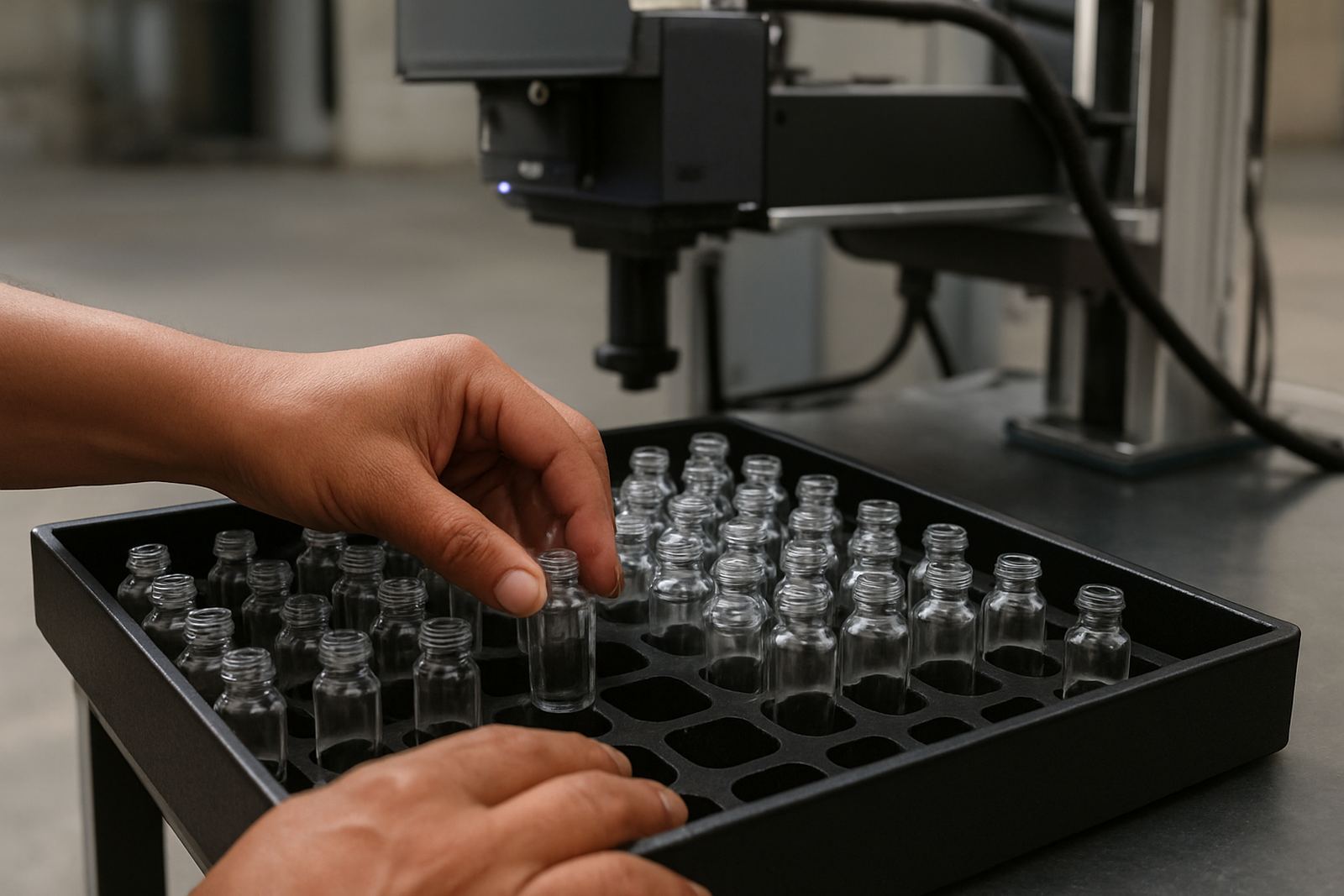
Most projects also need supporting equipment. A fixture keeps each glass or cup in the same position. A simple rotary unit is often used for cylindrical items, while trays or nests help with flat or irregular shapes. If the line already has conveyors or pick-and-place movement, we can look at line integration so the marking point fits the current process instead of forcing a full changeover.
- UV laser marking unit for fine, permanent detail
- Workholding or rotary fixture for cups, bottles and jars
- Fume extraction where the job creates residue or odour
- Software setup for logos, date fields and batch data
- Basic guarding and safety signage for the work area
In coastal areas and humid storerooms, dust and moisture control matters. In industrial zones around Ekurhuleni, we often see drinkware stored in mixed conditions before packing and dispatch, so the setup needs to be practical and easy to keep clean. If power cuts are part of the daily routine, the client should also plan for safe shutdown and restart procedures so settings are not lost and glass stock is not wasted.
Planning the layout before the first sample run
Good planning saves time and broken stock. Before installation, we look at the size of the drinkware, the mark position, line speed and the order in which products move through the area. A logo placed too close to the rim, handle or seam can be hard to repeat. A mark placed too low may be hidden once the glass is filled. That is why layout and artwork checks need to happen before production.
We also advise clients to define their marking standard early. Decide if the job is for branding only, or whether it also needs serial numbers, bottle sizes, capacity marks or event names. If multiple designs will be used, save the files clearly and keep a simple approval process. On sites where staff rotate between shifts, this cuts down on mistakes and avoids the wrong artwork being used on an order.
Sample testing should include real production conditions, not just a one-off sample on a clean bench. Test the same item size, same glass thickness and same handling method used on the floor. If the product is packed in trays or cartons afterwards, check for scuffing during movement. A good test also shows whether the mark remains clear after washing, wiping or chiller exposure.
- Confirm the mark size against the visible flat area or curved panel
- Check if the design needs one or two passes for legibility
- Decide whether each item needs a unique code or the same artwork
- Allow space for operator access, inspection and cleaning
Common mistakes that lead to poor drinkware marks
One of the most common mistakes is choosing a marking method before testing the actual material. Not every glass recipe or plastic blend behaves the same. A plastic cup that looks suitable may haze, warp or mark unevenly if the power settings are wrong. The same goes for coated or textured drinkware where the surface finish changes the result.
Another issue is trying to run too fast from the start. Drinkware jobs often need a slower first pass while the team confirms placement and quality. Once the process is stable, speed can be increased carefully. Rushing the setup usually leads to crooked logos, incomplete characters or marks that are too faint to meet the client’s standard.
We also see problems when the fixture is an afterthought. A wobbly glass or a cup that sits differently every time will produce uneven marks. If the item rolls, shifts or sits at a slight angle, the beam will not hit the same point on each cycle. For higher volumes, the fixture should be designed with loading ease in mind so operators can work quickly without fighting the setup.
Finally, clients sometimes overlook maintenance. Laser marking is cleaner than ink, but the work area still needs regular checks, lens care and software backup. In a busy plant, it only takes a small build-up of dust or a loose setting to affect output. Preventive maintenance is cheaper than a full breakdown on a Friday afternoon.
Budget ranges and what affects the Rand figure
Budgets for drinkware marking depend on the product mix, mark size, automation level and whether the site needs a new fixture or line integration. A small manual setup for sample work or low-volume production will sit at the lower end. A higher-output line with custom workholding, software setup and installation will cost more. For planning purposes, clients usually need to think in stages rather than one single figure.
As a rough guide, sample testing and small application trials may start from a few thousand Rand, especially where the client brings the stock to Jet Park for evaluation. A practical operator-focused setup for modest volumes can move into the tens of thousands. If the project includes a fully integrated installation, custom fixture design, on-site training and preventive maintenance planning, the budget can rise further depending on the line and the site conditions.
What drives the cost most often is not the logo itself but the repeatability. Curved glass, mixed bottle heights, unusual cup shapes and tight line speeds all increase the engineering time. If the job must work across several sites, such as Boksburg, Germiston and Pretoria, travel and commissioning time also need to be factored in. The best way to control cost is to lock the product sample, mark size and output target before the machine is selected.
For many drinkware businesses, the right approach is to start with a tested process and then expand. That keeps the first investment sensible and gives a clear path for future upgrades when volumes grow.
Support from Jet Park to sites nationwide
UV Laser is based in Jet Park, Boksburg and supports customers across Ekurhuleni and beyond with demos, installs, operator training and service. The team includes Riaan Pretorius, Naledi Mokoena, Refilwe Mahlangu, Anele Dlamini, Priya Naidoo and Thabo Khumalo, giving clients a direct line to people who handle applications, service and field work every week. That matters when a production line needs a quick change or a new drinkware range comes in with different dimensions.
We help with site demos, sample testing, machine installation, operator training, fixture design, line integration, preventive maintenance, breakdown repairs, software setup, process optimisation and spares supply. For drinkware projects, that support can cover everything from a one-off commemorative glass order to a steady production run for retail or hospitality supply. If a customer in Midrand or Alberton needs to compare finishes, a sample test can make the decision easier before the full order is placed.
Clients can reach us through the enquiry form on the contact page. That is the best starting point for sharing product photos, dimensions and the marking requirement so the right test can be arranged and the budget shaped properly.