Why laboratory containers need permanent identification
In labs and test rooms, the marking on a container often carries the batch number, sample code, material reference or calibration note. Paper labels can lift with alcohol wipes, condensation and repeated handling, while ink can fade or smear. UV laser marking is useful where containers move between prep areas, cold storage and benches, because the mark becomes part of the surface and stays readable.
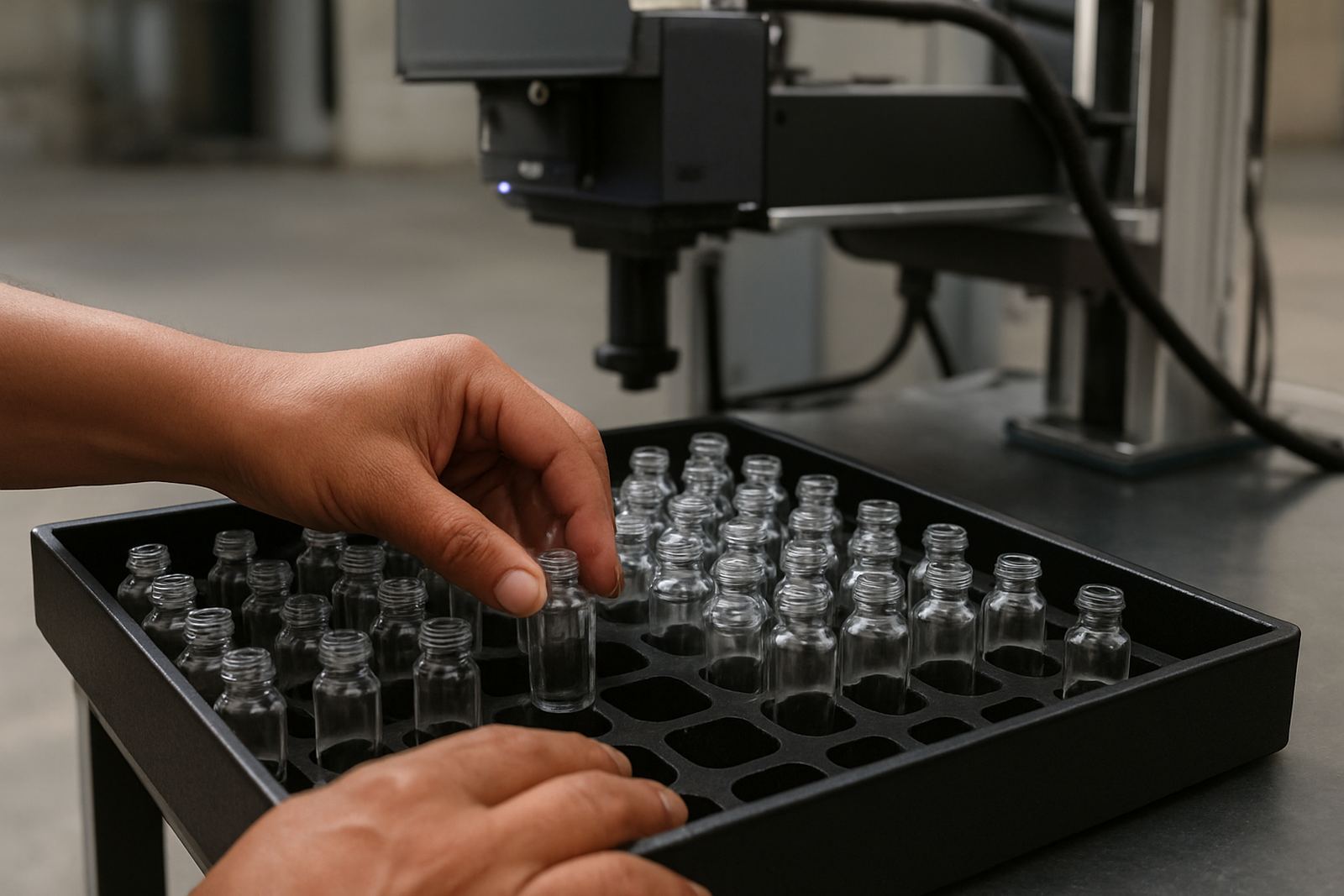
For South African sites, this matters in humid coastal areas, air conditioned labs and busy production plants where containers are washed often. We see it used on glass vials, reagent bottles, sample jars, measuring cylinders and plastic accessories where a clean finish is important. If your operation runs across shifts or handles many sample types, clear identification also reduces mix ups and helps with traceability during audits.
Typical containers and accessories we mark
Most laboratory marking jobs involve a mix of glass and plastics, with different shapes and wall thicknesses. The material type affects contrast, speed and how much heat the item can take, so sample testing is always worth doing before full production.
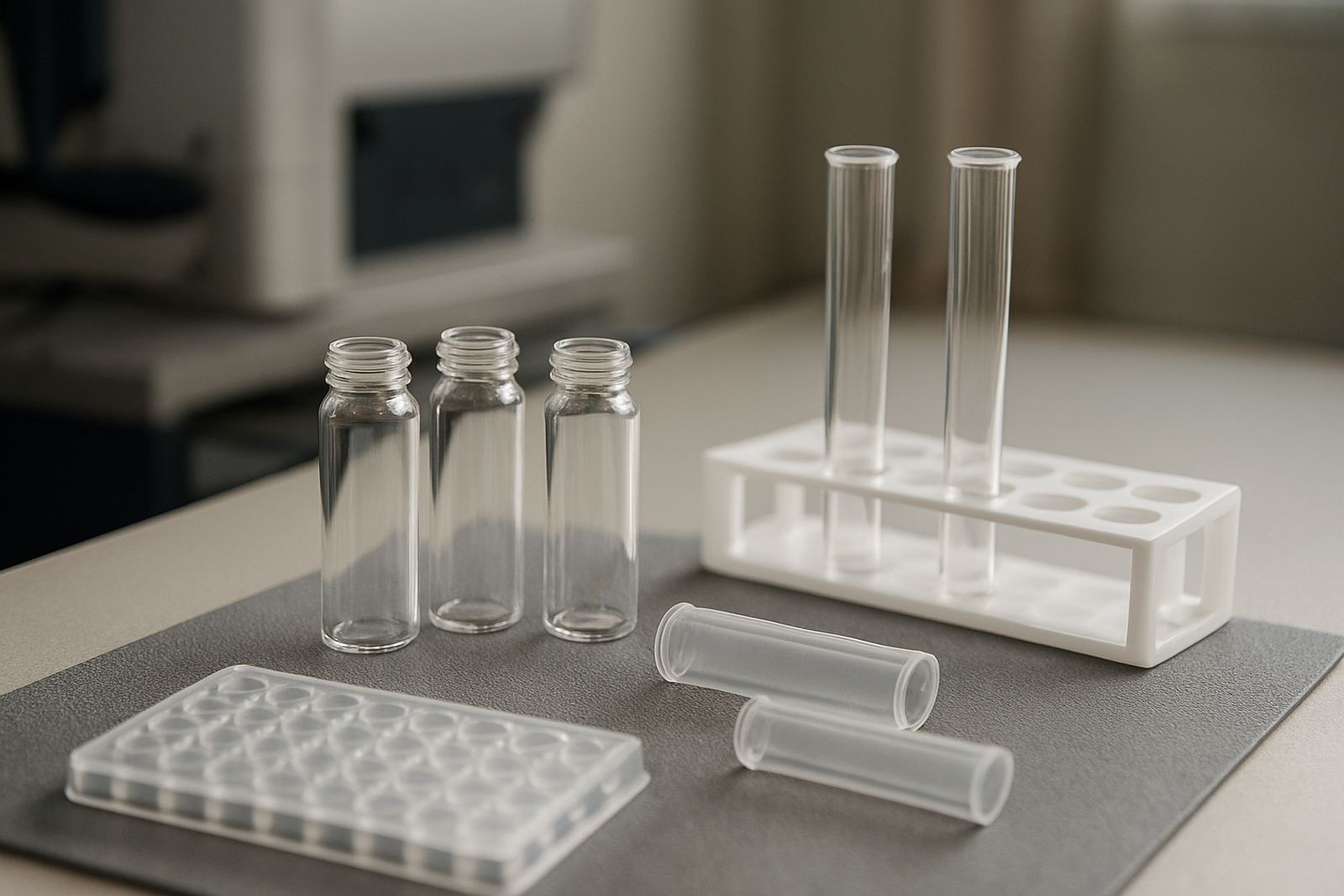
- Glass vials, bottles and jars for samples or reagents
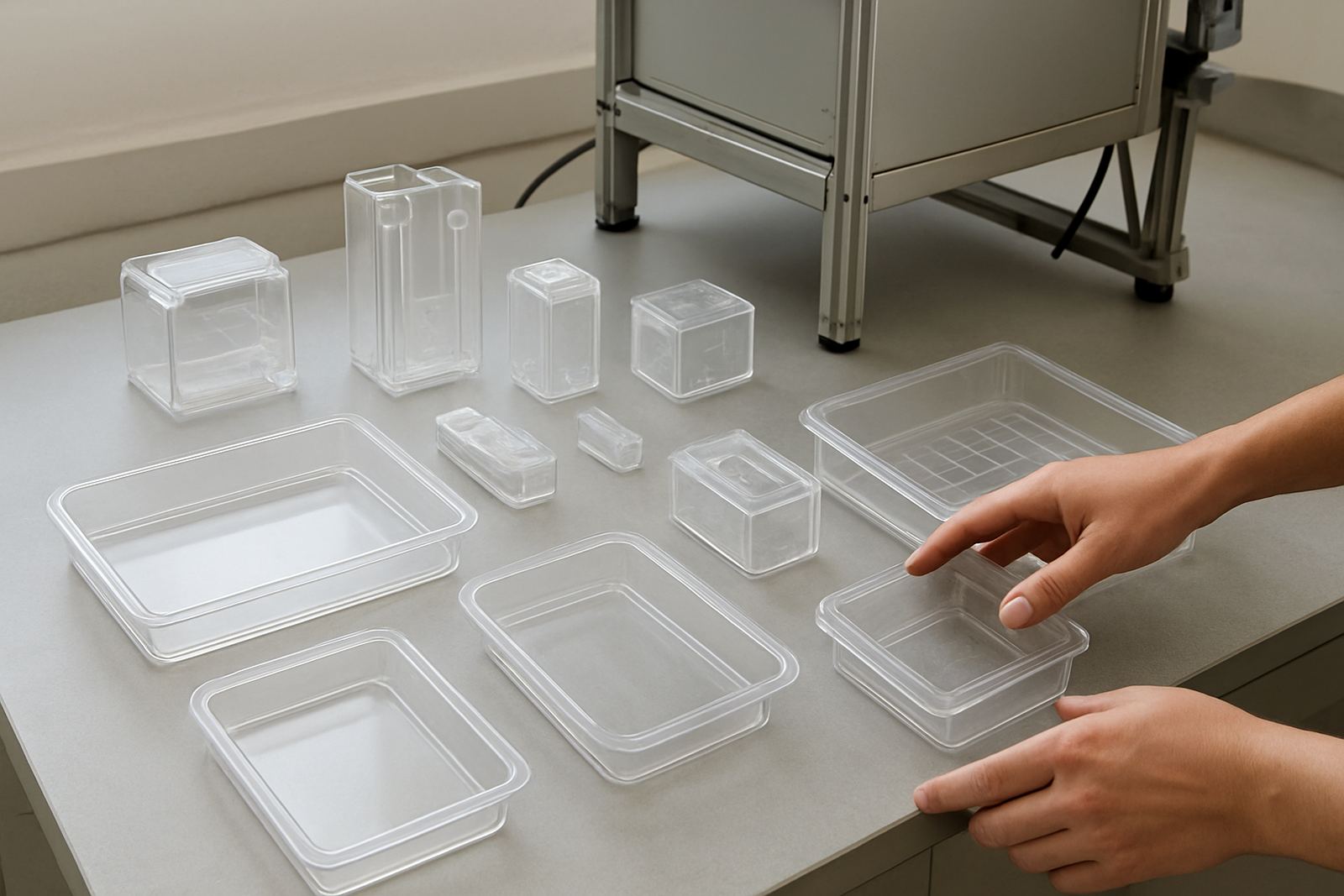
- Plastic tubes, caps, trays and racks
- Funnels, pipette holders and measuring accessories
- Sample storage containers and returnable test packaging
- Special items with curved sides, narrow necks or small print areas
We also assist where the same container needs several mark types, such as a logo, serial number and QR code. On smaller items, the layout must stay readable at close range and still survive routine cleaning. A good setup avoids crowded marks and keeps enough clear space around the identification area.
Planning the marking area in a working lab
The best results come from planning the container flow before the marking system is installed. You need to know where items arrive, how they are staged, who handles them and how they move back into storage or dispatch. If the lab has tight space, the marking station should fit the workflow instead of forcing staff to carry items across the room.
For many sites in Jet Park, Boksburg, Germiston and Kempton Park, the marking area is placed near receiving or packaging so containers can be coded before use. In larger facilities around Midrand or Pretoria, the station may sit on a dedicated line with a fixture, barcode check and controlled handover. Poor lighting, dust from packaging and uneven benches can all affect consistency, so the physical layout needs proper attention.
- Keep the marking surface stable and level
- Allow space for trays, samples and rejected items
- Plan for power backup if load-shedding affects the line
- Separate clean containers from used or tested items
- Make sure staff can read the mark without turning the part too much
Common mistakes that lead to poor marking
One common mistake is choosing a mark that is too fine for the size of the container. Tiny text may look neat on screen but becomes hard to read on curved glass or frosted plastic. Another issue is skipping sample testing and going straight to production, only to find the contrast is weak on a specific material grade.
We also see cases where the holder or fixture is not suited to the container shape, so the item moves during marking and the code lands off centre. On plastic items, the wrong settings can leave a rough finish or a mark that is too light to scan. On glass, the wrong approach can create unnecessary stress on thin walls. Good setup and proper operator training prevents a lot of these problems.
Another mistake is ignoring the cleaning routine. If a lab wipes containers with strong chemicals, the mark must be tested against that process. In coastal towns or damp storage rooms, moisture can also highlight any weakness in the layout or handling process, so we always advise a practical trial before buying in volume.
Budget ranges for laboratory marking projects
Budget depends on container size, quantity, material and whether the job is a simple bench setup or part of a full production line. For smaller labs doing short runs or sample prep, a basic marking and fixture package can start from about R180 000 to R350 000. That range suits operations that need steady identification without a large automation requirement.
For higher volume sites, or where the mark must be integrated with conveyors, verification and automated handling, budgets often move from around R450 000 to R1.2 million or more. Installation, software setup, operator training and process testing all affect the final figure. If the site needs spares planning or preventive maintenance cover, that should be included from the start so downtime does not interrupt testing schedules.
We normally recommend planning for sample testing first, then allowing room in the budget for fixtures and any line changes. It saves money later if the container format changes or if the marking position has to be adjusted. A cheaper start can become costly if the system has to be redone within a few months.
Demos, installation and support across South Africa
UV Laser works from Jet Park, Boksburg and supports clients across Ekurhuleni and beyond, including Alberton, Benoni, Germiston, Kempton Park, Midrand and Pretoria. We carry out site demos, sample testing, machine installation, operator training, fixture design and line integration where needed. If your facility runs a busy schedule, we plan around production so the changeover is managed with minimal disruption.
We also provide software setup, process optimisation, spares supply, breakdown repairs and preventive maintenance. For labs handling sensitive work, a clear handover matters just as much as the machine itself. Riaan Pretorius and the team work with clients to make sure the marking process fits the container type, the volume and the available floor space, rather than forcing a one size approach.
Clients usually start with the enquiry form on the contact page, then send samples for testing or book a demo. That is the easiest way to confirm the finish, readability and placement before any purchase is finalised.