Cap moulding line in Pretoria West needed direct traceability
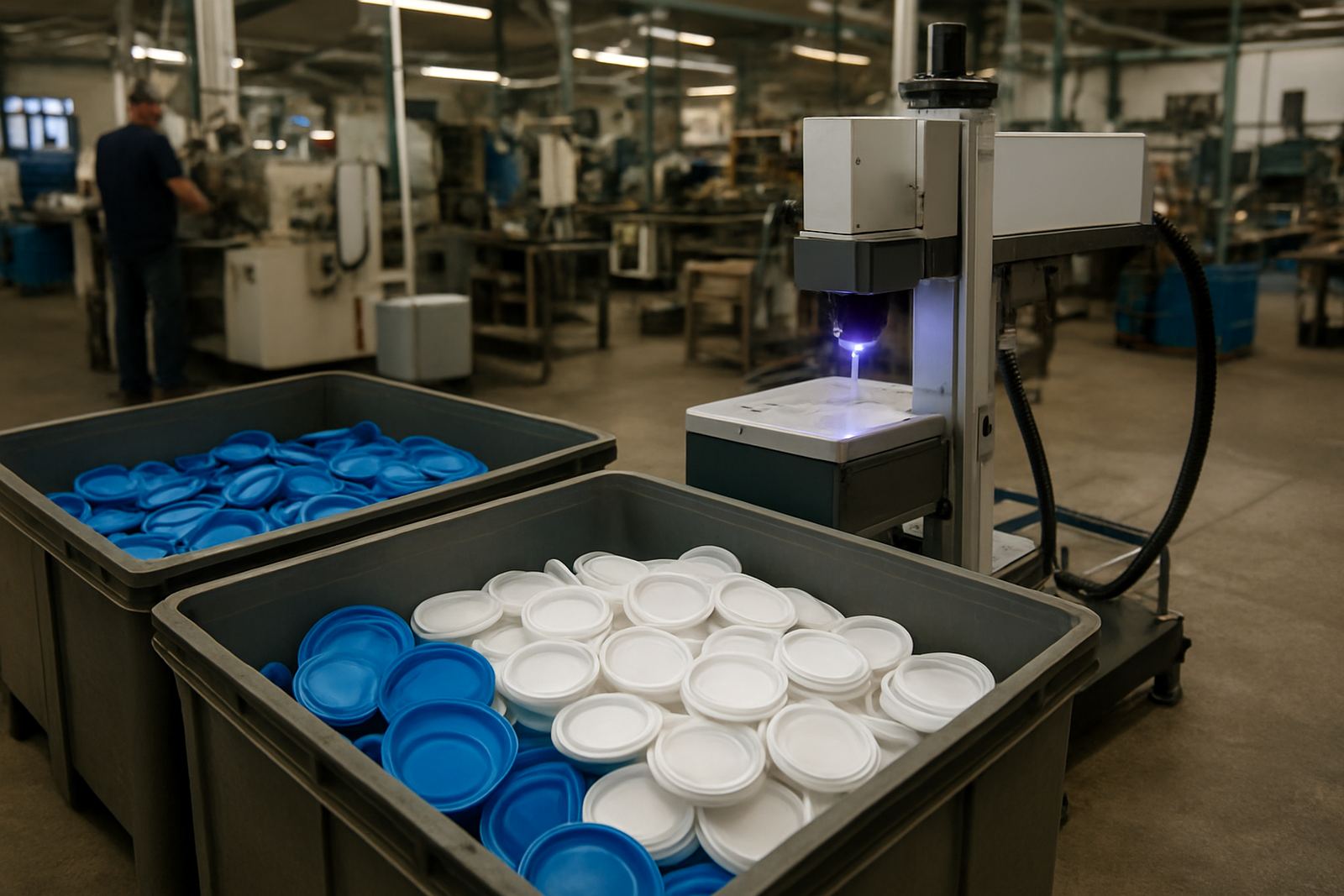
The client is a plastics moulding operation in Pretoria West producing caps for packaging and closure applications. Their team was running a busy multi-shift line and wanted a marking method that would hold up on small parts, stay consistent through the day, and support batch control without slowing production.
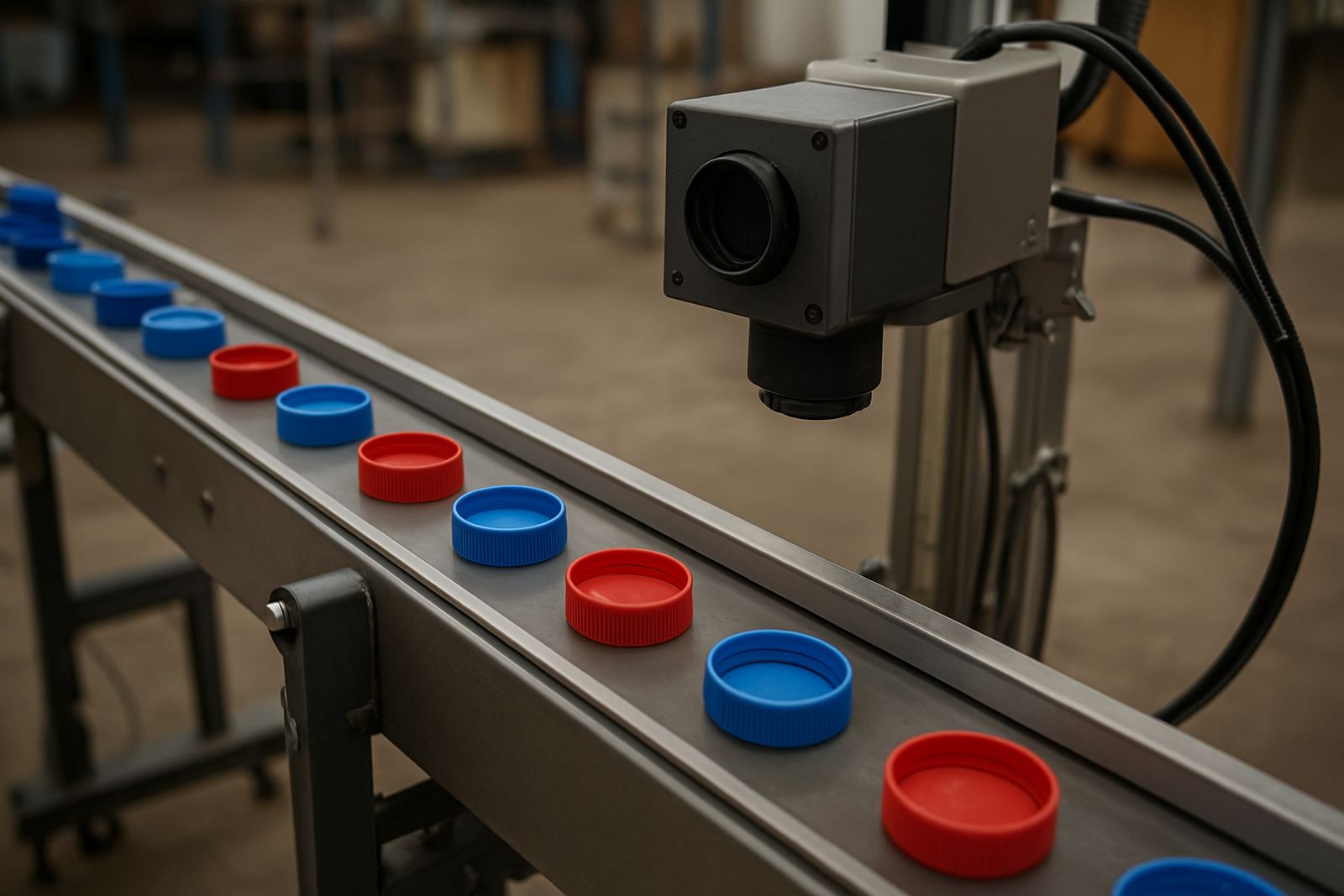
The brief was straightforward, but the conditions were not. The caps were small, curved and moved quickly through the process, so any mark had to be placed accurately every time. They also needed coding that would remain readable after handling, stacking and distribution. A printed label was never really suited to this product, and ink transfer from older methods was causing inconsistent identification.
We started by checking the part geometry, mould finish, resin type and the available space for the code. Because the caps are thin and lightweight, the marking energy had to be controlled very carefully. Too much power would risk surface whitening or distortion, while too little would leave a faint code that could disappear once the product was bagged and moved through the warehouse.
What the operation needed from the marking system
The customer wanted a practical setup that could work inside an active production environment without creating a maintenance burden. The line also had to keep running during load-shedding shifts and on days when the plant was operating on generator support. That meant the equipment had to restart cleanly, keep settings stable and remain easy for operators to use.
- Direct marking on plastic caps without inks, solvents or labels
- Readable batch and traceability codes on a small curved surface
- Low maintenance operation with simple daily checks
- Fast changeover between product sizes and code formats
- Training for operators and supervisors on setup and verification
- Support for future line integration as volumes increase
The site also needed a solution that could cope with dust, temperature swings and normal factory vibration. Pretoria West plants often work with mixed equipment and shared power infrastructure, so we planned the installation to be practical from day one. That included cable routing, safe mounting positions and a setup that would not be affected by routine cleaning around the line.
How we set up the UV coding application
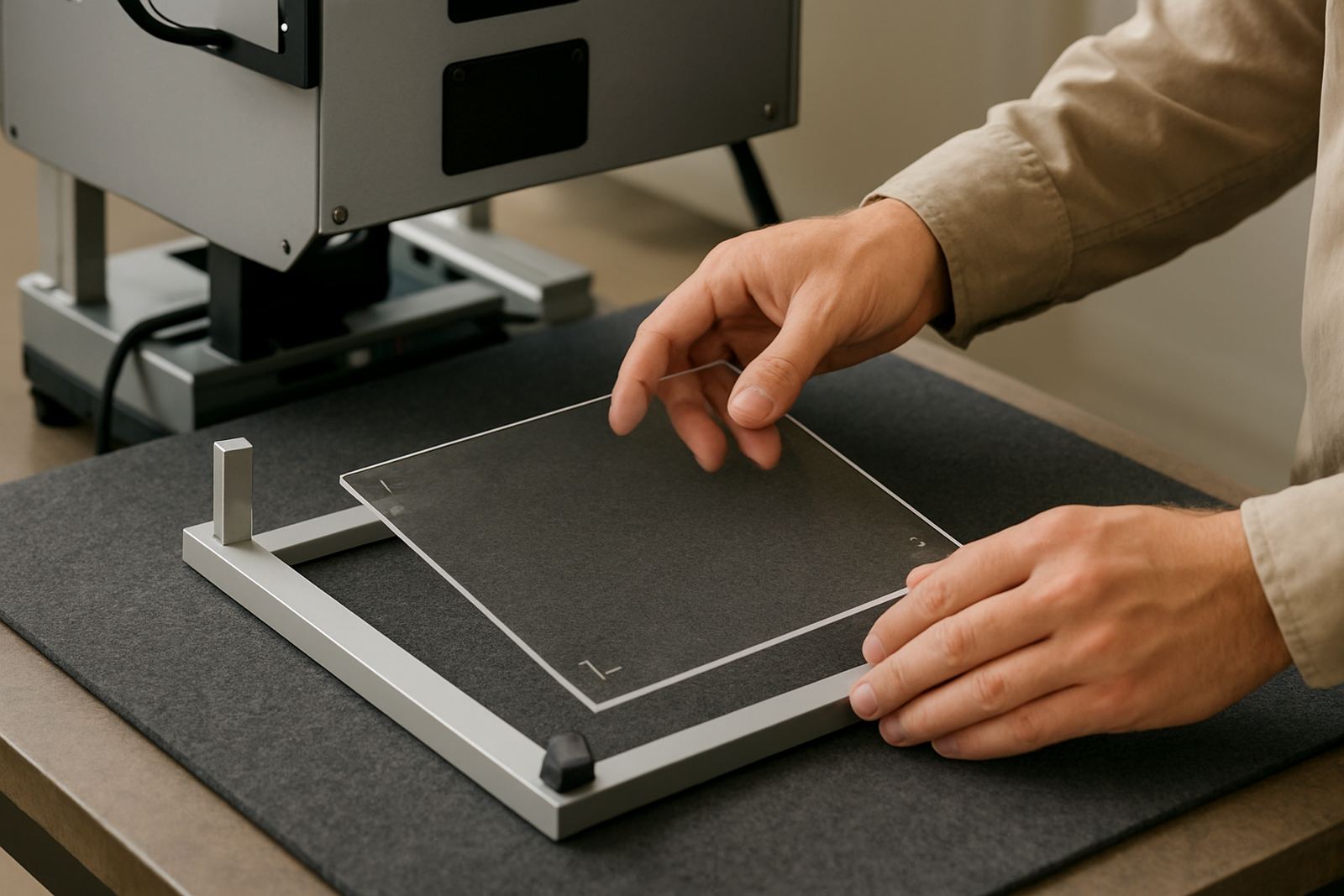
We supplied a UV laser marking system configured for plastics, together with the mounting hardware, fixture design and software setup needed for the job. The marking head was positioned to suit the cap feed path, and we adjusted the focal height and beam settings to suit the actual product samples rather than relying on a standard factory preset. That made a noticeable difference to code clarity.
Sample testing was done first, using production parts from the client’s own stock. We tested several positions, mark sizes and exposure levels until we found a setting that gave a clean, permanent code without affecting the finish. The final mark included line information and a small traceability identifier that could be checked at packing and again at despatch.
Once the samples were approved, we carried out the installation and then linked the unit into the line controls so the coding cycle matched the production rhythm. The operator interface was kept simple, with clear job selection and basic status prompts. Refilwe Mahlangu handled the application testing, while Thabo Khumalo managed the field installation and alignment on site. Training was completed with the production team so they could change formats, confirm quality and carry out daily checks without waiting for outside help.
Timeline from first sample to live production
The project ran over four weeks from initial site assessment to signed-off production. Week one was the line review and sample collection. In week two we completed marking trials at our Jet Park base and refined the settings for the cap material. Week three covered installation, fixture fitting and line interface setup in Pretoria West. Week four was operator training, handover and verification during a full production run.
- Week 1: site review, sample collection and process assessment
- Week 2: UV marking trials and code position testing
- Week 3: installation, alignment and control setup
- Week 4: training, production verification and handover
Because the client was already running a tight schedule, we worked around production windows to avoid unnecessary downtime. The changeover plan allowed the line to keep moving while the marking station was introduced, and the final handover was done only after the operators had completed a full batch successfully. No special consumables were needed for ongoing operation, which helped keep running costs predictable.
Results on the line after commissioning
After commissioning, the plant had clearer traceability on every cap leaving the line. The code was permanent, neat and easy to check by eye, which reduced sorting errors and made batch tracking simpler for the packing team. The production manager also reported fewer interruptions linked to unclear identification, which helped the team keep pace during busy periods.
The biggest gain was consistency. Once the final settings were locked in, the marks stayed stable from shift to shift, even when different operators were on duty. That matters in a moulding environment where small changes in setup can lead to visible variation. The team now has a repeatable process for marking and verification, rather than relying on a manual workaround that could drift over time.
We also improved the site’s ability to respond to traceability requests from customers. If a batch needs to be checked, the code is already on the product and does not depend on external labels or temporary inks. In practical terms, that means less rework, better product control and a cleaner finish for packaging and dispatch. The client specifically wanted a marking method that would not interfere with handling, and that box was ticked as well.
What we would repeat on similar plastic projects
If we were doing a similar cap moulding job again, we would follow the same process: test the actual sample first, confirm the mark position on the real part, and plan for the line conditions before installation. Plastic parts behave differently depending on resin, colour and surface finish, so a set-and-forget approach usually causes trouble later.
We would also keep the training practical. Operators need to know how to confirm the mark, how to spot a setting drift, and when to call for service. In a busy plant, a few minutes spent on that up front saves hours later. For the Pretoria West site, the simple job flow worked well and the team picked it up quickly, even with shift changes and normal production pressure.
For plants in Pretoria, Midrand, Germiston or anywhere in Ekurhuleni, the same method applies when direct coding is needed on plastics. We can handle site demos, sample testing, installation, training, preventive maintenance and breakdown support nationwide. If the product is small, curved or moving quickly through the line, the main thing is to match the marking process to the part and not the other way round.
Key facts
| Project type | Cap moulding traceability upgrade |
|---|---|
| Client location | Pretoria West, Gauteng |
| Material marked | Plastic caps |
| Marking method | Direct UV laser coding |
| Implementation time | 4 weeks |
| Support supplied | Sample testing, installation, training and line setup |