What the Boksburg team needed from the marking line
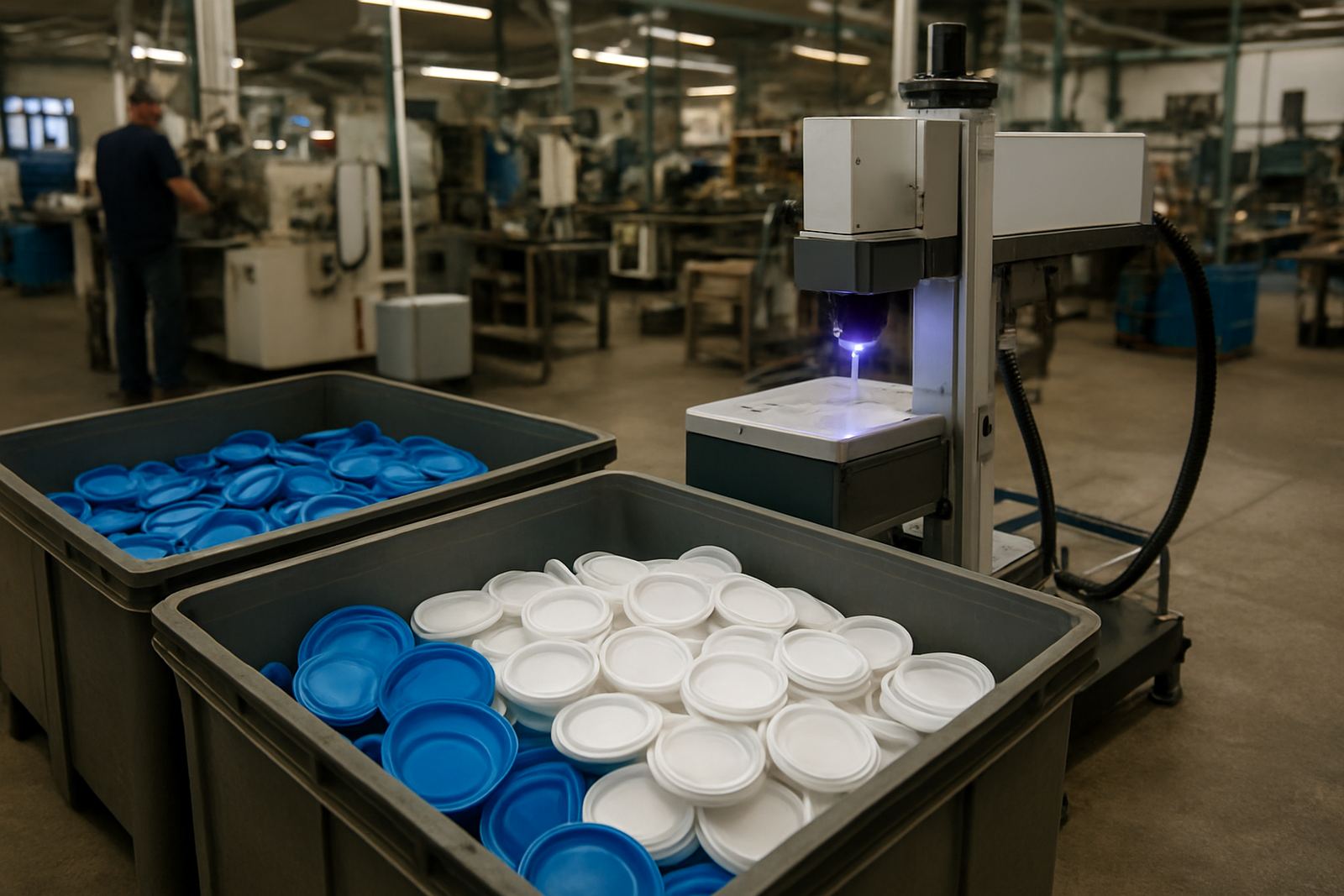
The client was a plastics converter in Boksburg supplying closure lids for fast moving production, where each batch had to carry a clean repeat brand mark without slowing the line. The lids were light coloured plastic and the mark needed to stay sharp, even where surfaces were slightly curved and the lids moved quickly through packing and dispatch. They also needed a practical setup that could run every day, not a machine that looked good in a demo but struggled once dust, vibration and shift changes came into play.
The brief was straightforward in one sense and tight in another. The converter wanted permanent branding, batch consistency and a marking method that did not rely on inks, labels or consumables that could smudge in humid weather or add admin to the line. Because the product went out in high volumes, they also wanted a system that could be set up once and then kept running with minimum interruption. In our first meeting, the focus was on throughput, mark quality and how the line would cope when load-shedding, maintenance stops or changeovers interrupted the day.
How we tested the lids before the installation
We started with sample testing at our Jet Park base, using the client’s actual lid material and surface finish. That gave us a clear picture of how the polymer would react to the UV laser, what contrast could be achieved, and whether the logo, code and small text would hold up at production speed. Plastics behave differently depending on additives, mould finish and colour, so we never treat one sample as a guess for the whole job.
The tests showed that the lids could take a crisp, permanent mark without deformation. We then mapped the marking area and checked a few options for fixture support so the lids would sit repeatably under the beam. The client wanted more than a simple logo, they needed a consistent code zone as well, so we made sure the mark could be read easily by staff and downstream checking. That saved them from rework later on and gave the production team a clear process to follow.
- Material tested: moulded plastic closure lids
- Mark type: permanent branding and identification text
- Key outcome from testing: clear contrast with no visible damage to the lid surface
- Production need: repeatable marks across high volumes
The UV laser marking setup we supplied
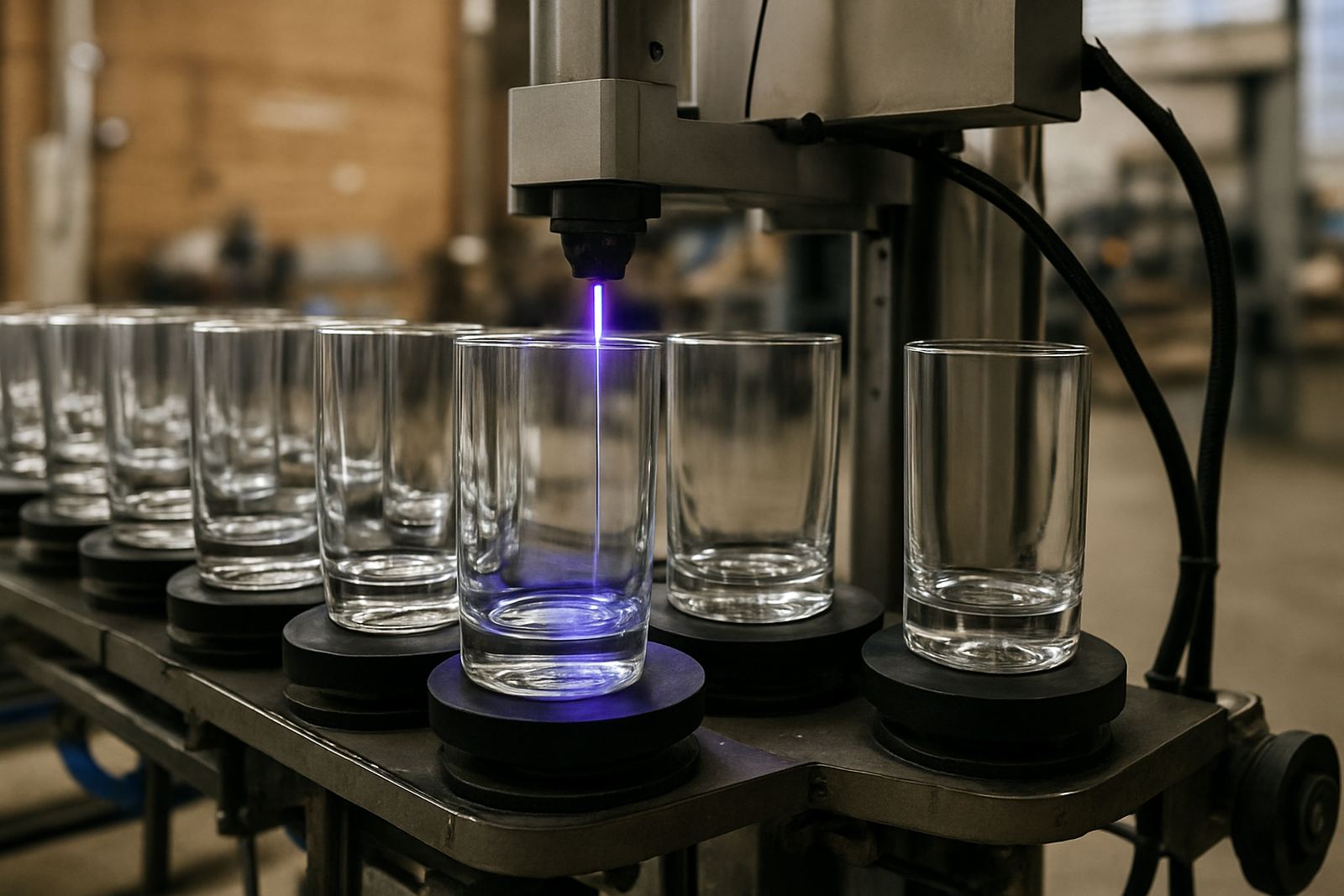
We supplied a UV laser marking solution suited to plastics that need precise, low-heat marking. The system was configured for repeat work on lids moving through a production flow, with fixtures designed to hold each item in the same position. That repeatability matters. If the lid shifts even slightly, the mark can land off centre or lose quality, which becomes a real issue when volumes are high and the same part is packed all day.
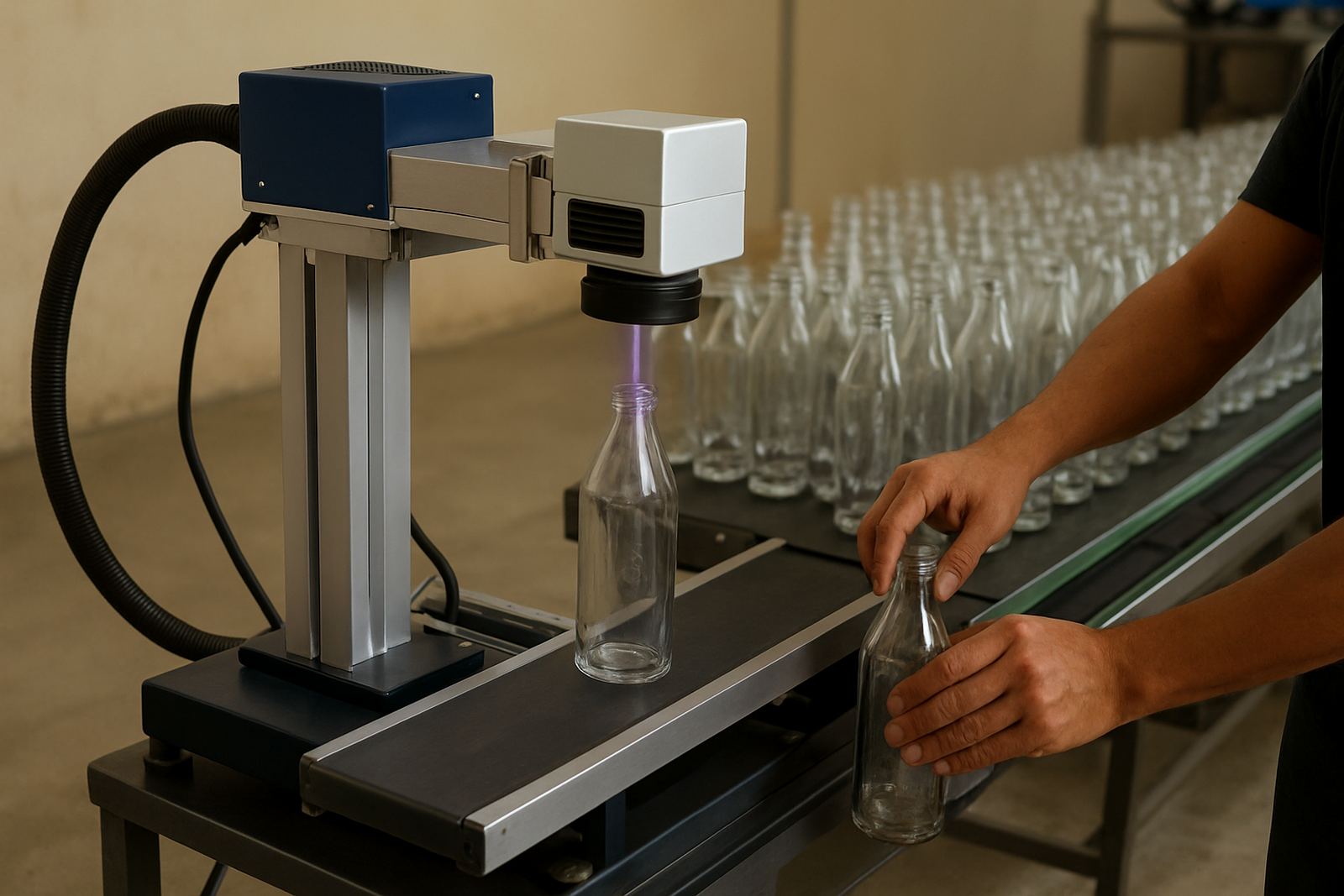
Our installation included the marking unit, the support fixtures, control setup and the practical adjustments needed to work with the client’s line layout. We also set up the process so operators could change the marking data without having to stop and call for help each time. For a plant running across shifts, that kind of control reduces delays and keeps labour focused on the line instead of on unnecessary resets. The result was a compact process that fit into the available floor space and did not create extra handling steps.
- Technology: UV laser marking for plastics
- Application: lids, closures and similar high-volume components
- Setup: fixture-based positioning for consistent placement
- Control: operator friendly marking changes and clean process workflow
Installation, setup and training in four weeks
The project ran over four weeks from testing through to handover. Week one covered sample assessment and confirmation of the marking area. Week two focused on fixture design and process planning. In week three we completed installation at the client site in Boksburg, with careful alignment to the production flow and the available space. Week four was spent on operator training, final process checks and handover to the production team.
During training, we worked with the people who would actually run the line, not only supervisors. That included daily start-up checks, safe operation, basic fault finding and the right way to keep marks consistent across a shift. Naledi Mokoena coordinated the site planning, while Refilwe Mahlangu handled the applications detail and Thabo Khumalo managed the field installation work. Riaan Pretorius reviewed the final process with the client so the system was not just installed, but properly understood. A quick handover is not enough if the team does not know what to look for, so we kept the training practical and direct.
Results on the production floor
Once the system was running, the client had a more reliable way to brand large runs of lids without ink drying issues, label alignment problems or smearing from handling. The laser mark stayed sharp after packing and movement through the warehouse, which was especially useful during humid spells and the warmer months where conventional markings can become harder to trust. The production team also found that the repeatability helped reduce rejected lids, because the mark landed in the same place from one batch to the next.
Another benefit was the cleaner workflow. With no consumables to replace and no wet marking stage to manage, the line needed less day-to-day attention. That matters when a factory is balancing output with maintenance, shift changes and the usual interruptions that come with operating in Ekurhuleni. The client wanted a practical answer to a real manufacturing problem, and the setup gave them that. It is the sort of job where you do not need big claims, only consistent parts coming off the line looking right every time.
What we would repeat for another lid marking project
If we were doing the same type of job again, we would follow the same sequence: test the actual lid material first, agree the mark area with the production team, design the fixture around the real handling method, then install and train on site. That order matters because plastics can vary by supplier, mould, surface finish and colour, so a process that works in theory may still need tuning before it is ready for daily use.
For converters in Boksburg, Germiston, Kempton Park or Benoni, the lesson is simple. High volume plastic marking needs a process that is measured, repeatable and easy for the line team to live with. UV Laser handles site demos, sample testing, installation and support nationwide, with practical help from Jet Park when the work is local and field visits where the customer needs them. We keep the focus on what the plant needs, not on fancy extras. If the job is lids, closures or other plastic parts, the priorities stay the same: clarity, durability and a setup the team can use without fuss.
- Best practice: test the actual material before committing to full production
- Best practice: design fixtures around the real lid handling method
- Best practice: train operators on the process they will use every day
Key facts
| Project location | Boksburg, Ekurhuleni |
|---|---|
| Client type | Plastics converter |
| Product marked | Closure lids |
| Process | UV laser marking |
| Delivery timeline | 4 weeks from testing to handover |
| Support offered | Sample testing, installation, training and ongoing nationwide support |