The brief from a Paarl vial producer
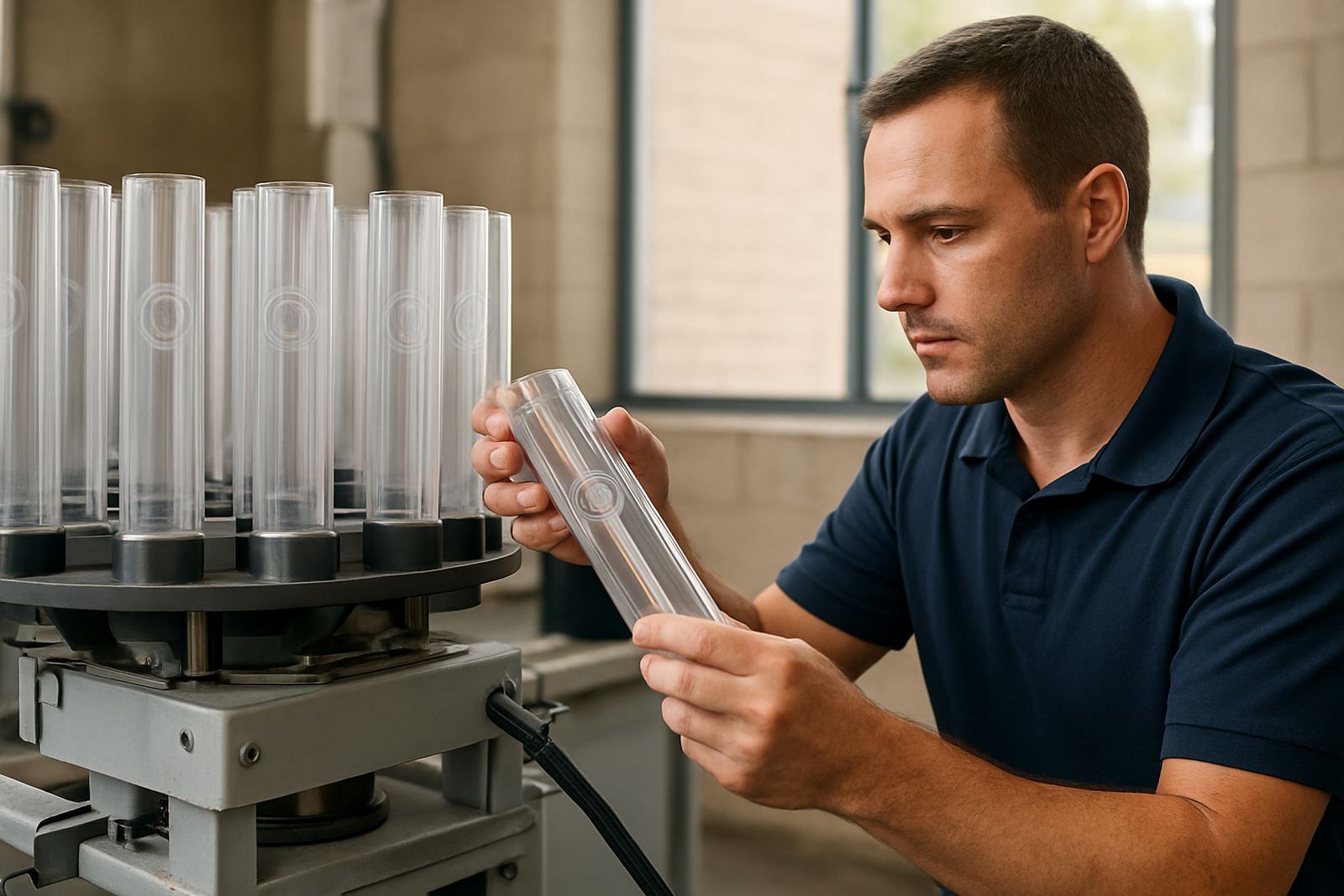
The client manufactures glass and plastic vials for local distribution and export, so the mark had to do more than look neat. It needed to stay readable on small round containers, carry batch and traceability details, and do it without slowing the line. The team also wanted one practical standard that could be rolled out across sites instead of patching together different marking methods at each plant.
Because the product range changed often, the brief called for a setup that could handle different vial diameters, wall thicknesses and label positions without constant rework. The markings had to stay crisp on clear and frosted surfaces, and they had to survive stacking, transport vibration and moisture during storage. In a coastal province or inland, the result had to be the same, and there was no room for smudging or fading.
- Product types: glass and plastic vials
- Marking need: batch codes, traceability and branding
- Operating goal: consistent output across multiple sites
- Surface challenge: small curved parts with varying finishes
What made the job tricky
Small containers are unforgiving. On a vial, a tiny shift in focus or fixture position can distort the mark, especially when the product moves fast or the surface reflects light. The client also had mixed line conditions, including different conveyor heights and some areas where dust and humidity were a concern. In one plant the mark area was close to a transfer point, so we had to keep the setup compact and protected.
There was also the reality of South African production. Load-shedding can interrupt line flow, so the system had to recover cleanly after power events and keep settings safe. The client wanted a machine that operators could use after short training, not something that needed an engineer on site for every change. That meant the controls, fixture design and software setup had to be plain and reliable, not overcomplicated.
- Curved, narrow marking area on each vial
- Varying plant conditions across sites
- Need for quick changeovers between SKUs
- Simple operation for shift staff after training
The UV laser setup we supplied
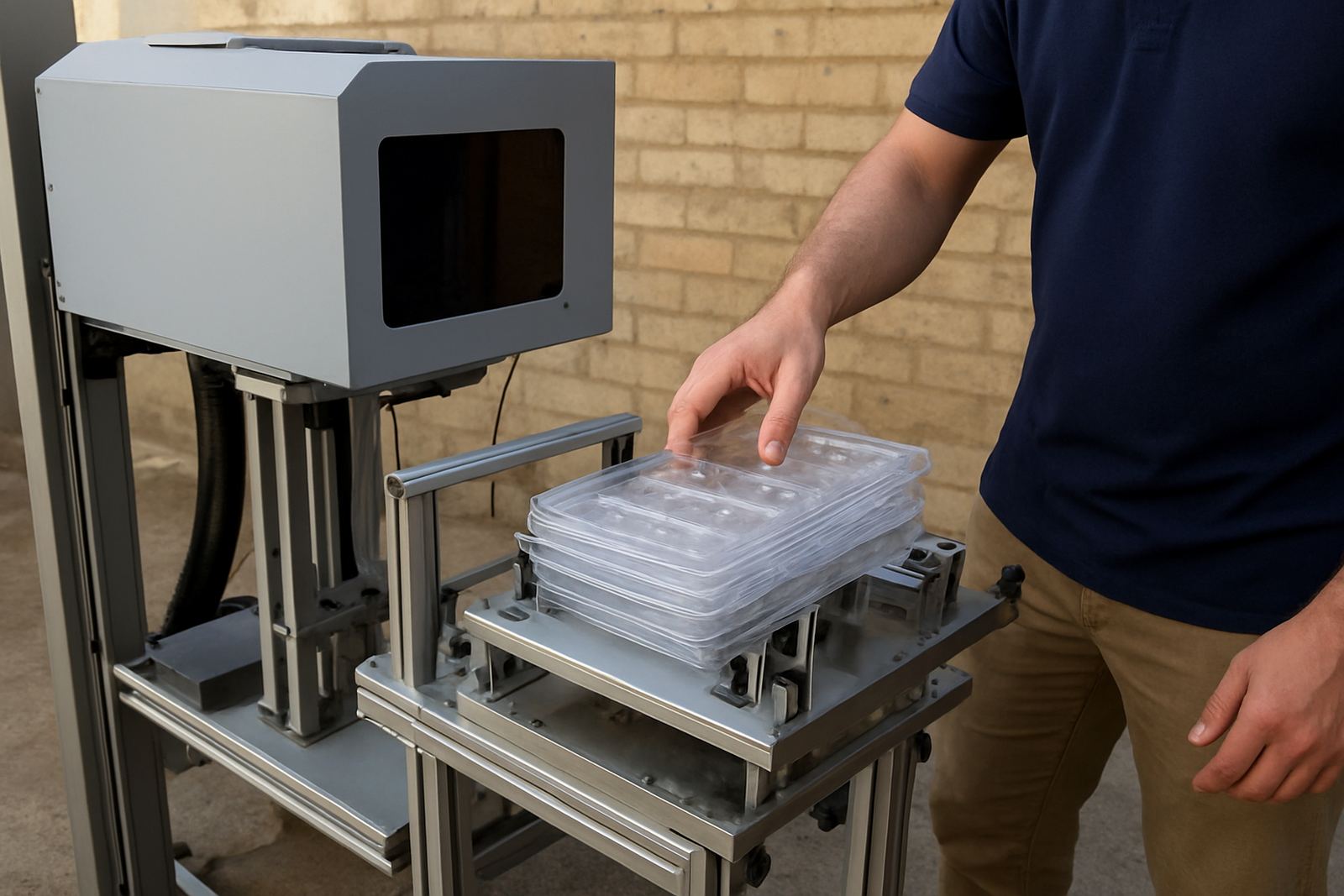
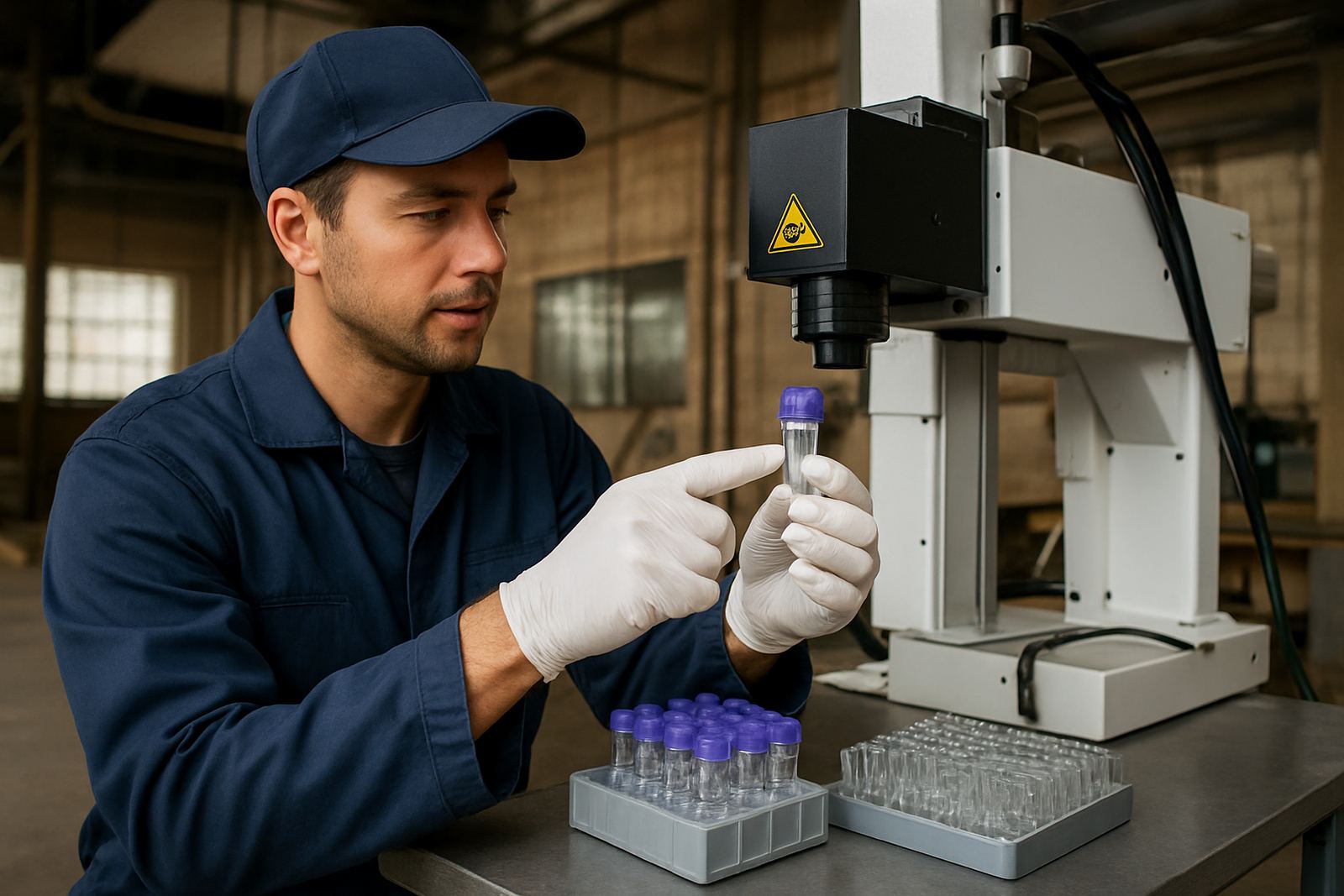
We supplied a UV laser marking solution matched to the client's vial range and production pace. UV marking was selected for the fine detail it gives on delicate materials, with a clean mark that does not rely on inks, labels or consumables on the product itself. That suited both brand work and regulated traceability fields.
The package included machine installation, fixture design for stable vial positioning, software setup for variable data, and process optimisation on the live line. We also provided spare parts planning and a maintenance schedule so the client could keep the system running during busy shifts. The final setup was built around the actual parts, not a generic sample, which saved time later. It was a proper fit, not a forced one.
- UV laser marking for glass and plastics
- Fixture design for repeatable part location
- Software setup for batch and variable data
- Process optimisation to match line speed
- Preventive maintenance and spares support
How the project ran from start to handover
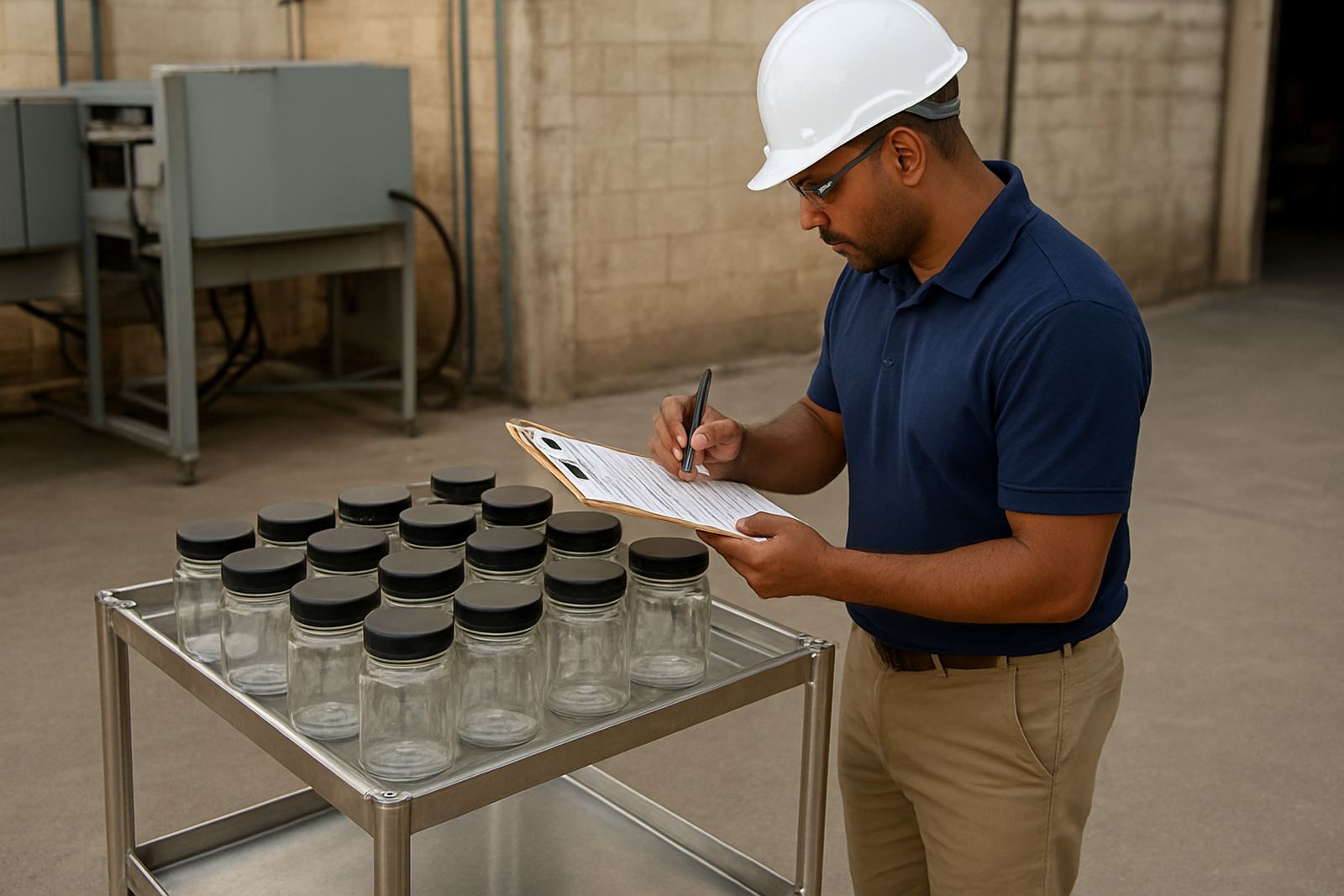
The project ran over six weeks from initial sample testing to final sign-off. Week one covered sample collection and mark trials. Week two focused on fixture concepts and line measurements. By week three we had a preferred setup for the first site, and we used that to refine the remaining installation plan. Weeks four and five covered machine installation, software configuration and operator training. Week six was for final checks, live production support and handover documents.
Because the client had more than one site, we kept the setup standardised where possible and adjusted only the parts that had to change. That made future support easier and reduced the chance of one plant drifting away from the agreed marking spec. Our team coordinated from Jet Park, Boksburg, with site visits where needed and practical support for each location. The client also appreciated that the training was hands-on and tied to their actual production routine, not just a classroom demo.
- Week 1: sample testing and mark confirmation
- Week 2: fixture measurement and layout review
- Week 3: final system specification approval
- Weeks 4 to 5: install, setup and training
- Week 6: support during live production and handover
Results on the line and across sites
The result was a stable, legible mark with consistent positioning from shift to shift. The client gained a standard that could be applied across plants without each site making its own interpretation of the code format. That made traceability easier for quality control and reduced rework on rejected parts. It also helped the production team keep pace because operators were not stopping to adjust settings all the time.
For the client, the biggest win was predictability. Once the fixture and software were set, the mark stayed where it should, and the finish held up through handling and distribution. The team could run smaller batches or larger runs with the same outcome, which is exactly what a vial producer needs when demand changes week to week. That kind of consistency matters more than fancy features.
- Clear permanent marks on glass and plastic vials
- Better batch traceability across sites
- Less rework and fewer rejected parts
- Quicker changeovers between production runs
What we would repeat on a similar project
If we were doing the same job again, we would still start with sample testing on the actual product, not a stand-in. That showed us how the material reacted and gave the client confidence before equipment was committed. We would also keep the fixture design simple enough for operators to clean and reset quickly, especially in plants where shifts change over and downtime costs money.
For a vial producer in Paarl or anywhere else in South Africa, the lesson is clear: the marking system has to suit the product, the people and the production line. A good result comes from matching the laser, the fixture and the workflow properly. That is where the long-term value sits, and it is also where support after installation matters most. We would take the same practical approach again, because it worked.
- Test on the real product first
- Keep fixtures practical for cleaning and changeover
- Plan for power interruptions and site variation
- Train operators on the exact line routine
Key facts
| Client type | Vial producer with multiple South African sites |
|---|---|
| Location | Paarl project, supported nationally from Jet Park, Boksburg |
| Marking method | UV laser marking for glass and plastics |
| Timeline | 6 weeks from sample testing to handover |
| Services | Site demos, sample testing, installation, training and support |
| Outcome | Permanent, consistent marks with standardised traceability |