Vial Coding for a Jet Park Laboratory Supplier
This project came from a laboratory supply business in Jet Park serving customers across Gauteng and beyond. Their vials needed permanent identification for internal stock control, traceability and branding, but the print area was small and the glass was delicate. The client wanted marks that stayed readable after handling, cleaning and normal warehouse movement.
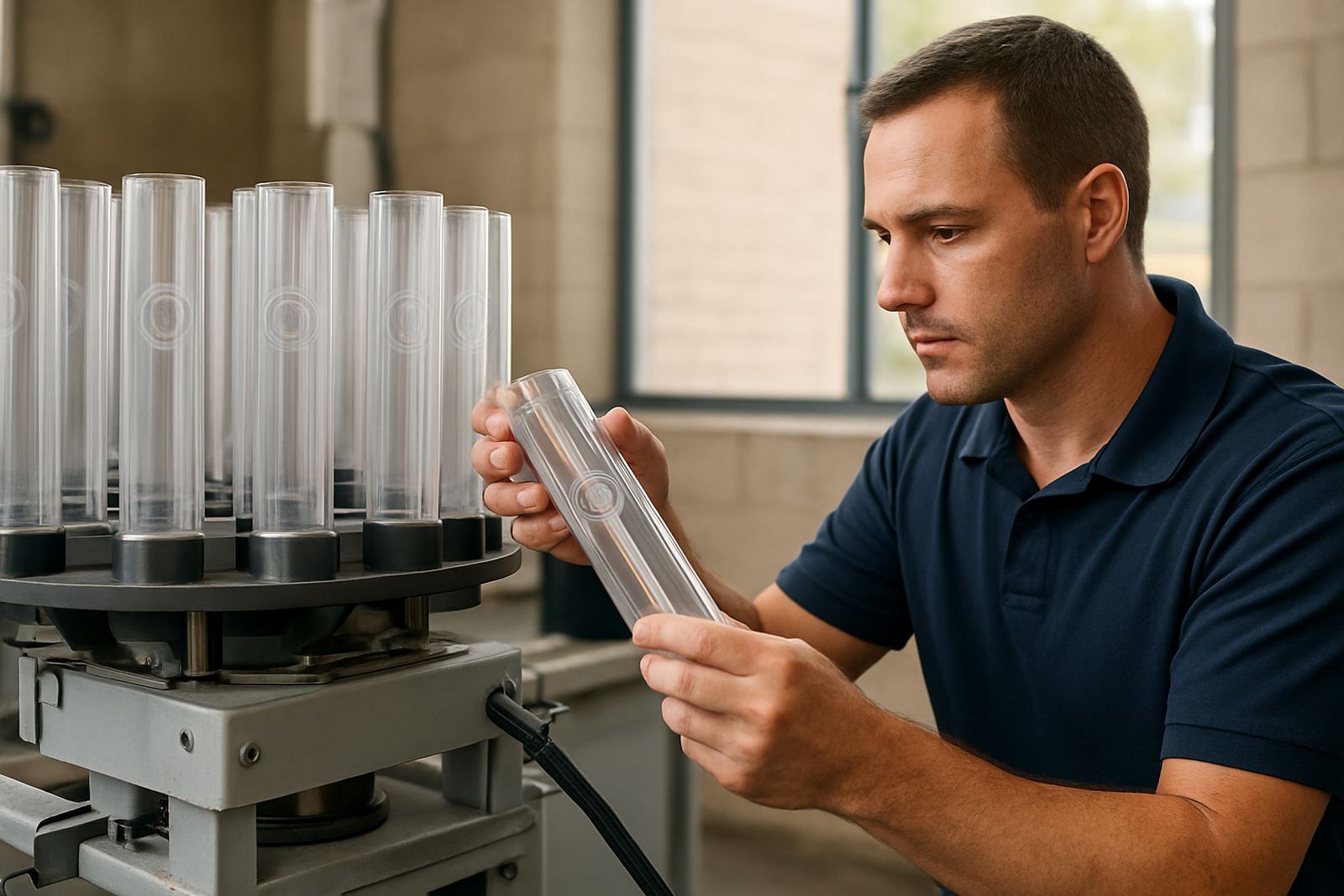
Our team assessed the vial sizes, the glass finish and the way the units moved through packing. The brief was simple in principle but exact in practice: place the code in the same position every time, keep the mark sharp, and avoid chips or stress on the glass. For this kind of work, small inconsistencies show up quickly, so the setup had to be right from the start.
Because the client works in a laboratory supply setting, the line also had to cope with regular batch changes. They needed a process that could handle different vial quantities without long changeovers. We kept the solution practical, with room for future adjustments if their product range changes later on.
What the Client Needed from the Marking Process
The core requirement was a permanent mark on small glass vials that would remain neat under day to day use. The client was not looking for surface labels or anything that could peel off. They needed direct marking that would stay legible and look professional on shelf stock and in transit.
- Permanent identification on small glass vials
- Clear marking position for easy reading
- No cracking, chipping or visible heat damage
- Repeatable results across batches
- Compact setup suitable for a Jet Park production area
There were also practical constraints. Glass vials can move or roll if the fixture is not designed properly, and even a slight position shift can affect the mark. The client also wanted to keep production moving during busy periods, so the process had to be quick enough for normal lab supply output and not only for test samples.
Our Approach to Small Glass Marking
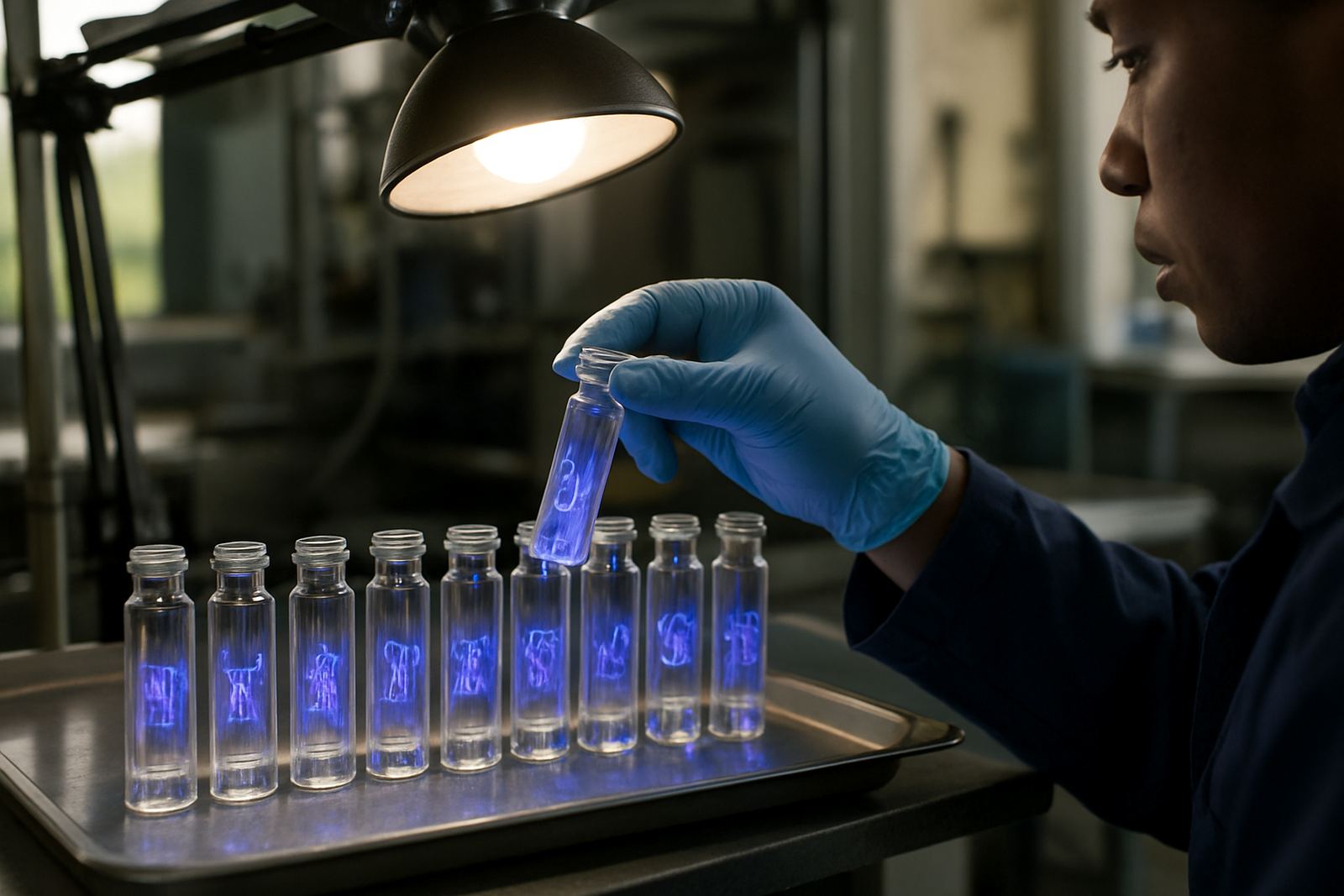
We supplied and configured a UV laser marking solution suited to glass and small plastic items. The system was set up to produce fine, permanent marks with good edge definition on compact vial surfaces. That gave the client the control needed for codes, part numbers and short text without cluttering the label area.
We also worked on the fixture design so the vials sat consistently in the same position. That made a big difference to repeatability, especially where the surface curve is tight and the marking window is limited. Refilwe from our applications team handled the testing with different vial samples and adjusted the settings until the result was clean and even.
- Fine mark detail for small text and codes
- Fixture support to prevent movement during marking
- Testing on sample vials before final sign off
- Process settings adjusted for glass finish and vial diameter
- Operator friendly setup for routine use
We also checked how the system would fit into the packing flow. That meant looking at load handling, the available bench space and the operator sequence. In a small production room, those details matter just as much as the marking head itself. The final arrangement was practical, tidy and suited to the pace of the site.
Timeline, Installation and Training in Jet Park
The project ran over three weeks from first sample testing to handover. In week one we received sample vials and confirmed the marking position, mark size and handling requirements. In week two we completed testing and finalised the fixture arrangement. In week three we installed the unit on site in Jet Park and trained the operators on setup, cleaning and daily checks.
Naledi coordinated the booking and site logistics while Thabo handled the installation and alignment on the production floor. The handover included practical training on how to load the vials correctly, check the mark quality and keep the lens area clean. For a glass marking job, a simple routine goes a long way, especially in a dusty industrial area where equipment can pick up residue faster than expected.
The client also needed guidance on uptime planning. With power interruptions still common in many parts of South Africa, we discussed how to protect the system during outages and how to restart cleanly after a shutdown. That kind of advice helps reduce downtime and keeps the marking quality consistent from shift to shift.
Results on the Finished Vials
The finished result was a neat, permanent mark with good contrast and consistent placement. The client could read the coding easily, and the marks held up well during packing and handling. There was no need for adhesive labels on the marked area, which reduced extra steps in the process.
They also gained better control over batch identification. That matters for laboratory suppliers because stock often moves through different customers, sites and storage conditions. A clear mark makes it easier to trace product groups, manage replenishment and avoid mix ups. The team reported that the output looked cleaner on the shelf and gave the product a more professional finish.
- Cleaner product presentation
- Permanent identification for traceability
- Better consistency between batches
- Less rework from uneven marking
- Simple operator routine after training
From our side, the job confirmed that small glass items can be marked reliably if the fixture, settings and workflow are all matched properly. It is not only about the laser itself, but also about how the vial is held, how fast it moves through the process and how carefully the operator works. That is where experience makes a difference.
What We Would Repeat on a Similar Job
If we were doing the same kind of vial project again, we would follow the same sequence: sample testing first, fixture design second, then installation and operator training once the result is proven. That order saves time and cuts out guesswork. For small glass units, rushing straight to installation can create avoidable setbacks.
We would also keep the focus on mark position and handling from the start. On a tiny vial, even a small shift changes the look of the finished product. A good fixture and a clear operating routine are worth more than trying to correct problems later. In this project, that approach gave the client a dependable result they could use straight away.
UV Laser supports clients across Jet Park, Boksburg, Germiston, Kempton Park, Benoni, Alberton, Midrand and Pretoria, with demos, installs and training nationwide. For businesses that need permanent marking on glass or plastics, we can test samples, set up the process and support the line after commissioning.
Key facts
| Project type | Permanent vial coding on small glass units |
|---|---|
| Client area | Jet Park, Boksburg |
| Industry | Laboratory supply |
| Timeline | 3 weeks from sample testing to handover |
| Marking method | UV laser marking for glass |
| Services used | Sample testing, fixture design, installation and operator training |