Start with the glass, not the machine
Before you look at a machine spec sheet, list the exact glass items you need to mark. Float glass, borosilicate, soda lime bottles and coated decorative glass all react differently under UV energy. A sample that looks fine on one product may scuff, haze or chip on another if the glass thickness, curvature or coating changes. In Gauteng and along the coast, dust and humidity can also affect handling, so the mark must hold up after storage, transport and washing.
Good buyers ask for sample testing on their own product, not just a similar sample. Bring the real bottle, jar or pane, along with the ink or coating if there is any secondary process. If the item is used in food, cosmetics or pharmacy packaging, confirm what part of the surface can be marked and whether the mark must stay visible after fill, chilling or sterilising.
- Confirm the glass type and wall thickness
- Check if the item is clear, tinted, coated or printed
- Note curvature, neck size and usable marking area
- Ask whether the mark must survive washing, abrasion or heat
Choose the right mark for traceability and branding
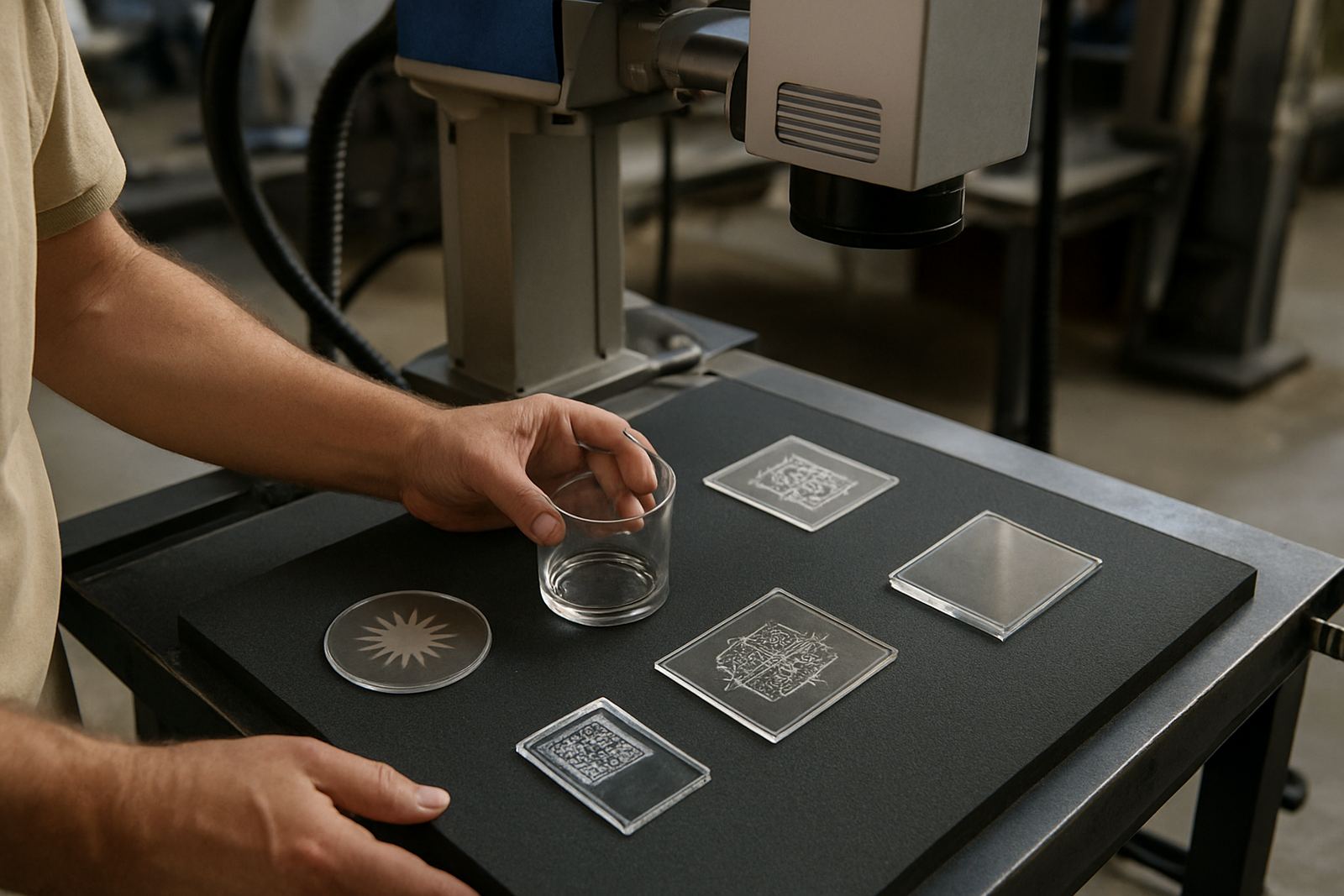
Some customers only need a batch code or expiry date. Others need logos, small text, QR codes or fine design work. The mark style should match the reason for marking. For traceability, legibility matters more than appearance. For branding, edge clarity and consistency across a full run matter most. On glass, too much energy can create stress marks or a white frosted effect that is too heavy, while too little energy leaves an uneven result.
It helps to define the end use in plain terms. If the product moves through retailers, distributors or export channels, the mark must remain readable after handling and storage. If the item is a premium bottle or gift jar, the finish should look neat under normal light and not distract from the product. Refilwe or another applications technician should be able to test different settings and show you the difference before you commit.
- Decide whether the mark is for traceability, branding or both
- Set the minimum character size and code format
- Check readability under bright light and low light
- Confirm if the mark must be permanent after washing or reuse
Look at fixture design and part handling
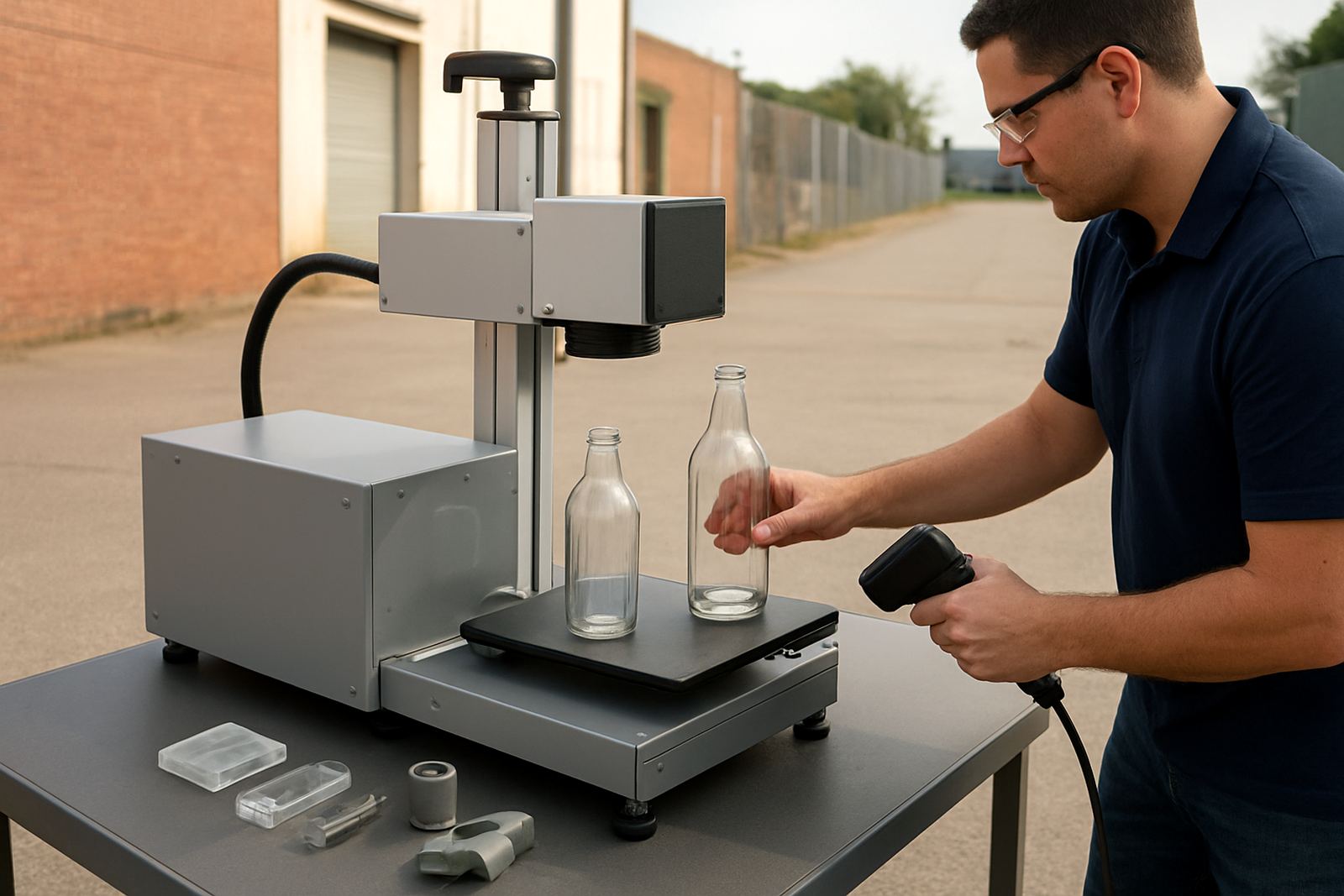
Glass marking is often won or lost in the fixture. If the part moves even slightly, the mark can drift, blur or land off centre. For curved bottles and irregular jars, the holding method must keep the item stable without cracking the glass. For flat sheets or panels, the support surface needs to prevent vibration and stop the sheet from shifting during marking. A good fixture also reduces operator fatigue and speeds up changeovers on busy shifts.
Ask whether the fixture will be supplied as a standard unit or designed around your product range. If you run more than one size, plan for quick change parts. In factories where load-shedding is still a reality, it also helps if the system comes back up cleanly after a power interruption, with settings that can be restored without wasting product. In some plants the simplest fixture saves more time than a faster marking head.
- Check if the fixture suits the full range of glass sizes
- Ask how changeovers are done between jobs
- Confirm the method for centring and repeat placement
- Make sure the design allows safe loading and unloading
Match the solution to your production rate
A small decorative workshop does not need the same setup as a high-volume packaging line in Jet Park or Germiston. The buyer should compare marking speed, conveyor integration, manual loading and downtime between jobs. A system that is quick on paper may slow down badly if operators need to keep adjusting the focus or reloading parts by hand. The real question is whether the mark fits into your daily output without becoming a bottleneck.
Ask for practical numbers. How many units per hour can be marked on your actual product? How long does it take to change a setting? What happens when the room is hot, or when the glass carries a bit of dust from storage? These details matter more than marketing claims. If you expect growth, it is better to choose a setup with some spare capacity now than to replace it in a year.
- Measure your target units per hour
- Ask for cycle time on your own sample part
- Check setup time, not just marking time
- Confirm the system can handle future line expansion
Plan for installation, training and daily support
Many marking problems come from poor setup rather than the marking process itself. Installation should include alignment, safety checks, software setup and a clean handover to the operator. Training must cover start-up, job loading, focus setting, basic fault finding and safe cleaning around glass dust or debris. A short demo is useful, but the best result comes when the team has handled the actual product and seen the mark under real factory conditions.
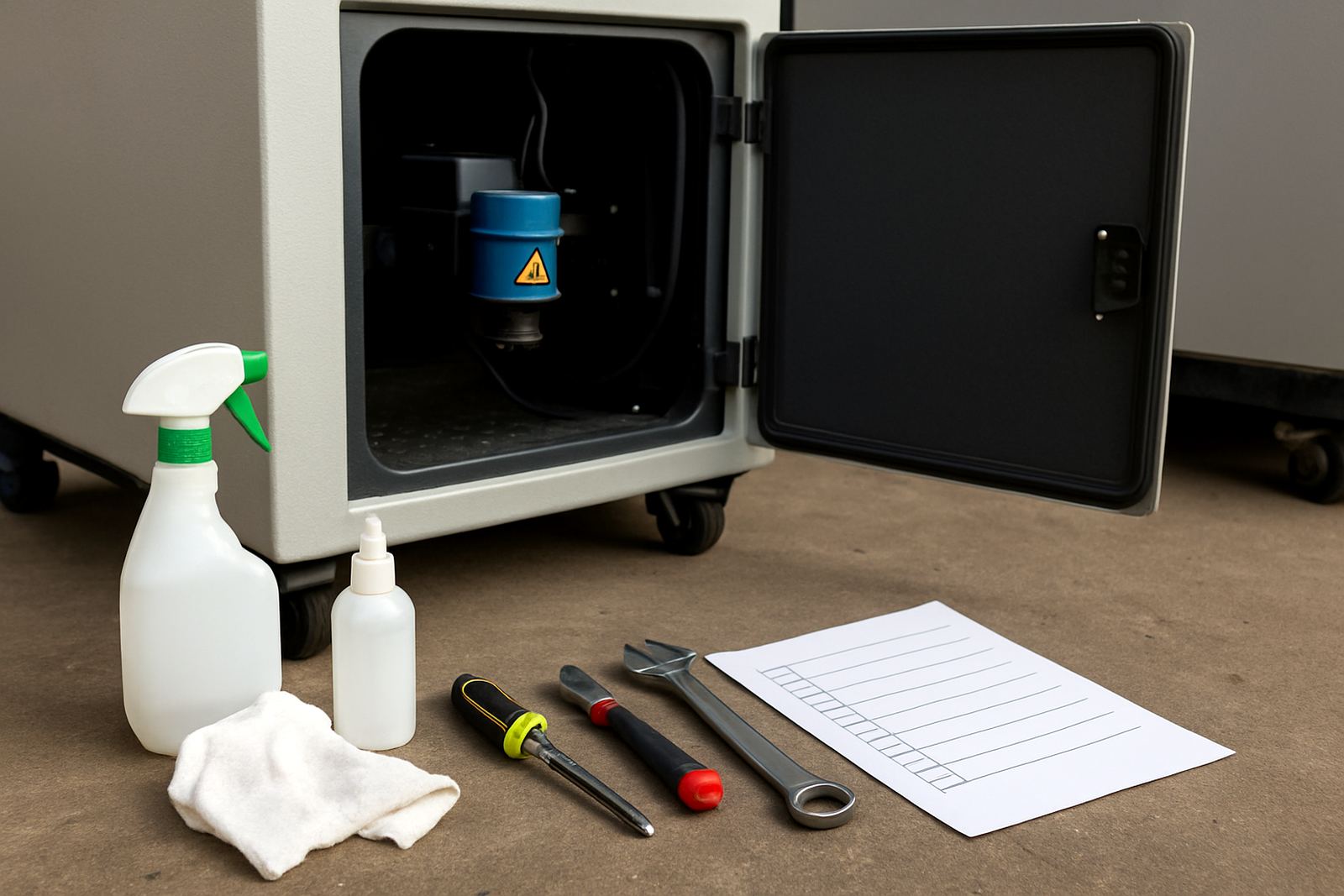
For buyers in Boksburg, Kempton Park, Benoni, Alberton, Midrand and Pretoria, it is worth asking how on-site support is arranged after commissioning. If a line goes down, you need a clear process for breakdown repairs, spares supply and return visits. Preventive maintenance also matters because optics, fixtures and software settings can drift over time. That is especially true in plants where shifts run long and changeovers are frequent.
- Confirm who does installation and sign-off
- Ask what operator training includes
- Check response time for support and repairs
- Set a maintenance plan from the start
Use a practical buyer checklist before you sign off
When you compare suppliers, use the same checklist for every quote. That keeps the decision grounded in what the machine must do, not what sounds impressive. Ask for sample results, fixture details, maintenance expectations and a clear scope of what is included. If software settings are part of the job, make sure your staff can save and recall them easily, with no guessing after a power cut or shift change.
A sound purchasing decision should answer four points: can it mark your exact glass, can your team run it, can the output keep pace with demand, and can the supplier support it across South Africa. If the answer is yes to all four, you are much less likely to deal with rework or stoppages later on.
- Own product sample tested and approved
- Fixture and handling method confirmed
- Training and support plan agreed
- Maintenance, spares and breakdown process defined