Start With the Part You Need To Mark
Before you look at power levels or software options, put the product on the table and measure it. Flat glass panels, curved cosmetic bottles, small plastic caps and moulded components all behave differently under a UV beam. A mark that looks crisp on a clear flat jar may scatter on a curved bottle or lift on a textured plastic surface.
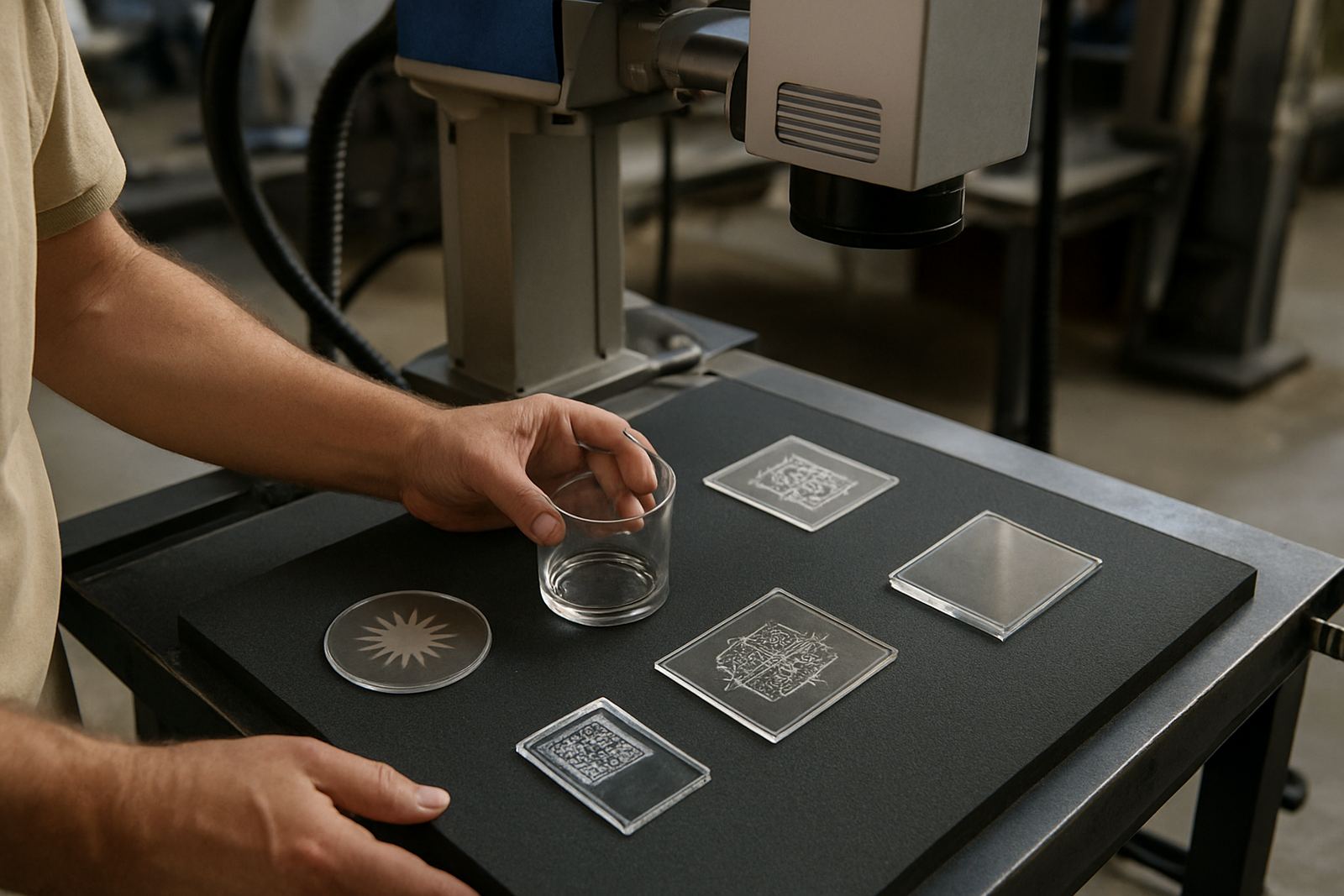
For glass, UV marking is usually chosen when you need fine detail, sharp logos or a permanent code without chipping the surface. On plastics, it works well where the material accepts a clean contrast mark without heat damage. The key is to confirm how the item sits in a fixture, where the mark must land and whether the surface has coatings, labels or mould release that can affect results.
- Measure the mark area in millimetres, not guesswork.
- Check if the item is flat, round, tapered or irregular.
- Note if the surface is clear, tinted, glossy or textured.
- Bring a sample that matches actual production stock.
Match Machine Type To Throughput And Line Layout
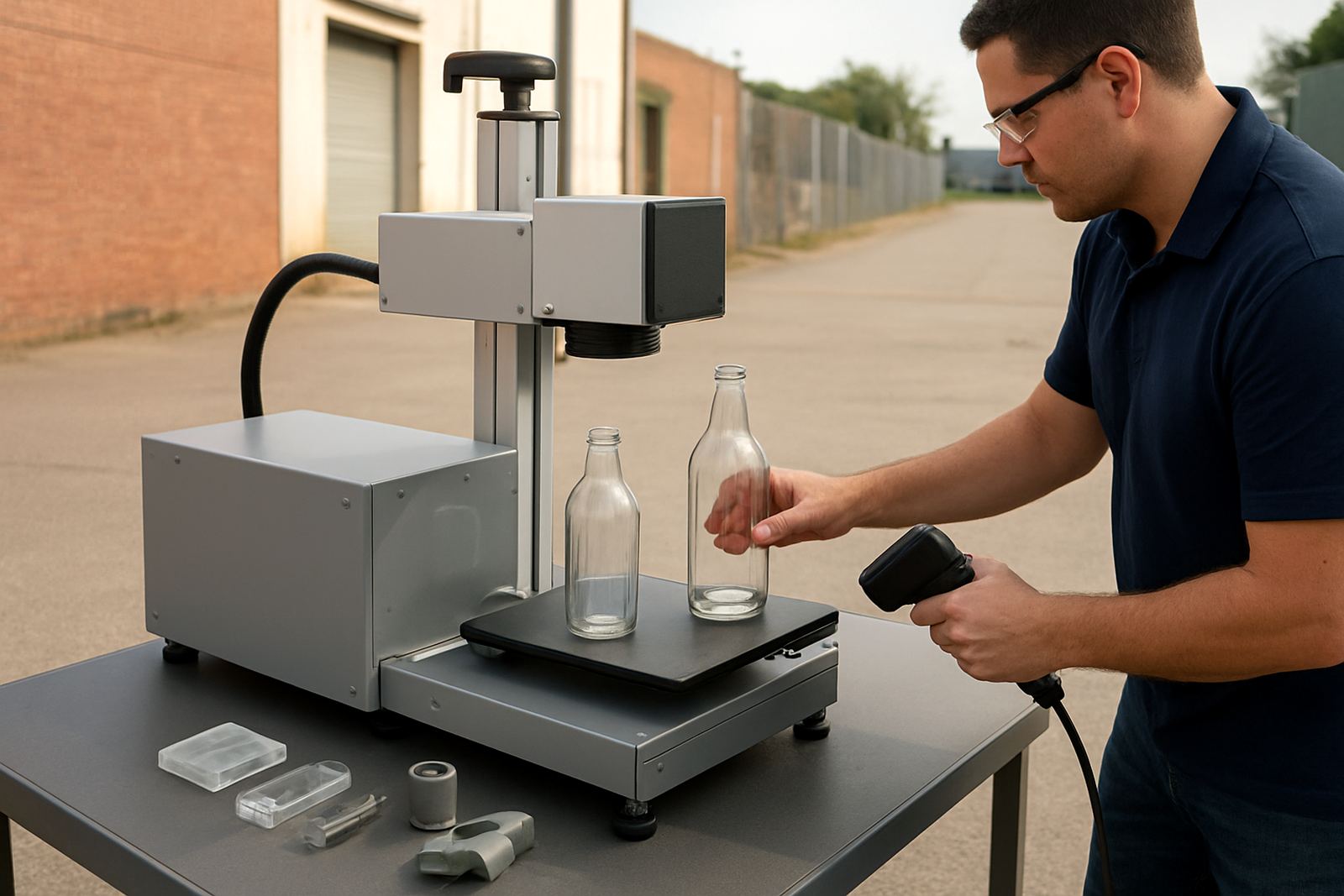
A low-volume workshop does not need the same setup as a line running thousands of parts a day. If you mark batches by hand, a compact unit with a simple loading table may be enough. If your products are moving on a conveyor or need to be marked inline after filling, moulding or packing, then the machine must fit the existing flow without slowing the team down.
Think about cycle time, operator movement and changeovers. In busy plants around Jet Park, Boksburg and Germiston, the most common mistake is choosing a machine that can mark the part but cannot keep up with loading, alignment and release. The machine must also suit your floor space, electrical supply and the way your staff handle parts during load shedding or shift changes.
- Hand-fed work suits short runs and varied job changes.
- Fixture-fed work suits repeat parts and higher consistency.
- Inline setups suit steady output and controlled product spacing.
- Ask whether the marking station can integrate with your current line speed.
Choose The Right Marking Result For Glass And Plastics
Not every mark has the same job. Some customers need branding that is visible from across a shelf, while others need a tiny serial code that must stay readable after washing, handling or packing. On glass, the aim is often a permanent mark with clean edges and no surface damage. On plastics, the aim is usually a clear contrast mark that does not warp the part or affect fit.
Material behaviour matters. Thin plastic parts can distort if the setup is too aggressive. Glass can give excellent results, but the finish depends on the thickness, coating and geometry of the item. That is why sample testing is not a nice to have, it is part of the buying process. Test the actual product, not just a similar off-cut from the supplier, and check the mark under normal light not only under workshop lamps.
Our team often advises clients to keep three reference samples: one for the first setting, one for the accepted production standard, and one for a worst-case part from the line. It saves time later when operators need to confirm quality fast.
A Practical Buying Checklist Before You Place An Order
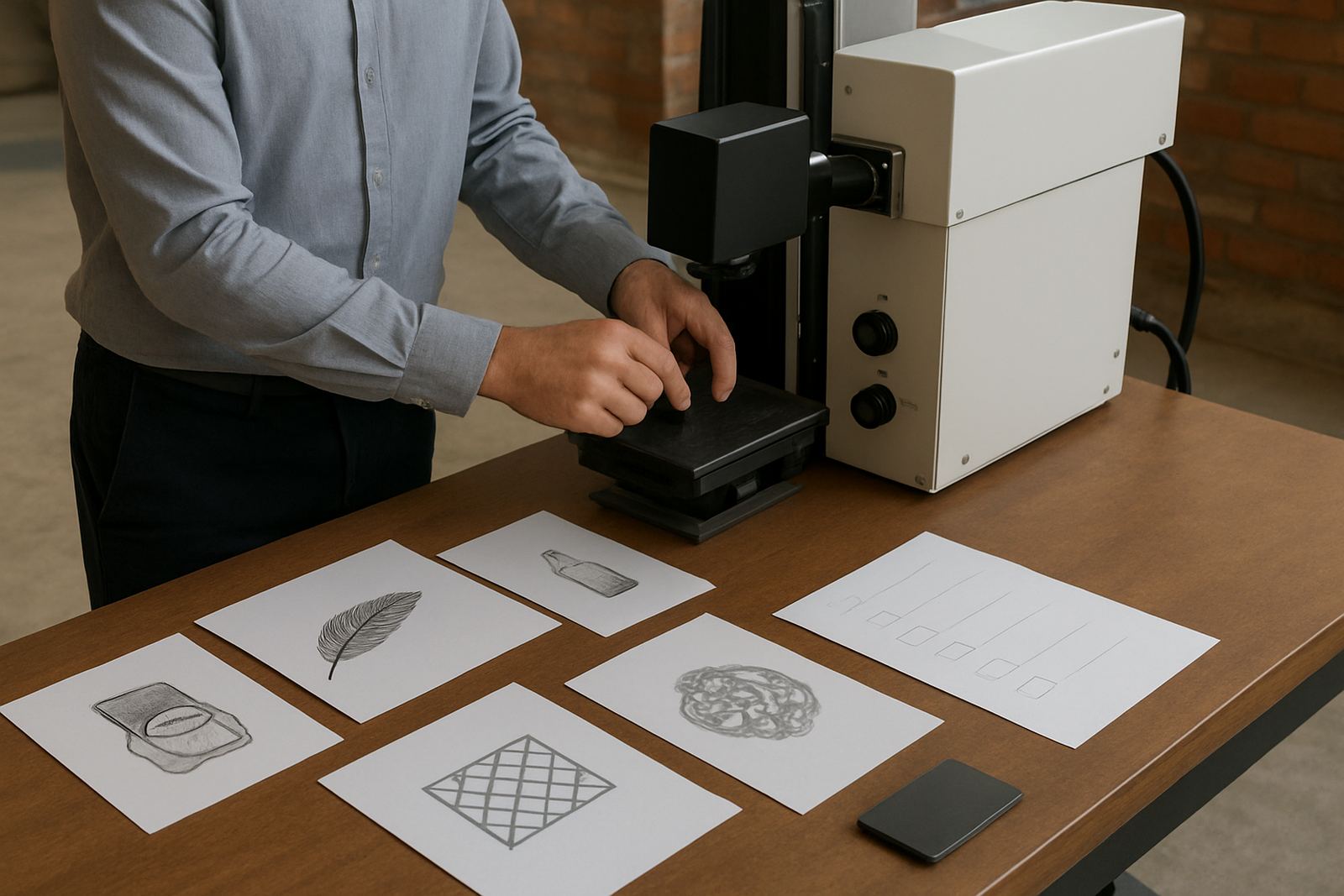
Use a proper checklist before you commit, especially if the machine will be installed into an existing production area. A clean result on one sample does not mean the setup is ready for daily use. You need to confirm handling, safety, software, maintenance and support from day one.
- What material am I marking and how does it behave under UV marking?
- What is the required mark size, depth or contrast?
- How many parts per hour do I need to process?
- Is the part flat, curved, cylindrical or mixed in shape?
- Will I need fixtures, stops or part orientation tools?
- Do I need software links to an existing process or database?
- Who will train operators and who will service the unit later?
- What spares are needed for normal production and upkeep?
If your site is near Pretoria, Alberton or Midrand, consider access for installation days, forklift use and where finished goods will be staged. A good plan saves a lot of time once the machine arrives.
Set Up For South African Production Conditions
Our conditions matter. Dust, heat, coastal humidity, unstable power and mixed production schedules all affect how marking equipment performs over time. A machine that works well in a clean sample room may need better positioning, extraction or maintenance when it runs on a plant floor with regular interruptions. If your site sees frequent voltage dips, ask how the system should be protected and what restart steps operators must follow.
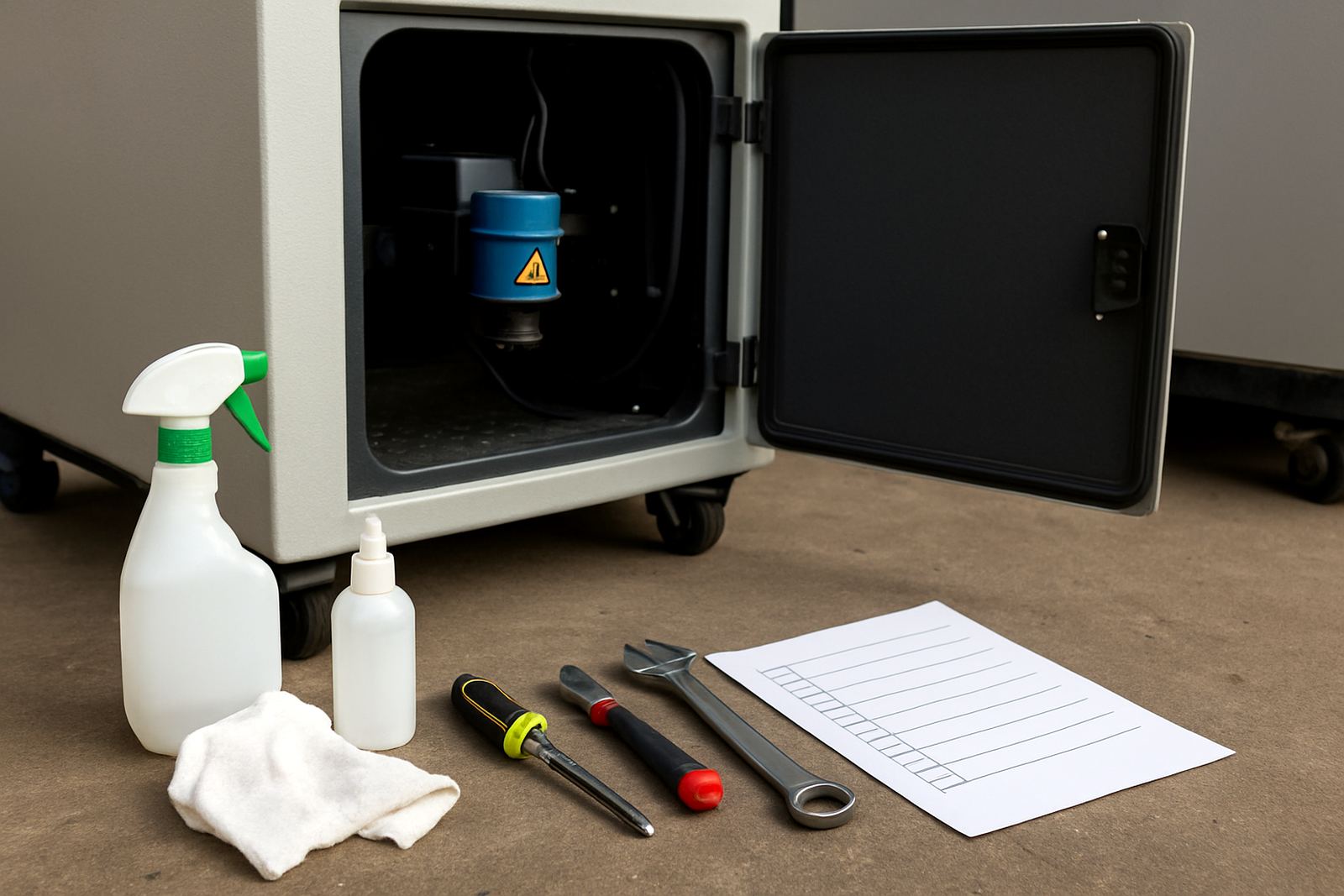
For coastal clients, moisture can affect storage, fixtures and sometimes the product itself. Inland sites may battle dust build-up around lenses, guards and alignment points. Preventive maintenance should be planned around the real production load, not only the calendar. In a lot of cases, a short scheduled service is cheaper than a breakdown repair that stops packing for half a day.
We support demos, installs and training nationwide, with practical setup help in Jet Park, Boksburg, Germiston, Kempton Park, Benoni, Alberton, Midrand and Pretoria. The aim is to get the machine marking properly on your product, in your space, with your team using it confidently.
How To Test Before You Buy
A sample test should answer one question: will this setup produce the mark you need in real production conditions? Bring the actual part, tell us the intended speed, and share any packaging or compliance requirements. If the mark must stay legible after handling, abrasion or cleaning, say so at the start. A test should also show whether the part needs a custom fixture, extra alignment help or a different feed method.
Good testing also helps operators. They can see the loading method, the focusing process, the software workflow and how long a changeover takes. That makes training easier later and reduces mistakes on shift one. If the sample passes, the next step is usually installation planning, line integration and a short training session so the team can run the system with confidence.
When the right machine is matched to the right part, you get cleaner marks, fewer rejects and a smoother production flow. That is the real value of choosing carefully at the start.