Start With the Part, Not the Fixture
Before you buy anything, look closely at the part itself. Measure the length, width, height, wall thickness and any curved sections, then note where the mark must sit in relation to handles, seams, mould lines or labels. In many job shops around Jet Park, Boksburg and Germiston, the real challenge is not the laser, it is holding parts in the same position every time.
For bottles, jars, caps, panels and housings, ask three questions first: is the part flat or curved, is it brittle or flexible, and does it move during loading? A simple standard fixture may be fine for straight runs on repeat parts, but if the marking area changes from batch to batch, or the part is awkward to locate by hand, you will lose time and consistency. That is usually the point where a custom jig starts paying for itself.
When a Standard Fixture Is Enough
A standard fixture suits parts that share the same dimensions, are easy to seat, and do not need highly exact positioning. Think of short production runs, sample testing, or a part that already has a clear locating edge. In these cases, a well-made universal holder can keep costs down and still give neat, permanent marks.
- Repeatable part size with little variation
- Easy top loading or side loading
- No fragile edges that can chip under pressure
- Mark position tolerant by a few millimetres
- Low to medium daily output
If your team can load the part in under 15 seconds without checking and rechecking, you may not need a custom build. Just make sure the holder can be cleaned quickly, especially if the area has dust, mould release residue or moisture from coastal humidity. A fixture that is awkward to wipe down will cause trouble later, and operators will start avoiding it.
Signs You Need a Custom Jig
Custom jigs make sense when the part needs a very specific seat, when marks must line up with features on the product, or when the same job runs often enough to justify the build. If your team is using tape, blocks, offcuts or careful hand positioning to get the part to sit right, that is a strong sign the process needs a proper fixture.
Other warning signs include too many rejects from off-centre marks, operator variation between shifts, or damage caused by clamping too hard. In some plants, especially where load-shedding interrupts a shift and work restarts later, operators can forget the correct setup if the fixture is not self-locating. A good jig removes guesswork and saves setup notes from getting lost.
- Same job returns every week or month
- Part orientation must be exact
- Marking multiple areas on one item
- High scrap cost if the mark misses
- Need for faster loading and fewer operator errors
What a Good Fixture Must Do on the Floor
A proper fixture should be simple to load, stable during marking and easy to inspect. It must hold the part without distorting it, and it should allow the operator to see if the item is seated correctly. If the fixture hides the location points, you are just moving the problem from the laser to the loading table.
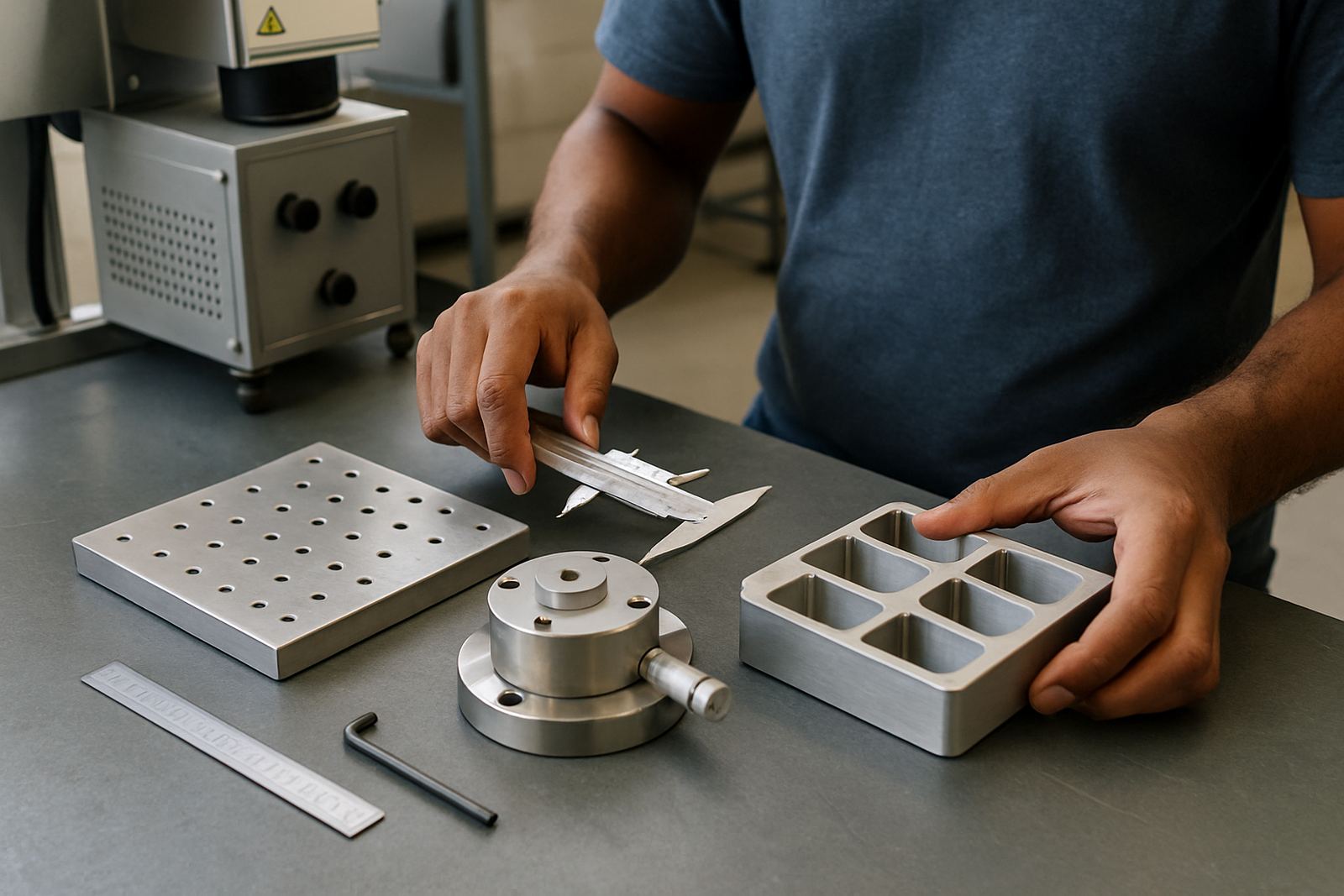
Ask for these practical features: clear locating stops, adjustable guides for small variations, wear surfaces that can be replaced, and materials that will not corrode in damp stores or near the coast. If the marking line is busy, it also helps when the fixture has a natural orientation so staff can place parts the same way every time. Clean edges matter too. A fixture with burrs, sharp corners or loose screws will slow the team down and can scratch the product.
Checklist for Choosing Between Standard and Custom
Use this checklist before you place an order. It keeps the conversation practical and helps you compare the real cost of a fixture against the cost of wasted time, rework and rejected parts.
- What exact part sizes are being marked?
- How many parts per shift need to be loaded?
- Can the mark position vary, or must it be exact?
- Does the part flex, chip, roll or tilt?
- Will the job run once, or return often?
- Does the operator need both hands free to load safely?
- Will the fixture be used in one site or moved nationwide?
If you answer yes to three or more of the custom points, a purpose-built jig is usually the better call. If most answers point to a straight forward repeat job, a standard fixture should be enough and will keep spend down.
Installation, Training and Ongoing Care
Fixture buying does not end when the jig arrives. The setup must be checked against the actual laser station, the operator needs training, and the job should be tested with real samples before full production starts. That is where many issues are caught early, such as a part rocking slightly or a mark landing too close to an edge.
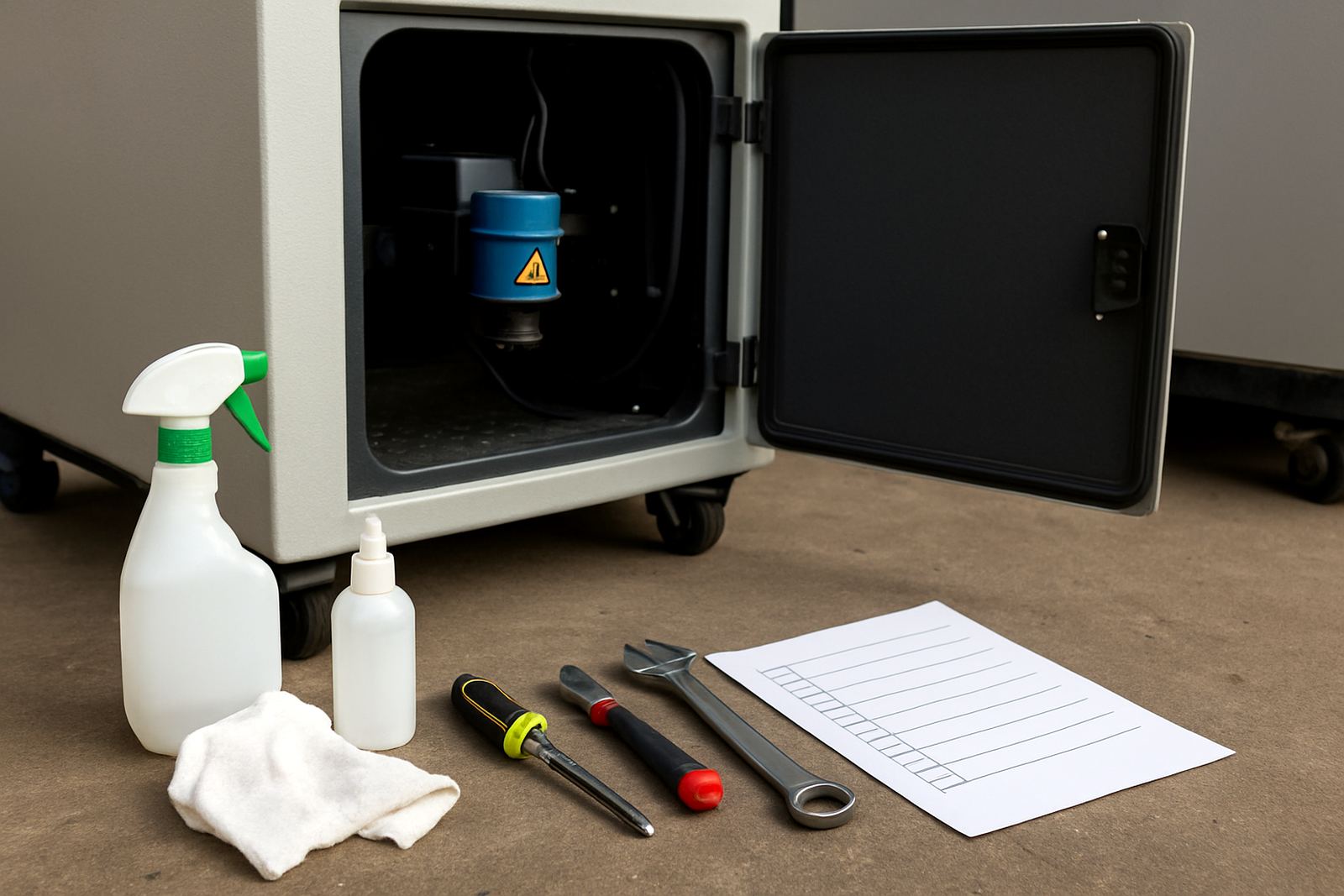
Keep a short setup sheet beside the machine with part name, orientation, clamping points and any special notes. During preventive maintenance, inspect locating pins, screws and contact surfaces for wear. In busy plants across Boksburg, Benoni and Midrand, this small habit prevents the same fault from showing up again after a few weeks. It is also worth keeping one spare wear part on hand so a damaged guide does not stop production for a whole day.