What to include when you send samples
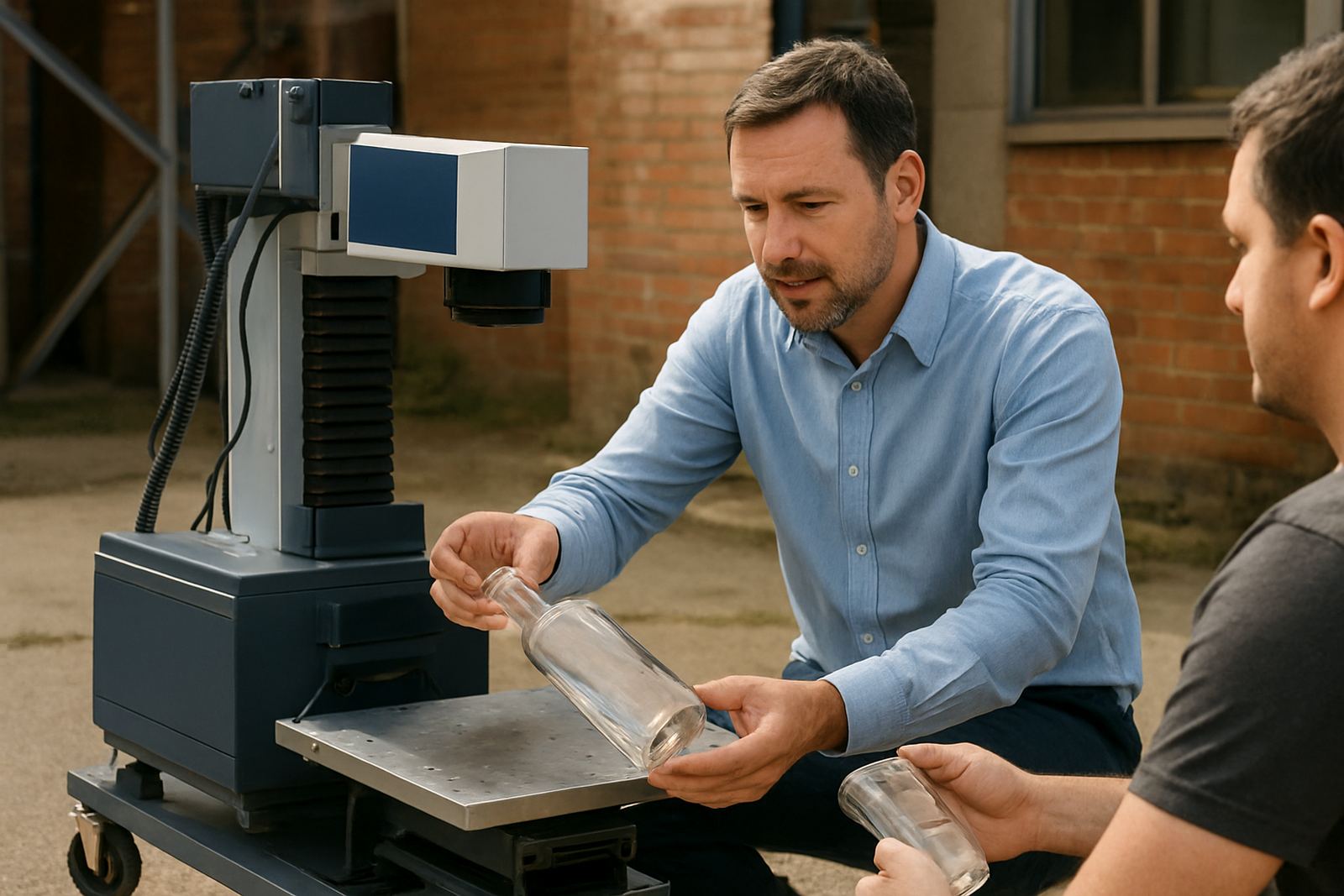
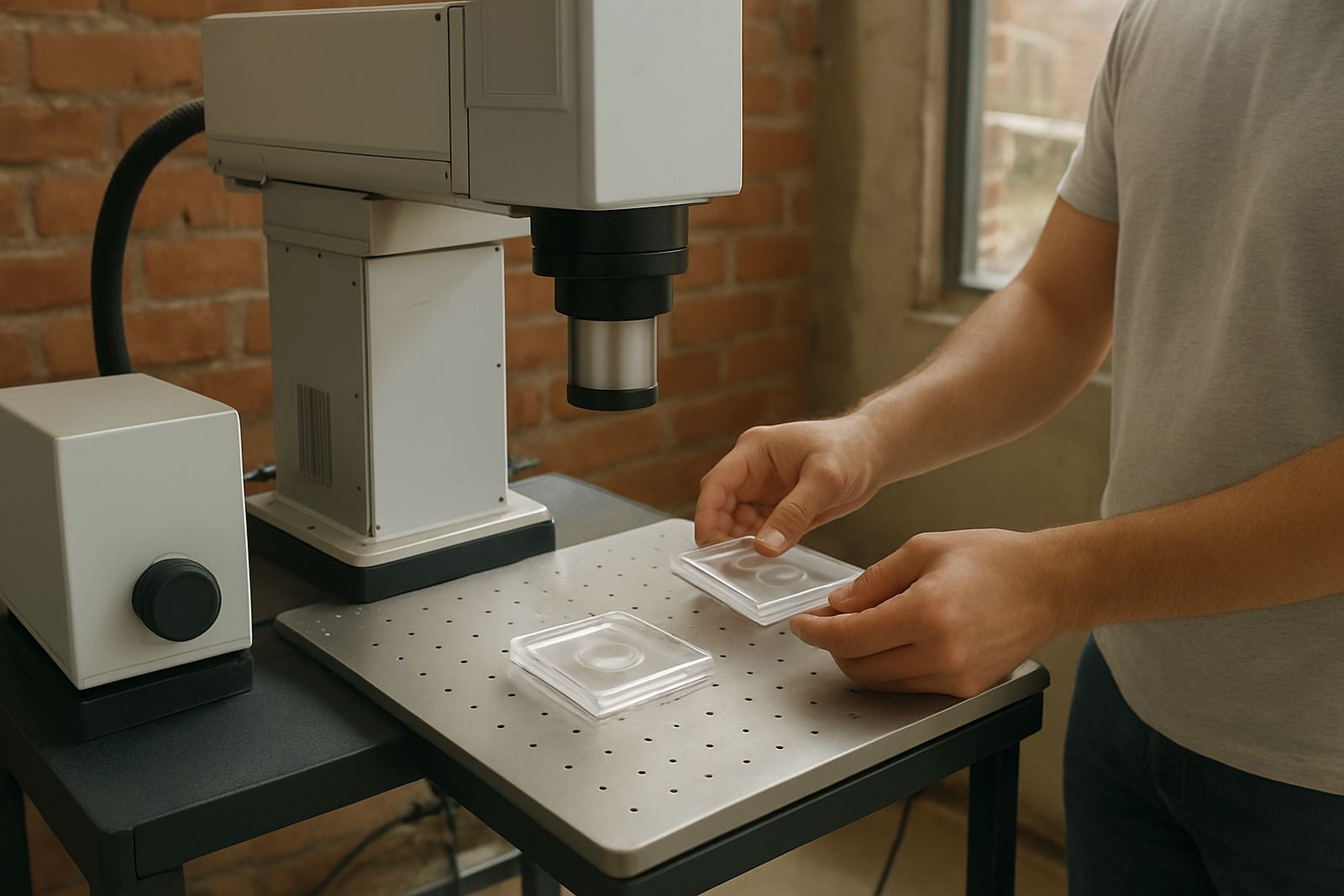
To give you a proper assessment, send the actual part or a representative offcut rather than a photo alone. Glass, clear plastics, tinted plastics and textured plastics can all react differently, and small changes in thickness or coating can affect the marking result.
Please include enough sample pieces for testing on more than one setting if possible. If your part has a curved face, a narrow rim or a tight label area, that detail helps us choose the right approach from the start. A short note with the sample saves time and avoids back and forth.
- Your company name and contact person
- Material type, thickness and colour
- What you want marked, such as logo, batch code, serial number or text
- Any size limits or position limits on the part
- Whether the sample must be returned
How the sample testing process works
Once your sample arrives at our Jet Park base, we inspect it and confirm the marking area, finish and any handling concerns. If a part is fragile, heavy or sensitive to dust, we plan the test accordingly. For glass items, we check for chips, surface stress and whether the marking needs to sit inside a protected area. For plastics, we look at colour contrast and the risk of heat effects on the surface.
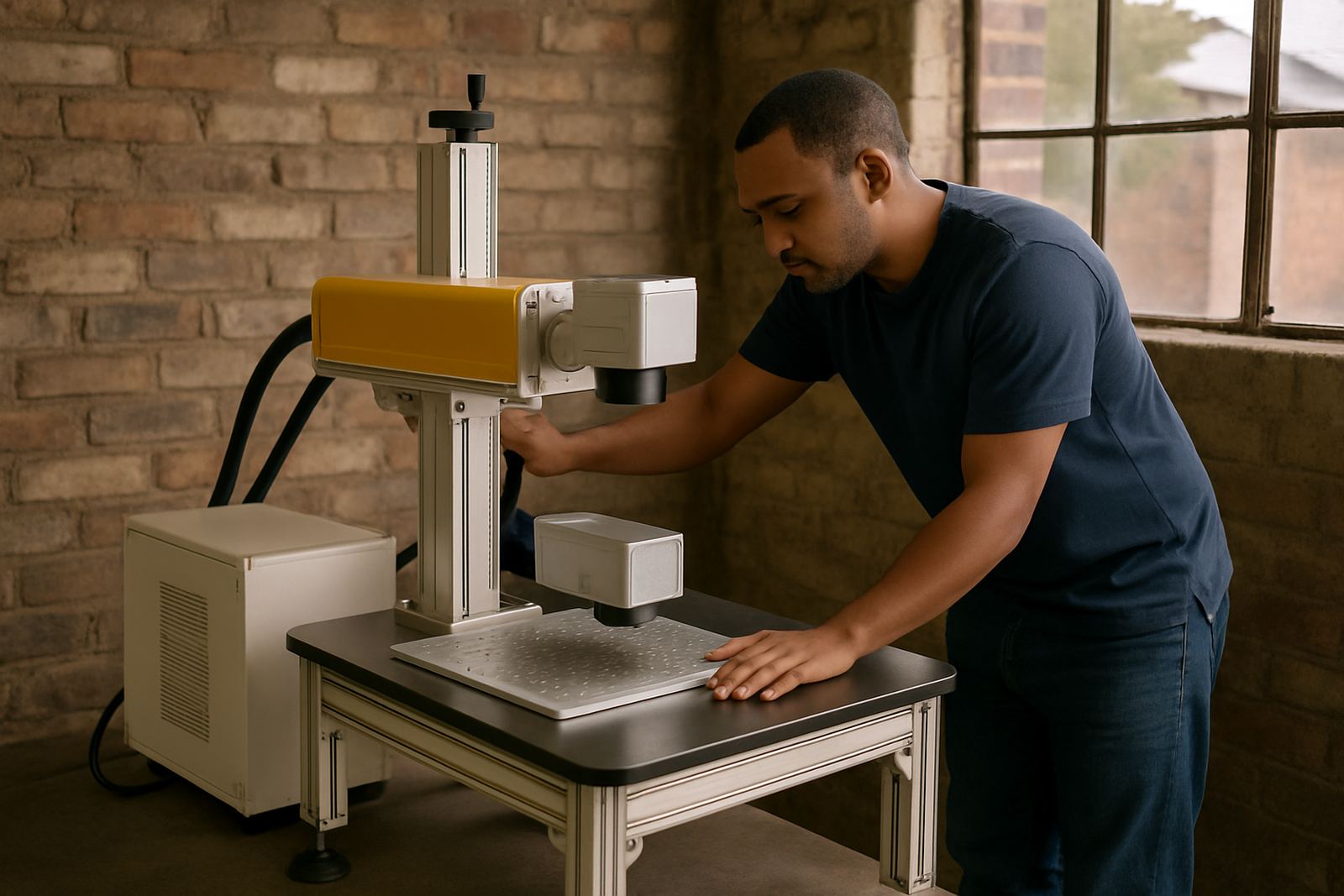
We then run a feasibility test and record the settings used. If there are several possible outcomes, we can compare them side by side so you can judge which one suits your product best. This is useful for branded bottles, cosmetic packaging, technical components and precision labels where the final look matters.
- Receive and inspect the sample
- Confirm material suitability for UV laser marking
- Run one or more marking trials
- Review the sample result with you
- Agree next steps for production, fixtures or line integration
What we check during feasibility testing
Feasibility testing is about more than making a mark appear on the surface. We check whether the result is permanent, clear and practical for your operating environment. If the product will be washed, handled often or exposed to moisture, we look at durability under normal use. Coastal humidity can also affect storage and handling, so this matters for many Gauteng and coastal clients alike.
We also test the repeatability of the marking. If you need the same position on every part, we assess whether a fixture or guided setup is needed. If your line runs during load-shedding or on backup power, we can advise on process timing and safe restart steps so production does not lose consistency.
- Mark clarity and contrast
- Position accuracy and repeatability
- Surface finish after marking
- Suitability for batch coding or branding
- Need for fixtures, jigs or software changes
Packing and sending your parts safely
Good packing protects your sample and improves the testing outcome. Glass should be wrapped so it cannot knock against other items, while plastic parts should be secured so they do not rub and scratch in transit. If your sample includes more than one product variant, separate them clearly and label each group.
Use a strong outer carton and a packing method that suits the shape of the part. If the item is polished, coated or pre-printed, avoid tape directly on the face where possible. Include your written instructions inside the parcel as well as on the outside label. That small step helps when a parcel passes through a busy receiving area in Jet Park or at a courier hub in Germiston or Kempton Park.
- Wrap each item individually where needed
- Fill empty space so parts do not move
- Mark fragile items clearly
- Separate different sample types in the same box
- Include your contact details and instructions inside the parcel
If your part needs a fixture or line integration
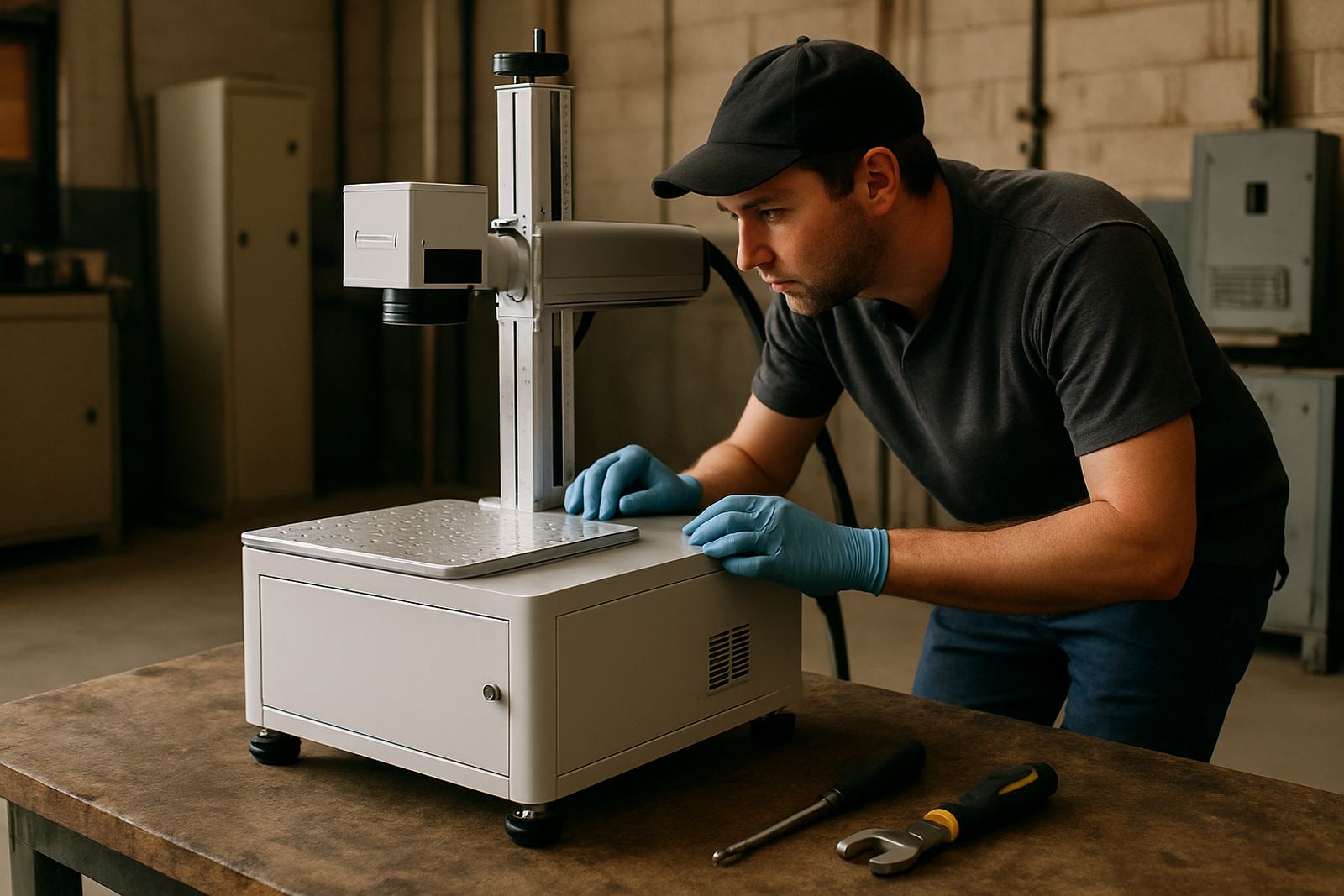
Some samples can be marked immediately, while others need a fixture to hold the part in the correct position. This is common with small components, angled surfaces and high volume jobs where consistency matters. If the sample reveals a positioning challenge, we can look at fixture design, operator handling and line integration before you order a full setup.
For production sites in Boksburg, Benoni, Alberton, Midrand and Pretoria, this is often the point where we move from sample testing to planning the practical install. Refilwe and Thabo handle the technical side of that process, while Naledi coordinates the work and Priya keeps the service record clear so you know what was tested and what was recommended.
That approach saves repeat trials later and helps avoid unnecessary downtime after installation. It also gives your team a clearer idea of how the marking will fit into the day to day workflow, especially where operators are changing shifts or working around other equipment.
Next steps after the sample result
When the test is complete, we share the result and talk through the best way forward. If the mark meets your needs, we can move on to a production proposal, operator training or preventive maintenance planning. If the outcome needs adjustment, we can retest with a different setting or review a different part orientation. Sometimes a small change in surface prep or positioning is all that is needed.
Our team works with clients across Ekurhuleni and nationwide, with demos, installs and training arranged from Jet Park. If you are not sure whether the part is suitable, send it anyway and ask for a feasibility assessment. It is better to test first than to commit to a batch and find out later that the finish is not right. One good sample can save a lot of time and money, no guessing required.
- Approved sample and production planning
- Retest with adjusted settings
- Fixture or software recommendations
- Training for your operators
- Support for breakdowns, spares and maintenance after install