Fast fault finding for stopped or inconsistent marking
Breakdowns usually show up in the same ways: no laser output, weak marking depth, poor contrast, missed positions, software errors, interlock alarms, or a conveyor that no longer tracks properly. Our repair service starts with quick fault isolation so your team is not left guessing. We look at the marking head, control cabinet, cooling arrangement, motion system, software setup and fixture condition to find the real cause, not just the symptom.
For glass and plastics applications, small issues can create scrap very quickly. A worn fixture, a dirty optic, unstable power supply, heat build-up in the cabinet, or a damaged cable can stop a line before lunch. We repair equipment used for branding, traceability codes, batch marks, serial numbers and fine-detail graphics, and we work on systems installed in packaging, cosmetics, beverage, pharmaceutical and plastics environments.
- Laser source and beam path checks
- Control and software fault tracing
- Motion, fixture and alignment inspection
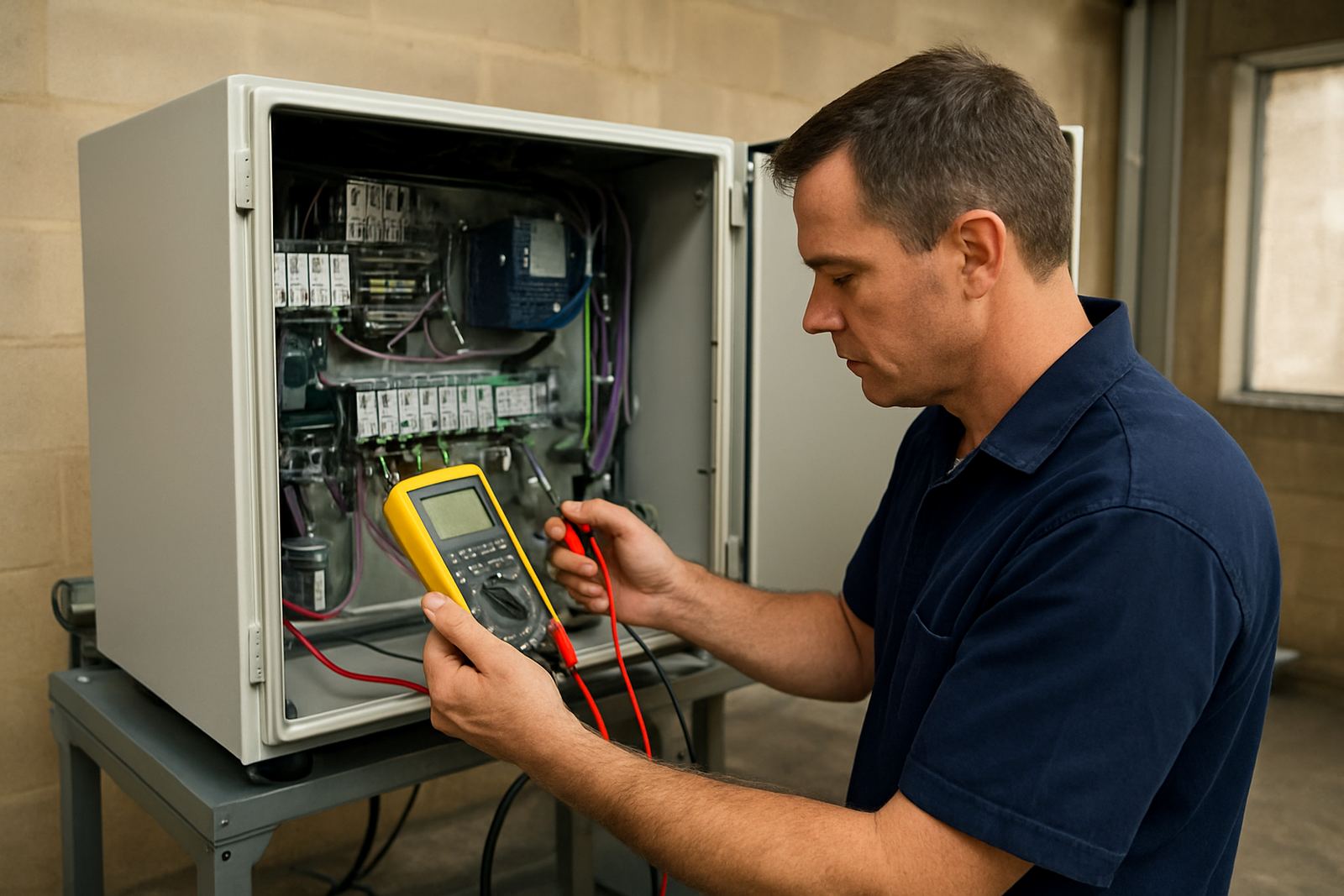
- Power, cabling and safety interlock testing
What is included in a breakdown repair callout
Each callout is structured so your team knows what is being checked and why. We confirm the fault report, inspect the machine in situ, identify whether the issue is electrical, mechanical, software related or process related, then carry out the repair where possible. If parts need to be replaced, we explain the options before work continues.
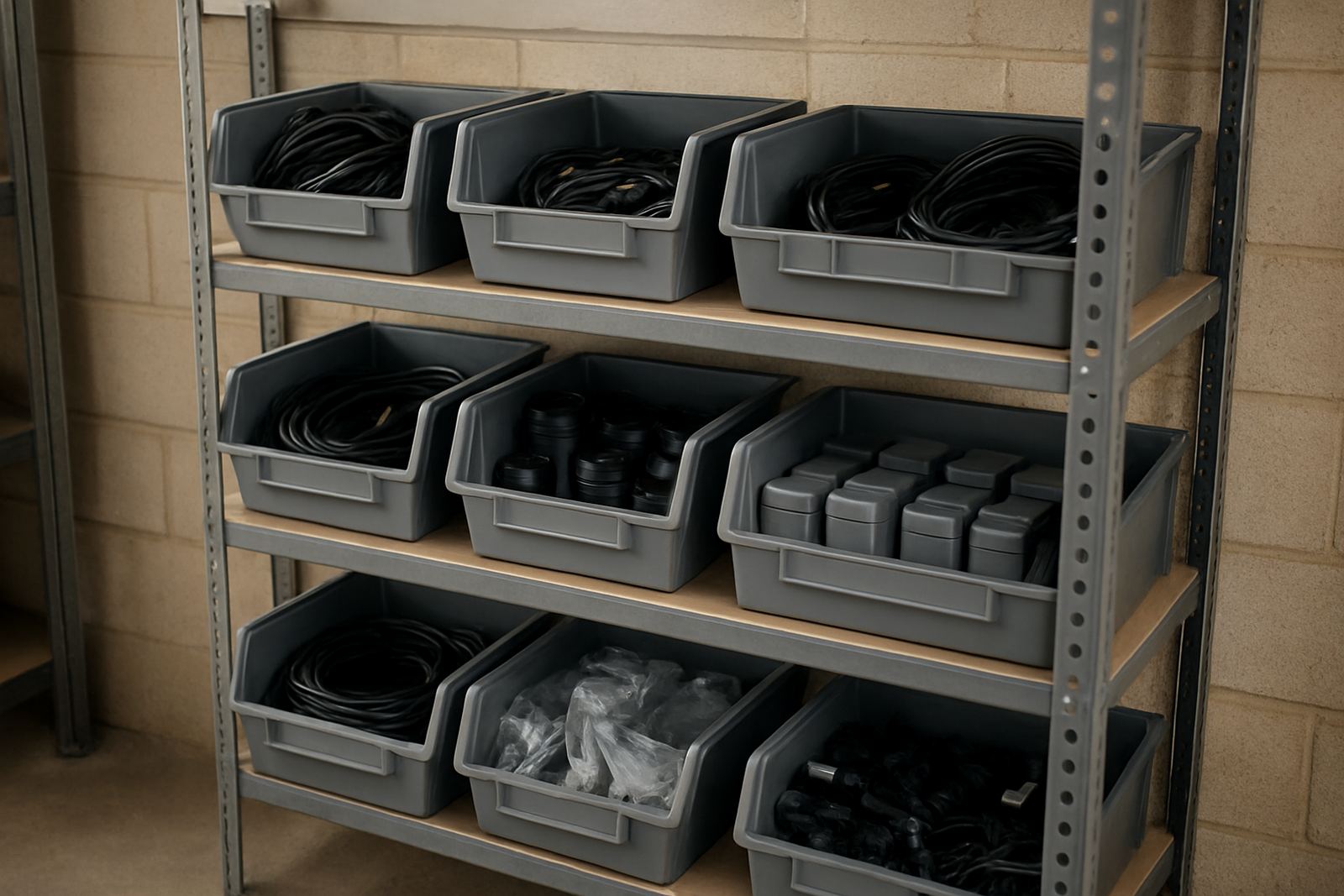
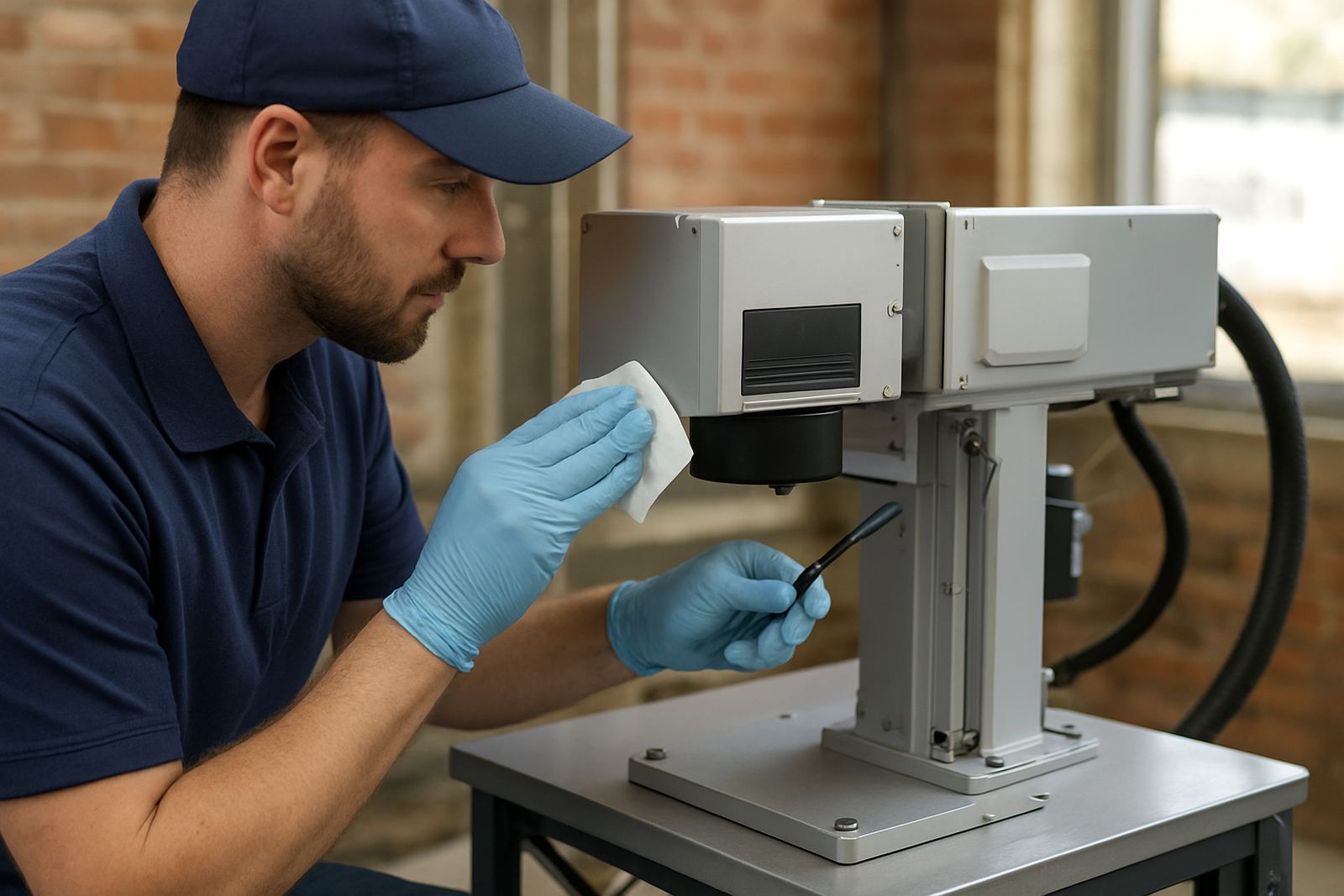
Repair work can include software recovery, parameter correction, beam alignment, replacement of damaged cables, sensor checks, fixture adjustments, cleaning of optics and lenses, cabinet ventilation checks, and re-commissioning after the fault is cleared. If the machine was affected by load-shedding, unstable supply, dust ingress or humidity at a coastal site, we also check for related damage that may cause repeat faults later on.
- On-site diagnosis and reporting
- Component replacement where practical
- Re-test of marking quality and repeatability
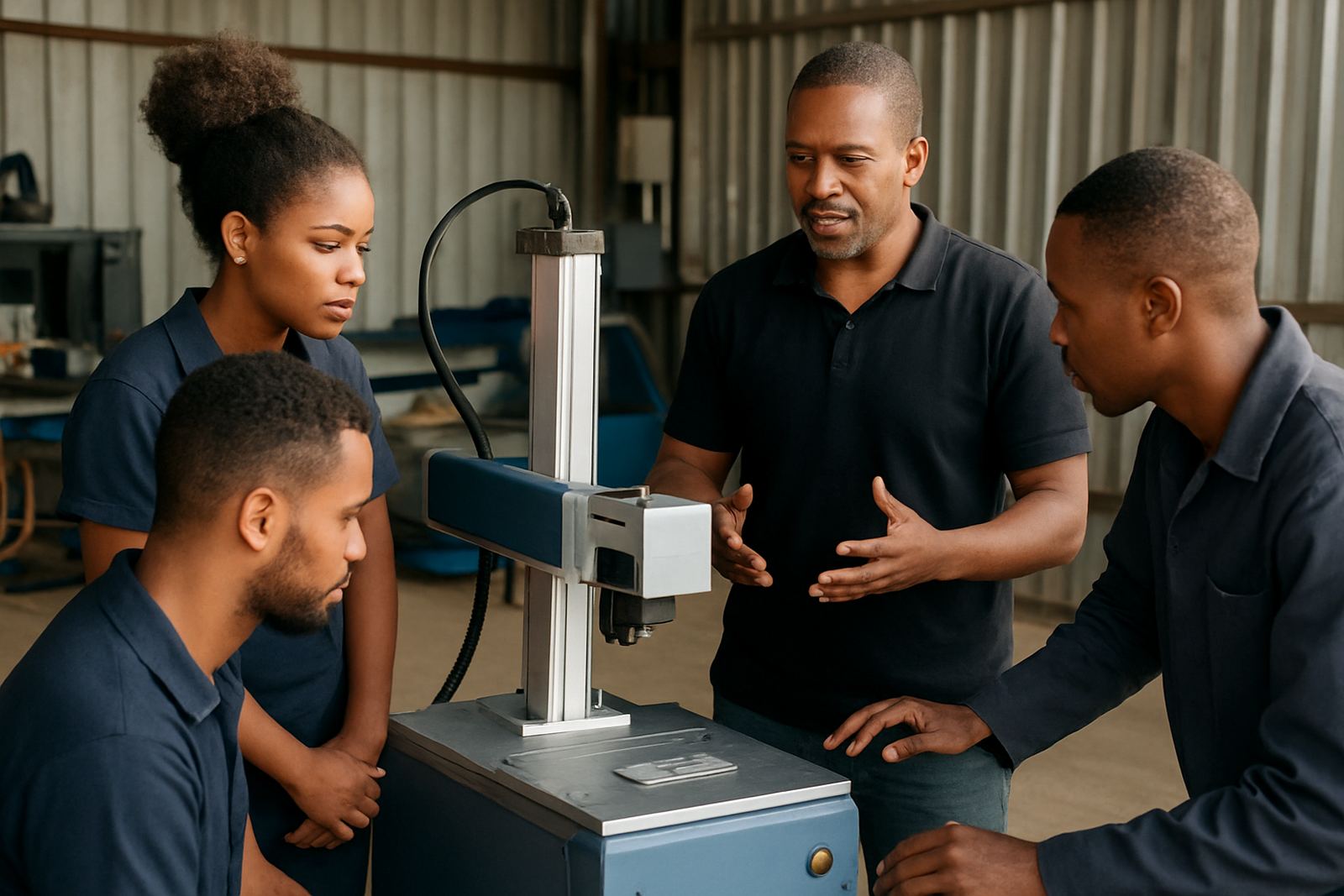
- Operator handover after the fault is cleared
Repair process from first call to back in production
The process is kept straightforward. Clients contact us through the enquiry form on the contact page and give a brief description of the fault, the machine model if available, and the type of product being marked. We then assess urgency, ask for sample images or fault photos if needed, and plan the right technician and spares for the visit.
In many cases we can talk your operator through simple checks before a visit, which saves time when the problem is a loose connection, a software setting, or a blanking issue. If the machine needs workshop attention, we isolate the unit, remove the affected module, and arrange return or replacement work. Once repaired, we run sample marking to confirm clarity, placement and permanence before sign-off.
- Initial fault capture and triage
- Remote checks where suitable
- Site visit or workshop repair as needed
- Final testing with your actual material
Turnaround times and response planning
Turnaround depends on the fault, the site location and parts availability, but the aim is always to reduce downtime quickly. For Ekurhuleni sites such as Jet Park, Boksburg, Germiston, Kempton Park, Benoni and Alberton, response can often be arranged faster because our base is local. For Pretoria, Midrand and other inland sites, we schedule road travel and spares together to avoid wasted trips.
Simple fixes may be completed on the first visit. More complex issues such as source failure, motion system damage, or software corruption can take longer, especially if a specialised part is required. In urgent cases, we prioritise machines tied to a live production line, and we keep clients updated on parts lead time, test status and expected return to service. That way the production manager is not left waiting with no clear next step.
Pricing approach and repair scope
We price breakdown repairs according to the fault, the level of diagnosis required, travel distance, and any replacement parts or consumables needed. There is no one-size-fits-all repair fee because a simple re-alignment is not the same as a damaged source or a failed controller. Before major work proceeds, we outline the expected repair scope and the cost drivers so you can make a clear decision.
When possible, we separate diagnosis, labour and parts so your accounts team can see exactly what was done. For plants with multiple units, repeated callouts, or regular production pressure, we can also plan repairs together with preventive maintenance to reduce total downtime over the year. This is often cheaper than waiting for the next failure and then rushing a repair under pressure.
Maintenance intervals that reduce repeat breakdowns
Some breakdowns are caused by overdue maintenance rather than a single failed part. We recommend regular checks at intervals that suit the production load. Busy plants usually benefit from quarterly inspections, while lighter-use sites can work on a six-month cycle. Sites with dust, vibration, heat or coastal humidity may need shorter intervals, especially where marking must stay legible on smooth plastic or clear glass.
During maintenance visits we check optics, air flow, cabinet condition, cable wear, fixture stability, software backups and marking consistency. We also review how the operator is using the machine, because a small change in handling can sometimes cause the same fault to return. If your site works through load-shedding, it is worth checking backup power and shutdown procedure too, since sudden stops can affect both electronics and alignment.
- Quarterly checks for high-volume lines
- Six-monthly checks for moderate use
- Shorter intervals for dusty or humid sites
- Service records for repeat fault tracking
Key facts
| Supported materials | Glass, plastics and selected coated surfaces |
|---|---|
| Typical repair response | Same-day to scheduled next-day support, depending on location and fault |
| Site coverage | Jet Park, Boksburg, Germiston, Kempton Park, Benoni, Alberton, Midrand, Pretoria and nationwide |
| Repair methods | On-site fault finding, part replacement, alignment, software correction and re-commissioning |
| Process check after repair | Marking clarity, repeatability, placement accuracy and permanence |
| Maintenance recommendation | Quarterly for heavy use, six-monthly for standard use, shorter where dust or humidity is high |