What the client needed in Kempton Park
The project came from a cosmetics packer working in Kempton Park, serving retail and contract packaging lines that need tidy, repeatable marking on glass and plastic containers. The brief was simple on paper: move away from stick-on labels for selected packs and print directly onto the container surface, with a cleaner finish and less rework on the line.
The packer wanted marks that would not lift in humid storage, smudge when handled with sanitiser on the hands, or look tired after transport around Gauteng. They also needed the marking process to fit into an active packing line with limited downtime, and with operators who had to be trained quickly. A label fault can be corrected fairly easily, but a bad mark on a premium cosmetic bottle is a write-off, so consistency mattered from the start.
Why direct UV marking made sense for this product range
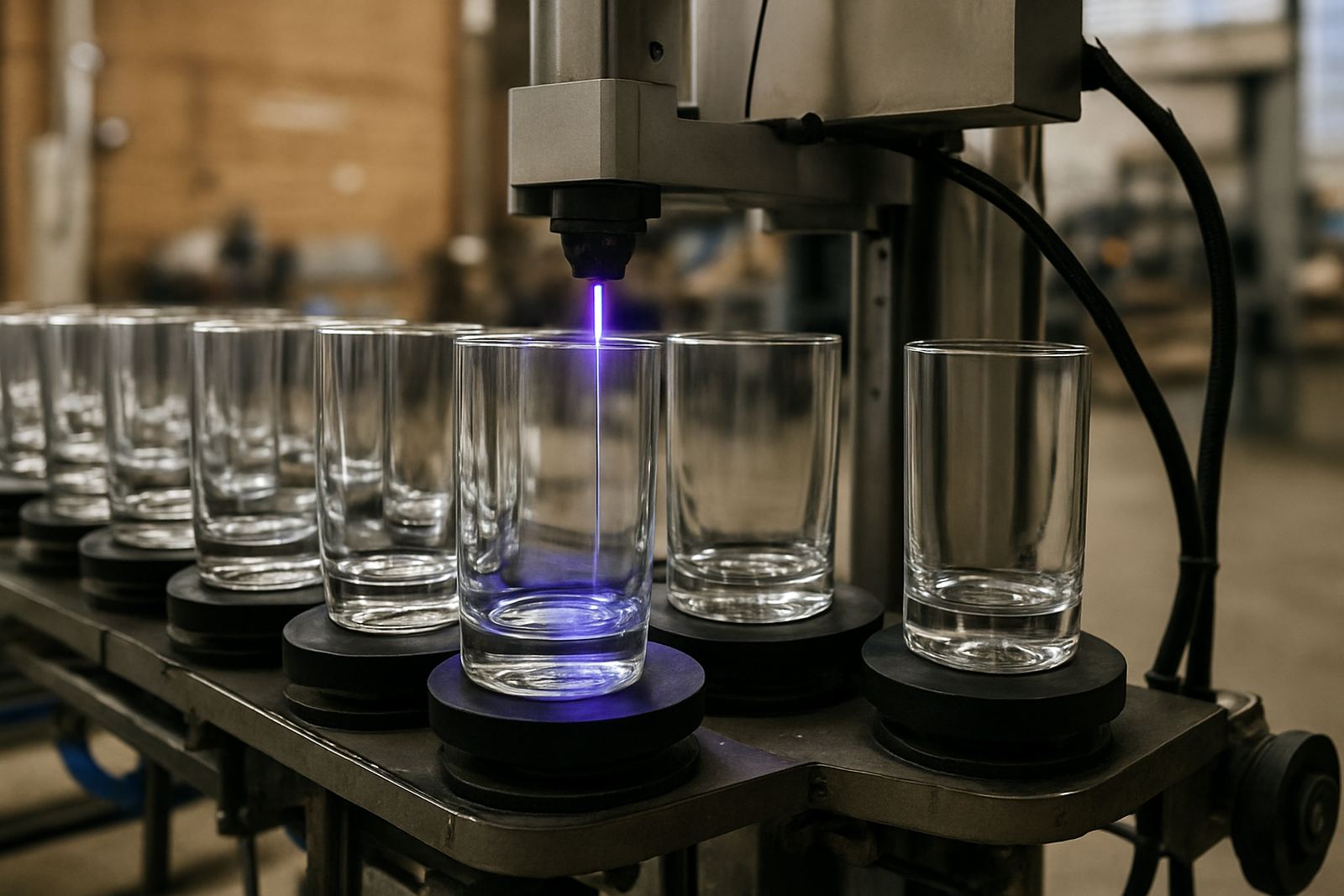
Cosmetic packaging is unforgiving. Small bottles, curved jars and glossy caps all show defects immediately, especially under bright retail light. The client wanted a marking method that supported branding as well as traceability, without changing the look of the pack too much. UV laser marking gave that balance because it produces a precise mark with no ink, ribbon or adhesive layer to manage.
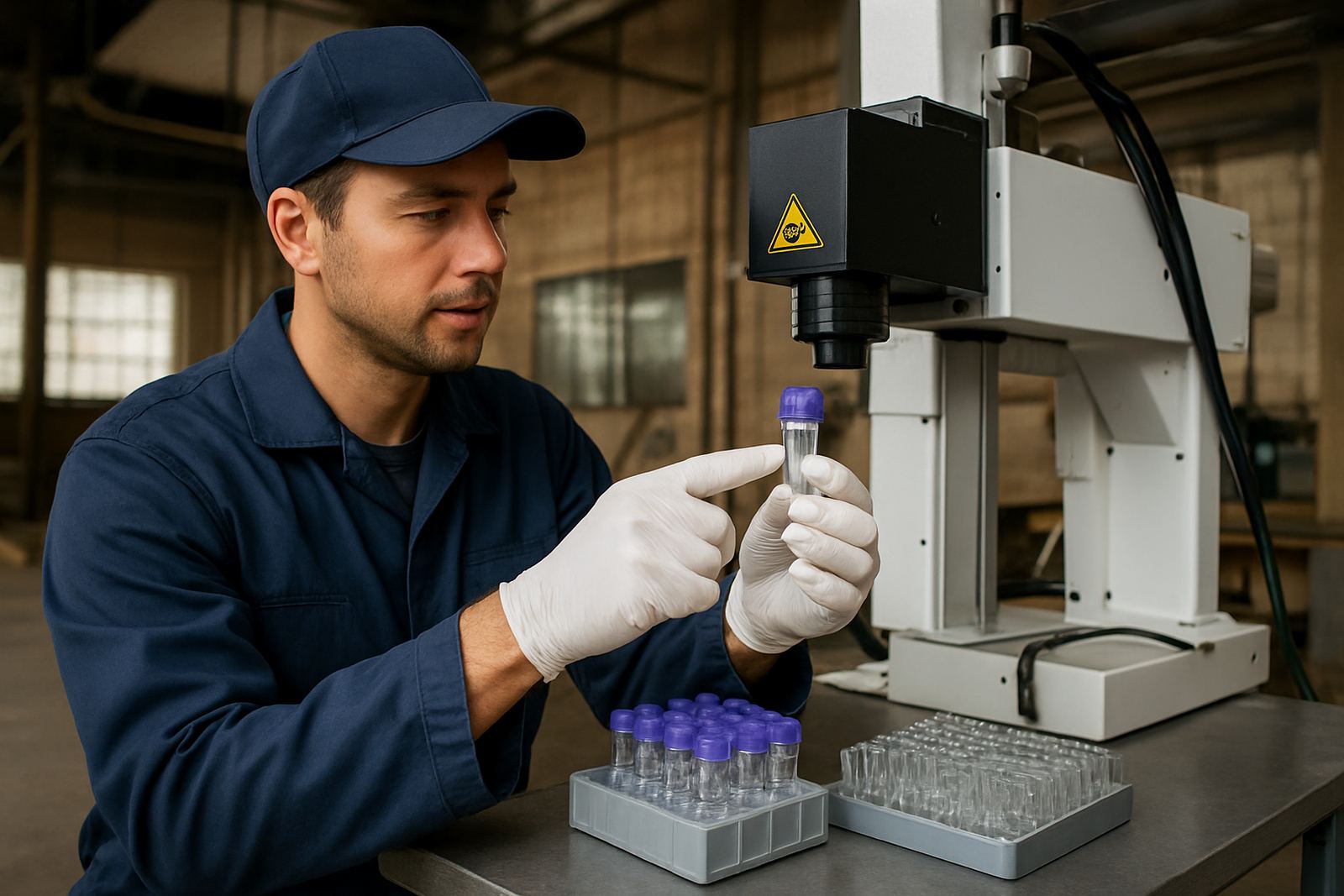
We tested the process on a mix of containers before final sign-off. The samples included clear and coloured plastics, as well as glass packs used for higher value product lines. Direct marking gave the team a permanent result with good contrast on the surfaces they use most often. It also reduced the need for label inventory and cut down on spoilage from misapplied labels or peeling corners.
- Suitable for glass and plastics used in cosmetic packaging
- Permanent mark for brand names, batch codes and product details
- No consumables such as ink or adhesive labels for the marking step
- Better finish on premium packs where presentation matters
Sample testing and line planning before installation
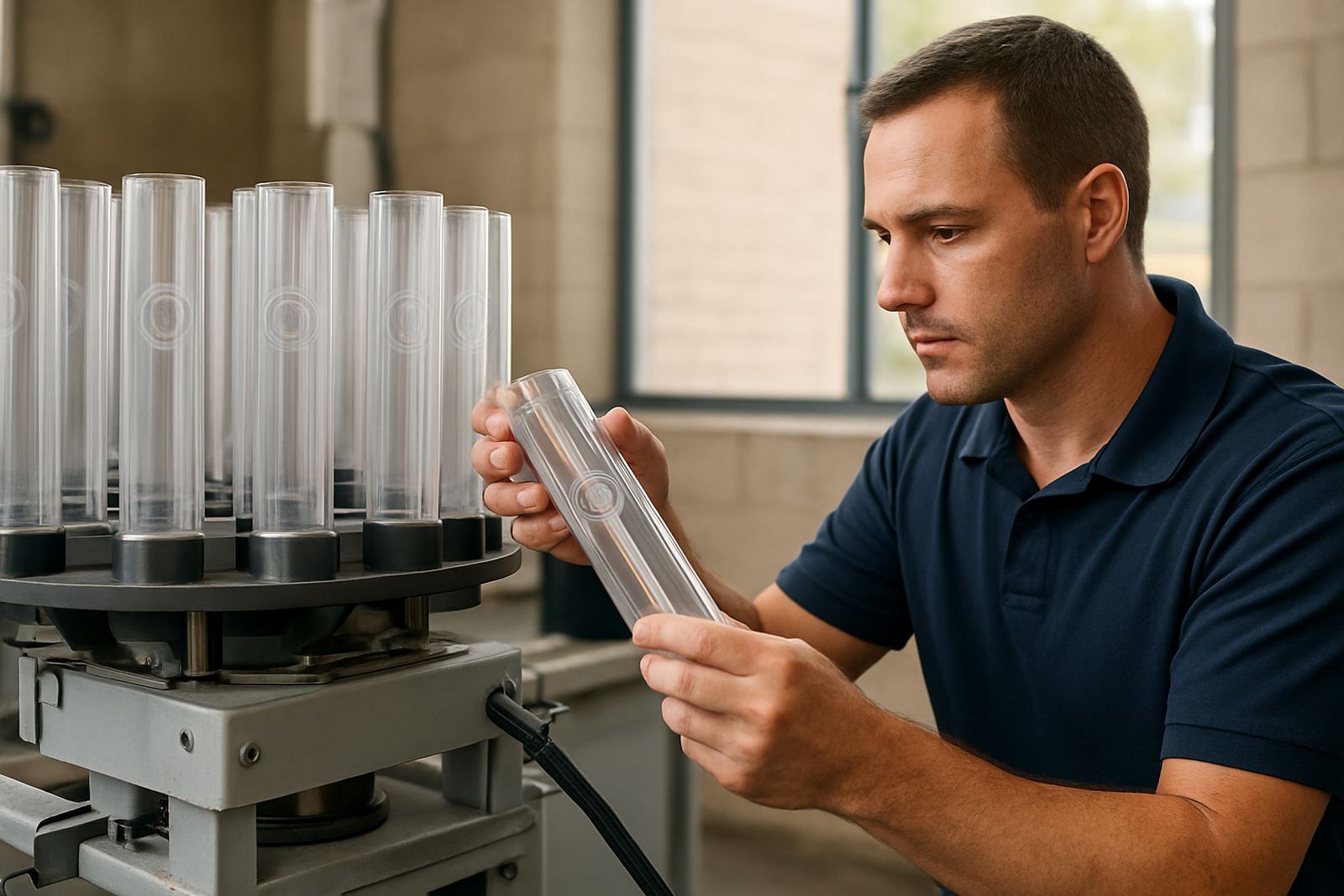
We started with sample testing at our Jet Park base, then repeated trials against the client’s actual pack sizes and artwork requirements. The main concern was legibility on small areas, especially where the container curve could distort the mark. We checked character height, spacing, marking depth and placement so the code remained readable after filling, capping and final pack-out.
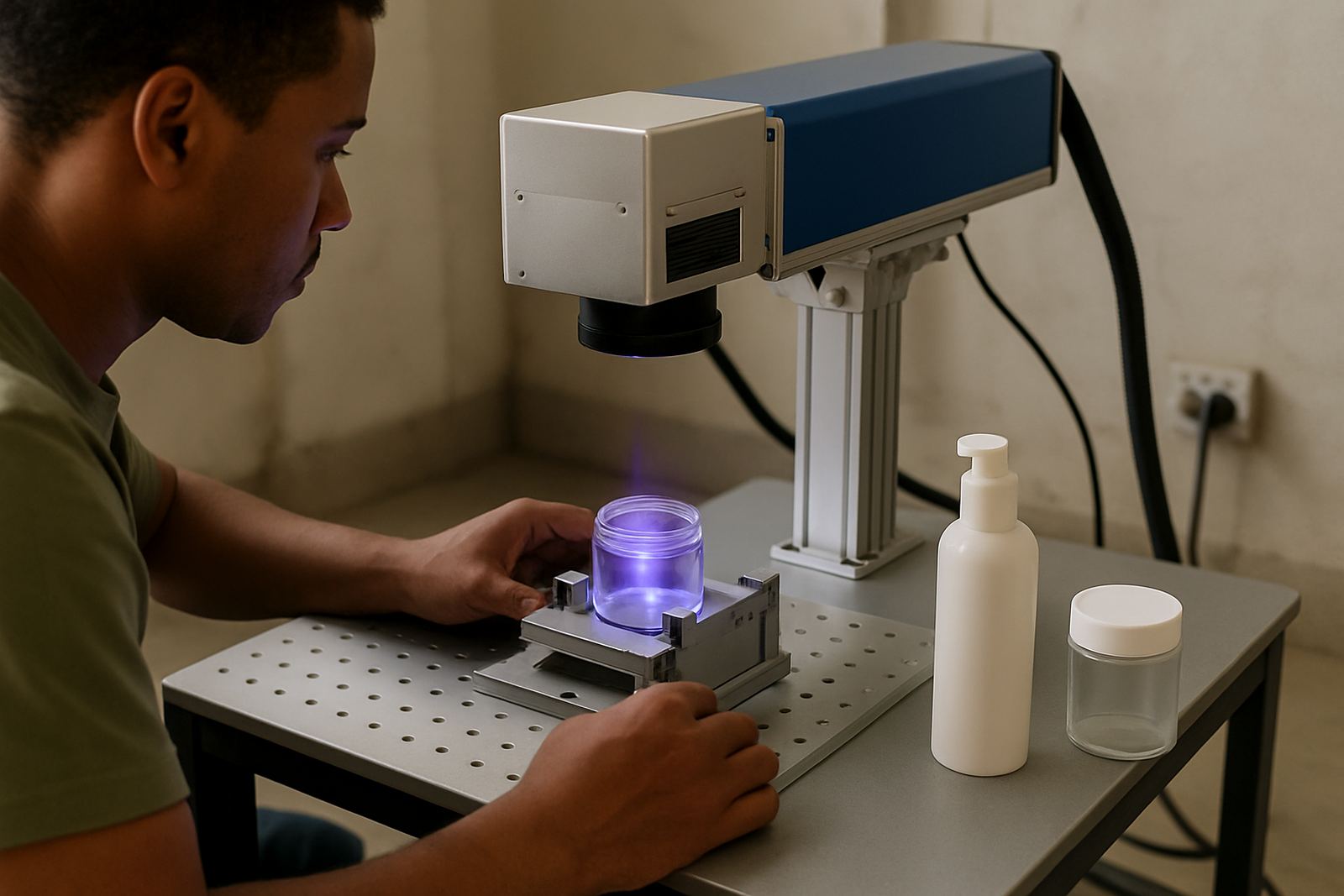
Once the sample set was approved, we planned the installation around their packing schedule to keep disruption low. The line had to stay practical during load-shedding and after-hours production, so the setup was arranged for stable operation and simple changeover between product sizes. We also looked at where operators would stand, how product would present to the marking head, and how fixture changes could be kept quick for short production runs.
- Sample testing completed before machine fitment
- Fixture position checked for each pack size
- Mark placement mapped to stay visible after filling and capping
- Line flow reviewed to reduce stoppages during changeovers
What we supplied and how the job was carried out
We supplied a UV laser marking system sized for the client’s product mix, together with the mounting hardware, safety setup, fixture work and software configuration needed for day-to-day use. The marking head was set up for fine detail, so the client could apply compact brand marks, small text and traceability information without crowding the pack. We also configured the job files for different pack types so operators could select the correct setting with minimal fuss.
The installation itself was completed in two weeks from approval to handover. Week one covered sample validation, fixture refinement and software setup. Week two covered installation on site, alignment, operator training and final process checks. Refilwe handled application testing, Thabo completed the on-site fitment, and Anele led the training session so the team could run the unit confidently from the first shift. Naledi managed scheduling and handover coordination, with Priya handling service records and spares planning.
The client also asked us to support future product launches, so the file structure was set up to make new pack formats easier to add later. That saved time for the production team and avoided a scramble each time a new cosmetic line came through. In a fast moving packing environment, that sort of order matters more than people think.
Results on the packing floor
After changeover, the client saw a cleaner finish on packs that previously depended on labels for branding and batch information. The marks stayed crisp through normal handling, carton packing and delivery, and the team no longer had to manage label roll changes for those selected products. It also improved appearance on premium ranges where a printed label could look a bit busy or start lifting at the edges.
They gained a more repeatable process and less waste from label rejects. The production team reported easier stock control too, because the marking step was now tied to the actual container rather than a separate label application stage. On a practical level, that means fewer stops, fewer reworks and less sorting at end of line. The client also appreciated that the system could be maintained locally, with support available from our Ekurhuleni base and nationwide for follow-up work.
- Cleaner product presentation on glass and plastic packs
- Permanent traceability marks that do not peel or fade easily
- Less label stock to order, store and change over
- Better line consistency during busy production periods
What we would repeat on the next cosmetic line
If we were doing this again on a similar cosmetics line, we would follow the same sequence: sample test first, fixture check second, then installation and training only after the mark is signed off. That keeps the production team involved and avoids surprises once the unit is on the line. We would also keep a few alternate files ready for different container sizes, especially where the client runs both retail packs and small trial sizes.
For cosmetic packers in Kempton Park, Boksburg, Germiston, Benoni or Alberton, the lesson is the same. Direct marking works best when it is matched to the actual pack, the real line speed and the way the team works every day. A neat result on the sample table is useful, but a neat result after a full shift is what really counts.
Our support for this project included site demos, preventive maintenance planning, software setup, operator training and breakdown repair cover if needed. The client can still call on us for spare parts, process checks and line adjustments as new products come through.
Key facts
| Project location | Kempton Park, Ekurhuleni |
|---|---|
| Client type | Cosmetic packer |
| Marking method | Direct UV laser marking |
| Materials tested | Glass and plastics |
| Project timeline | 2 weeks from approval to handover |
| Scope | Sample testing, installation, operator training, fixture design and software setup |