Start with your production pattern, not the price tag
The best choice depends on how often you will use the machine and what you need it to do. If your work is seasonal, project based, or tied to short production runs, hiring can make sense because you only pay for the period you need. If your line runs every day and you need full control over throughput, buying is usually the better long-term move.
In Ekurhuleni, where many sites run on tight schedules and load-shedding can interrupt output, it helps to ask one simple question: will this machine be busy enough to pay for itself? A UV laser marking system is ideal for glass and plastics where you need clear, permanent marks, but the value comes from how much product you move through it each week, not just the purchase price.
When hiring is the smarter short-term option
Hiring works well when you need to test a process before committing capital, or when you have a temporary contract that needs marking work for only a few months. It also suits companies that need a unit for sample approval, product launch trials, or to cover a production spike while another machine is down. For some teams, it is the quickest way to get marking done without taking on a major asset.
It can also suit businesses that want training on real parts before deciding on a permanent installation. If you are still refining fixture design, software setup, or mark positions, a hire period gives room to learn without locking in a full purchase too early. That said, if your team needs the machine on site every day, hire costs can add up faster than expected.
- Short contracts or seasonal demand
- Trial runs before capital approval
- Temporary production cover during repairs
- Sample testing before full rollout
When buying gives better value over time
Buying generally suits sites with steady output, repeat jobs, and a clear marking spec. If your operation needs permanent branding, batch codes, part identification, or intricate designs on glass or plastics every day, ownership gives you control over scheduling and production planning. You also avoid ongoing hire fees and can build the machine into your normal workflow.
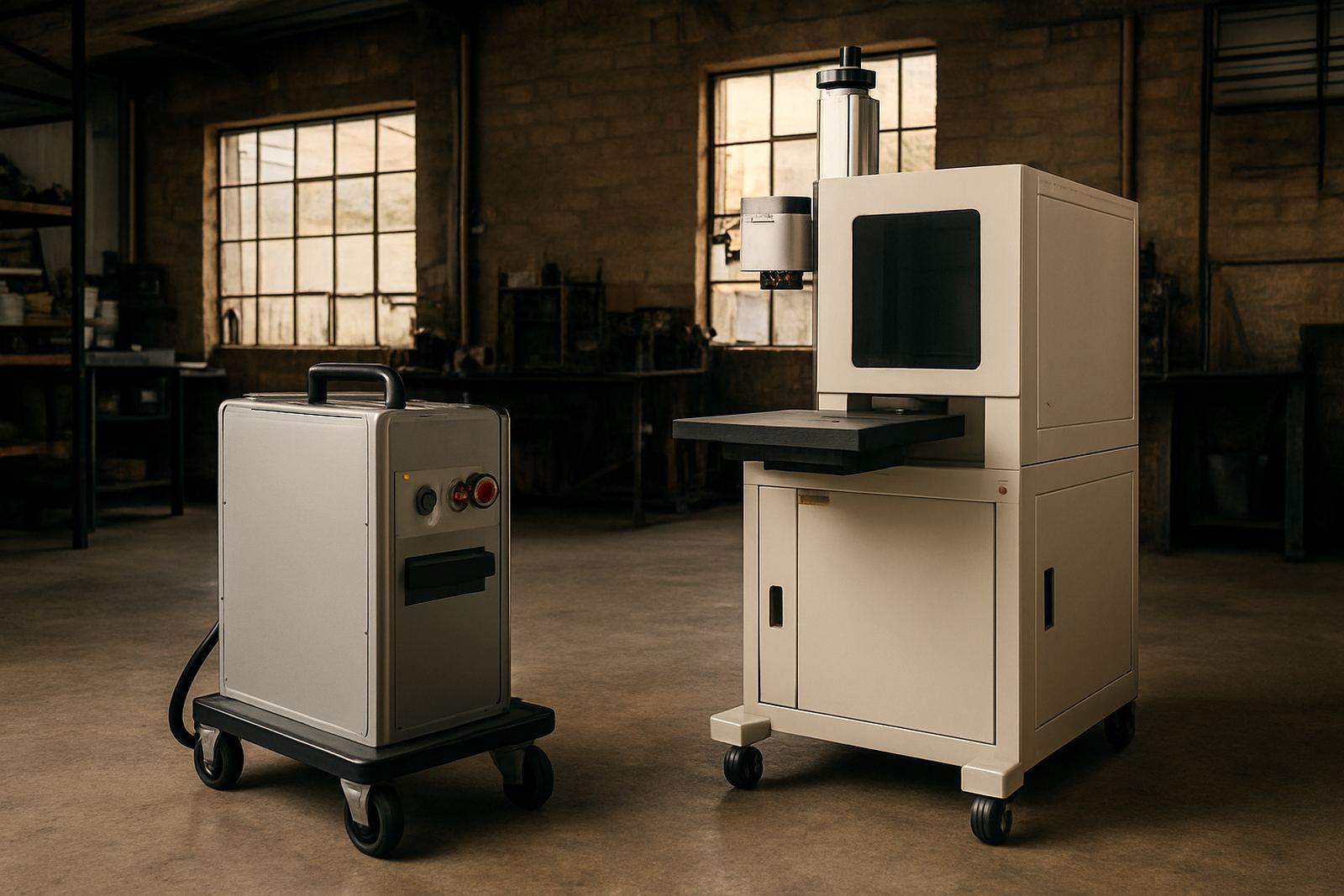
Ownership can be the better call where integration matters. If the unit must fit into a line, work with fixtures, or connect into existing process steps, a purchased machine can be set up to suit your exact layout. For operations in Germiston, Kempton Park, Benoni, Alberton, Midrand, and Pretoria, this often matters because factory floor space and conveyor arrangements differ from site to site.
There is also the resale and asset side to think about. A purchased machine may hold value, and once it is paid off the operating cost is easier to manage. For businesses with stable demand, buying usually works out cheaper over 2 to 4 years, though each case needs its own numbers.
Cost checks that show the real difference
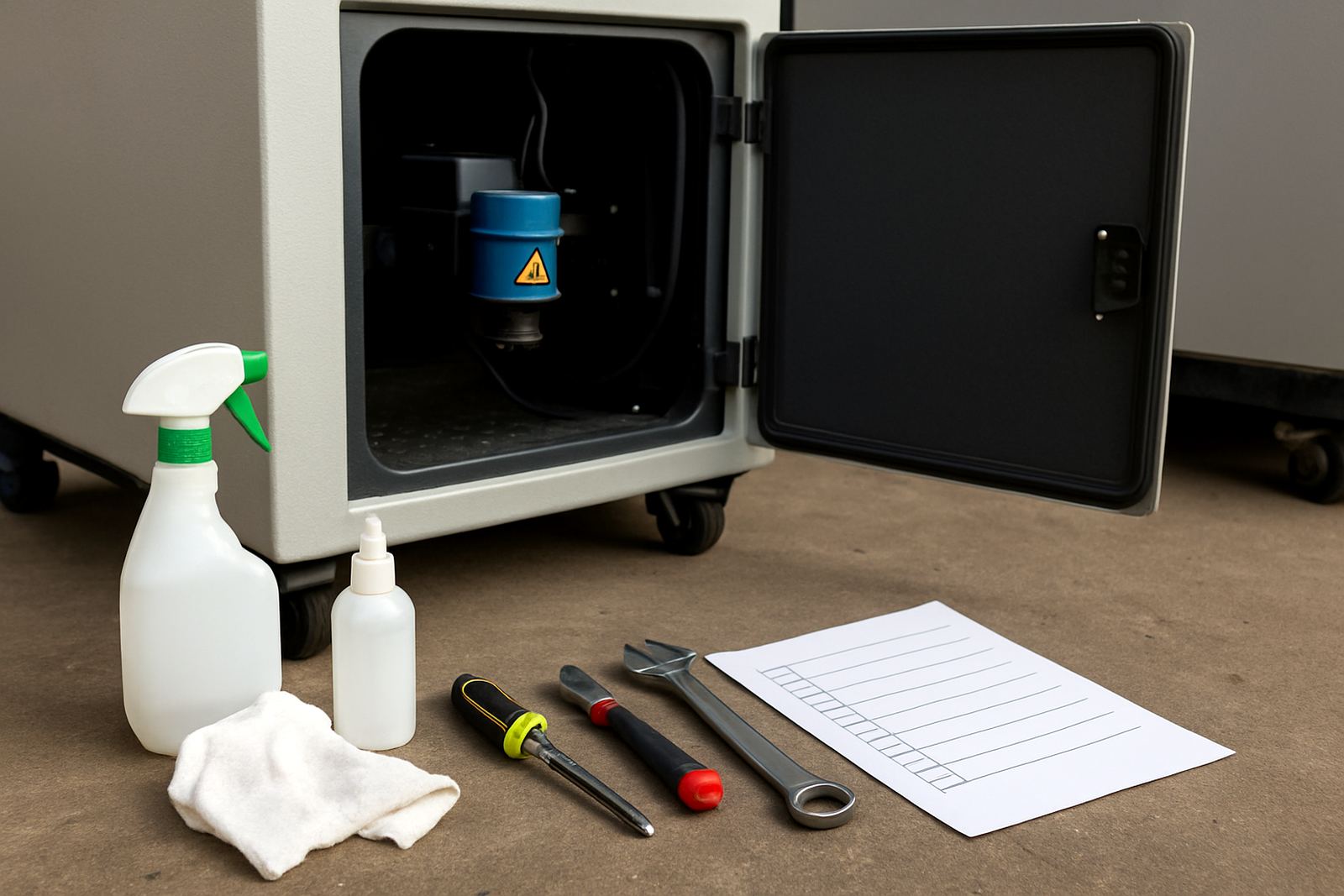
Compare more than the monthly hire rate. Look at install time, operator training, spares, service callouts, software setup, and how much downtime you can afford. A cheaper hire option can become expensive if the supplier is slow to respond or if the machine is not suited to your materials. In the same way, buying a machine with no support plan can leave you carrying the risk alone.
Use this quick checklist when you compare options:
- How many hours per week will the machine run?
- Will it be used daily, weekly, or only for projects?
- Do you need line integration or a stand-alone unit?
- Is operator training included or charged separately?
- What happens if the machine needs breakdown repairs?
- Are spares and preventive maintenance available locally?
- Will power cuts or voltage swings affect your site?
If you cannot answer these points clearly, you may be comparing prices without comparing risk. That often leads to the wrong decision.
Practical questions to ask before you commit
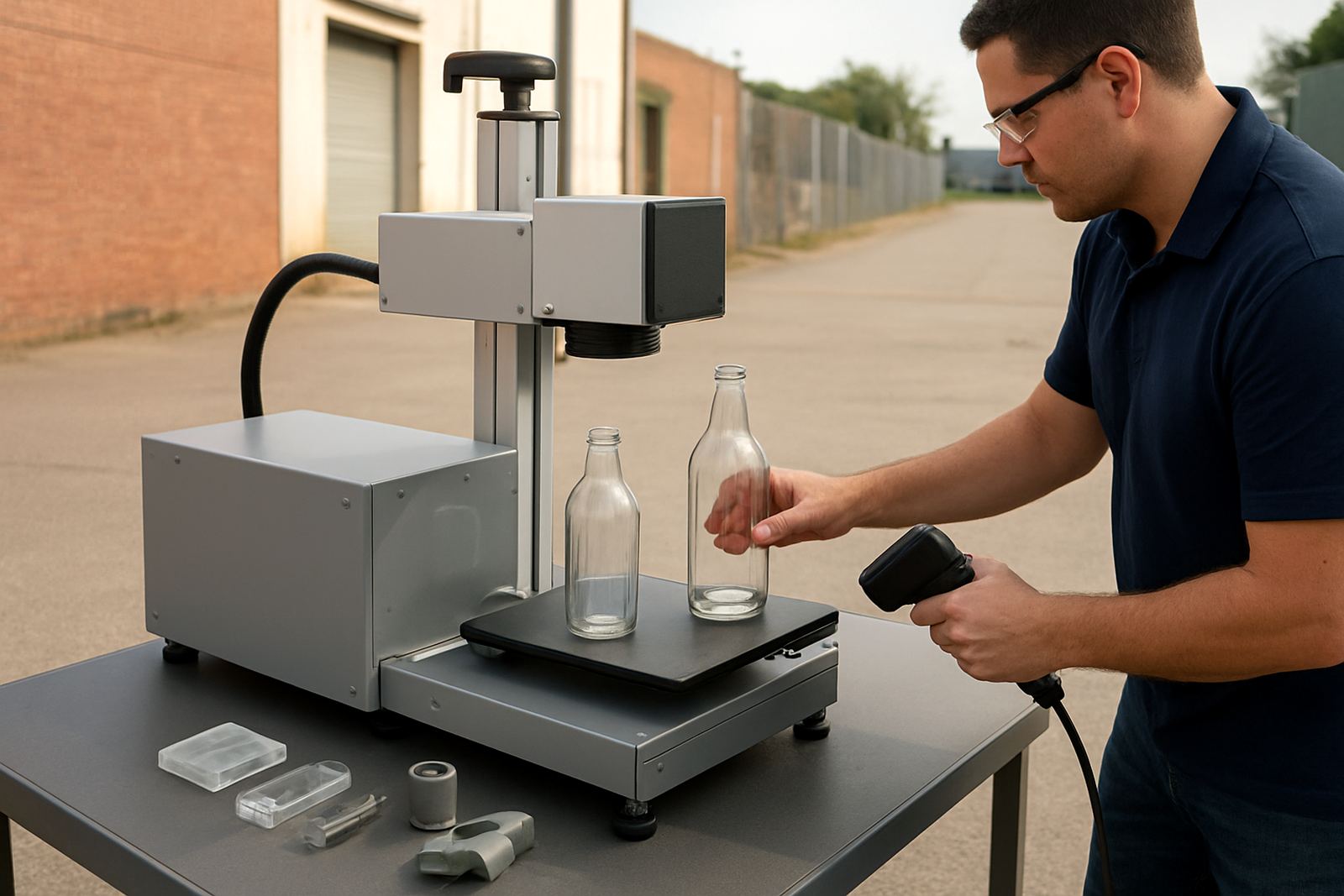
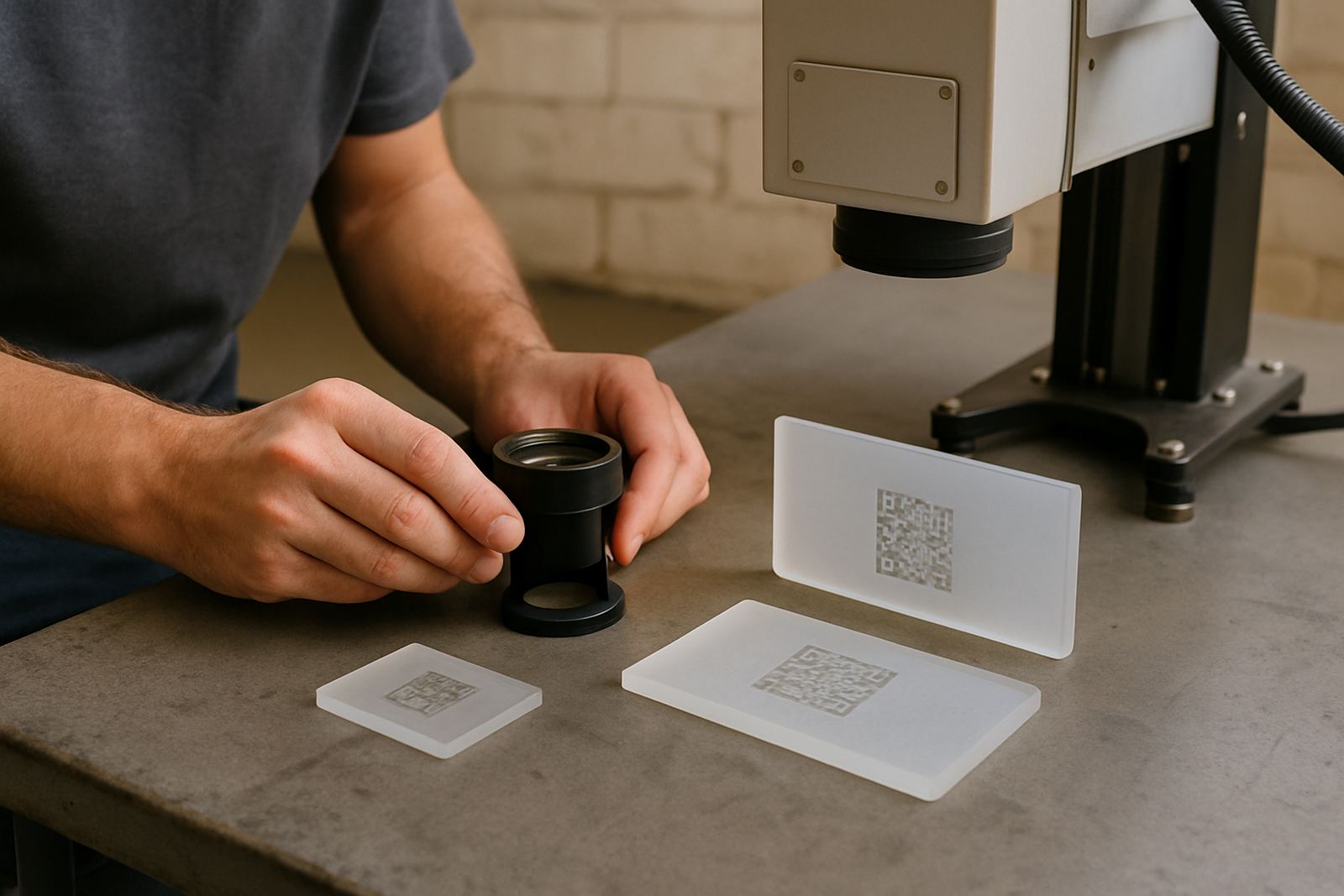
Before you hire or buy, look at the actual marking job. Glass and plastics behave differently, and the marking result depends on surface finish, material grade, part shape, and how the part is held during the cycle. A good supplier should be able to test samples, check mark clarity, and recommend the right fixture design before anything is signed off. Minor differences in setup can make a big difference to repeatability.
Ask the supplier to walk through these questions with you:
- Can we test our own samples before choosing a route?
- What training will our operators need?
- How quickly can installation happen on site?
- Can the system be adjusted for future products?
- What support is available after handover?
If your answer changes after sample testing, that is a good sign the decision is being made on facts not assumptions. It is better to find out early than after the first production run.
A simple decision path for South African operations
Use this step by step approach to narrow the choice. First, define your volumes and how long the job will last. Second, confirm whether the marking process is part of a pilot, a regular order, or a permanent line requirement. Third, compare the full cost of hire against ownership over the period you expect to use the machine. Fourth, check service support, training, and spare parts supply.
For many companies in and around Jet Park, Boksburg and the rest of Ekurhuleni, the final decision comes down to uptime and flexibility. If your demand is uncertain or you need a temporary solution, hiring can help you move quickly. If your output is established and you need day to day control, buying often gives better long-term value. Either way, choose a setup that matches your materials, your production pace, and your power supply realities, because those details matter on the factory floor.
When the numbers are close, pick the option that gives you the least disruption and the clearest support path. That usually saves more than chasing the lowest initial cost.