Fully enclosed marking for cleaner shop-floor use
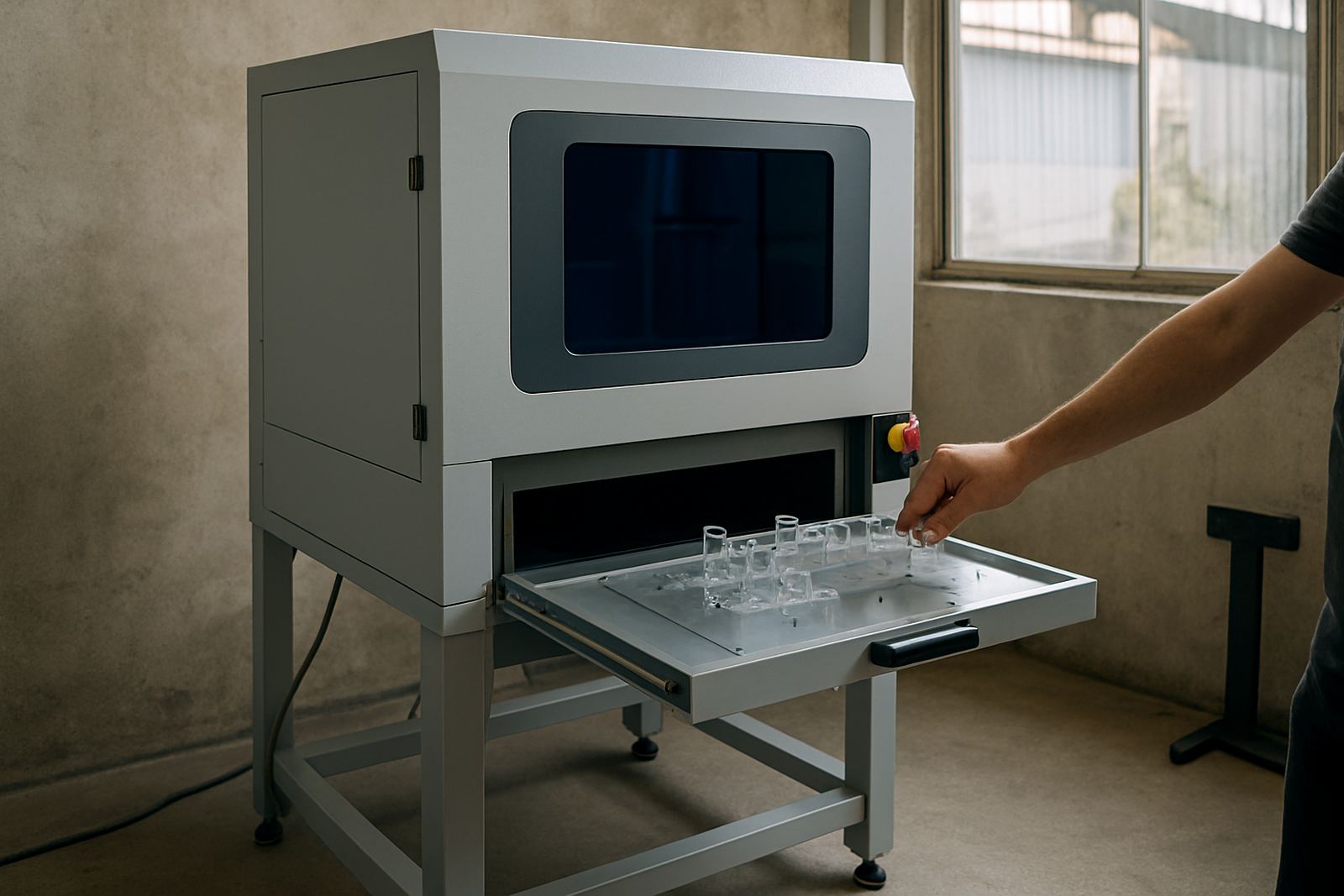
The Enclosed Safety Marker keeps the marking zone closed off during operation, which helps contain stray light, dust and handling contact. For busy production areas in Jet Park, Boksburg, Germiston and Kempton Park, that means a tidier work area and better control when operators are moving parts through the process.
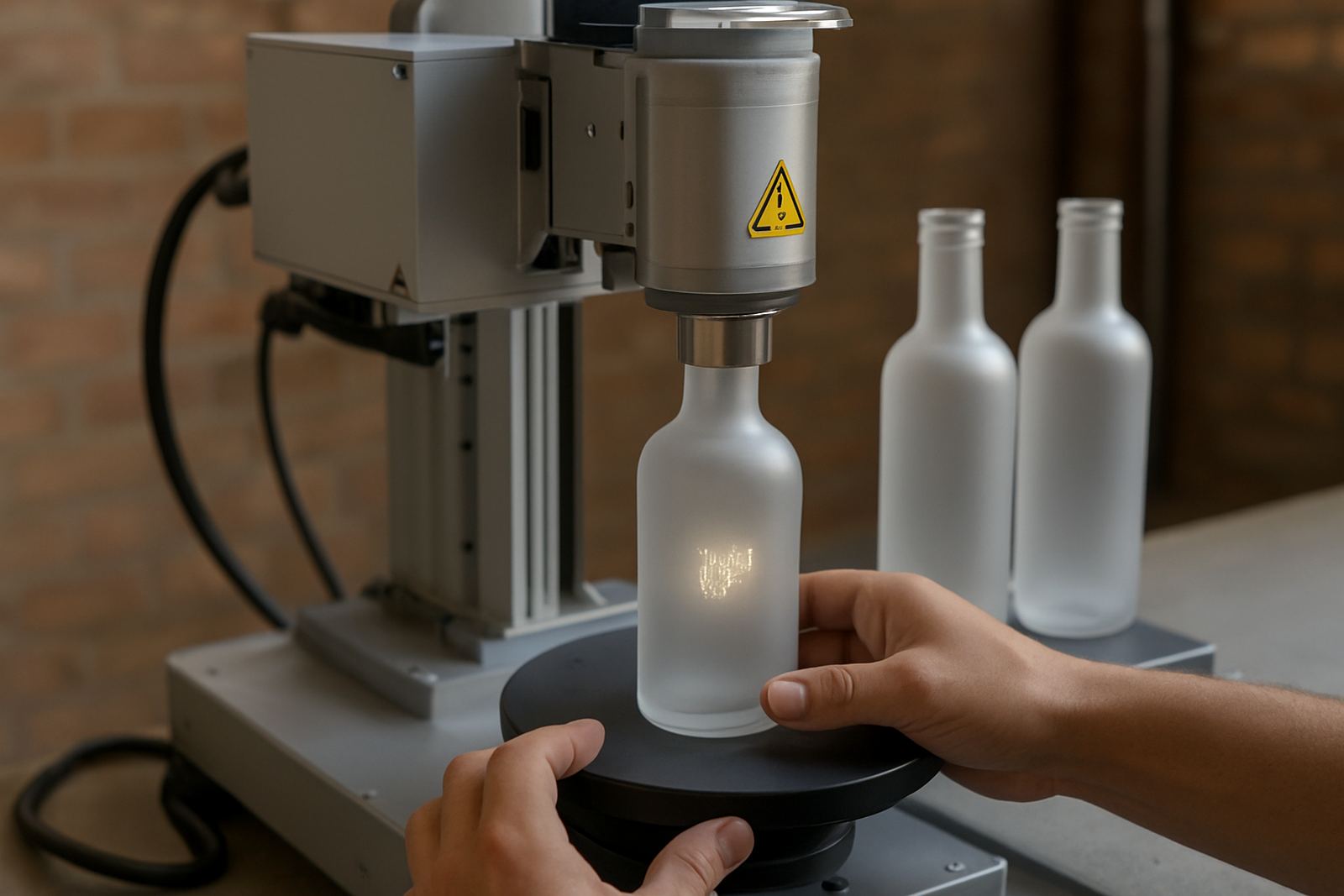
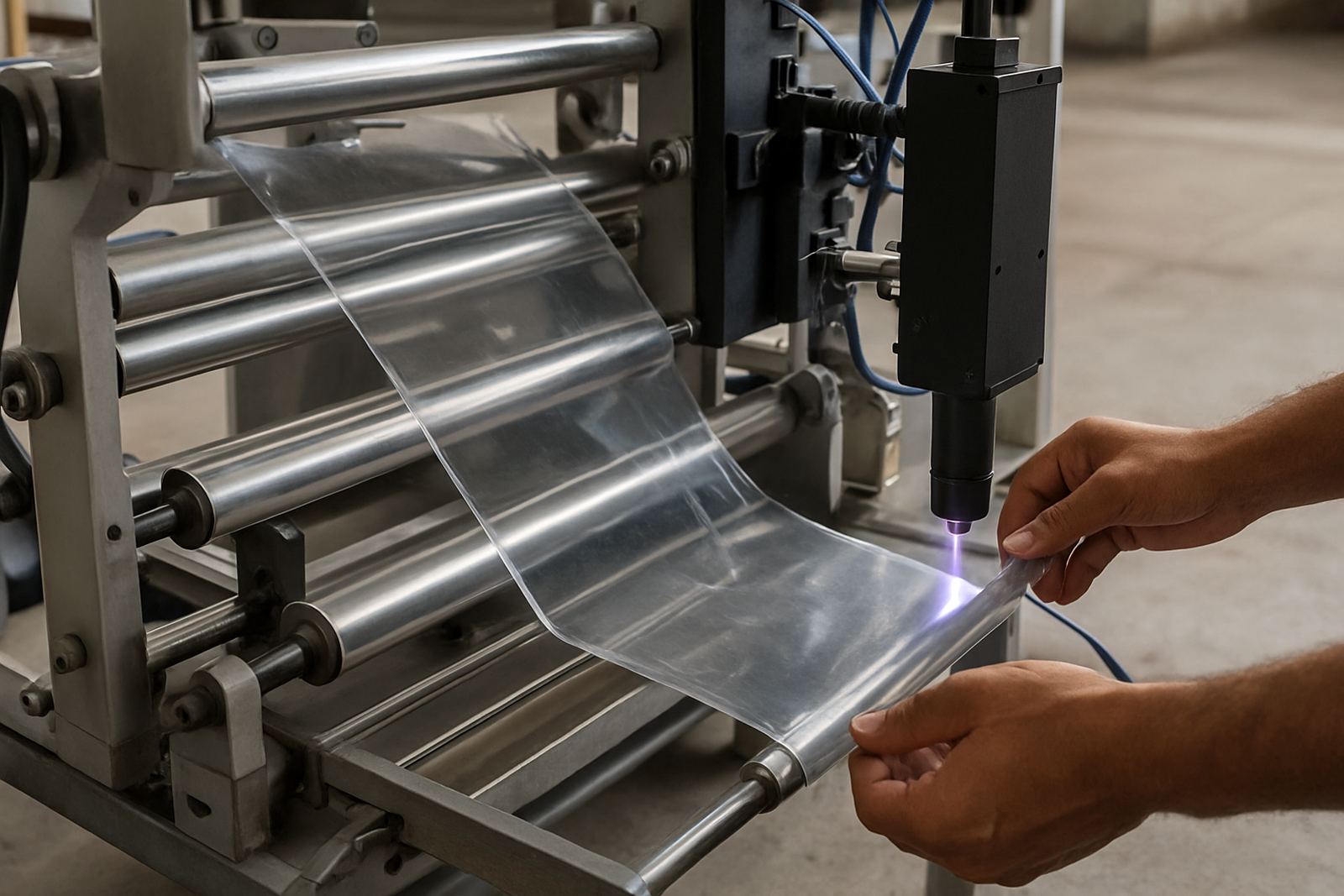
Because it is designed around UV laser technology, the system is well suited to materials that need fine detail without excess heat. It is commonly used on glass bottles, cosmetic containers, medical packaging, clear plastics, technical components and labels that need permanent identification. The mark is made without inks or solvents, so there is no drying time and no consumables in the usual sense.
The enclosed format also helps when a site has multiple staff rotating through the line. Operators can load, check, mark and unload in a clear sequence. That makes it easier to keep the process consistent on a morning shift, an afternoon shift, or during load-shedding recovery when production needs to restart quickly.
Where this model suits best
This product suits businesses that need neat marking on flat or curved glass and on a wide range of plastics that respond well to UV. It is often a good fit for small-batch production, repeat jobs, and lines where the mark must stay legible after handling, cleaning or transport. If your work includes branding, compliance details, part numbers or short codes, the enclosed system gives you a dependable starting point.
- Glass packaging, bottles and jars
- Clear or coloured plastic parts
- Personal care and household products
- Medical and lab items
- Small engineering components and housings
- Short-run promotional items with fine detail
For sites in Benoni, Alberton, Midrand and Pretoria, the enclosed unit is useful where staff need a straightforward setup without exposing the marking area to busy traffic. It also helps in environments with dust, vibration or fluctuating humidity, which can affect open workstations more than enclosed ones.
Sizes, build options and marking area
Enclosed systems can be specified in different frame sizes depending on the part size, the working height and how the items will be loaded. The right choice depends on whether you are marking single parts, trays, or a small fixture with multiple cavities. A larger enclosure gives you more room for jigs and line transfer, while a compact unit takes up less floor space in a tight production room.
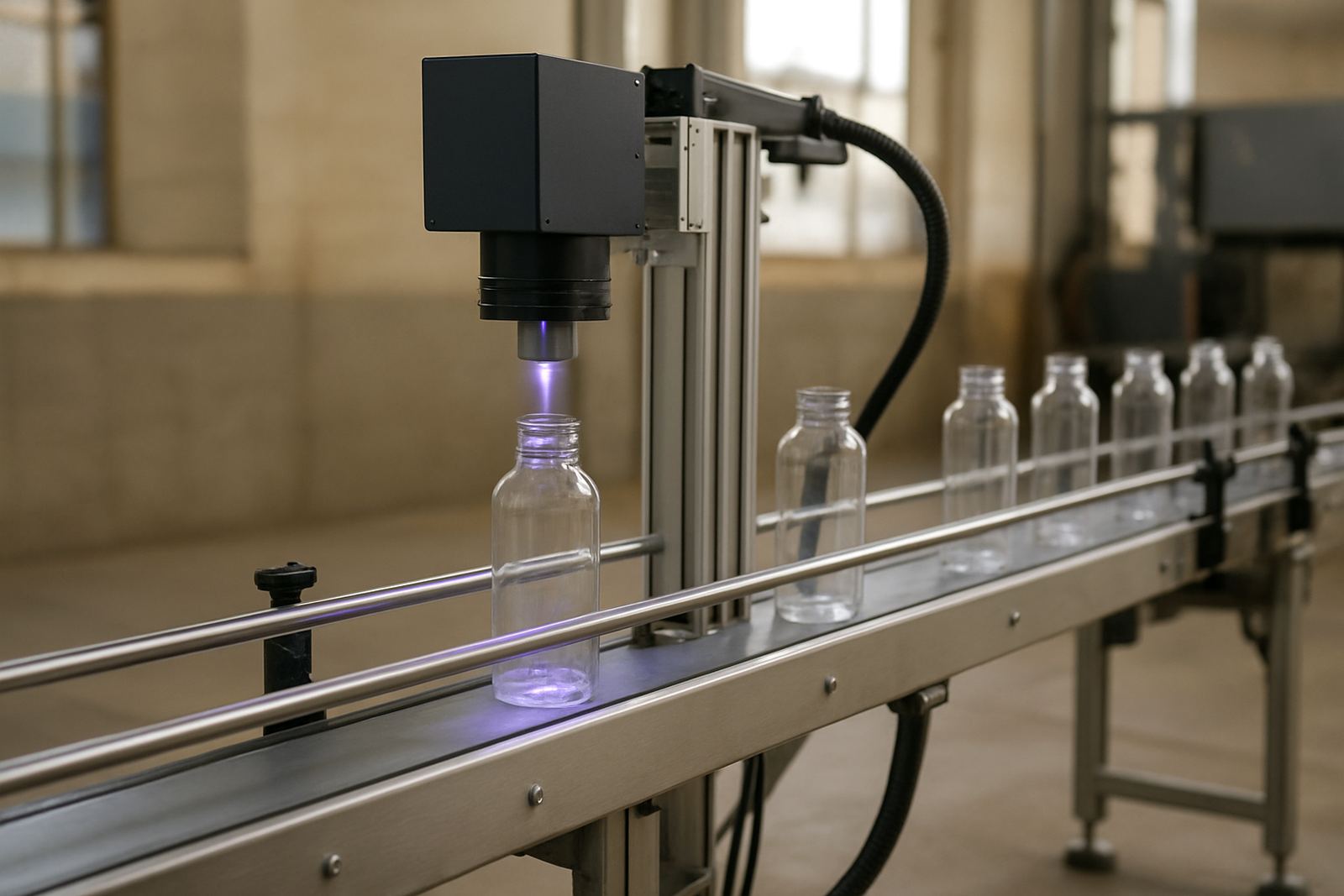
Typical options include manual loading with a fixed bed, a slide-in tray, or a custom fixture for repeat positioning. The marking field is selected to suit the job, and the enclosure can be set up for bench use or integrated into a line. On some applications, a viewing window and internal lighting are added for easier checking of the part before and after marking.
Useful points to confirm when choosing the size include the widest part you need to mark, the tallest part you need to clear, and whether the item must be held in a clamp or nest. If you already have a production table, the enclosure can be matched to the available footprint so you do not end up with wasted space.
Power, services and installation requirements
The Enclosed Safety Marker is typically installed on standard single-phase power, which suits most South African sites. A clean electrical supply is important, so a stable circuit and proper earthing should be in place before commissioning. Where power dips or interruptions are common, a backup supply or proper shutdown plan is worth considering so jobs are not lost mid cycle.
In most cases the system does not need gas for the marking process itself. Depending on the material, job setup and site conditions, a small amount of compressed air may be used for part cleaning or dust removal. Some installations also benefit from local extraction if there is any fine residue, especially where plastics or coated materials are involved.
- Single-phase power supply, usually 220 to 240 V
- Stable earthing and a suitable isolator
- Compressed air if the application calls for it
- Space for safe operator access and maintenance
- Level mounting surface for accurate marking
Our team handles demos, installs and training nationwide, from Ekurhuleni through to Pretoria and beyond. Site checks are useful before installation, especially where a line needs to keep moving while the new unit is fitted in, or where the room has limited access for bringing equipment through.
What to look after once the machine is running
Routine care is straightforward, but it matters. Keep the enclosure clean, check the viewing window for marks or dust, and make sure the fixture is holding the part in the same position each time. If the machine is used daily, a short start-up check at the beginning of the shift can prevent waste later in the day.
Schedule preventive maintenance at sensible intervals, especially on sites with high dust levels or coastal humidity. Hinges, seals, fans, filters and cable points should be checked, along with the alignment of the working area. If operators notice a change in mark quality, slower cycles or uneven positioning, it is best to review the setup before the problem grows.
We also recommend operator refresher training whenever a new product, new artwork or new fixture is introduced. A simple change in material grade can affect how a UV laser behaves, so it helps to keep notes on settings, part orientation and pass/fail samples. That record makes future repeat jobs a lot easier, and saves time during busy production runs.
Ordering checks before you commit
Before ordering, it helps to have a clear sample of the actual item, not just a drawing. Bring or send the exact material, because glass and plastics can behave differently even when they look similar. Confirm the mark size, the text height, the font style, the logo detail and whether the mark must be white, frosted, dark or just lightly etched in appearance.
- Material type and finish
- Part dimensions and the highest point on the item
- Mark area size and location
- Required output, such as text, codes or artwork
- Daily volume and cycle time expectations
- Whether the unit must sit on a bench or join a line
If you need line integration, ask about fixture design and process flow at the same time. That avoids ordering a machine that works well on samples but slows the line once full production starts. Our team in Jet Park can test parts, suggest the right enclosure size and make sure the setup suits your staff, your site and your production pace.
Key facts
| Machine type | Fully enclosed UV laser marking system |
|---|---|
| Suitable materials | Glass and selected plastics |
| Power requirement | 220 to 240 V single-phase, site dependent |
| Cooling | Air-cooled system |
| Operating mode | Manual load or fixture-based marking |
| Typical applications | Branding, labelling, traceability, batch coding and fine detail marking |